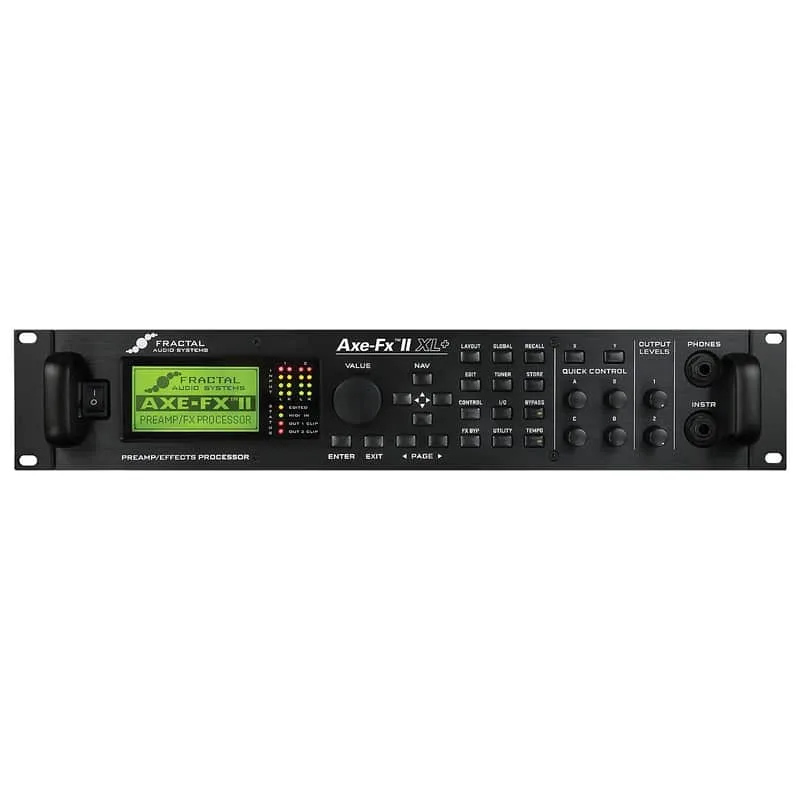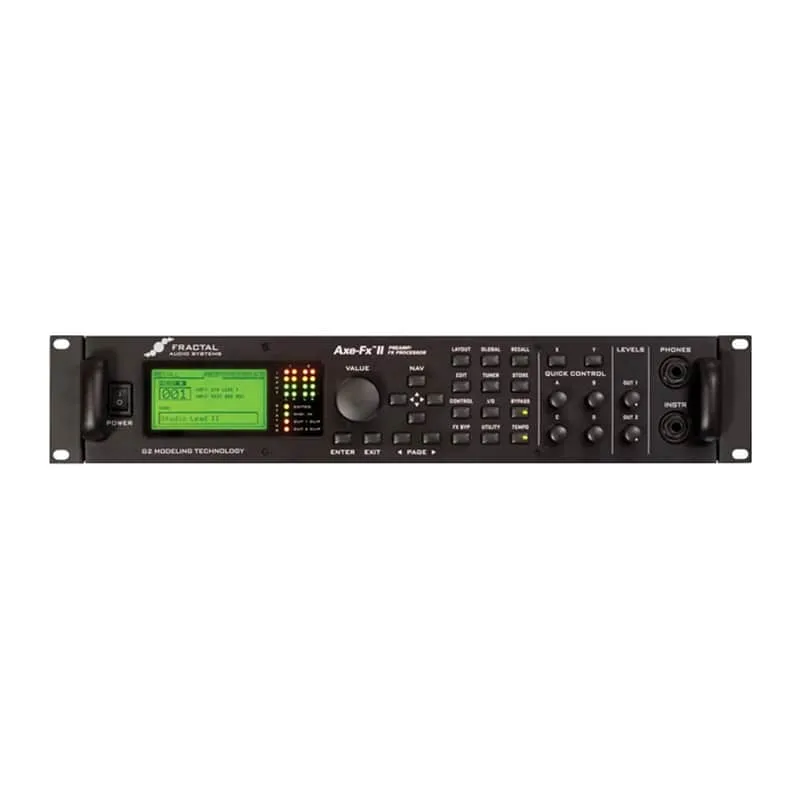


The Fractal Audio Axe-Fx II is a rack-mountable digital preamp and effects processor, the company's follow-up to the original Axe-Fx Standard and Ultra models, first released in 201112. It packs amp modeling and a full range of effects, including overdrive, chorus, reverb and delay, into a single 2U-style rack unit, and it replaced the single-processor Standard and Ultra with two TigerSHARC processors running Fractal's G2 modeling technology, which Premier Guitar reported generates twice the processing power of its predecessors13.
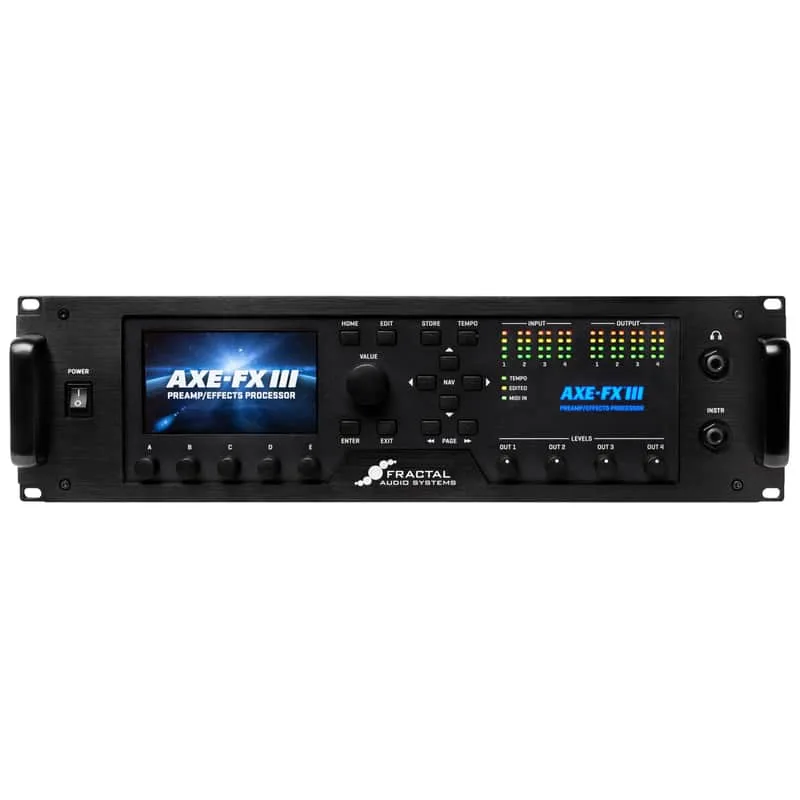
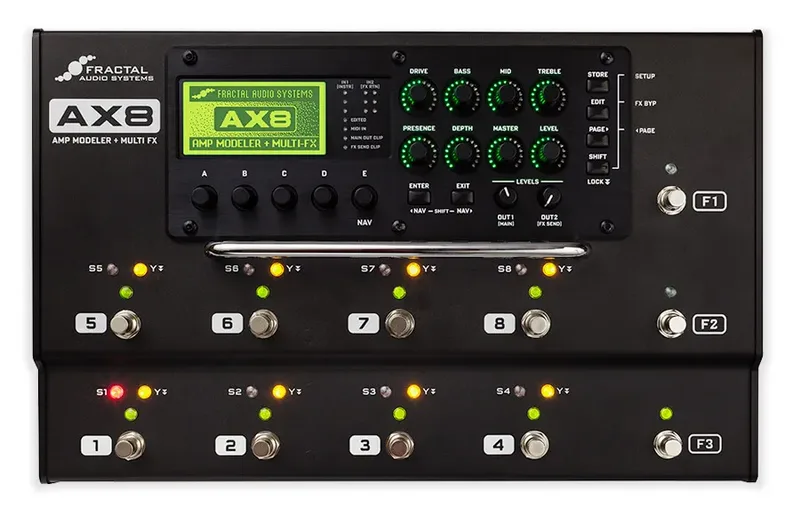
MusicRadar's reviewer called it "one of the most talked up pieces of equipment in recent years" and found that "the amp models are some of the finest to grace our lugs"4. It sits in the wider family of multi-effects units; its successor is the Axe-Fx III, and Fractal also built the floor-based AX8 on the same modeling platform.
The controls
The front panel was overhauled from the original Axe-Fx, with a larger screen, four Quick Control knobs for real-time editing, and an X/Y switching mode that lets you flick between two different settings of the same model without changing patches4. Preset navigation is handled by a big value knob next to the screen, plus four navigation buttons that move through presets one at a time (up and down) or in increments of 10 (left and right), which Premier Guitar's reviewer found handy for jumping from, say, preset 4 to preset 54 quickly1.
The X/Y feature is more than a convenience. In a Fractal interview, Matt Picone described assigning one of his footswitches to it so he can switch between two different versions of the same amp, with the differences assignable to boost, bias, gain and level, speaker size, mic placements or speaker sims8. The same interview highlighted the modifier system: "Being able to program a modifier to any parameter and assigning the controller pedal to it just opened up endless possibilities."8
"The ease of Axe-Edit was really appealing."
Deep editing is often done in Fractal's Axe-Edit software rather than on the panel itself8, and finished rigs can be saved onto a thumb drive8.
Connections: USB audio, MIDI and outputs
The rear panel carries the connections that turn the Axe-Fx II from a stage preamp into a studio hub. The headline addition over the original Axe-Fx is the USB port: the original had none, and the II adds "a USB 2.0 jack for computer connectivity, which makes the Axe-Fx II a serious audio/MIDI interface with capabilities like re-amping and recording," as Premier Guitar put it41. That means a player can record the processed output straight into a DAW, and send a dry DI track back through the unit for re-amping later.
MIDI is handled by MIDI IN and OUT/THRU jacks on the original Axe-Fx II, with a single "Pedal" jack for an expression pedal5. The XL upgraded this to dedicated MIDI IN, OUT and THRU jacks, versus the shared OUT/THRU of the Mark II, and added a second onboard pedal jack9. A factory-default MIDI CC map assigns INPUT VOLUME to CC 10 across the Axe-Fx II, XL and XL+10.
For output routing, players have used it in several configurations. Chris Letchford of Scale The Summit, who uses the Axe-Fx II live, described the options: "Sometimes we put the Axe-Fx direct to front-of-house and use monitor wedges on stage. On some smaller stages where the crowd up front ends up behind the PA, we run stereo direct lines to the front of house and also run out to power amp and cabs for stage volume."11 Neal Schon's 2014 rig sent a feed from the Fractal to a Roland M-120 rack mixer as well as a mono signal directly to monitors and front of house12.
Versions: original, Mark II, XL and XL+
The Axe-Fx II went through several revisions, and Fractal's own product page lays out the differences side by side5:
| Version | Key differences |
|---|---|
| Axe-Fx II (original) | Dual TigerSHARC, 384 presets, 100 user cab slots, RJ45 MFC-101 port, mechanical main encoder, MIDI IN and OUT/THRU jacks, single "Pedal" jack, 60mm fan5 |
| Axe-Fx II Mark II | EtherCON port for connecting the MFC-101 foot controller; 60 or 80mm fan5 |
| Axe-Fx II XL | As Mark II, but 768 presets, 500 user cab slots, EtherCON and FASLINK connectors, optical main encoder, dedicated MIDI THRU, lower noise floor, 80mm fan9 |
| Axe-Fx II XL+ | Preamp/FX processor with balanced rear analog inputs for cleaner signal over greater distances, and four smaller QUICK CONTROL knobs giving direct access to extra parameters including SCENES5 |
The XL began shipping in March 2014 at a direct price of $2499.95 ($2999.95 list), and was offered in the online store alongside the Mark II9. Fractal described it as offering expanded memory, new I/O ports and other upgrades over the Mark II9.
Capture and tone matching
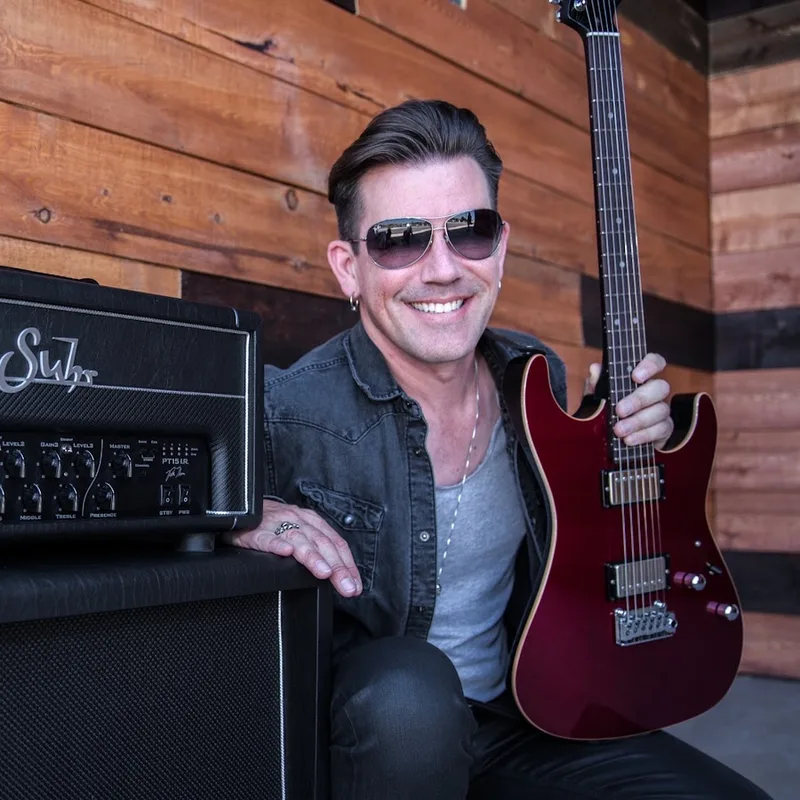
Beyond its stock amp and cab models, the Axe-Fx II can capture speaker impulse responses (IRs) and tone-match amps and recordings13. Tone matching analyzes a target sound, whether a physical amp miked up in a room or a commercial recording, and builds a preset that reproduces it. Fractal's artist community leaned on this: the first batch of presets Pete Thorn shared with Fractal users were based on two of his favorite amps, a Suhr SL68 and a Friedman BE10013.
What reviewers said
The two major reviews agree on the sound and disagree on nothing except the price of admission. Premier Guitar praised "exceptional sound quality and a true amp-like feel in a self-contained unit," listing a steep learning curve and the 178-page PDF manual among the cons1. MusicRadar's verdict was similar in spirit:
"It's not for the faint of wallet, but the Axe-Fx II delivers supreme modelling power in a hardy piece of kit."
MusicRadar's reasons to buy included doubled processing power that "delivers amazing performance," and its reviewer found the delay sounds particularly strong, from conventional slapback, ping-pong and tempo-sync'd delays to "long, evaporating, crystalline delays"4. On the learning curve, the same reviewer concluded: "It demands time and attention, but the reward comes with the sound and feel of using the real thing."4 The one listed reason to avoid was the daunting price tag4.
Players who used it
Documented users include Robin Finck, whose Nine Inch Nails show required 147 Axe-Fx II presets, programmed within three days of rehearsals with no glitches8, Chris Letchford of Scale The Summit11, and John Myung of Dream Theater, whose rig uses the unit for overdrive, chorus, reverb and other effects processing3.
Videos
Guitar World
Guitar Interactive Magazine
G66
Questions
What is the difference between the Axe-Fx II and the Axe-Fx II XL?
The XL, which began shipping in March 2014, keeps the Mark II's core design but adds expanded memory (768 presets and 500 user cab slots instead of 384 and 100), EtherCON and FASLINK connectors, an optical main encoder, a dedicated MIDI THRU jack, a second onboard pedal jack, a lower noise floor, and an 80mm fan. It sold at a direct price of $2499.95, or $2999.95 list.
Can the Axe-Fx II be used as a USB audio interface?
Yes. It has a USB 2.0 jack for computer connectivity, which Premier Guitar's reviewer described as making it a serious audio and MIDI interface with capabilities like re-amping and recording. The USB port was one of the headline additions over the original Axe-Fx, which had no USB port at all.
Can the Axe-Fx II capture impulse responses?
Yes. Fractal Audio says the Axe-Fx II can capture speaker impulse responses (IRs) and tone-match amps and recordings. Tone matching lets a player analyze the sound of a physical amp or a recording and build a preset that reproduces it, rather than relying only on the built-in amp models.
How much did the Axe-Fx II cost?
Premier Guitar listed a street price of $2199 for the Axe-Fx II. MusicRadar gave the Axe-Fx II's RRP as $1799. The later XL version shipped in March 2014 at a direct price of $2499.95, with a list price of $2999.95. Its successor, the Axe-Fx III, launched at $2,249.99.
Is the Axe-Fx II hard to learn?
Both major reviews flagged a learning curve. Premier Guitar listed a steep learning curve among its cons and noted the unit ships with a 178-page PDF manual. MusicRadar's reviewer said it demands time and attention, but felt the reward comes with the sound and feel of using the real thing. Fractal's Axe-Edit software is used for programming presets.
Does the Axe-Fx II have a USB port?
Yes. The original Axe-Fx lacked a USB port, and MusicRadar's reviewer noted that the updated Axe-Fx thankfully includes it. The USB 2.0 jack handles both audio and MIDI over the computer connection, supporting recording and re-amping workflows.
Sources (13)
- Fractal Axe-FX II Preamp FX Processor Review, Premier Guitar, 2012-07-09
- Fractal Audio Axe-Fx III review, Guitar World, 2019-04-01
- Rig Rundown, Premier Guitar, 2011-10-25
- Fractal Audio Systems Axe-Fx II review, MusicRadar, 2011-10-12
- Axe-Fx II XL+, Fractal Audio Systems, 2020-09-08
- Axe-Fx III, Fractal Audio, 2026-01-15
- Axe-Fx III is the most powerful effects processor ever, MusicRadar, 2018-01-29
- Robin Finck: Driving Nine Inch Nails with a Nineteen-Inch Axe-Fx II, Fractal Audio Systems, 2017-11-06
- Announcing the Axe-Fx II XL, Fractal Audio Systems, 2017-10-02
- Voes | MIDI-CC, Voes (voes.be), 2024
- Chris Letchford Ascends To New Heights With The Axe-Fx II, Fractal Audio Systems, 2017-11-07
- Rig Rundown: Journey's Neal Schon (2014), Premier Guitar, 2014-09-17
- Pete Thorn: Versatile and In-Demand, Fractal Audio Systems, 2017-11-15
 Pete Thorn
 Chris Letchford
 John Myung
 Paul Waggoner
 Stephen Carpenter