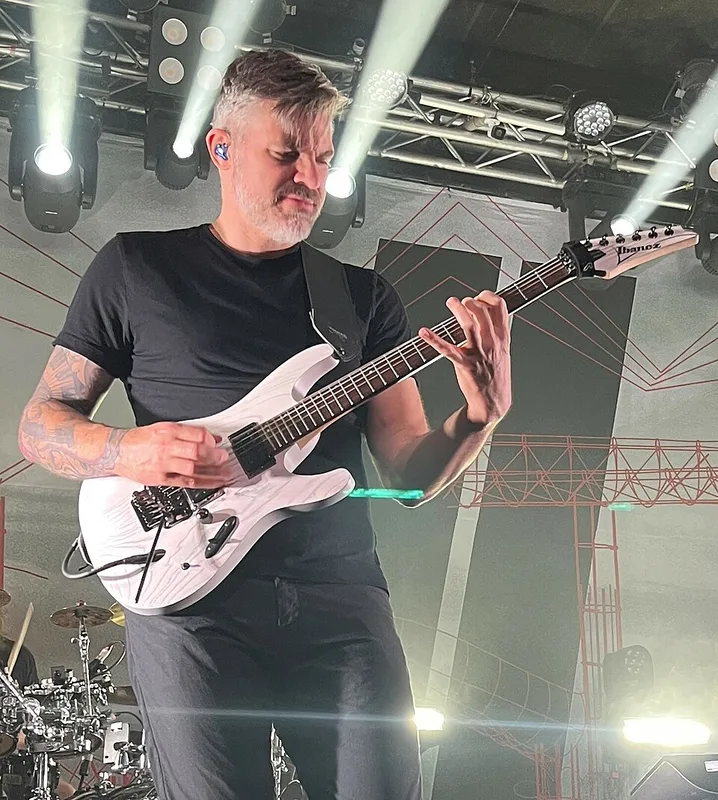
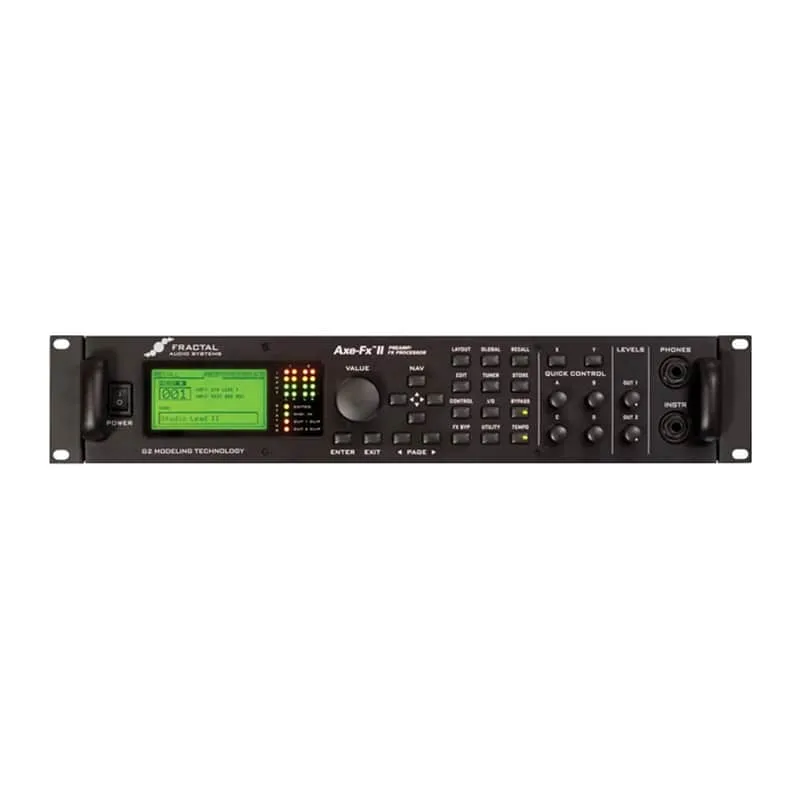
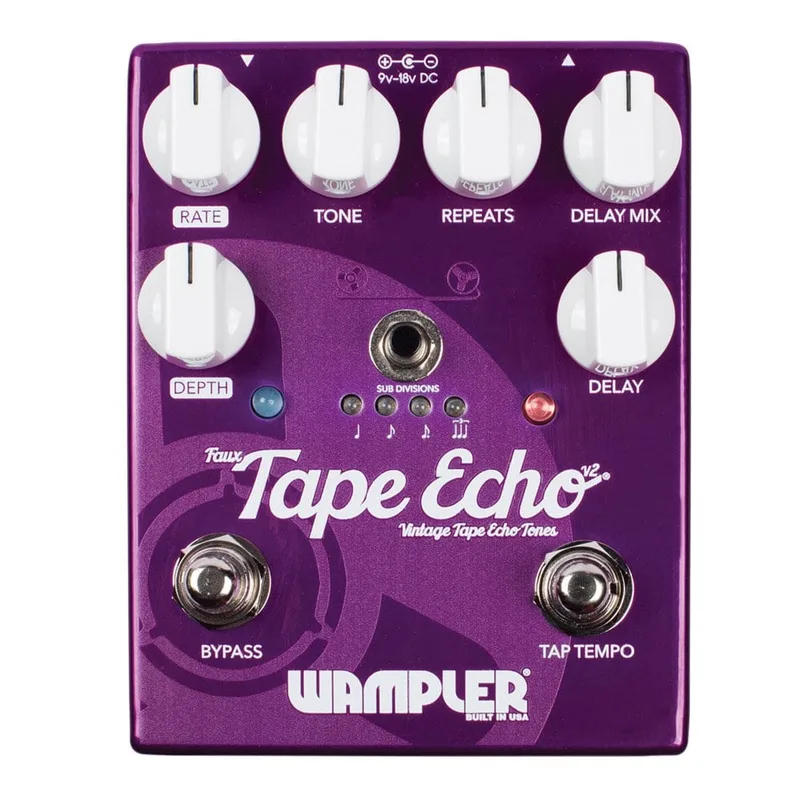
Paul Waggoner is one of the two guitarists in Between the Buried and Me, sharing the guitar duties with Dustie Waring. Fractal Audio describes the pair as the builders of the band's soundscape, "sometimes heavy and melodic, sometimes rhythmic and intense, sometimes lush, and always epic"1. Waggoner's rig is built around a Fractal Axe-Fx rather than a wall of amplifiers, with a small pedalboard of expression pedals, a tuner and a boost in front of it.
He came to the Axe-Fx through Daniel Klein from Port City Amps, a friend of the band, who told them to check it out as a replacement for all of their amps, effects and cabling; touring with Cynic and Devin Townsend, who used it, pushed them the same way1. The band ended up with two Axe-Fx Ultras, and Waggoner later moved to the Axe-Fx II1.
Rhythm tones on Parallax II
For the rhythm sounds on Parallax II: Future Sequence, Waggoner and Waring worked inside the Axe-Fx rather than with real amps. Waggoner says:
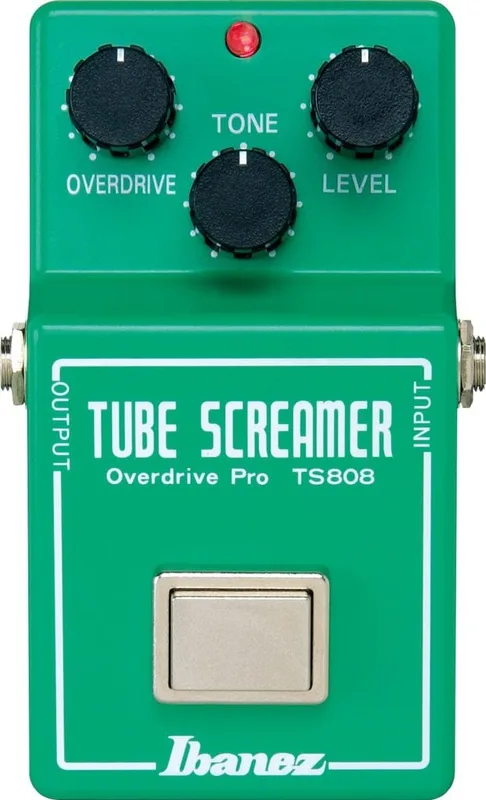
"For our rhythm tones, we used a blend of the FAS Modern with the Solo-100. We threw a little T808 OD drive pedal on there to tighten things up."
The T808 OD is a Tube Screamer-style overdrive model, and using one to tighten the low end of a high-gain amp model is the same trick players use with physical pedals. One patch carried over from the earlier Ultra to the Axe-Fx II: he ported the Organ Grinder patch across and tweaked the delay tempo a bit1.
Clean tones on Parallax II
For clean tones on the same album, he again blended two amp models:
"I used a blend of the Double Verb and the Mr. Z 38 Sr. It gives you a nice big and warm tone, with some twang and some sparkle on the top end."
He placed delay and reverb at the end of the chain for these tones1, which lines up with standard signal-chain practice. Delay is typically placed after modulation and overdrive, before reverb, toward the end of the chain3, and reverb usually works best as the final link after the delay, because delayed reverb can sound muddy4. Placing reverb last, or in an amp's effects loop, also keeps it from being distorted by anything ahead of it5. Guitar World's guidance puts it the same way: delay and reverb are ambience effects, so they belong at the end of the chain, with the delay in front of the reverb6.
Waggoner's ear for that kind of tonal color comes from outside progressive metal. He listens to old country and bluegrass: Willie Nelson, Merle Haggard and Johnny Paycheck, along with Joe Bonamassa1. He says he sets up presets in the Axe-Fx to copy those old single-coil slap-back delay tones and then brings some of that into his own patches1.
The live rig
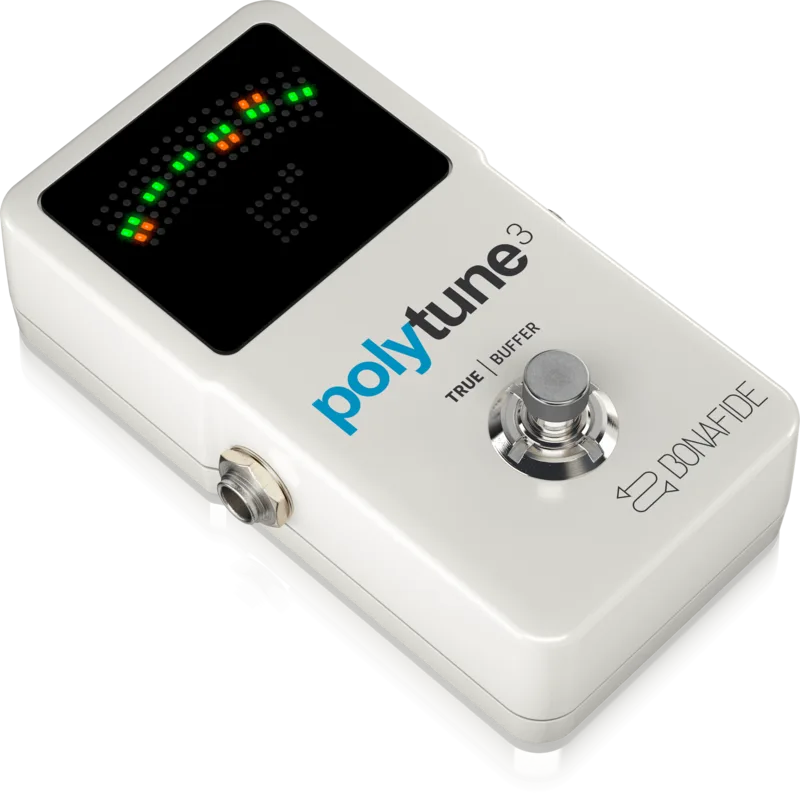
On tour, Waggoner and Waring carried a matched setup built around the Axe-Fx. Both guitarists use Mission expression pedals for volume and wah through the Axe-Fx, TC Electronic PolyTune tuners, and a Port City Salem boost on their board2. Waggoner's board also carries a Wampler Faux Tape Echo delay and a Wampler Levithan2.
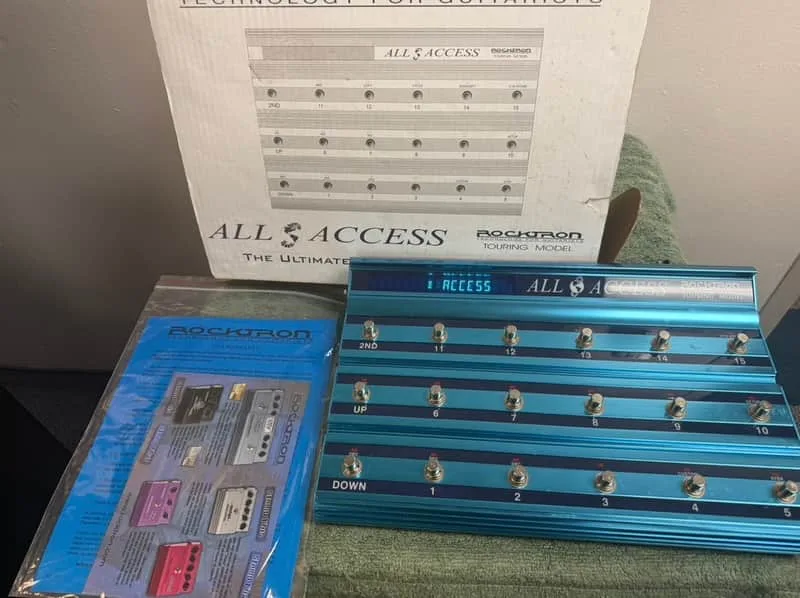
He controls the Fractal with a Rocktron All Access foot controller, a MIDI floor unit Rocktron lists among its artist gear27. Rather than browsing patches by type, he sets them up in song mode, with rhythm, lead and other patches assigned per song, including a banjo-sounding patch when a song calls for one2.
The signal path runs from a Line 6 Relay G50 digital wireless unit2 into the pedalboard, then into the Axe-Fx Ultra, which feeds a Mesa/Boogie Simul-Class 2:90 power amp driving two Port City 212 cabinets running in stereo, each loaded with Celestion Vintage 30s2. A Mesa/Boogie Stereo 2:50 sits in the rack as a backup power amp2.
His guitars are PRS Custom 24s fitted with Bare Knuckle Blackhawk pickups2, tuned to C# standard with a custom gauge set of D'Addario strings: .011, .014, .021 wound, .032, .044 and .0562.
Signal chain at a glance
| Position | Gear | Role |
|---|---|---|
| Wireless | Line 6 Relay G50 | Digital wireless from the guitar2 |
| Board | TC Electronic PolyTune, Port City Salem boost, Wampler Faux Tape Echo, Wampler Levithan, Mission expression pedals | Tuning, boost, delay and expression control2 |
| Controller | Rocktron All Access | Selects Axe-Fx patches in song mode2 |
| Modeling | Fractal Axe-Fx Ultra (later Axe-Fx II) | Amp, drive and effects processing1 |
| Power | Mesa/Boogie Simul-Class 2:90 (Stereo 2:50 backup) | Powers the cabinets2 |
| Cabinets | Two Port City 212s in stereo, Celestion Vintage 30s | Speaker output2 |
One placement note worth keeping in mind when building a chain like this: a volume pedal near the end of the signal chain, just before delay and reverb, lets you fade or mute the guitar without cutting delay or reverb tails short6. Waggoner's own volume control lives earlier in the concept, as a Mission expression pedal feeding the Axe-Fx2, but the principle is the same trade-off every player makes between swells before the dirt and clean fades after it.
Questions
What overdrive does Paul Waggoner use?
On the rhythm tones for Parallax II he used a T808 OD drive pedal in the Axe-Fx to tighten up a blend of the FAS Modern and Solo-100 amp models. Live, his pedalboard carries a Port City Salem boost, and he and Dustie Waring both run Mission Expression pedals for volume and wah through the Axe-Fx.
What amp models did Paul Waggoner use on Parallax II?
For rhythm tones he blended the FAS Modern with the Solo-100, with a T808 OD drive pedal to tighten things up. For clean tones he used a blend of the Double Verb and the Mr. Z 38 Sr, which he describes as big and warm with twang and sparkle on the top end.
How does Paul Waggoner get his clean tone?
On Parallax II he used a blend of the Double Verb and the Mr. Z 38 Sr amp models in the Axe-Fx, with delay and reverb placed at the end of the chain. In his own words, it gives a nice big and warm tone, with some twang and some sparkle on the top end.
Does Paul Waggoner use an Axe-Fx?
Yes. He moved to the Axe-Fx Ultra after Daniel Klein from Port City Amps recommended it, and later used the Axe-Fx II. Live he has run the Ultra into a Mesa/Boogie Simul-Class 2:90 power amp and two Port City 212 cabinets with Celestion Vintage 30s, with a Mesa Stereo 2:50 as backup.
Where does Paul Waggoner put delay and reverb in his chain?
He puts delay and reverb at the end of the chain, after his amp tones. That matches the usual guidance: delay typically sits after modulation and overdrive, before reverb, and reverb works best as the final link so it stays clean and undistorted.
Sources (7)
- Paul Waggoner and Dustie Waring Between The Buried And Me, Fractal Audio Systems, 2017-11-11
- Inside the Gear of Between the Buried and Me, Premier Guitar, 2013-03-20
- UNDERSTANDING PEDAL ORDER, JHS Pedals
- The Ultimate Guide to Guitar Effects Pedal Order and Signal Chain, BOSS (articles.boss.info), 2023-03-01
- The Best Reverb Pedals for Electric Guitar: From Budget to High-End, www.gearnews.com, 2026-06-08
- Guitar pedal order: how to arrange your pedalboard, Guitar World, 2019-09-24
- Artists - Rocktron - Technology for Guitarists - rocktron, rocktron.com, 2024-08-28