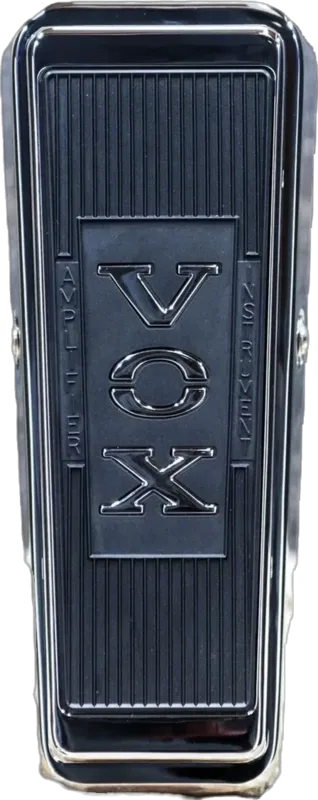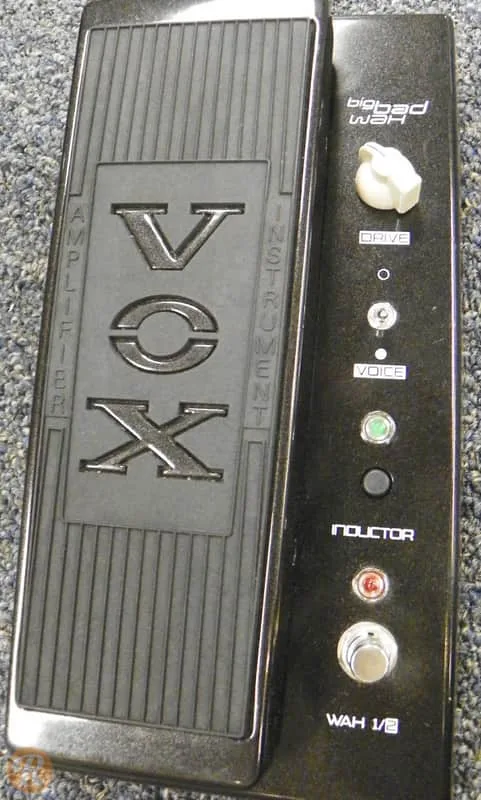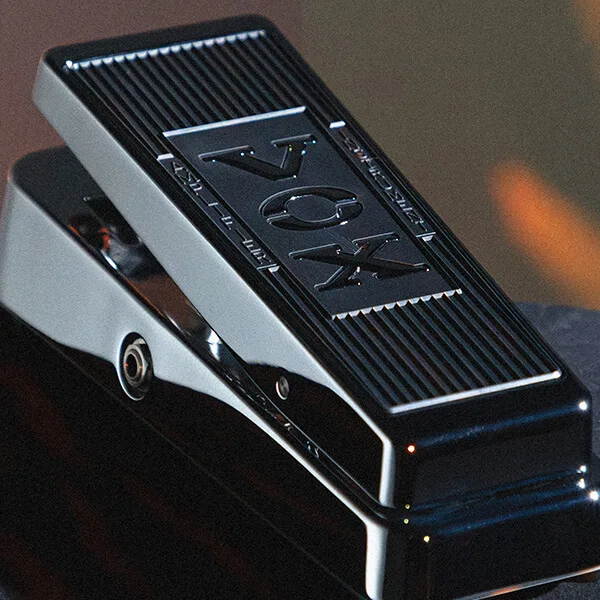


The original Clyde McCoy wah came out of a collaboration between Vox and Clyde McCoy, a noted jazz trumpeter who wanted a device that mimicked the tone of a muted brass instrument and could be used with a keyboard1. An unintended but music-changing use with electric guitar turned the wah into a vital tool for renowned artists such as Jimi Hendrix and Eric Clapton, according to Vox2.
A recreation of the 1960s Clyde McCoy wah
Vox describes the Real McCoy as a meticulous recreation of one mint-condition original 1967 Clyde McCoy wah, often hailed as the "Holy Grail" of wahs4. The project started by acquiring that vintage unit, then working backward through its parts: the Halo inductor, the transistors, the resistors and the enclosure were all matched to the original24. RockBoard's PedalPedia entry for the pedal states that it "perfectly emulates the original wah down to the component level, replicating the exact tonal characteristics of the vintage McCoy wah model"5.
The enclosure itself was redesigned from 3D scans of vintage units to capture every curve and detail of the original2. Vox says the Real McCoy is voiced for the iconic nasal tone of the original wah model, with an accentuated midrange that imparts a warm and melodic character2.
Guitar World's Paul Riario reviewed the Real McCoy alongside the V846 Vintage, and found it delivered the Clyde McCoy wah tone heard on Allen Collins' solo in Lynyrd Skynyrd's "The Needle and the Spoon"3:
"And here, the Real McCoy delivers an authentic replication of that wah tone."
Inside: Halo inductor and BC109 transistors
The heart of the pedal is its inductor. Vox's engineering team "faithfully replicated the legendary Halo inductor, perhaps the most crucial component in delivering the distinctive mid-range response of vintage units"2. Riario agreed, writing that "the soul of both wahs is the Halo inductors, which replicate the distinct nasally voice of the Real McCoy"3.
The rest of the circuit follows the original just as closely:
- Transistors: BC109s, with identical numbering and appearance as the vintage counterpart4
- Resistors: ½ watt carbon film resistors in a custom circuit2
- Enclosure: Redesigned from 3D scans of vintage units2
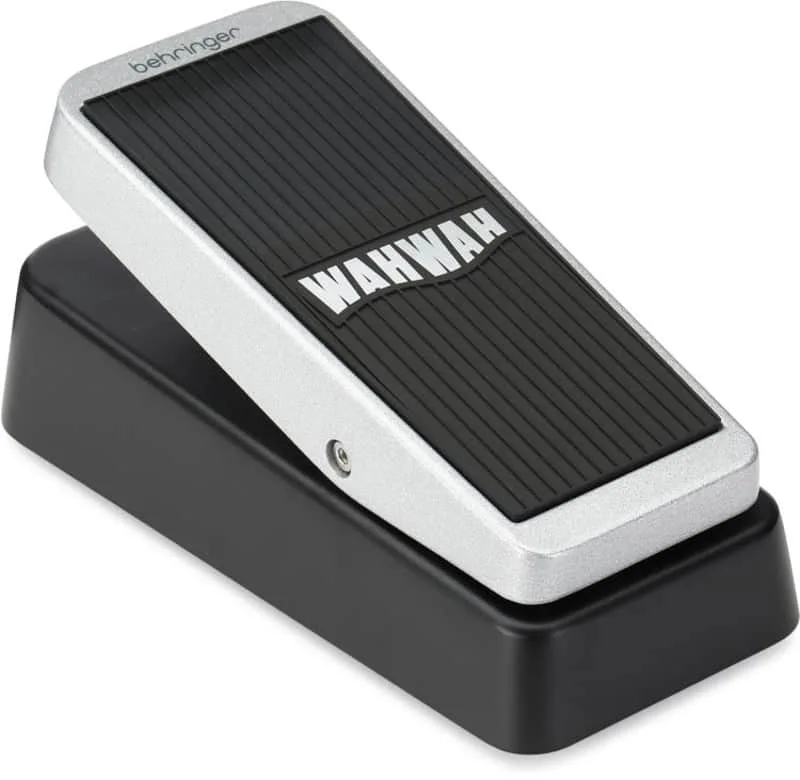
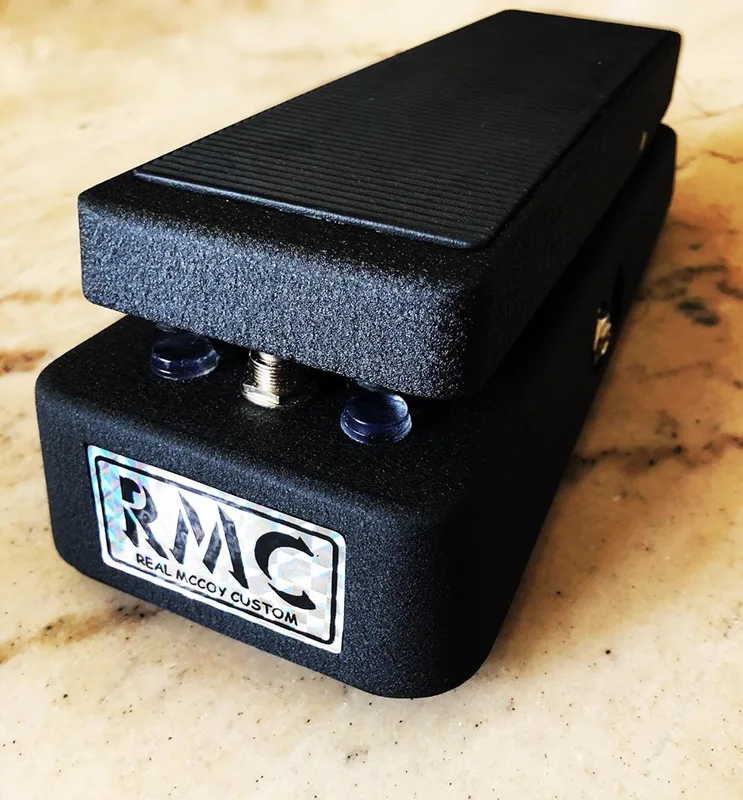
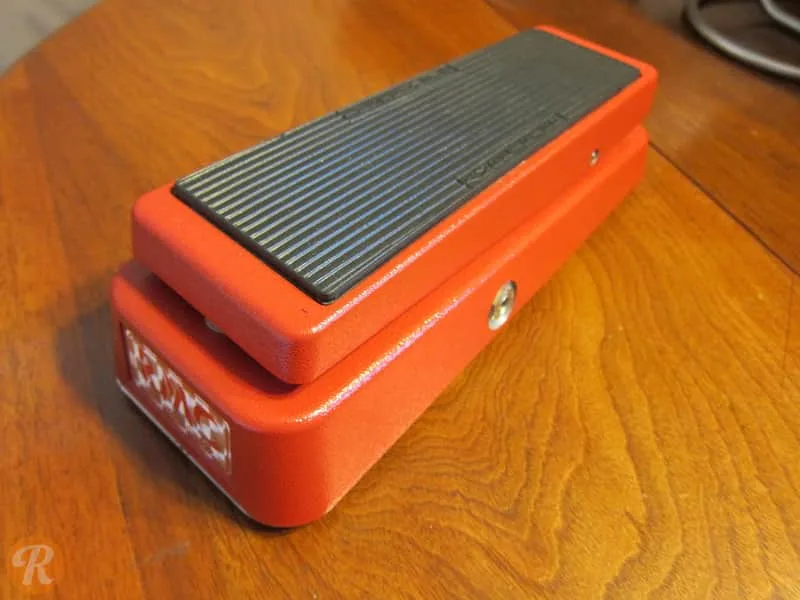
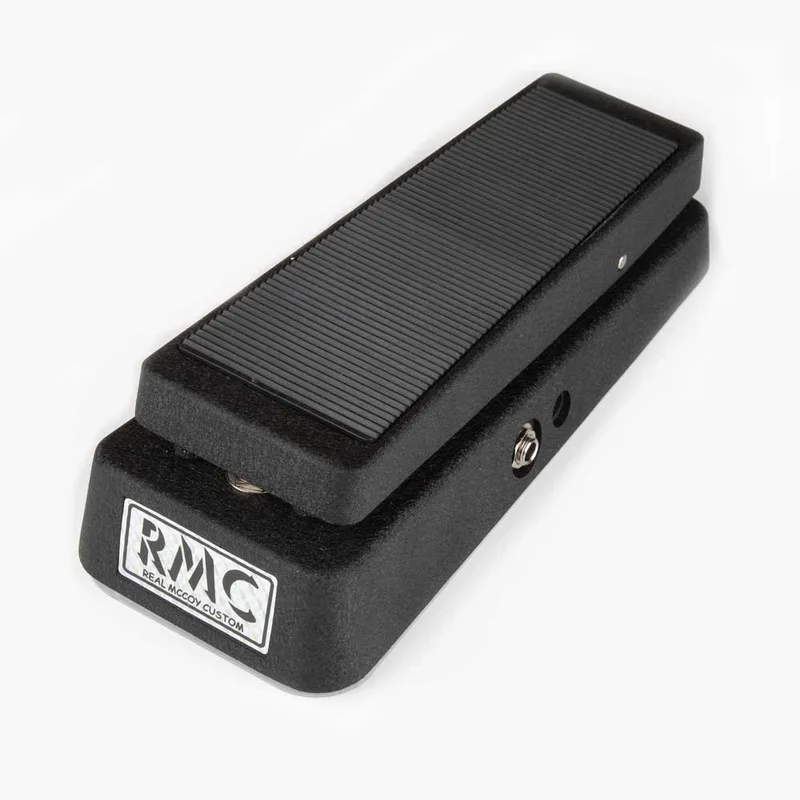
The Halo-style inductor has since appeared elsewhere in the wah market: Behringer's Real McCoy WahWah, an affordable model announced in 2026, uses a halo-style inductor and all-analog circuitry with true bypass6. Players comparing hand-built alternatives can also look at Geoffrey Teese's Real McCoy Custom line, including the RMC4 Picture Wah and the RMC5/Wizard Wah, which Vox's own naming echoes.
Power and connections
The Real McCoy is a battery-only pedal. Vox lists its power source as 9V dry cell batteries (6LF22/6LR61), sold separately, with a current draw of 540μA at 9V DC2. There is no AC adapter jack in the maker's specifications, which sets it apart from wahs like the Real McCoy Custom RMC10, which includes an adapter jack and runs at 10mA from a 2.1 center negative barrel connector7.
| Specification | Value |
|---|---|
| Power source | 9V dry cell batteries (6LF22/6LR61), sold separately2 |
| Current draw | 540μA (9V DC)2 |
| Battery life | Approx. 100 hours or more with alkaline batteries2 |
| Input | INPUT jack (monaural phone jack)4 |
| Output | OUTPUT jack (monaurate phone jack)4 |
| Dimensions | 102 x 252 x 80 mm (W x D x H)2 |
| Weight | 1300 g excluding batteries2 |
With no power supply jack, the Real McCoy cannot be run from a pedalboard power supply. At 540μA, an alkaline 9V battery lasts roughly 100 hours or more, so battery changes are infrequent, but players who power everything from one supply will need to plan around this pedal.
The Limited Edition chrome version
The Real McCoy is also available as a Limited Edition in a chrome finish4. Vox's product page for the Limited Edition lists the same 102 x 252 x 80 mm dimensions as the standard pedal, and like the standard version its enclosure was redesigned from 3D scans of vintage units to capture every curve and detail of the original4. Both the chrome Limited Edition and the standard Real McCoy were part of Vox's NAMM 2024 recreation of its first two production wah pedals8.
Where it came from
Videos
Premier Guitar
Guitar Center
JamesOnGuitar
Questions
Does the Vox Real McCoy Wah have a power supply jack?
No. The Real McCoy runs on 9V dry cell batteries (6LF22/6LR61), sold separately, and the maker lists no AC adapter jack among its connections. It draws 540μA at 9V DC, so it cannot be powered from a standard pedalboard power supply.
How long does a battery last in the Vox Real McCoy Wah?
Vox rates battery life at approximately 100 hours or more with alkaline batteries. With a current draw of 540μA at 9V DC, a single 9V cell lasts a long time by pedal standards, though the battery itself is sold separately.
How heavy is the Vox Real McCoy Wah?
The pedal weighs 1300 g excluding batteries, which is roughly 2.9 pounds. It measures 102 x 252 x 80 mm (width x depth x height), the same footprint Vox lists for the chrome Limited Edition.
Which Clyde McCoy wah is the Real McCoy based on?
It is based on a mint-condition original 1967 Clyde McCoy wah that Vox acquired and refers to internally as the Holy Grail. The company recreated that specific unit down to the component level, including the Halo inductor and BC109 transistors.
Sources (8)
- Xotic Wah XW-1 review, Guitar.com, 2016-09-05
- VOX Real McCoy Wah Pedal, Vox Amps (voxamps.com), 2025-09-30
- Vox V846 Vintage and Real McCoy Wah review, Guitar World, 2024-09-10
- VOX Real McCoy Limited Edition Wah Pedal, Vox Amps (voxamps.com), 2025-09-30
- Real McCoy Wah Limited VXVRM1LTD by VOX, RockBoard PedalPedia, 2026
- Behringer Real McCoy WahWah:Affordable '60s-Style Wah!, gearnews.com, 2026-07-20
- Real McCoy Wah RMC10, West Coast Pedalboard
- NAMM 2024: Vox unveils recreations of first-ever wah pedals that are built “as they were”, Guitar.com, 2024-01-23