| Type | Overdrive/distortion pedal6 |
| Maker | DOD Electronics, founded by David Oreste DiFrancesco1 |
| Original release | 1974, shortly after the MXR Distortion+9 |
| Circuit | Single 741 op-amp with clipping diodes3410 |
| Clipping | Silicon diodes in the gray version11 |
| Controls | Gain and Level12 |
| Power (reissue) | 9V DC, with a 9V battery option128 |
| Power (50th Anniversary and 250-X) | 9V, 12V or 18V, with more headroom at higher voltage13 |
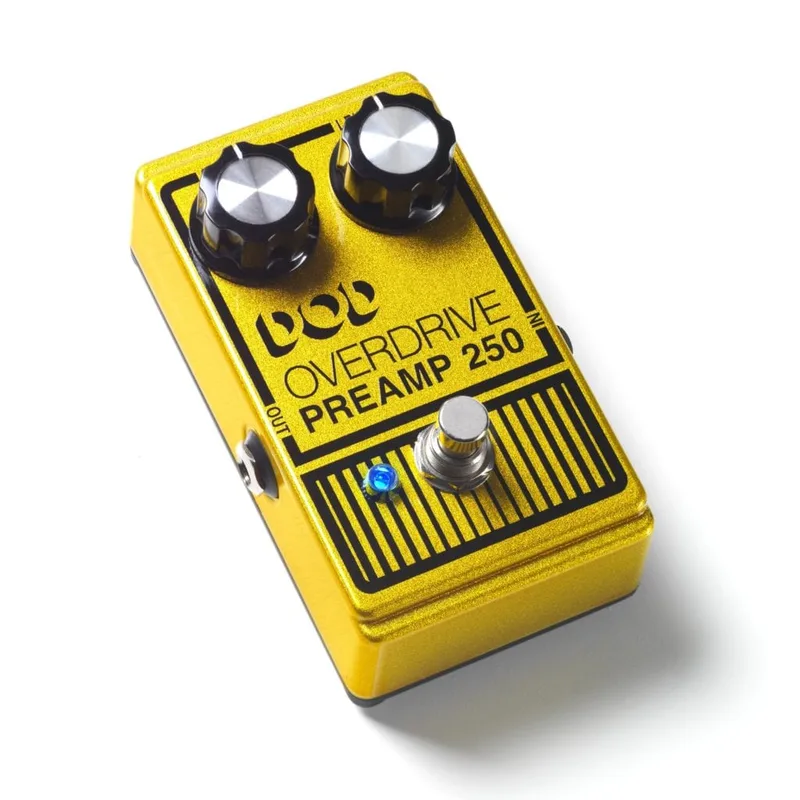
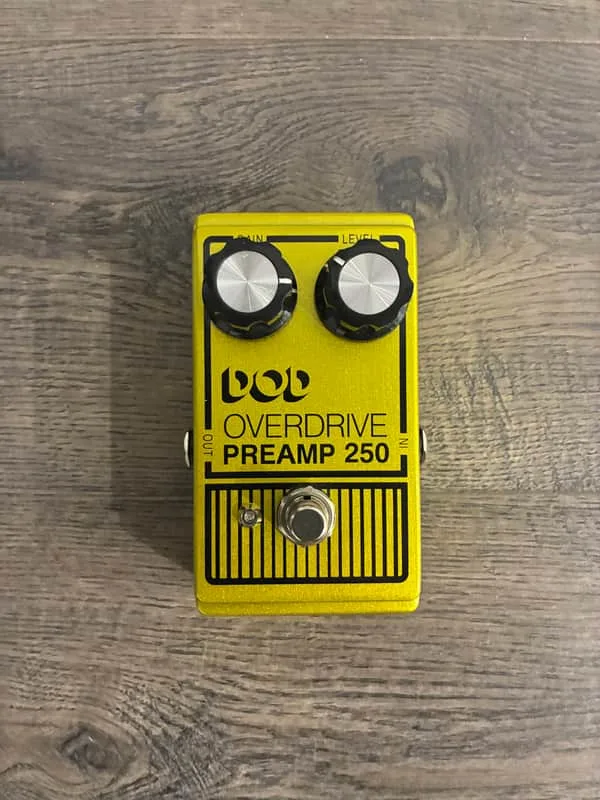
The DOD Overdrive Preamp 250 is a two-knob overdrive/distortion pedal first released in the early 1970s by circuit designer David Oreste DiFrancesco, the founder whose initials gave DOD its name12. Its circuit is one of the simplest and most copied distortion designs ever sold: a single 741 op-amp IC with a pair of clipping diodes, a circuit so close to the MXR Distortion+ that the two pedals are described as near-clones differing in only a few part values345. The original came in a gray painted box, later in a yellow box, and the design has been reissued several times, most recently in a 50th Anniversary Edition hand-built in the USA678.
For a player, the 250 sits in the territory between overdrive and distortion: the op-amp provides the gain, the diodes clip the signal, and two knobs, gain and level, set how hard it pushes and how loud it comes out. Guitar World's Alex Lynham notes the pedal was used by Yngwie Malmsteen, and the circuit's simplicity has made it a favorite of DIY builders for decades9.
Where the DOD 250 came from
The 250 was first released in the early '70s by David Oreste DiFrancesco, whose initials, DOD, became the company name1. The pedal appeared in two main vintage forms: an early version in a gray painted box and a later yellow box version, with part values varying between them over the years6. The gray box used a lighter aluminum housing than later DOD enclosures1.
The deepest look into the pedal's origins comes from JHS Pedals, which acquired an early unit known as the #75 "Big Box" DOD Overdrive/Preamp 250. The sticker on its backplate said "DOD Electronics Company" and listed the home address of founder David Oreste DiFrancesco, with the serial number 7514. The internals featured a floating, loose hand-etched PCB carrying the same DOD 250 circuit with a few changes, and the internal parts dated as early as 1972. According to David, those parts were harvested from old radios and electronics he scavenged when he started building his first effects14.
That #75 unit predates the gray box 250 pedals that most players had assumed were the first version. It was encased in a large gray folded metal enclosure that JHS describes as resembling Electro-Harmonix more than DOD, and it lacked the "250" model number14.
How it works: one 741 op-amp and clipping diodes
The 250's circuit is built around a single 741 op-amp in a configuration often described as a passive distortion circuit. Godlyke's description of the related Maxon OSD-9 notes that both it and the DOD 250 employ a passive distortion circuit based around the 741 op-amp3. The 741's limitations are part of the sound: General Guitar Gadgets points out that the distortion plays off the specs of the 741 itself6.
That point matters for anyone building or servicing the circuit. General Guitar Gadgets, whose DIY replica kit covers both the gray and yellow versions, is blunt about chip substitution67:
"It is highly recommended to stick with the 741."6
Pin-compatible single op-amps with better specs are available, but the 250's character depends on the 741's particular behavior, so a "better" chip changes the pedal6. The same kit notes a small build variation: some versions of the circuit include a 25pF capacitor at position C5 and some do not, and with a 741 IC it is probably not needed6.
The clipping itself comes from diodes placed in the op-amp's feedback path, a standard arrangement in this family of circuits. The gray DOD 250 used silicon diodes in its distortion block, a change from the MXR Distortion+ that preceded it9.
Close kin to the MXR Distortion+
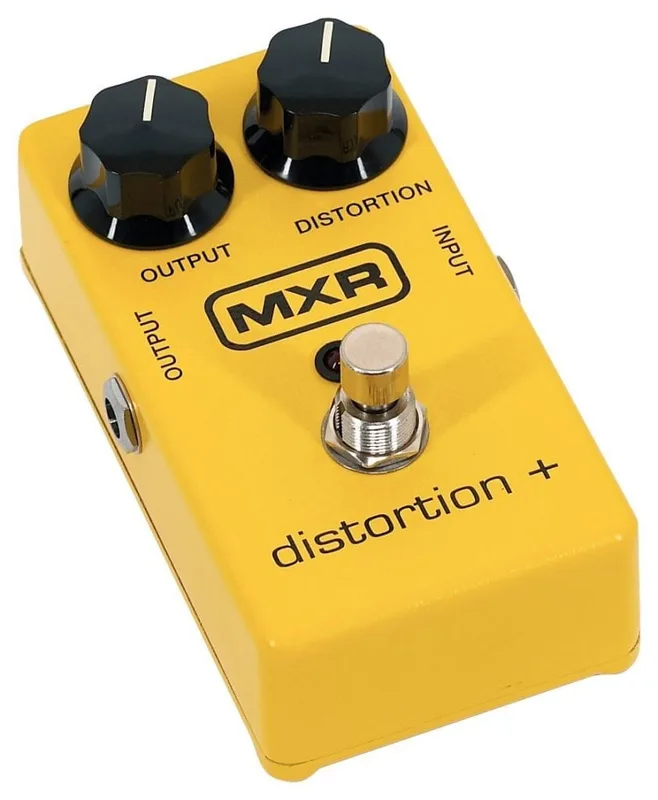
The DOD 250's closest relative is the MXR Distortion+. The original 250 came out in 1974, shortly after the Distortion+, and Guitar World's review of the 250-X describes the relationship plainly71115:
"A near-clone, the key differences were component value changes and a switch to silicon diodes for the distortion block."9
General Guitar Gadgets, which sells DIY kits for both pedals, puts it in build terms: the same circuit board can be used for the MXR Distortion Plus, the DOD 250 Overdrive, the '77 Gray DOD 250 Overdrive and the Ross Distortion, with the circuits almost identical and differing in only a few part values6. The MXR Distortion+ is strikingly similar to the DOD Overdrive 250, and part values varied over the years for both pedals7.
The family extends further than the obvious pair:
| Pedal or project | Relationship to the DOD 250 |
|---|---|
| MXR Distortion+ | Near-identical circuit, different part values and diodes69 |
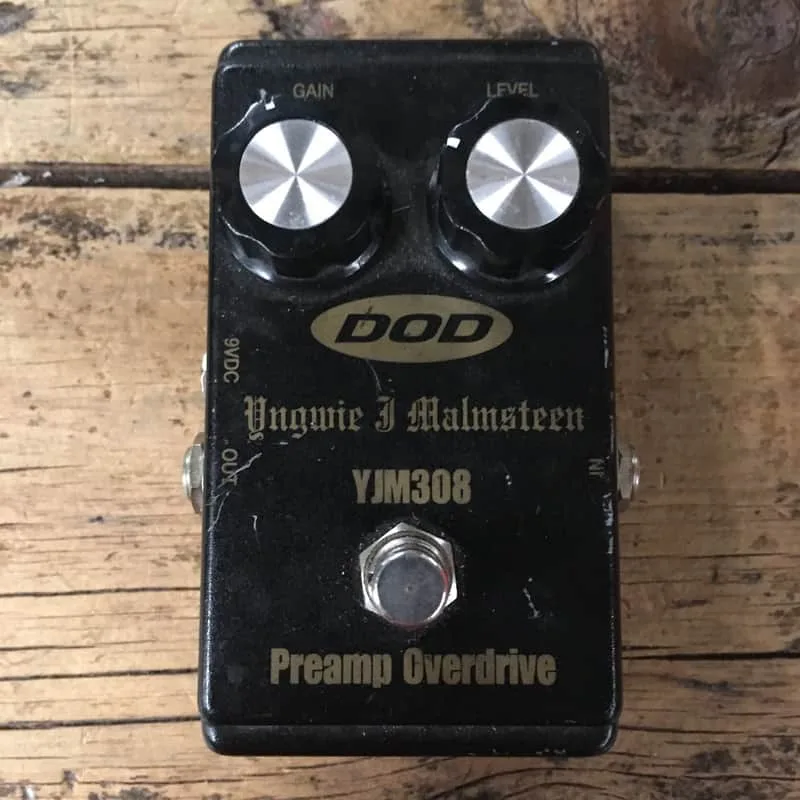
| DOD YJM308 | Same circuit board as the yellow 250 reissue, a few different component values4 |
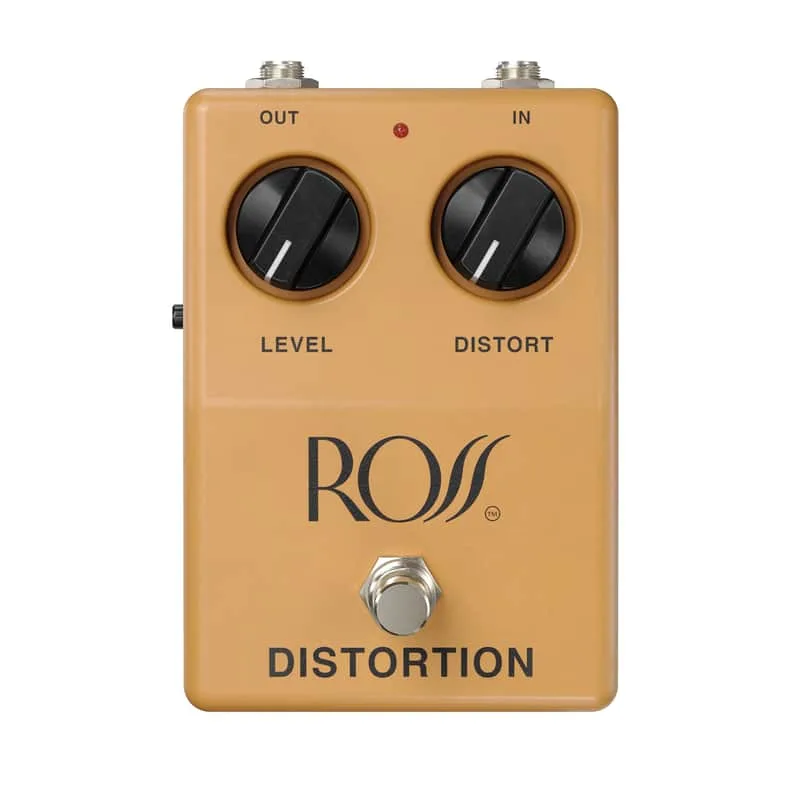
| Ross Distortion | Same circuit board family, differing in a few part values6 |
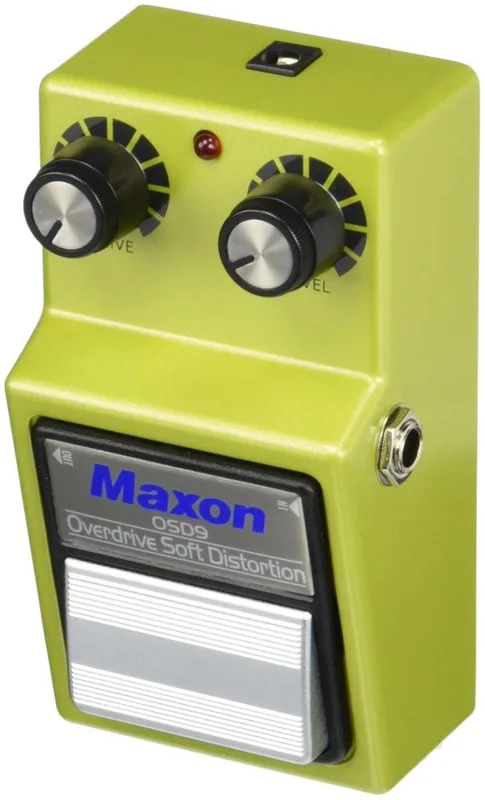
| Maxon OSD-9 | Passive distortion circuit around the same 741 op-amp3 |
| Pete Cornish BD-1 | First half adapted from the Distortion+ with a few value changes16 |
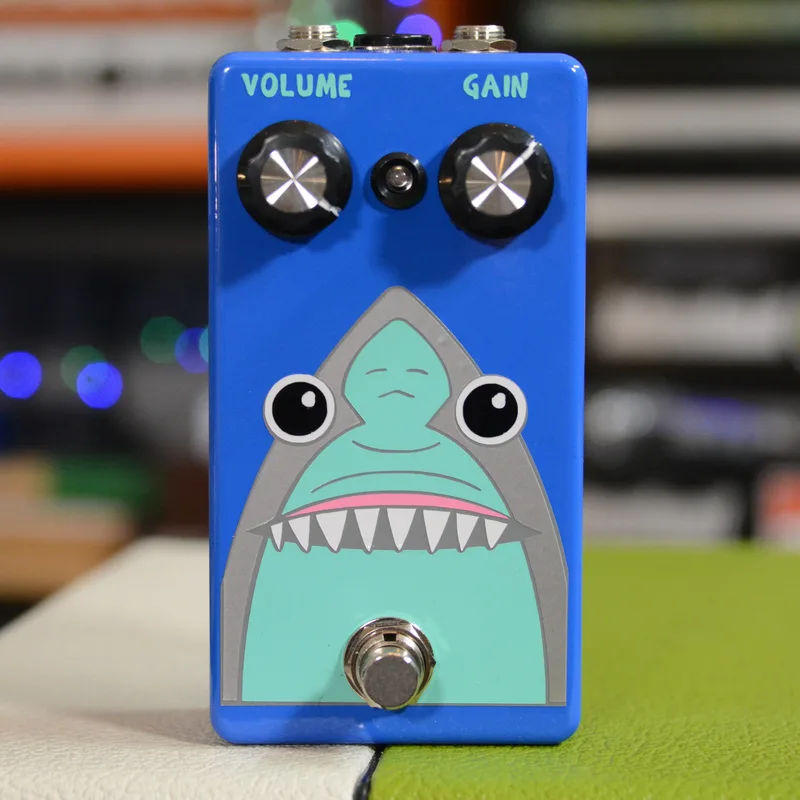
| GUP Tech Shark+ | A take on the MXR Distortion+, DOD 250 and MXR Micro Amp17 |
The Pete Cornish connection is worth noting for players who trace lineages: Aion FX describes the Cornish BD-1's first half as adapted from the Distortion+ with a few value changes, which also makes it substantially similar to the Cornish SS-2 and SS-316. Since the Distortion+ and 250 are themselves near-identical, the 250's circuit sits at the root of a wide family of overdrives.
Versions: the Big Box prototype, the gray box, the reissue and the 250-X
The 250's history breaks into several distinct versions.
The Big Box prototype. The #75 unit described above, with its hand-etched PCB and 1972-dated parts, predates everything players normally think of as a DOD 25014. JHS also acquired a second early big-box unit while researching the #75, which used a completely different clipping arrangement14.
The gray box. The early production version, in a gray painted box with a lighter aluminum housing, is the version most often referenced when builders talk about "the original"16. Its silicon diodes and 0.001uF input cap are the stock reference point for mods94.
The yellow box and the reissue. The later yellow box version carried the same circuit with different part values6. When DOD returned to production under DigiTech, the updated version maintained what DigiTech called "the classic tone and spirit of the vintage gray LM741 250," with the LM741 op-amp just like the original and a modern 9V DC power supply input, but with more output on tap118. The yellow reissue uses the same circuit board as the YJM308 with a few different component values4.
Analog Man, who modded the earlier yellow reissue using the original DOD factory schematics from the 1970s and three gray DOD pedals for reference, reports that those moddable reissues were discontinued and replaced by surface-mounted, robot-built circuitry that cannot be modded4.
The 50th Anniversary Edition. Hand-built in the USA using the authentic design of the original 1974 pedal, this version is equipped with a socketed LM741 op-amp and through-hole components for easier modding, just as the original 250s were known for8. It runs on a 9V alkaline battery or a power supply, and can operate at 9V, 12V or 18V813.
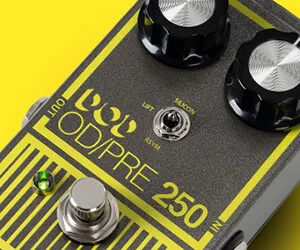
The 250-X. The newest version, made by DOD, is based on the original 250 circuit and adds an ASYM mode using an asymmetrical clipping circuit913.
The #75 unit and the JHS Overdrive Preamp
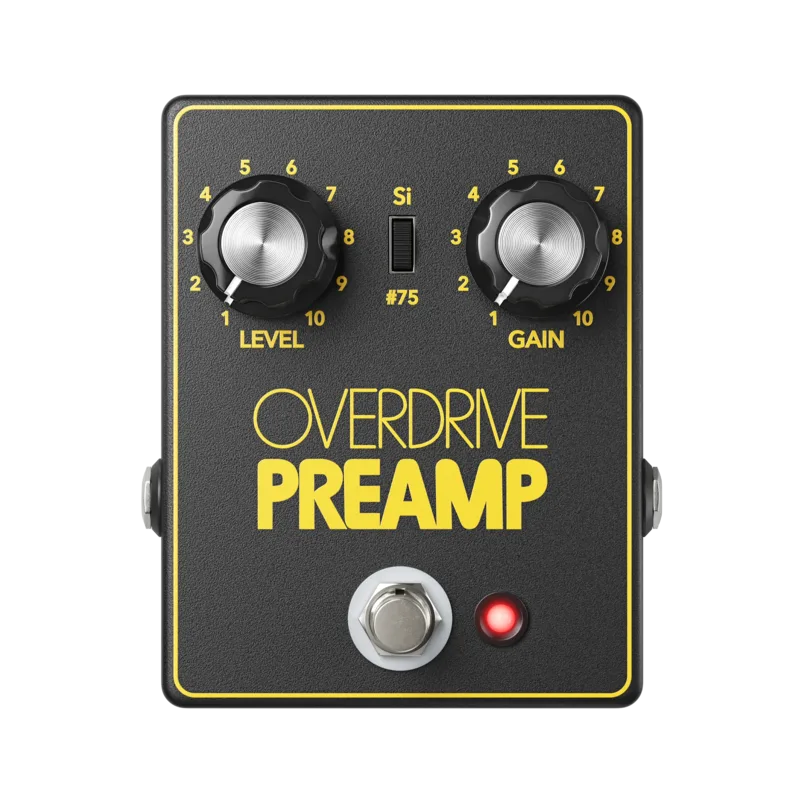
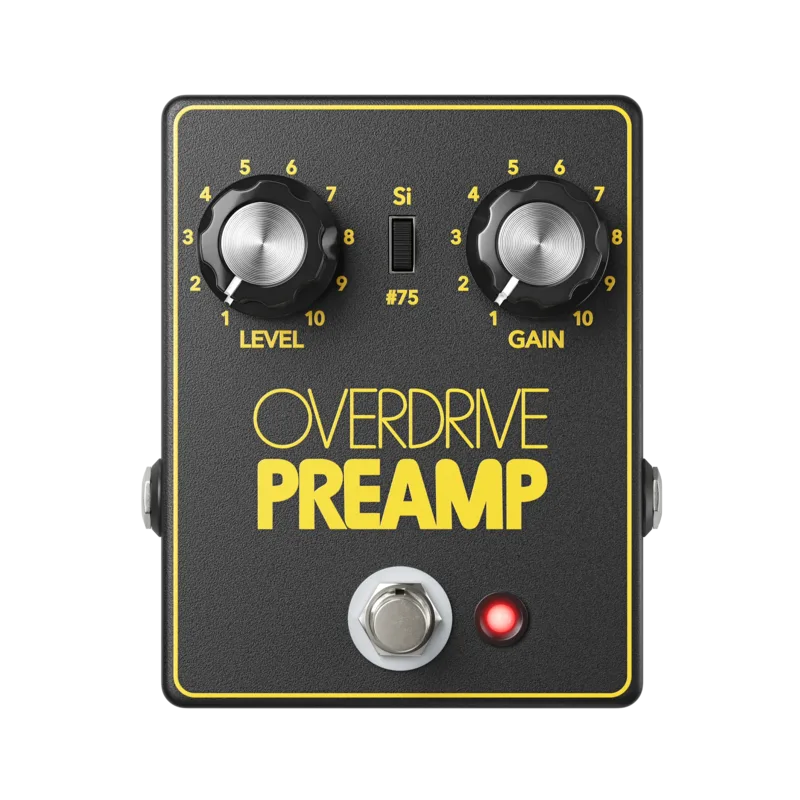
The #75 Big Box unit never went into production as such, which makes it, in JHS's words, an unobtainable version of DOD's most loved pedal. JHS released the Overdrive Preamp in 2022 as a faithful replication of that V1 circuit1419. The JHS version adds a slider switch that was not included with the original DOD 250, offering two clipping variations taken from the two early big-box units JHS examined: the Ge (down) position recreates the V1 #75 unit1420. JHS also modified, or in their words corrected, the level control wiring from the original #75 unit, giving the production pedal much more volume on tap20.
The 250's circuit has also made it into digital form: the HeadRush D250 Drive stompbox model is based on the DOD Overdrive Preamp 25021.
Pedals based on the 250
Beyond JHS, a range of makers sell pedals or kits built on the 250 circuit222324:
- Jeds Peds Two Fifty: a DIY kit that compares to the DOD 25022
- Griffin Effects YJM250 Plus PCB: a DIY PCB based on the DOD 250 Overdrive that can also be built as the DOD YJM308 or the MXR Distortion+23
- GUP Tech Shark+ and Shark+ Douche: takes on the old MXR Distortion+, DOD 250 and MXR Micro Amp17
- GUPtech Lab Series #19: a DOD 250 distortion clone, built with silicon diodes to match the spec of the gray DOD 25025
- Mosky LM741 Preamp: based on the DOD 250, DOD YJM308 and MXR Distortion+ circuit26
- GuitarPCB Emexar: a DIY board that can be built as either the MXR Distortion+ or the DOD 25027
- Madbean Pedals Degenerator24: a madbeanpedals original design in the same family28
DIY layouts and replica builds
General Guitar Gadgets has sold a replica kit covering both the gray and yellow versions, with a bill of materials versioned 2012January30 and copyright 2009 JD Sleep6. The kit's documentation notes that some versions have a C5 25pF capacitor and some don't, and that with a 741 IC it is probably not needed6.
For players who want to modify an existing reissue rather than build from scratch, Analog Man's mod work is a well documented reference. Using the original DOD factory schematics from the 1970s and three gray DOD pedals for reference, components were physically removed and substituted to identically match the original specs of the gray pedals4.
The most commonly cited mod is the input capacitor:
"Changing the stock 0.001uf input cap to 0.01uf improves low end and exactly matches original gray circuit design."4
=== 42 === The 250's release around 1974 places it alongside the MXR Distortion+ and other early distortion pedals of that era29. The 250-X carries the circuit forward with its ASYM mode asymmetrical clipping circuit13. Josh Scott of MusicRadar called the 250 "one of the greatest pedals ever made"30. ===
In other words, the yellow reissue's stock 0.001uF input cap can be swapped for 0.01uF to recover low end and return the circuit to the gray box's original design value4.
What reviewers said
Guitar World's Alex Lynham reviewed the 250-X and framed the pedal's whole history in the review, noting the 1974 release date, the near-clone relationship to the Distortion+, the silicon diode switch, and Yngwie Malmsteen's use of the original9. DigiTech's video review by Ryan "Fluff" Bruce covered the reissue, describing its standard 9V operation for the pedalboard12. Delicious Audio's coverage of the reissue highlighted the vintage-correct LM741 op-amp, "just like back in the '70's," and the extra output the updated version offers over the original1.
Pedals on this page
News
Questions
What is the difference between the DOD 250 and the MXR Distortion+?
The two circuits are almost identical, differing in only a few part values. The DOD 250 came out in 1974, shortly after the MXR Distortion+, and is described as a near-clone with component value changes and a switch to silicon diodes in the distortion block. The same DIY circuit board can be used to build the MXR Distortion+, the DOD 250 Overdrive, the '77 Gray DOD 250 and the Ross Distortion.
Does the DOD 250 use silicon or germanium diodes?
The gray DOD 250 used silicon clipping diodes, which is one of the key differences from the earlier MXR Distortion+. GUPtech's Lab Series #19 clone of the gray DOD 250 uses silicon diodes specifically to match the original spec. The JHS Overdrive Preamp Yellow adds a slider switch with two clipping variations, one of which recreates the early #75 unit.
Which op-amp is in the DOD 250 reissue?
The reissue uses the LM741 op-amp, the same chip as the original 1970s gray units. The 50th Anniversary Edition takes this further with a socketed LM741 and through-hole components for easier modding. General Guitar Gadgets recommends sticking with the 741 in DIY builds, because the distortion plays off the specs of that particular chip.
Who famously used the DOD 250?
Yngwie Malmsteen is the best known player associated with the DOD 250, as noted in Guitar World's review of the 250-X. DOD also made a YJM308 variant sharing the same circuit board as the yellow 250 reissue with a few different component values.
What does changing the DOD 250 input cap to 0.01uF do?
The stock input cap is 0.001uF. Analog Man reports that changing it to 0.01uF improves the low end and exactly matches the input cap of the original gray circuit design. It is one of the most common mods performed on 250 circuits.
What is the DOD 250 Yellow Spiral?
The Yellow Spiral is the yellow-box reissue of the DOD 250. Analog Man notes that it uses the same circuit board as the YJM308 with a few different component values, and that the earlier moddable version has been discontinued in favor of surface-mounted circuitry that cannot be modded.
Does the DOD 250 run on 9V DC?
Yes. The reissue runs on a standard 9V supply, and the 50th Anniversary and 250-X versions can operate at 9V, 12V or 18V, with more headroom as the voltage increases. The 250-X also takes a 9V battery and draws about 7mA.
Sources (30)
- DOD 250 Overdrive Preamp, Delicious Audio, 2025-02-21
- HOW MXR PEDALS BECAME LEGENDARY, JHS Pedals
- OVERDRIVE-SOFT DISTORTION (OSD-9), Godlyke Distributing, Inc.
- DOD OD-250 and YJM-308 overdrive pedal mods, aNaLoG.MaN (analogman.com), 2021
- DOD Overdrive Preamp 250 review, Guitar World, 2023-06-14
- DOD™ 250™ Overdrive Clone: DIY Kit, PCB & Schematic, General Guitar Gadgets, 2014-05-12
- MXR™ Distortion+™ Clone: DIY Kit, PCB & Schematic, General Guitar Gadgets, 2014-05-12
- Overdrive Preamp 250 50th Anniversary, DigiTech, 2026-01-02
- DOD Overdrive Preamp 250-X review, Guitar World, 2025-12-16
- DOD OD250-X, Vintage Guitar magazine, 2026-08-20
- MXR Distortion+ & DOD OD Preamp 250, That Pedal Show, 2025-02-21
- DOD Overdrive Preamp 250 Review by Ryan ‘Fluff’ Bruce, DigiTech, 2023-10-04
- NEW Product Spotlight: Overdrive Preamp 250-X, DigiTech, 2025-09-25
- OVERDRIVE PREAMP YELLOW, JHS Pedals
- Guitar Pedal X - GPX Blog - Holy Island Audio's Angel Teeth is a fantastic sounding, massively evolved DOD250 Distortion with Extra Clipping Options, Upper Octave and Fuzz!, Guitar Pedal X
- Perseid Bass Drive / Cornish BD-1, Aion FX, 2026-07-03
- Shark +, GUP Tech (guptech.ca)
- Announcing the 'Comeback' of the DOD Pedals, DigiTech, 2023-02-10
- JHS Pedals Overdrive Preamp based on a pedal that never existed, gearnews.com, 2022-02-26
- OVERDRIVE PREAMP, JHS Pedals
- HeadRush D250 Drive, HeadRush (revalver.headrushfx.com), 2026
- Two Fifty, Jeds Peds
- YJM250 Plus PCB, Griffin Effects
- Supercool Pedals The Cutback Preamp-Style Distortion - Pedal of the Day, Pedal of the Day, 2025-11-05
- Lab Series #19, GUPtech (guptech.ca)
- LM741 PREAMP_M-SERIES_Products_mosky pedal, moskyaudio.com
- Emexar New v4, GuitarPCB
- Degenerator24.pdf, madbeanpedals.com, 2024-11-20
- HISTORY OF DISTORTION PART 2, JHS Pedals
- “Surely the most versatile version yet, putting different flavours of gourmet crunch on the menu”: DOD 250 Overdrive/Preamp 50th Anniversary review, MusicRadar, 2025-02-04