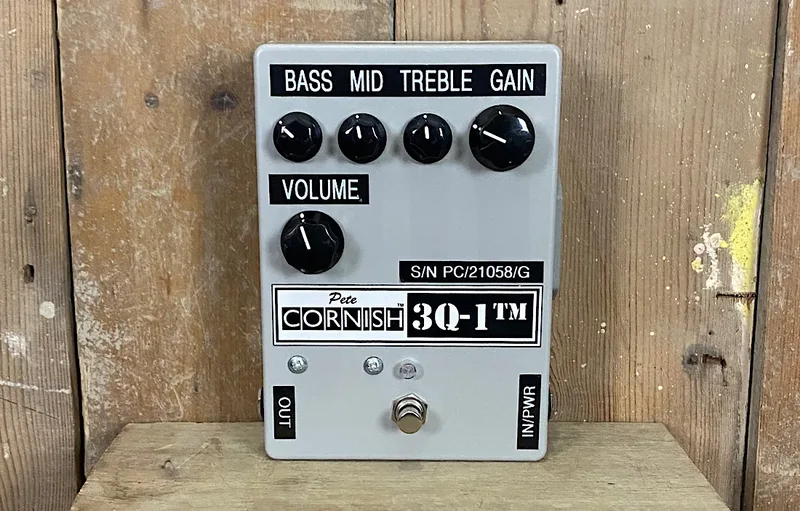
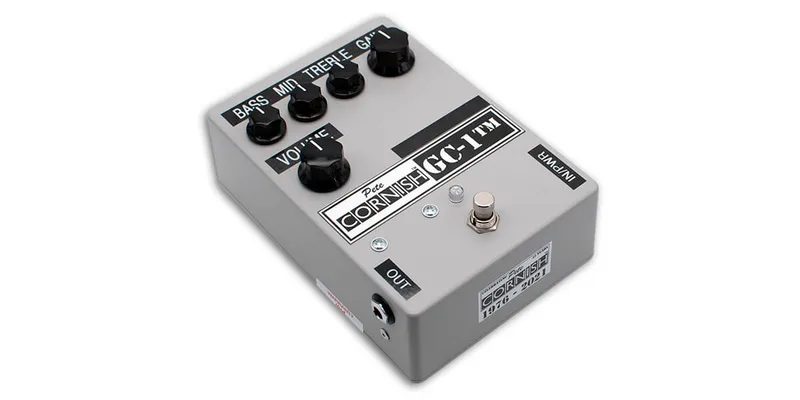
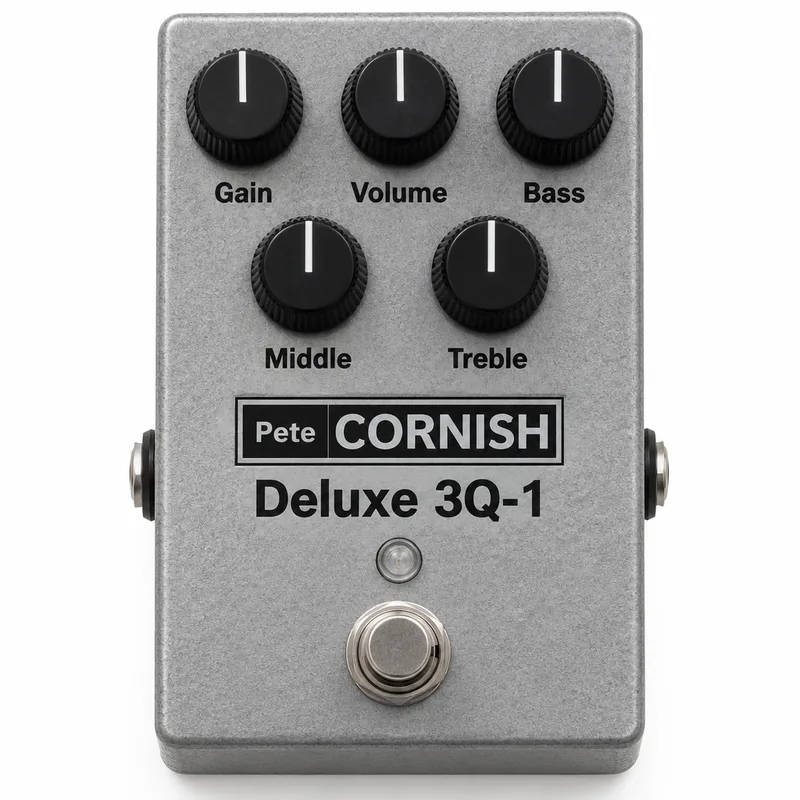
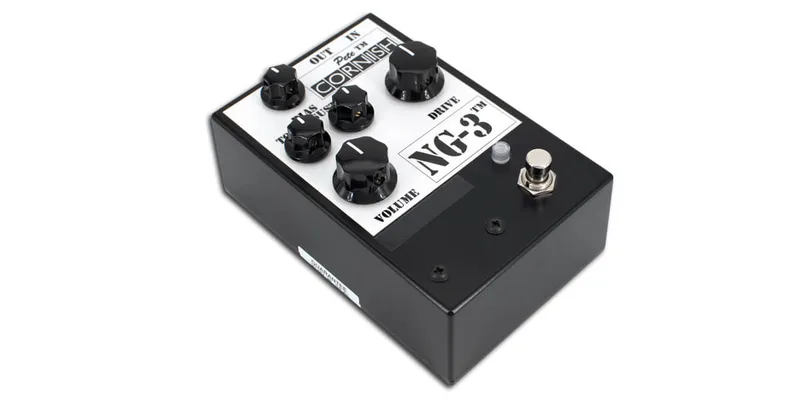
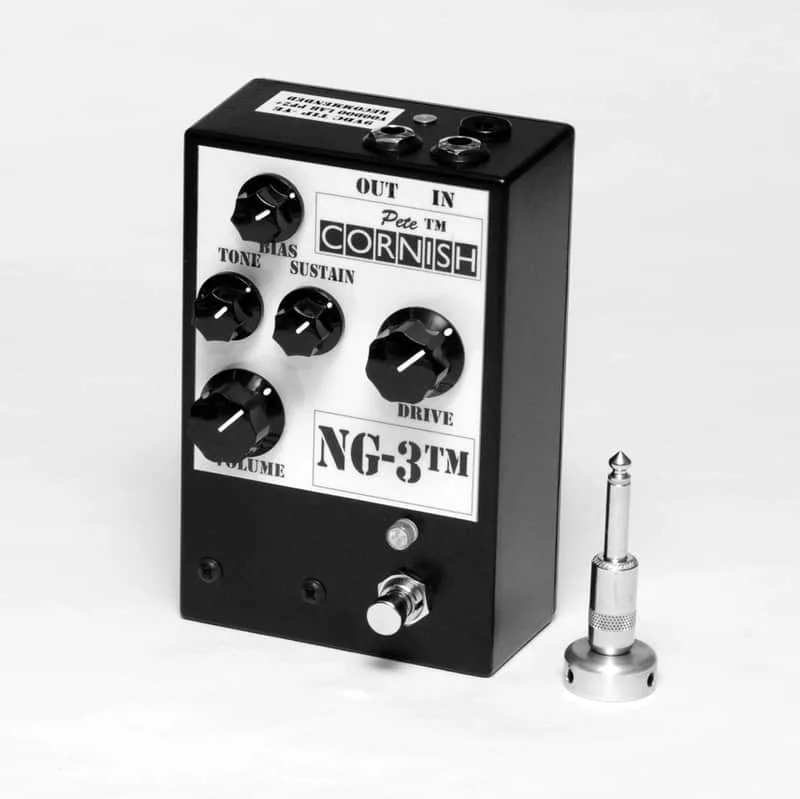
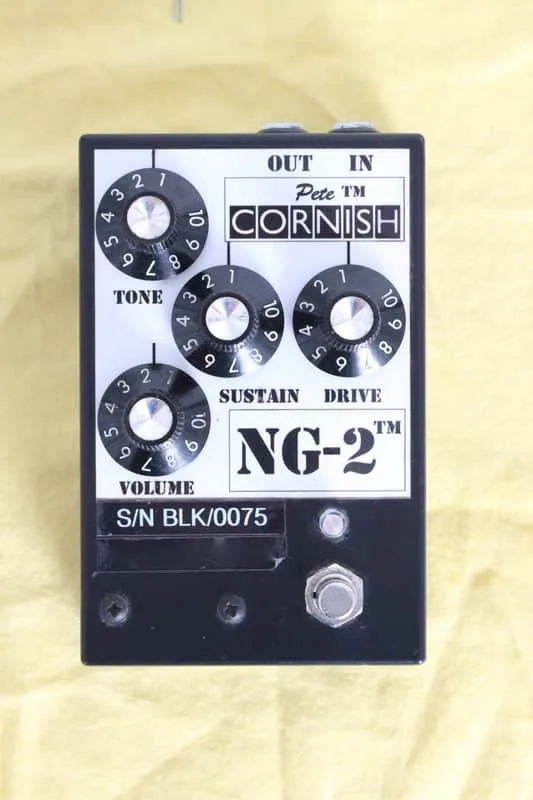
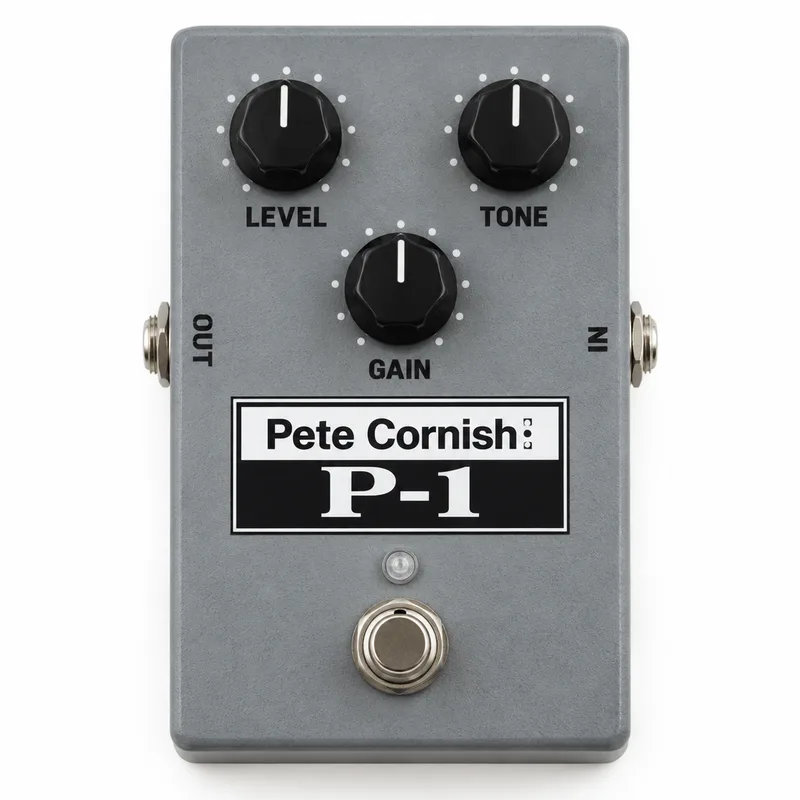
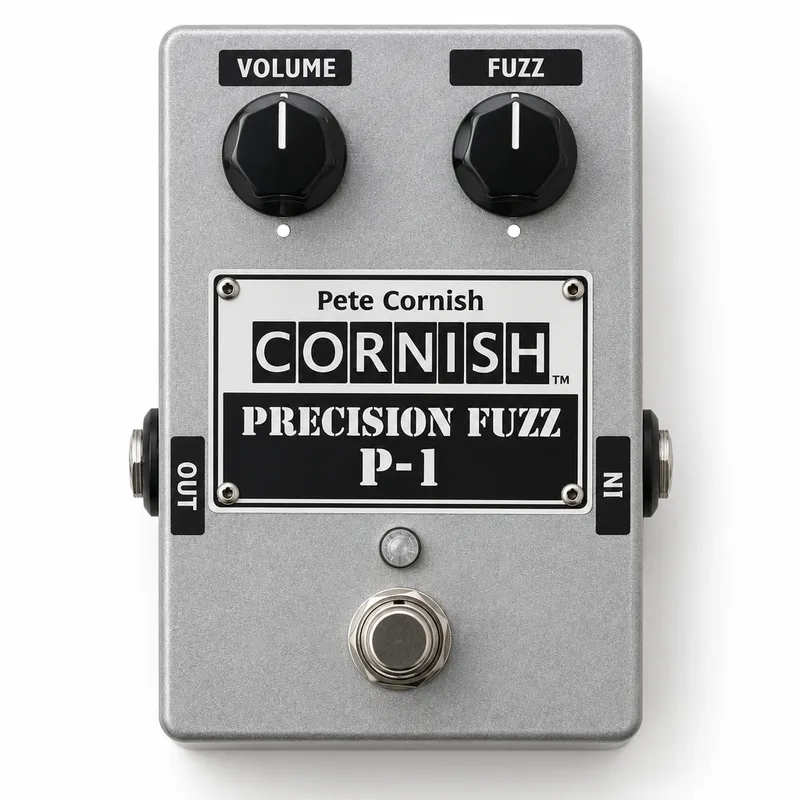
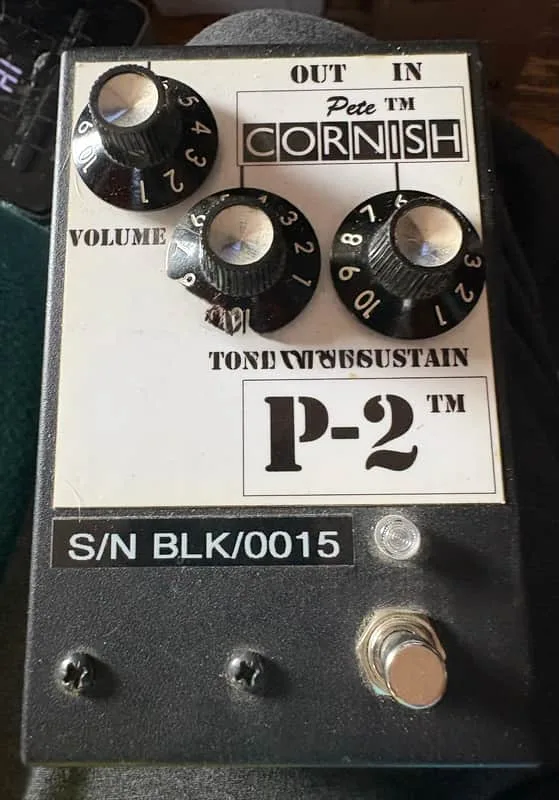
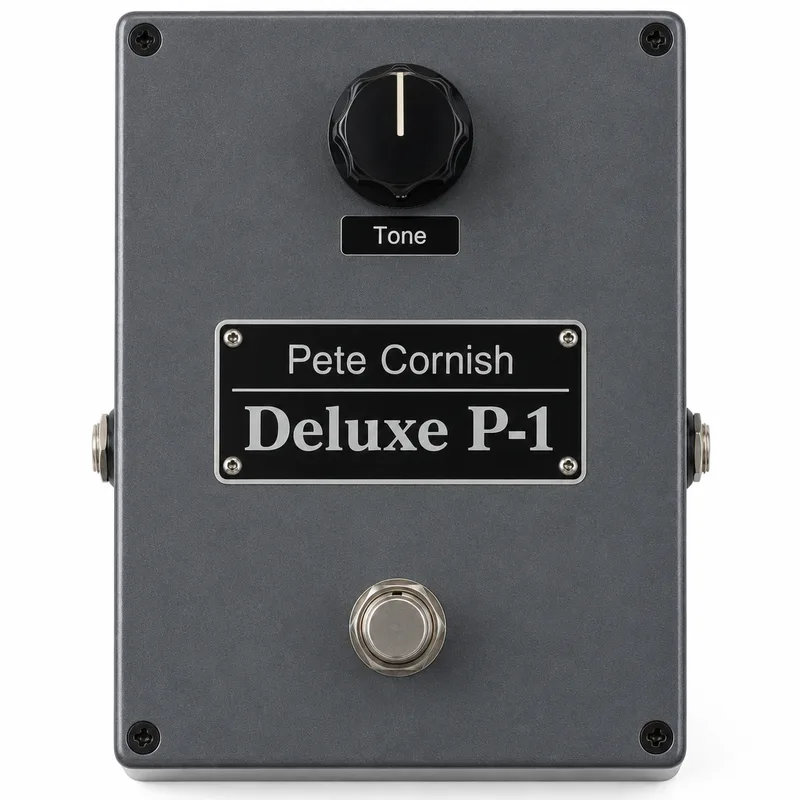
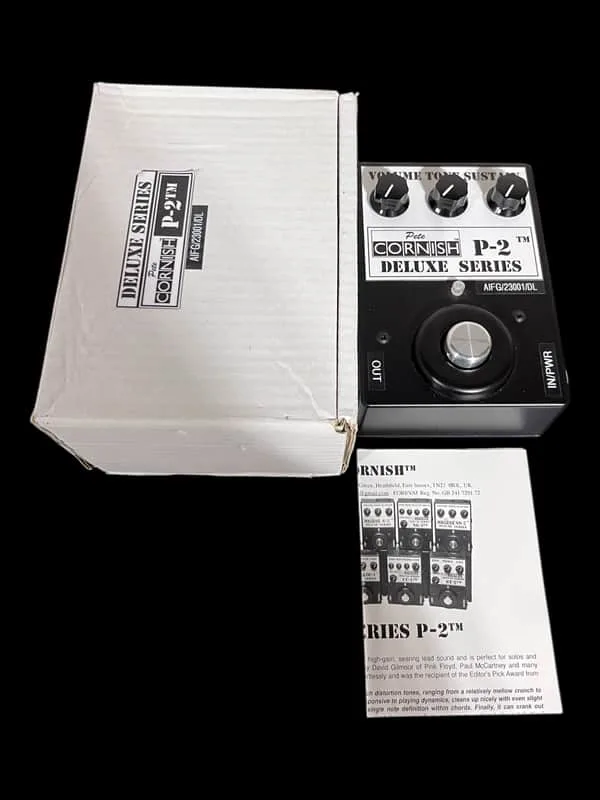
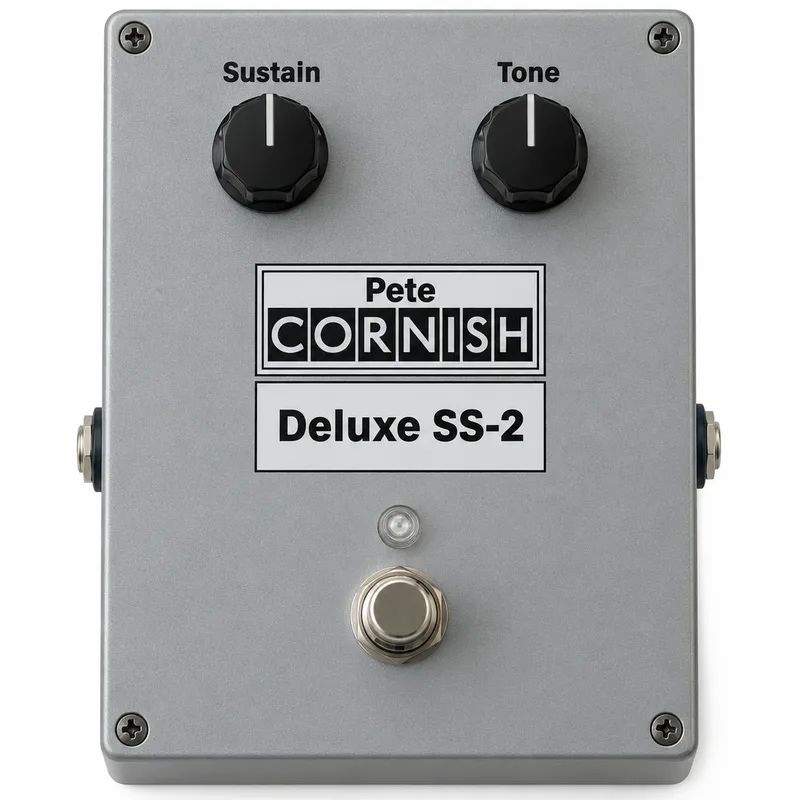
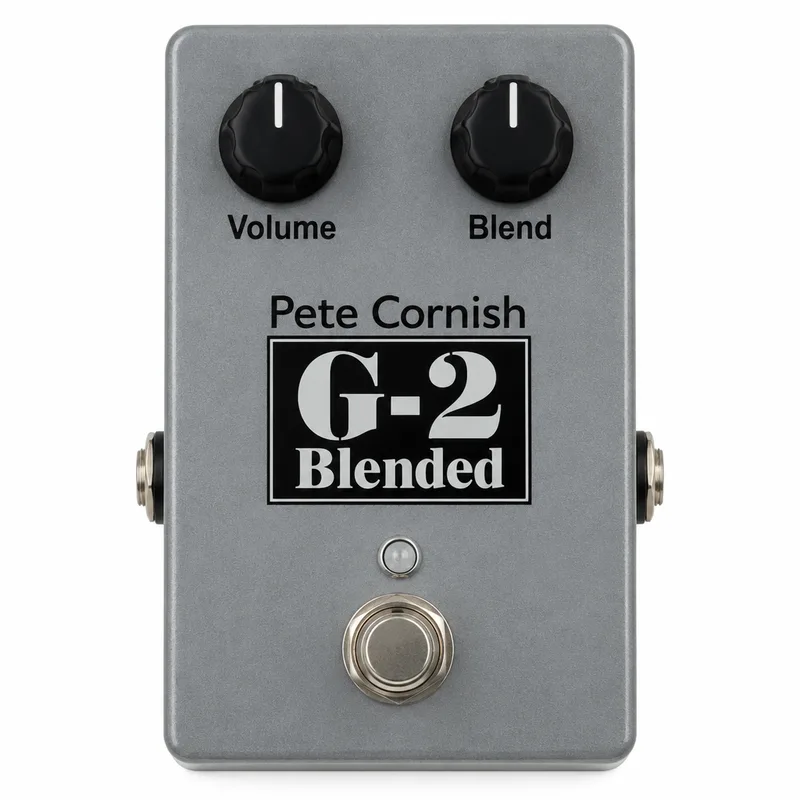
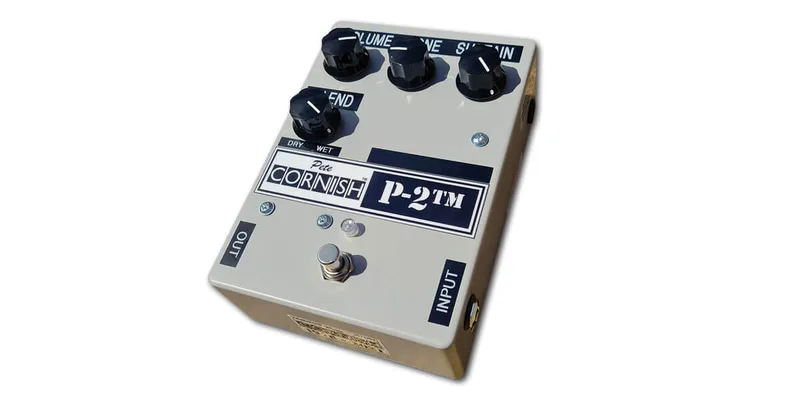
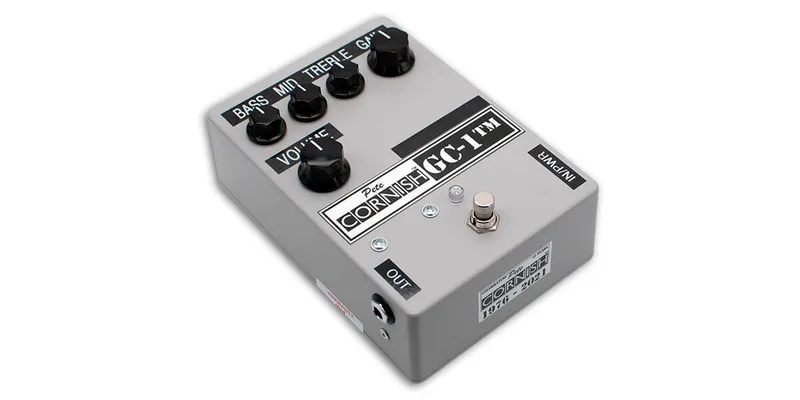
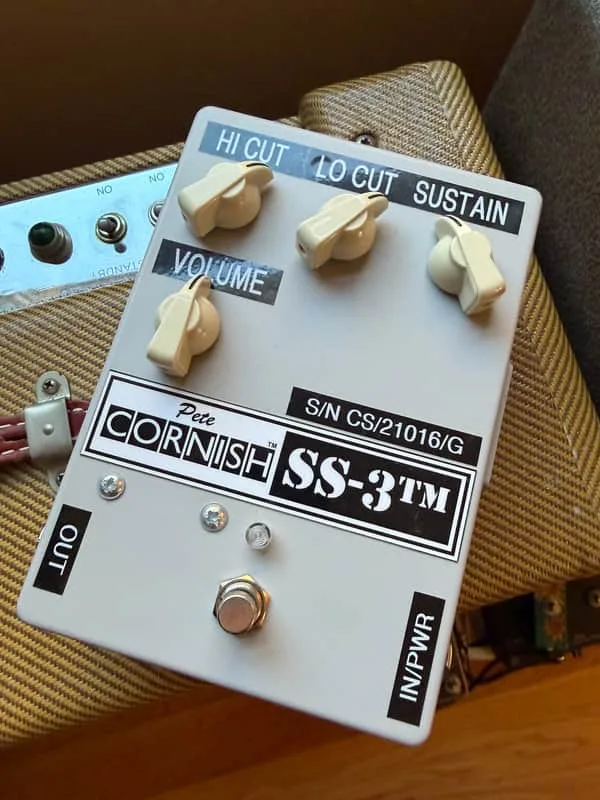
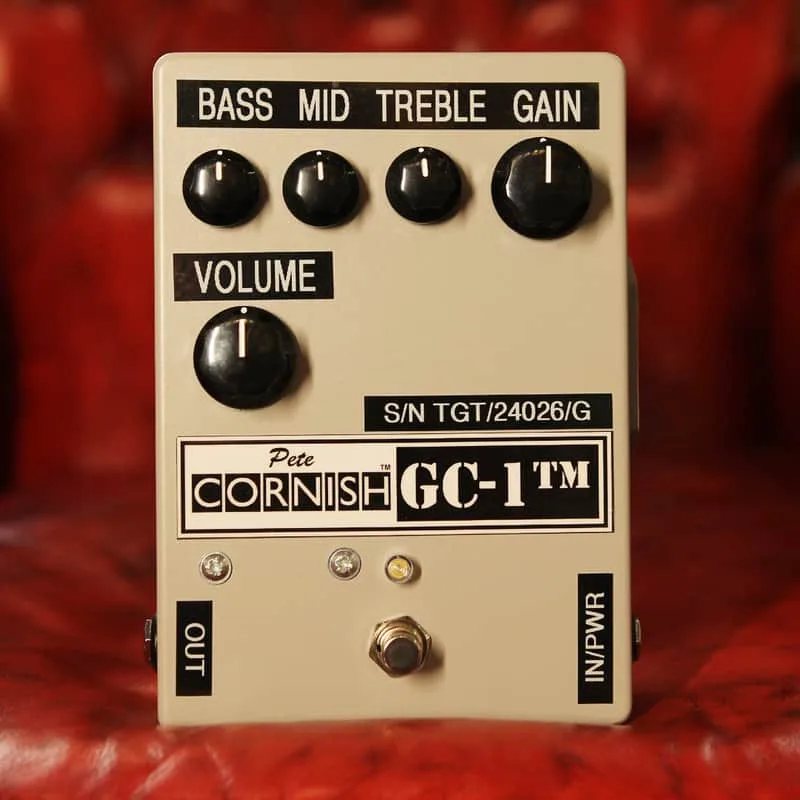
The name carries weight among touring players. Q Magazine described the business as the destination "when the biggest (and necessarily, the most loaded) names in rock need their effects pedals rationalizing, their voltage [stabilized]"2. David Gilmour's All Tube Effects Stage System was custom designed and built by Pete Cornish, and the P-2 pedal is used prominently by both Gilmour and Paul McCartney3.
From Practical Wireless to Sound City: how Pete Cornish started
Cornish discovered electronics young. Q Magazine tells it: laid low by tonsillitis at age eight with nothing to read but a copy of Practical Wireless magazine, he found his vocation2. At 16 he secured an apprenticeship with the Ministry of Aviation, one of only 16 places available in the country, where he inspected and evaluated military equipment and developed what Q called "a mania for high-quality wiring"72.
His training included an electronics course with the Air Ministry and a three-year technical apprenticeship at Aquila in Chiselhurst, started in 1960, making and repairing valve radios8. He then worked in Bromley electronics firms and the planning department of relay makers before drifting up town to Sound City in London's West End, where he became Service Manager to the group of shops, part of the Dallas-Arbiter Group78.
The pedalboard business began there. As Cornish recalled in a 1979 interview: "One day Peter Banks came in and said would I make him a pedal board"8. Q Magazine identifies the client as Peter Banks of Flash, and later Yes2. By about 1979 the company had standardized the CryBaby body for pedal controllers, which Cornish said looked good and were very well built9.
Custom pedalboard and rack systems
The core service has stayed the same since the 1970s. As a 1979 profile in Musicians Only put it, Cornish takes a player's effects out of their own cases and puts them all under one roof, connects them to one power point, and makes sure they don't fall apart810. Q Magazine described the method: the company receives a boxful of the artist's favorite effects pedals, guts them, modifies the wiring for improved reliability and guitar signal integrity, and conceals them in a single sturdy wooden box with size 11-friendly buttons replacing the original units' flimsy switches2.
Every item of Pete Cornish equipment is individually designed and built to the customer's specific requirements7. All the boards are one-offs, and Cornish, a keen photographer, snaps each one before it goes out8. In 1979, Andy Summers of the Police had one, as did Steve Hackett, whose board's lights were visible from the audience at a Genesis gig8.
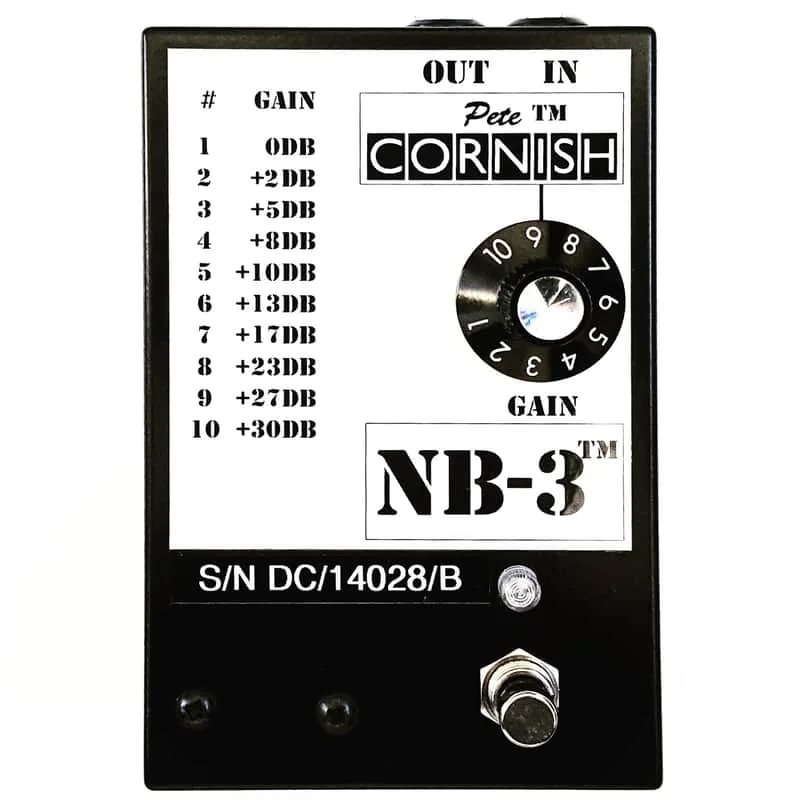
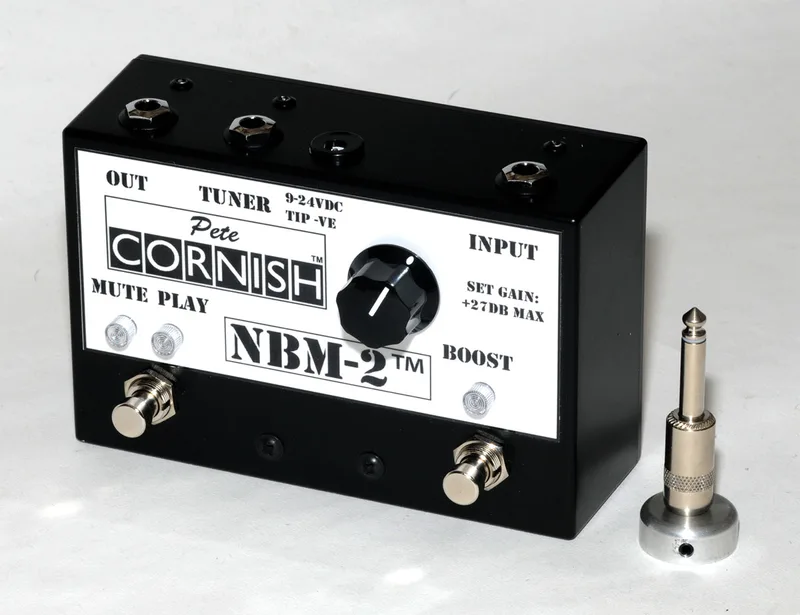
Several stand-alone pedals in the current range began as parts of these systems. The NB-3 and the NBM-2 were both originally designed as integral parts of each Pete Cornish Custom Pedalboard and Rack System1112.
How a Cornish board is built: relays, regulated supplies and floating outputs
The construction details come from Cornish himself, in the 1979 Musicians Only interview8:
- Switching: by reliable relay, not solid state.
- Power: each effect gets its own regulated supply, with voltages varying between 15, 12 and 18 volts, some with positive earths.
- Hum prevention: all outputs are floating and earthed at only one end, to prevent hum loops; the case covering, which Cornish called his own secret, also prevents hum.
- Mechanical: any component bigger than a capacitor is held down, circuit boards are screwed to the wood with the biggest screws that fit, wires are fastened to the casing every other inch, and the toughest marine ply is used.
- Indicator lights: 28 volt filament bulbs rather than low-power LEDs, which are not bright enough under a fierce light show.
- Layout: effects are split into footswitch, controls and circuit; switches sit at the front circled by wooden rings, pots sit on etched aluminum sunk in wells, and the circuit sits at the back.
On bypass, the company's position is clear from its product pages: all pedals except the Vintage TBs include internal Buffer/Line Drivers13, and the Play/Mute switch is suitable at the output of other buffered pedals but may not be suitable with true bypass or unbuffered pedals, a use the company does not recommend14. The Deluxe P-2 allows extended cable runs in bypass mode15.
Solid State and All Tube effects systems
Today the company offers two systems, each offering Pete Cornish craftsmanship1. The Solid State effects board system works by completely isolating each pedal from its neighbor, which the company says eliminates the tone and volume losses associated with multiple pedal setups1. The All Tube Effects Stage System was custom designed and built for David Gilmour, who uses the P-1 prominently in it3.
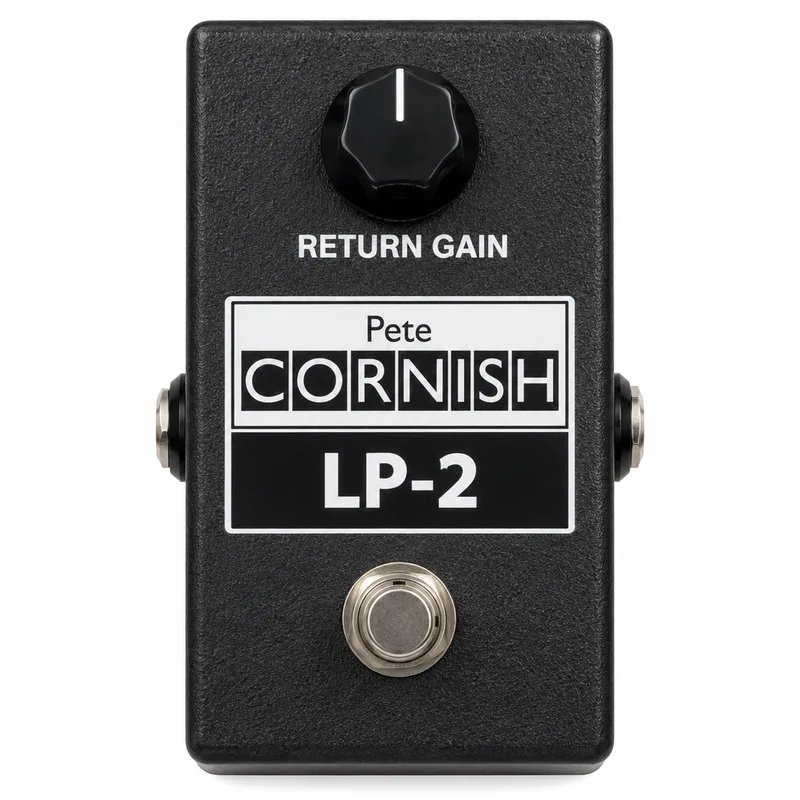
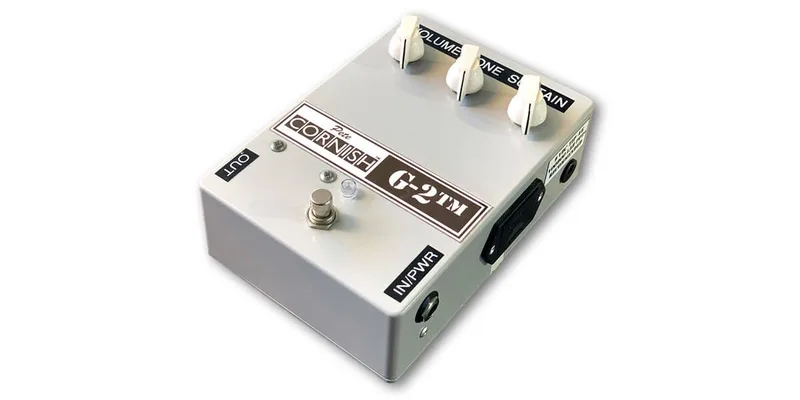
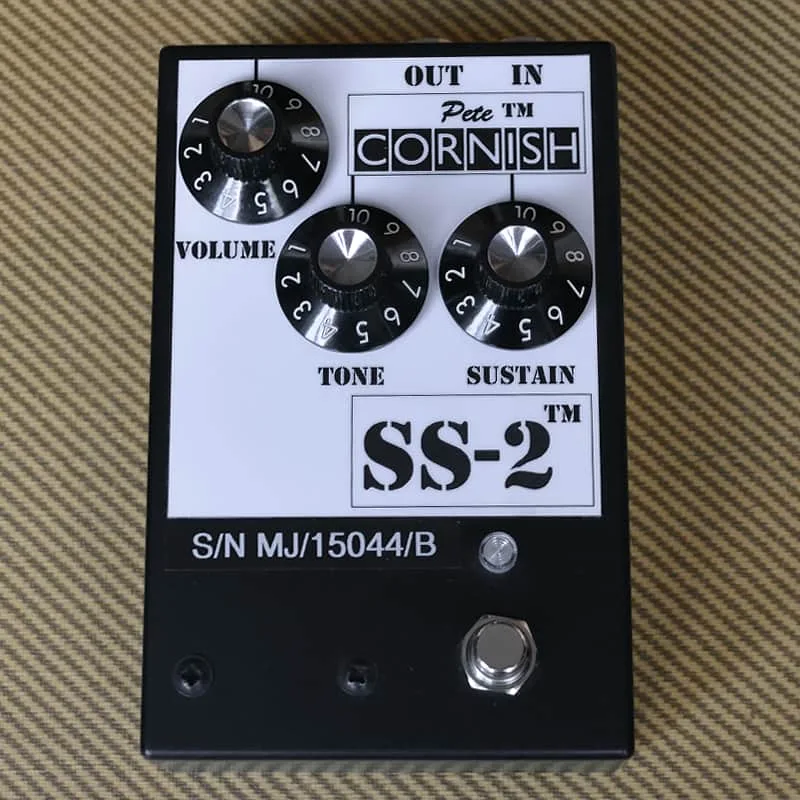
Alongside the systems sits the stand-alone pedal range, all hand built. The SS-2 is an overdrive/distortion pedal the company describes as totally different from any overdrive/distortion previously available, housed in a rugged die-cast box16. The LP-2 is a loop selector designed to be used with any guitar or bass effects pedal or device that needs a boost or cut when activated17. The G-2 is a distortion pedal, and "G2" is a trademark of Pete Cornish Pedals1819. The range also includes utility pedals such as the battery-free A/B/Y Box20 and the Dual LD-3 line driver21.
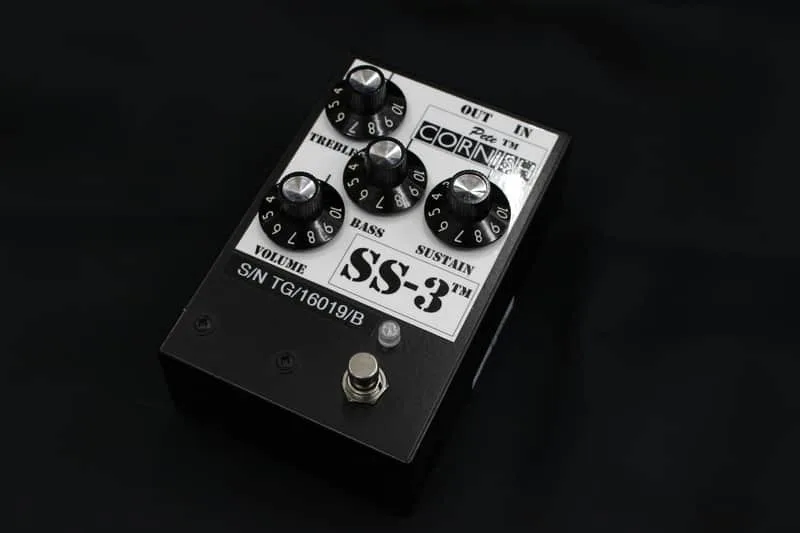
Every stand-alone pedal receives a serial number when it is made. The format encodes the year, the build count and the dealer: PC/13286, for example, was built in 2013 and was the 286th pedal built that year, purchased direct; CR/1106 was the 6th pedal made for CR Guitars in 2011. Gray Series pedals from 2014 carry the format PC/14XXX/G, and Battery-Free Series pedals PC/14XXX/B22.
Pete, Lynda and Mingus Cornish
The company is a family operation. Each unit is hand built, wired and tested by Pete, Lynda and Mingus Cornish5, and each pedal is individually hand made by Pete and Lynda Cornish from the etching of the circuit board through to the testing, with no other person involved10. Pete also plays in a group, The Pete Cornish JAZZ FX, performing Power Jazz7.
Ordering, warranty and repairs
Orders are accepted by email only, to petecornishpedals@gmail.com, advising your delivery location; the company cannot accept orders by telephone6. The telephone number, (0)1435 813393 or international +44 1435 813393, is given for support4.
Warranty terms vary by product line:
| Product | Warranty | Notes |
|---|---|---|
| P-2 | Two years from purchase | Original manufacturing faults repaired if returned post paid; not transferable; voided if guarantee labels damaged or removed23 |
| Dual LD-3 | Two years from purchase | Same conditions; not transferable21 |
| P-1, Deluxe P-1, Deluxe P-2, Deluxe OC-1, Deluxe 3Q-1, Blended P-2 | Twelve months from purchase | Repairs of original manufacturing faults; voided if guarantee labels damaged or removed; normal wear, misuse, unauthorized modifications or accidental damage excepted1524825 |
The Deluxe P-2 and Deluxe OC-1 warranties do not apply to the customer's own equipment connected to the unit1524.
Prices
A 1979 article put finished boards around the GBP 600 to GBP 900 mark on average, varying with the specials the artist wanted8. Current stand-alone pedal prices are published as UK prices on the maker's price lists dated 31 March 2026426:
| Pedal | UK price, ex VAT | UK price, inc VAT |
|---|---|---|
| P-1 | GBP 540.58 | GBP 648.70 |
| P-2 | GBP 477.68 | GBP 573.21 |
| G-2 | GBP 492.24 | |
| SS-2 Blend | GBP 486.82 | |
| TB-83 | GBP 225.41 | |
| A/B/Y Box | GBP 396.87 | GBP 476.24 |
| Dual LD-3 | GBP 388.99 | |
| LD-3 | GBP 271.81 | |
| LD-1 | GBP 180.66 | GBP 216.79 |
| Passive Play/Mute Switch | GBP 116.34 |
The price lists reserve the right to change prices to reflect increased material costs26.
The range (41)
News
Questions
Do Pete Cornish pedalboards use true bypass?
No. Cornish boards use relay switching rather than true bypass, and every pedal except the Vintage TBs includes an internal Buffer/Line Driver. The company says its Play/Mute switch is suitable at the output of other buffered pedals but may not be suitable with true bypass or unbuffered pedals, and such use is not recommended.
How much does a Pete Cornish pedalboard cost?
A 1979 article put the finished boards around GBP 600 to GBP 900 on average, varying with the artist's specials. Current stand-alone pedal prices are published as UK prices: the P-2 is GBP 477.68 ex VAT, the G-2 GBP 492.24 ex VAT and the TB-83 GBP 225.41 ex VAT, on the maker's 31 March 2026 price lists.
How do you order from Pete Cornish?
Orders are accepted by email only, to petecornishpedals@gmail.com, advising your delivery location. The company states it cannot accept orders by telephone. The phone number, (0)1435 813393 or international +44 1435 813393, is for support rather than ordering.
Where is Pete Cornish based?
The workshop is at Unit 5, Silveroaks Farm, Hawkhurst Lane, Waldron, Heathfield, East Sussex, UK, TN21 0RS. In the late 1970s the work was done from a backroom office near Covent Garden tube station in London, directed there largely by word of mouth.
Who was Pete Cornish's first pedalboard client?
Peter Banks, guitarist with Flash and later Yes. Cornish built his first effects board for Banks in 1972, which the company counts as its founding year. Banks came into the shop where Cornish worked and asked him to build a pedalboard.
Does Pete Cornish design his own effects circuits?
For the custom boards, no. A 1979 profile states he does not design effects units, only integrates them into boards. The stand-alone pedal line, however, carries his own designs, such as the SS-2 overdrive/distortion, and each pedal is hand made by Pete and Lynda Cornish from circuit board etching through testing.
Why do Pete Cornish boards use filament bulbs instead of LEDs?
Because low-power LEDs are not bright enough to be seen under a fierce stage light show. Cornish uses 28 volt filament bulbs as indicator lights instead, a choice documented as far back as a 1979 article, when Steve Hackett's Cornish board had lights visible from the audience at a Genesis gig.
Sources (26)
- Effects Pedal Board Systems, Pete Cornish (petecornish.co.uk), 2025
- Pete Cornish Q Magazine Article, Q Magazine, 1996-01
- Pete Cornish P-1, Pete Cornish, 2025
- Battery Free Effects Pedals, petecornish.co.uk, 2026-03-31
- Pete Cornish Deluxe CC-1, Pete Cornish, 2017
- Pete Cornish, Pete Cornish, 2026
- Pete Cornish: Rocks Problem Solver, petecornish.co.uk, 2025
- The Personal FX of Pete Cornish, Musicians Only (reprinted on petecornish.co.uk), 1979-10-06
- Pete Cornish: Pink Floyd Relics, Pete Cornish, 1995-07
- Pete Cornish Vintage Series, Pete Cornish (petecornish.co.uk), 2026
- Pete Cornish NB-3, Pete Cornish, 2025
- Pete Cornish NBM Duplex, Pete Cornish, 2014
- Pete Cornish Play/Mute, Pete Cornish, 2025
- Pete Cornish Play/Mute, Pete Cornish, 2025
- Pete Cornish Deluxe P-2, Pete Cornish (petecornish.co.uk), 2025
- Pete Cornish SS-2, Pete Cornish, 2014
- Pete Cornish LP-2, Pete Cornish, 2025
- G2 Animal v3, GuitarPCB
- Revolution Distortion, pastfx.com, 2026
- Pete Cornish A/B/Y Box, Pete Cornish, 2018
- Pete Cornish Dual LD-3, Pete Cornish, 2025
- Pete Cornish: Work in Progress: Current Project, Pete Cornish, 2025
- Pete Cornish P-2, Pete Cornish, 2025
- Pete Cornish Deluxe OC-1, Pete Cornish, 2025
- Pete Cornish Deluxe 3Q-1, Pete Cornish, 2025
- Grey Series Effects Pedals, petecornish.co.uk, 2026-03-31