News
Guitar Pedals 101: A Quick and Dirty Guide to Overdrive, Distortion, and Fuzz Pedals
When you’re just getting into guitar effects pedals (or, sometimes, even when you’re already an old hand), the sheer number of different effects types can drown you in a sea of confusion. Our Guitar Pedals 101 series is here to help you navigate through the storm and reach your own personal pedal nirvana. Today we’re looking at what is probably the most important guitar effect ever created: distortion. Dirt, drive, crunch, grain, grit, fuzz—these are all terms associated with distortion, perhaps the most important guitar effect ever introduced to music. The distortion effect is characterized by the well-known “growl” caused by a significant increase in the gain level of an amp or pedal. This is just an oversimplification, however; the exact science behind the levels of distortion and their effect on a guitar sound is too extensive to cover here. When we say distortion, we’re using it as a banner term. Distortion guitar effects pedals can, in fact, be divided into three distinct categories: overdrive, distortion, and fuzz. We’re not just talking about the pedals specifically marked and marketed as “distortion” here. To understand more about distortion and how it is used as a guitar effect (minus a lot of the technical science, of course), we have to look at each of these three types individually. But first, a short history lesson!
The History of Distortion
Distorting guitar signals for a meaner, heavier sound first caught the imagination of guitar players at the tail end of the 1940s. Most sound engineers during that time considered distortion as an unwanted side effect, but some guitar players had become enamored with the tone and tried different ways of recreating it themselves. The more experimental and rebellious types noticed that the sound coming out of their tube amps would get messed up when they dimed the volume knobs and pushed past the “dangerous beyond this point” mark dictated by amp engineers. Some took to damaging amps to make them sound more”buzzy,” similar to what happened in 1951 when Willie Kizart played his guitar through a damaged amp while recording the Ike Turner song “Rocket 88.” In 1958, Link Wray gave distortion another pushed further into the public consciousness when he released the instrumental track “Rumble.” He achieved the song’s distorted tone by literally taking a pencil to his amp’s speaker cone and poking holes in it. “Rumble” is also distinctive for being one of the first songs to feature both distortion and power chords, the most essential building block of rock and heavy metal. It was the only instrumental track to ever be banned from radio in the U.S.; needless to say, it was a huge hit with the kids of the time. A few years later, session guitarist Grady Martin inadvertently discovered the fuzz effect when he ran his six string bass through a faulty channel during recording of the 1961 country song, “Don’t Worry.” While Martin didn’t like the fuzzy sound at the time, he eventually used the exact same faulty preamp when he recorded his instrumental piece called “The Fuzz.” Up to this point, guitarists who wanted to add some distortion to their sound were limited to making changes only to their amps. Pedal-style effect units hadn’t even hit the market yet. It wasn’t until 1962, when Gibson subsidiary Maestro released the FZ-1 Fuzz Tone, that the world’s first ever distortion pedal became available. A lot of guitar players were looking for a way to consistently create a distorted tone, but for some reason or another, the FZ-1 Fuzz-Tone languished in relative obscurity shortly after its release. That it, until 1965, when Keith Richards of The Rolling Stones used it for the main riff on “(I Can’t Get No) Satisfaction. Sales of the FZ-1 Fuzz-Tone shot through the roof when the song hit the airwaves, ushering in the era of distortion pedals. Distortion pedals released in the intervening decades have since been roughly categorized into the three types we mentioned before: overdrive, distortion, and fuzz. Now it’s time to take a closer look at what these distinct distortion types bring to the table.What are Overdrive Pedals?
Overdrive pedals are considered the most mild type of distortion effect. They create the distortion effect by “pushing” an amp past its clean tone threshold, or at least they emulate it. The signature characteristic of a good overdrive is its ability to mimic the sound of a tube amp’s valves made as loud as they could go. Overdrive pedals typically add a bit of crunch and bite to a guitar signal by boosting the signal using a high-fidelity op-amp then slightly clipping the boosted signal for extra harmonic content. Of the three types of distortion pedals, overdrive pedals retain the most dynamic response; the harder you play, the crunchier the signal gets. If you need a more auditory example, listen to Stevie Ray Vaughn’s “Pride and Joy” or pretty much any AC/DC song to get a good idea of what overdrive sounds like.
What are Distortion Pedals?
A distortion pedal is overdrive’s very aggressive and always angry brother. An overdrive pedal lets the nuances of your unique playing dynamics shine through despite the distorted sound. A distortion pedal? It doesn’t care. It has its own way of doing things. Whether you play harder or softer, you’ll usually get the same level of distortion effect all throughout. Thanks to a distortion pedal’s inherently higher gain level and harder clipping compared to an overdrive pedal, the former can make your signal sound far heavier and darker than the latter. The level of compression also makes it easier to get insanely long sustain that can quickly break through to feedback territory. “Heavier” musical genres such as hard rock and metal generally worship at the altar of distortion. One of the most quintessential examples of how a distortion pedal can transform and define a song is Nirvana’s “Smells Like Teen Spirit.” You can easily tell when Kurt Cobain stepped on his Boss DS-1 during that iconic intro riff. Compare and contrast the sound of this song with the earlier examples to hear the difference.
What are Fuzz Pedals?
A fuzz pedal is what you get when you push a distortion pedal even further beyond the boundaries of aggression and into straight-up sonic insanity. Remember how fuzz distortion was first discovered via the accidental use of a faulty amp channel? Fuzz makes your guitar sound like it’s being played through a damaged amp or speaker. Of the three types of distortion effects, fuzz has the hardest and harshest clipping. A sine wave still retains its curvy looks sine wave looks under an overdrive pedal’s clipping, but when you run it through a fuzz pedal, that curvy waveform turns all square-like. Fuzz pedals are also decidedly lo-fi; instead of the op-amps used in overdrive and distortion pedals, they feature transistors that add a lot of extra harmonic content to your guitar signal. The result is a fuzzier, thicker distortion effect. The aforementioned “(I Can’t Get No) Satisfaction” by The Rolling Stones is a quintessential example of a song running thick with fuzz. Jimi Hendrix’s “Foxy Lady” is another one. For a slightly more modern example, check out “Cherub Rock” by the Smashing Pumpkins and compare the part where the distortion kicks in with the Nirvana example above.
Parameters to Play With
Level - This parameter controls a distortion pedal’s overall volume. Level knobs give distortion pedals extra flexibility; you can set it at unity, use it for a small boost to make your signal float even higher above the mix, or just dime it and dial the gain down to turn your dirt stomp into a quick boost pedal. Gain - This is where the magic happens. The gain parameter (also known as the Drive, Distortion, or Fuzz knob) controls the amount of distortion being applied to your original guitar signal. Note that not all distortion pedals are created equal when it comes to gain. Overdrive pedals are usually low-gain affairs, while distortion and fuzz pedals can easily venture into the high-gain territories (especially the latter). Tone - Most good distortion pedals come with their own dedicated tone pots. This controls the amount of high and low frequencies and dictates how bright or dark your sound becomes. Some distortion pedals replace the single Tone button with two- or three-band semi-parametric EQ knobs that control the Treble, Bass, and Mids. There are also pedals that have multi-band graphic EQ sliders, like the Mesa Boogie Throttle Box, but they’re much more rare.
Recommended Overdrive Pedals
Ibanez Tube Screamer Mini
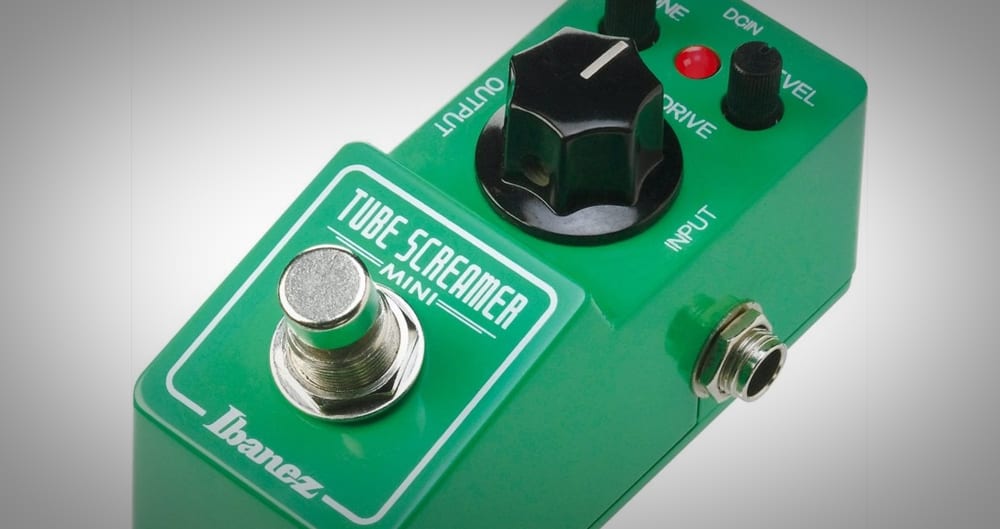
When it comes to overdrive pedals, you can get more classic than the Ibanez Tube Screamer. While original vintage TS808s and TS9s come with pretty hefty price tags, Ibanez has released more affordable reissues in recent years. The Tube Screamer Mini is one such model. This downsized version of the iconic TS808 Tube Screamer retains not only the original’s all-analog construction, but its highly recognizable and extremely transparent sound as well. Put it in front of a tube amp and you’d be hard pressed to tell the difference between it and its larger predecessor. Check out even more Tube Screamer-type overdrive pedals in our articles on the best Tube Screamer-type stompboxes below and above $100.
Fulltone OCD
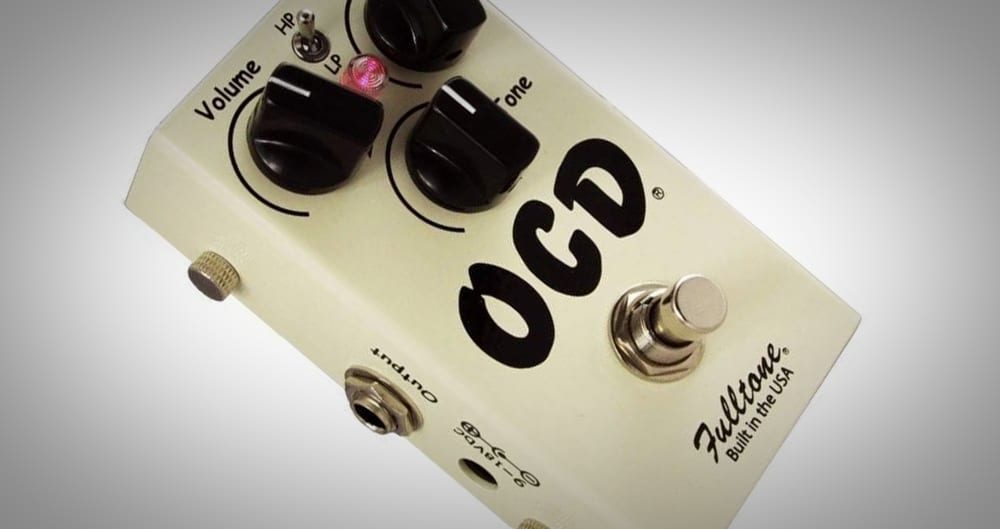
The Fulltone OCD is another, albeit more modern classic overdrive pedal. Just like the Tube Screamer, the OCD has been copied, cloned, and built upon by countless guitar pedal manufacturers. It’s not hard to imagine why when you listen to the OCD, though. It serves up overdrive tones that carry the signature warmth and fullness of a true tube amp pushed past its safe limits. It’s very dynamic and transparent, too, responding splendidly to your picking attack while keeping your core sound intact.
Recommended Distortion Pedals
Boss DS-1
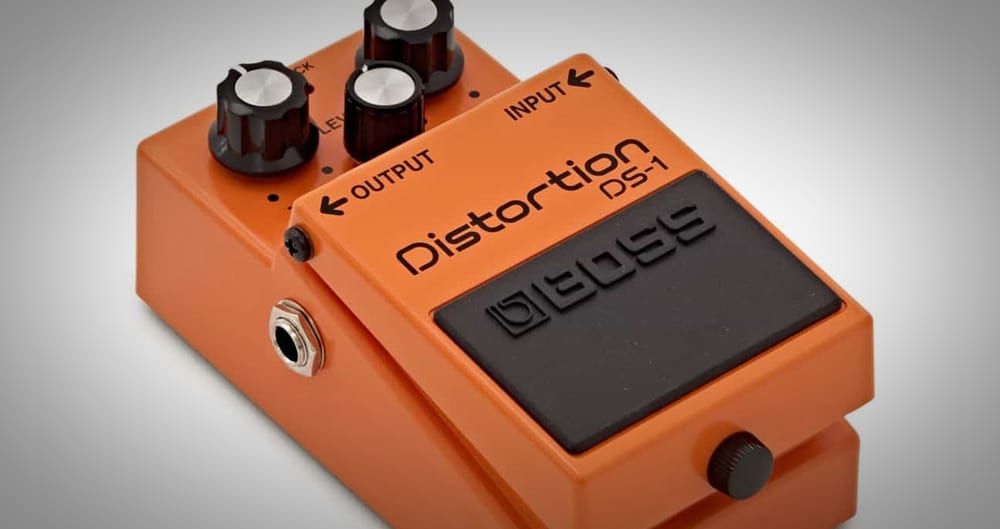
We’ve touched on how the Boss DS-1 helped define and entire musical genre before, so it’s a no-brainer that we’re going to include it in our list of recommended distortion pedals. The DS-1 has been chugging along since its first release way back in 1978, and today it remains Boss’ best selling compact pedal ever. When it comes to distortion pedals, it’s simply one of the best choices in the mid-range price category. Its hard-edged distortion tone remains remarkably clear even when you push the gain knob closer ever closer to 10, while its dedicated Tone knob gives you an adequate amount of sound shaping control. Dial back on the Gain knob and you can use it as a pretty solid dirty boost.
Wampler Sovereign
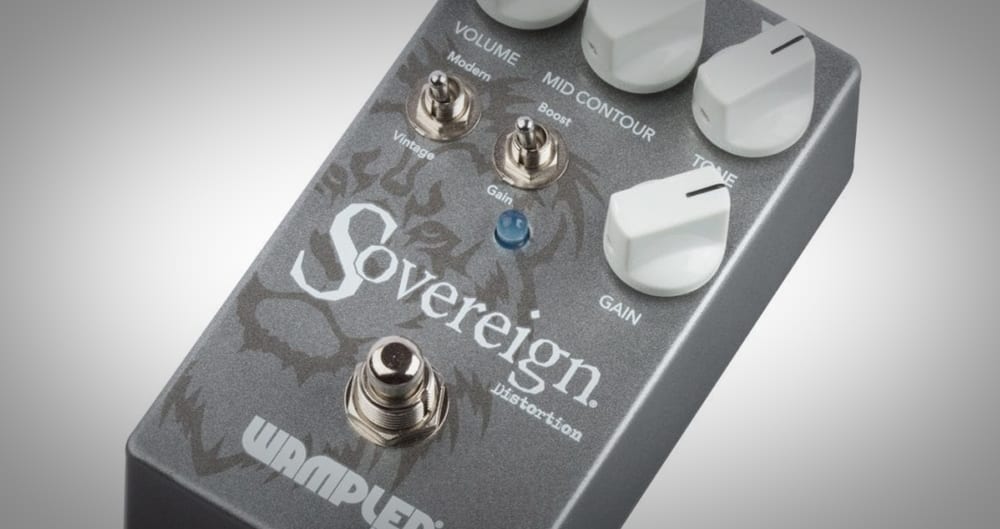
The Wampler Sovereign is roughly the same size as the DS-1, but it manages to pack quite a few more different distortion flavors than the iconic orange stomp. Aside from the usual Volume, Tone, and Gain knobs, you get a Mid Contour pot that lets you choose which particular mid-range frequency area you want to emphasize in your sound. It also comes with a two two-way toggle switches: Bright/Even and Boost/Standard. The Bright/Even toggle lets you choose between a high-frequency-heavy sound and more balanced treble and bass tone with strong midrange. The Boost/Standard toggle, meanwhile, lets you give the Sovereign a shot of extra gain juice for all the powerful distortion tones you need. The relatively more complicated controls means it’ll take a bit of experimentation to find the exact sound you want from the Sovereign, but the sheer amount of versatility that you get in return is definitely worth the price of admission.
Recommended Fuzz Pedals
Electro-Harmonix Big Muff
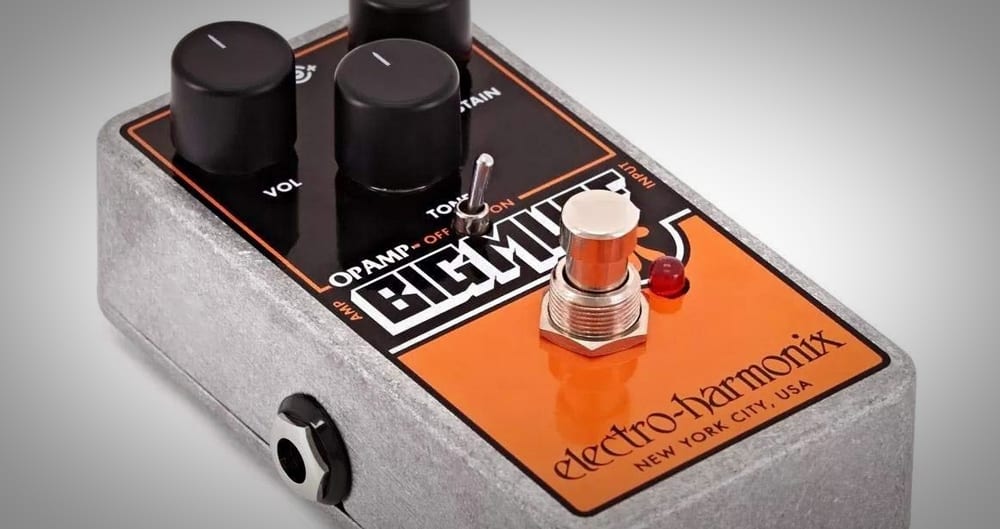
The Big Muff line is one of the most iconic fuzz pedal lines ever to see the light of day. There have been a lot of different Big Muff versions released over the years, but one of the most popular is the op-amp version, which saw a big spike in interest when Billy Corgan used it for the recording of Siamese Dream. You can still get an original Big Muff op-amp version exactly like the one used by the Smashing Pumpkins if you have the dough for it, but even if you don’t Electro-Harmonix has your back. The company has already released a reissue of this comparatively rare variant.
Jim Dunlop Germanium Fuzz Face
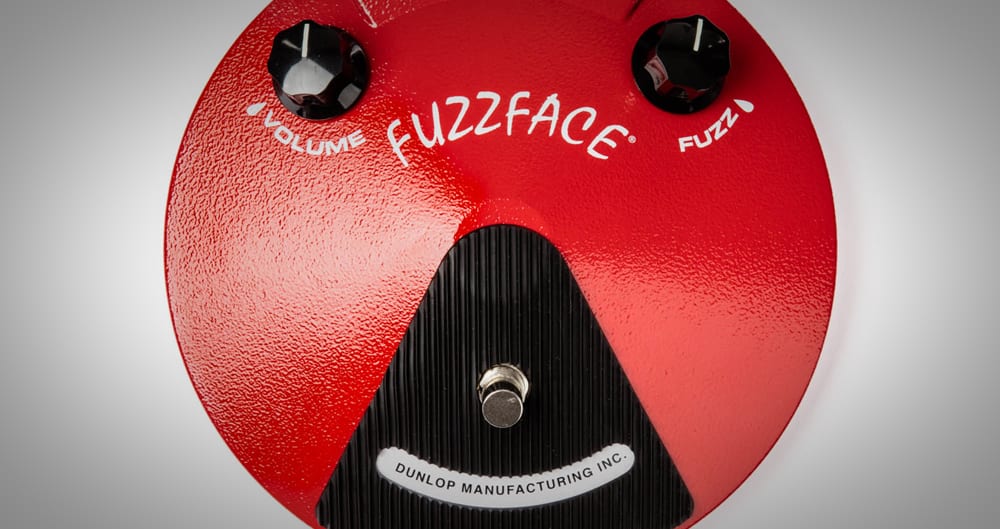
Speaking of iconic fuzz pedals, even the Big Muff would be hard-pressed to compete with the Fuzz Face that quickly became the foundation of Jimi Hendrix’s signature sound. The circular, “smiley face” Fuzz Face has largely remained in production since the ‘60s, but more recent versions have used silicon transistors instead of the germanium ones that Jimi favored. Fortunately for those hoping to capture that elusive Hendrix sound, Dunlop has released a round of reissues that feature germanium transistors, just like the originals.