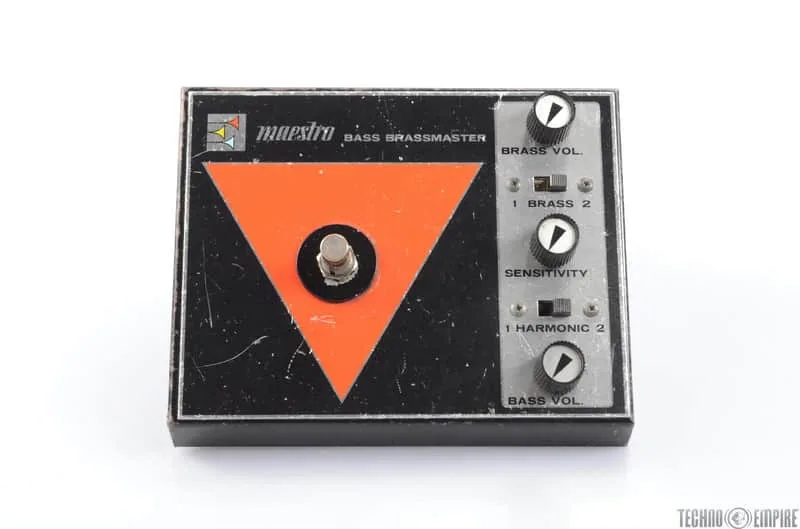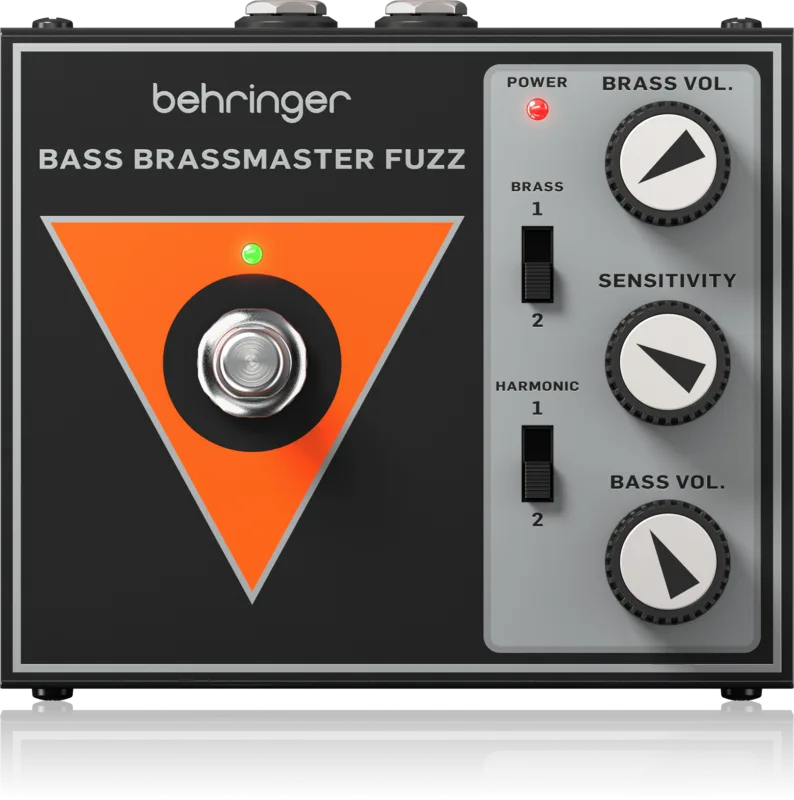


The Behringer BASS BRASSMASTER FUZZ is a fuzz pedal from Behringer that recreates the circuit of the Maestro BB-1 Bass Brassmaster, a rare bass octave fuzz from the 1970s. Behringer describes it as a way to "give your bass or guitar tone an aggressive edge with a healthy amount of distortion but still retain its clarity and definition in a wall of sound"12. What sets it apart from a basic fuzz is a clean blend knob and a built-in dual-voice ring modulation stage that shapes the fuzz tone3.
A Behringer take on the Maestro BB-1 Bass Brassmaster
The pedal is a recreation of the Maestro BB-1 Bass Brassmaster, which Maestro built from 1971 to 19742. MusicRadar calls the original "an octave bass fuzz with an onboard dual-voice ring modulator, opening up a full spectrum of harmonically unorthodox" tones, and notes it is super rare, selling for $2,000 or more on the used market4. Behringer's version brings what the maker calls "a hidden gem of a circuit back to life" at a fraction of that price1.
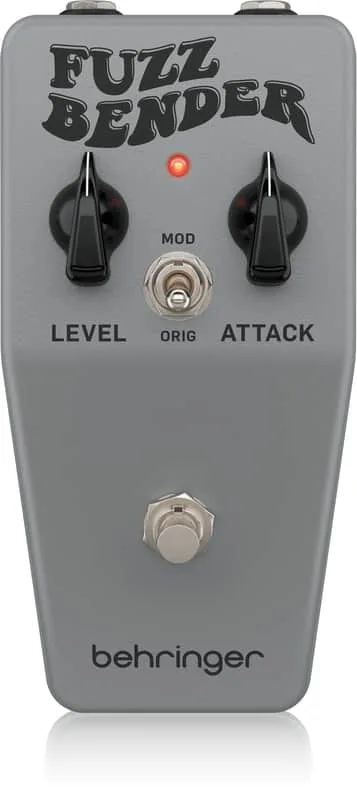
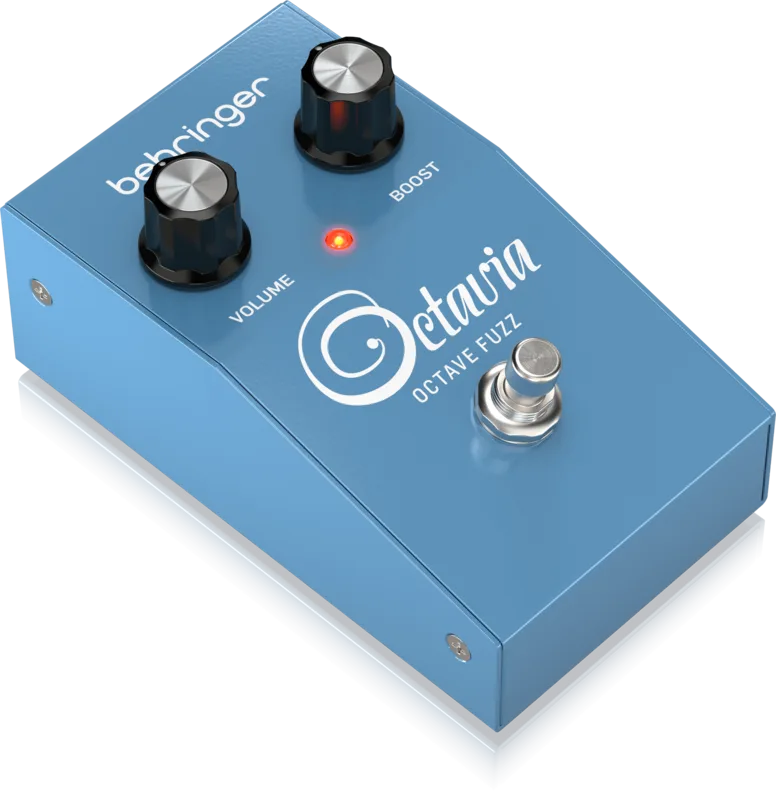
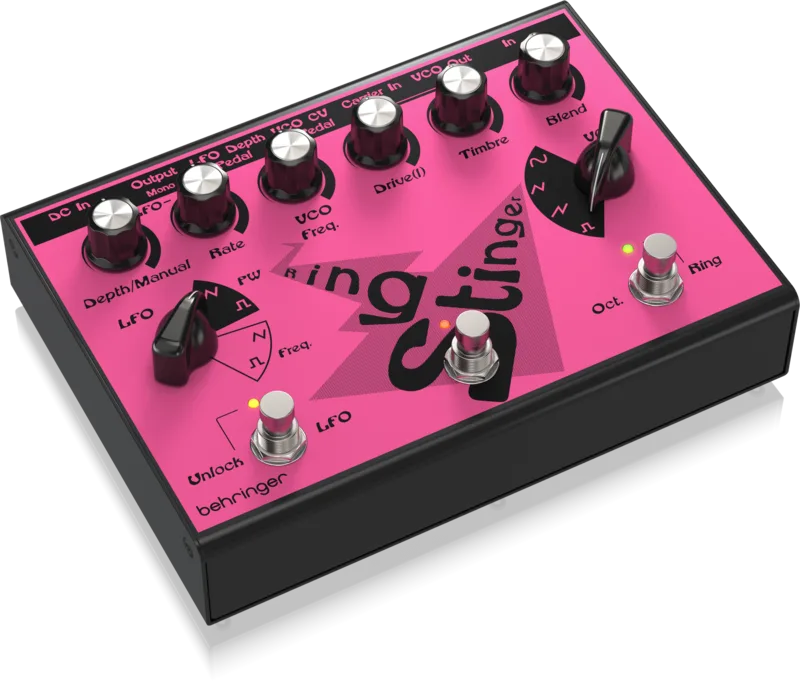
Behringer has followed a similar path with other vintage fuzz recreations, including the Fuzz Bender, the OCTAVIA OCTAVE FUZZ and the Ring Stinger, a clone of the Lovetone ring mod/fuzz pedal.
Controls and the clean blend
The control set follows the original BB-1 layout, with two knobs and two toggle switches working together12:
| Control | What it does |
|---|---|
| BASS VOL | Adjusts how much of your clean sound is mixed in1 |
| BRASS VOL | Adjusts the fuzz mix1 |
| BRASS toggle | Toggles between two voicings, the second packing more midrange4 |
| HARMONIC toggle | Selects the filter, toggling between high-end harmonic content and low-end4 |
The clean blend is the feature bass players will notice first. Instead of the fuzz swallowing your low end, the BASS VOL knob sets how much clean signal sits underneath the distorted voice, which is how the pedal keeps "clarity and definition in a wall of sound"1. Gearnews found the two voicing switches let you "switch between emphasising the high and low frequencies to find the fuzz sound you want"3.
On the original Maestro, the Brass switch works the same way: Performer Mag describes it as "a filter that controls the tone of the fuzz," where "Brass 1 has more bite on the top-end" and Brass 2 has a bit more midrange, while turning up the Brass Vol. knob adds more fuzz to the signal2.
The built-in dual-voice ring modulation is part of what shapes the fuzz tone rather than a separate effect you switch on and off. Gearnews calls it "what makes the Behringer Bass Brassmaster Fuzz so special"3.
Power, bypass and connections
The pedal takes 9V from a DC pedalboard power supply and is true bypass, so it leaves your clean signal alone when switched off4. All the connections sit on the top of the unit, which helps with tight pedalboard rows4. Behringer says the housing "can withstand a life of constant gigging and the heaviest of stomps"1.
What reviewers said
Gearnews reviewed the pedal at launch and was positive about the value:
"I think Behringer have really hit the nail on the head with the Bass Brassmaster Fuzz. You get a huge amount of great sound at an amazingly good price."3
MusicRadar framed the launch as "another super-affordable clone of a holy grail vintage stompbox," recreating the Maestro BB-1 for $694.
Price and availability
The pedal was announced in December 2024. Gearnews listed it at $61.00, with a Thomann price of $65.00, and said it would be available from Thomann soon3. MusicRadar reported the launch price as $694. The two figures differ slightly, so treat these as launch-window pricing rather than a fixed street price.
Videos
Behringer
Reeves Electro Guitar Pedals
Budget Pedal Chap
News
Questions
Is the Behringer Bass Brassmaster Fuzz true bypass?
Yes. MusicRadar reports that the Bass Brassmaster Fuzz is true bypass, so your clean signal passes through the pedal uncolored when the effect is switched off. It runs alongside the clean blend feature, which lets you keep some of your original tone in the fuzz sound when the pedal is engaged.
What power supply does the Behringer Bass Brassmaster Fuzz need?
It takes 9V from a DC pedalboard power supply, according to MusicRadar. That makes it a standard fit for a typical 9V DC pedalboard power brick. Behringer describes the housing as robust enough for constant gigging and heavy stomping.
Does the Behringer Bass Brassmaster Fuzz run on a battery?
MusicRadar specifies only that the pedal takes 9V from a DC pedalboard power supply, so plan on a 9V DC power supply rather than a battery.
What does the Brass switch do on the Bass Brassmaster Fuzz?
The Brass slider switch toggles between two voicings, with the second packing more midrange. On the original Maestro BB-1, the Brass switch is a filter controlling the fuzz tone: Brass 1 has more bite on the top end and Brass 2 a bit more midrange.
Can you use the Behringer Bass Brassmaster Fuzz with a regular guitar?
Yes. Behringer describes it as a fuzz for bass or guitar tone, and the original Maestro BB-1 was noted by MusicRadar as a bass octave fuzz that also sounds great on guitar. The BASS VOL knob lets you blend clean signal for either instrument.
Sources (4)
- BASS BRASSMASTER FUZZ, Behringer
- FLASHBACK: 1970s Maestro Bass Brassmaster BB-1 Fuzz, Performer Mag (performermag.com), 2020-05-26
- Behringer Bass Brassmaster Fuzz: Aggressive Sounds With a Lot of Fun!, gearnews.com, 2024-12-06
- “A unique octave bass fuzz with a built-in, 2-voice ring modulator”: The Maestro BB-1 Brassmaster is a super-rare bass octave fuzz from the '70s that sounds great on guitar, sells for $2,000+, and Behringer just made a $69 clone of it, MusicRadar, 2024-12-13