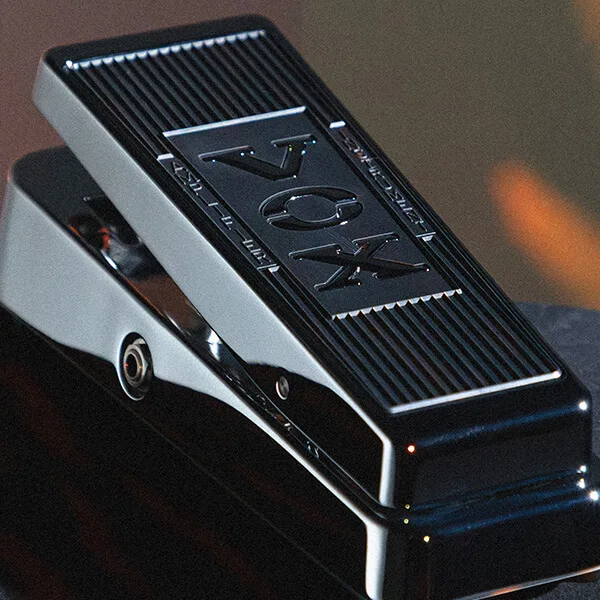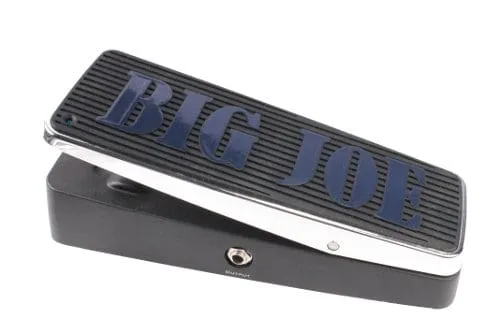
The Big Joe Wah Wah is a wah pedal: a foot-treadle effect that sweeps a boosted midrange frequency up and down as you rock your foot, shaping your guitar tone into something that sounds like a human voice saying "wah." Along with distortion and delay, T-Rex Effects counts the wah-wah as part of the "Holy Trinity" of classic guitar effects, an effect invented by accident in the 1960s1.
What a wah does to your sound
A wah is not a subtle effect. GuitarPCB's technical analysis describes it plainly: it "emulates the sound of a trumpet being muted, modifying the guitar tone like a human voice saying the syllable wah"2. Vox, the company behind the original pedal, says much the same, calling the effect "the sound of a trumpet mute, or more accurately the human voice saying the onomatopoeic name 'Wah-Wah'"3.
The reason it sounds so vocal comes down to physics. As a history of the Cry Baby published by Stompbox Book puts it:
"the physics of the wah are very similar to how human vocals work, as the mouth changes shape, the frequencies change in a similar way"4
In circuit terms, a wah is simpler than it sounds. On JHS Pedals' history of the effect, Josh Scott breaks it down:
"A wah is a mid frequency equalizer that's kind of variable, and it has a boost to it."5
So when you rock the treadle, you are moving a narrow, boosted band of frequencies across the midrange. Heel down, the boost sits low and the tone is dark and throaty. Toe down, it climbs toward the treble and the tone gets thin, nasal and cutting. Sweep it back and forth in time with your playing and you get the classic vocal quack.
Ways players use it
The treadle sweep is only one way to use a wah. A few distinct approaches are worth knowing:
- Sweeping: rocking the treadle in time with a riff or a lead line, the most familiar wah sound.
- Cocked wah: leaving the treadle parked at its sweet spot and using the pedal as a fixed filter. MusicRadar traces this to players who "stepped on the treadle, found the sweet spot for his electric guitar tone, and left it there," creating the cocked wah sound6.
- Auto wah and envelope wah: filter pedals that move the same kind of frequency band for you, driven by your picking dynamics rather than your foot. Jeds Peds describes its Auto Wah in these terms: "The harder you play, the more it quacks and it really does quack"7.
How different makers voice their wahs
Even though the underlying circuit idea is shared, makers voice their wahs differently, and that is where one wah separates itself from another. A few published examples of how makers describe their own voicing:
| Maker and pedal | How the maker describes the sound |
|---|---|
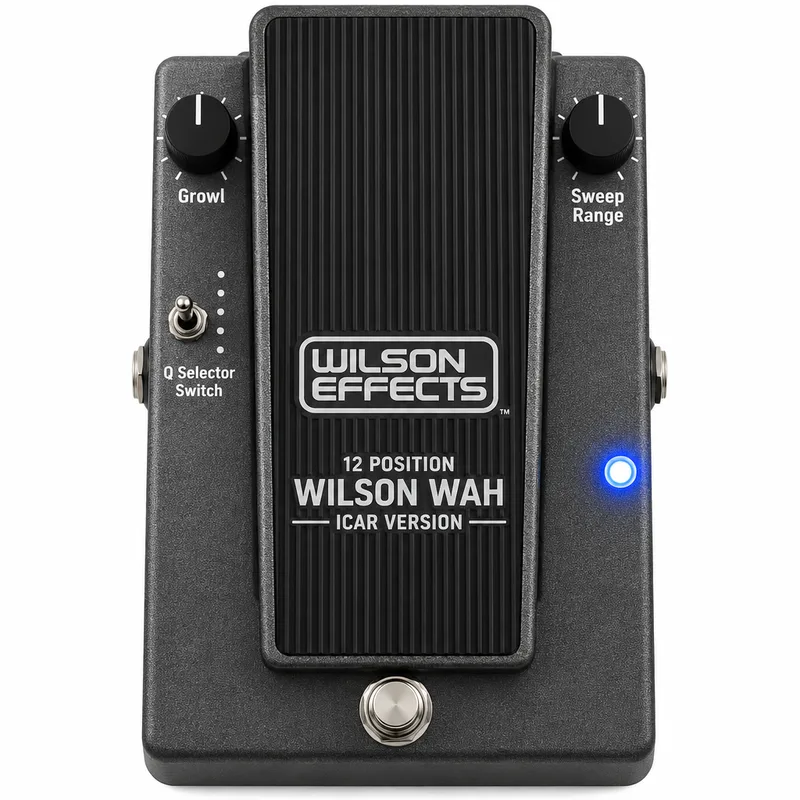
| Wilson Effects 12 Position Wilson Wah | Enhances bass response at the input, creating a thick, full-bodied sound8 |
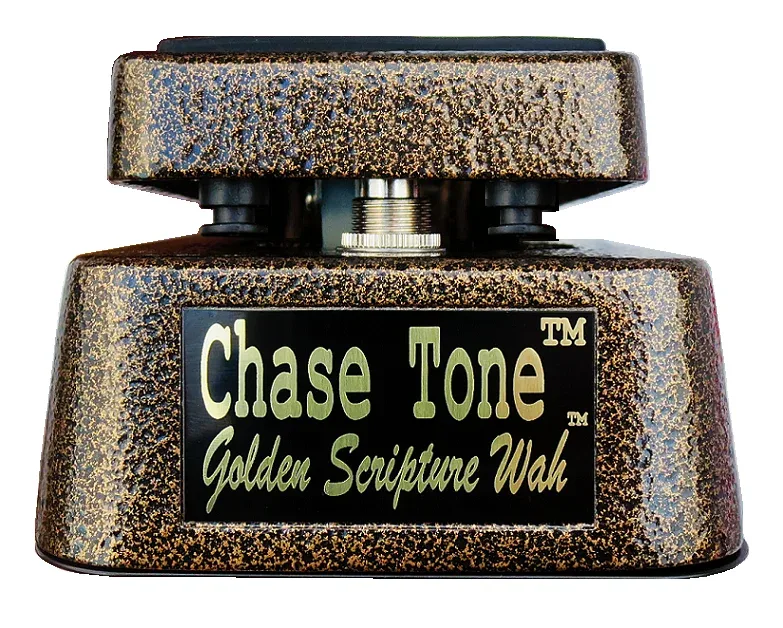
| Chase Tone Scripture Wah | A pronounced, thick vocal "WAH" voice with a longer, smoother bass-midrange-treble sweep, extremely vocal both clean and distorted9 |
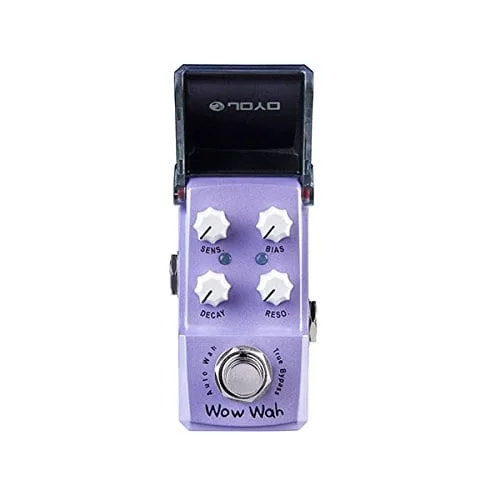
| JOYO JF-322 Wow Wah | "It's extremely dynamic."10 |
| Real McCoy Custom Joe Walsh Signature Wah | Delivers the classic wah sounds heard on all of Joe's early recordings11 |
Where a wah goes in your signal chain
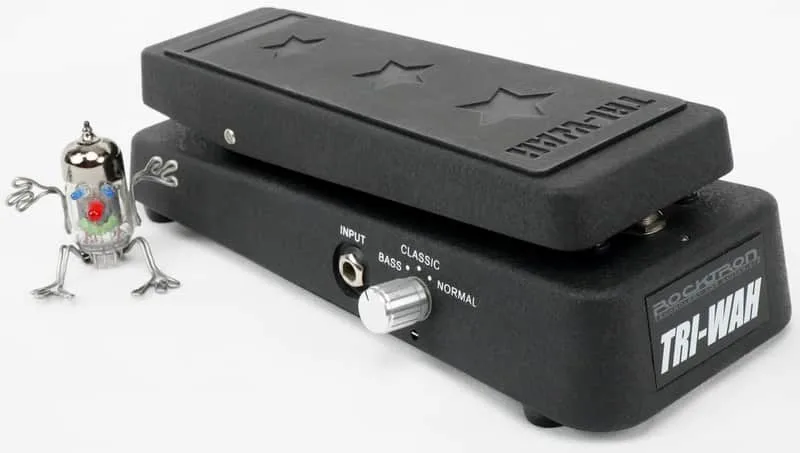
The standard answer, from both makers and press, is: first. Rocktron says of its Tri-Wah that although you may place a wah anywhere in the chain, "it usually sounds best at the beginning, directly from guitar or bass"12. JHS Pedals gives the same standard routing advice: "you put your wah pedal first, and then you put all your other pedals after it"5.
The classic exception is fuzz. Wahs and vintage-style fuzz circuits can interact badly, which is why accessories like the Area 51 Wah Output Buffer Kit exist; Area 51 says its buffer enables a wah-before-fuzz order that is "a little more like running the wah straight into an overdriven amp"13.
One more piece of buying advice from the press is worth repeating: JHS warns against combination units, saying "don't go buy any kind of device that does wah and volume. You just end up with a 'jack of all trades, master of none' situation"5. A dedicated wah does one job.
Where the wah came from
The wah was an accident. Vox's own history says the pedal was "discovered during the design of the VOX Super Beatle amplifier in 1966"3. The fuller story, as told by gearnews.com: in 1965, studio engineer Brad Plunkett was reworking a Vox AC-100 amp to make it cheaper to produce, and while replacing the amp's midrange boost switch with a potentiometer, he discovered that sweeping the frequency created a dramatic "wah" tone. His solution was to adapt an organ's volume pedal so a player could control that sweep with a foot14.
GuitarPCB's circuit analyses record the invention date as November 1966, by Lester Kushner and Brad Plunkett at Warwick Electronics, a division of Whirlpool that owned Thomas Organ Company and Vox215. MusicRadar's coverage dates the invention to around 1965 and credits Plunkett with developing the sound, with the pedal then evolved by Thomas Organ, Vox and Clyde McCoy16.
The first commercially available wah, the Clyde McCoy model named for a trumpet player, launched in 196717, and Vox introduced its Wah-Wah pedal that same year17. Vox notes that the pedal's use with electric guitar was unintended but music-changing, turning the wah into a vital tool for renowned artists such as Jimi Hendrix and Eric Clapton18.
Questions
Where should a wah go in the signal chain?
The standard routing is wah first, directly after the guitar, with the rest of your pedals after it. Rocktron says its Tri-Wah usually sounds best at the beginning of the chain, straight from the guitar or bass, and JHS Pedals gives the same advice for standard setups. The main exception is fuzz: a buffer or a purpose-built kit can let a wah sit before a fuzz and behave more like a wah driving an overdriven amp.
Who invented the wah pedal?
The wah-wah pedal was invented in November 1966 by Lester Kushner and Brad Plunkett at Warwick Electronics, a division of Whirlpool that owned Thomas Organ Company and Vox. Plunkett, a studio engineer, found the effect while reworking a Vox amp's midrange boost circuit. Some press accounts date the idea to around 1965, when Plunkett first swept the frequency and heard the wah tone.
Sources (18)
- → T-REX EFFECTS ← Pedals for guitar and bass players!, T-Rex Effects
- Vox V847 Wah-Wah Analysis, GuitarPCB, 1966
- The VOX Amps Wah Wah Pedal Story, Vox Amps (voxamps.com), 2023-01-18
- Vox Cry Baby, Stompbox Book, 2019-04-27
- 5 REASONS TO WAH, JHS Pedals
- NAMM 2025: “You place the wah, and leave it there, and that's the tone”: With a little help from Bob Rock, Dunlop honours David Bowie's maestro of the cocked wah, Mick Ronson, with signature Cry Baby, MusicRadar, 2025-01-24
- Auto Wah, Jeds Peds (jedspeds.co.uk)
- 12 Position Wilson Wah, Wilson Effects
- Chase Tone® Scripture Wah®, Chase Tone
- JF-322 Wow Wah_JOYO, JOYO
- JOE WALSH SIGNATURE WAH, Real McCoy Custom, 2007-12-14
- Tri-Wah Pedal, Rocktron, 2024-08-28
- Area 51 Wah Output Buffer Kit, Area 51 Tube Audio Designs, 2020
- The Best Wah Wah Pedals for Iconic Guitar Tones: Cry Baby and Beyond, gearnews.com, 2025-08-18
- Dunlop CryBaby GCB-95 Cicuit Analysis, GuitarPCB, 1966
- Cry Baby: The Pedal That Rocks The World, MusicRadar, 2010-11-29
- HISTORY OF THE WAH PEDAL, JHS Pedals
- VOX Real McCoy Limited Edition Wah Pedal, Vox Amps (voxamps.com), 2025-09-30