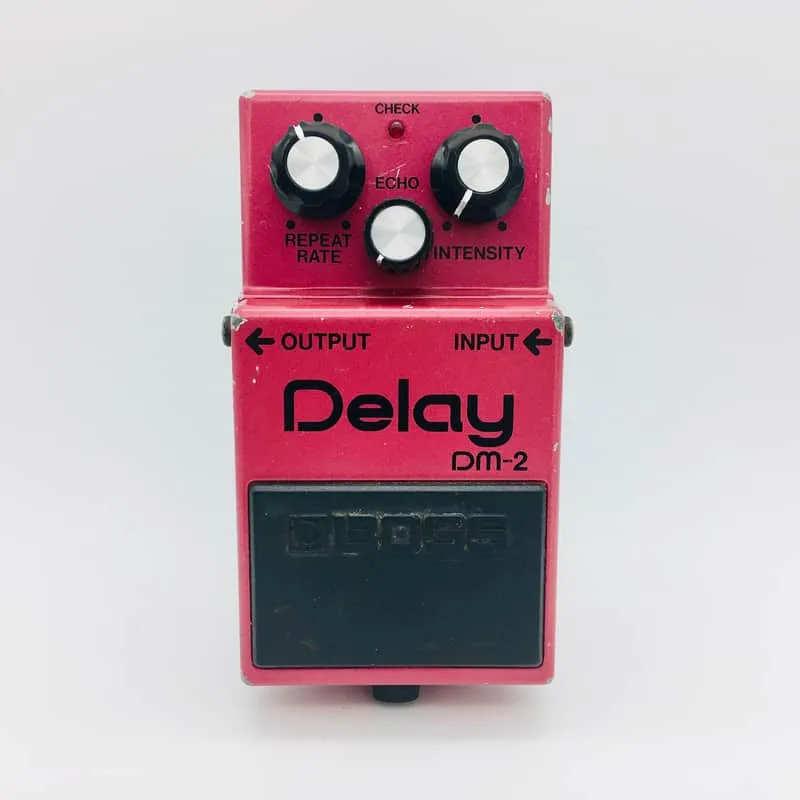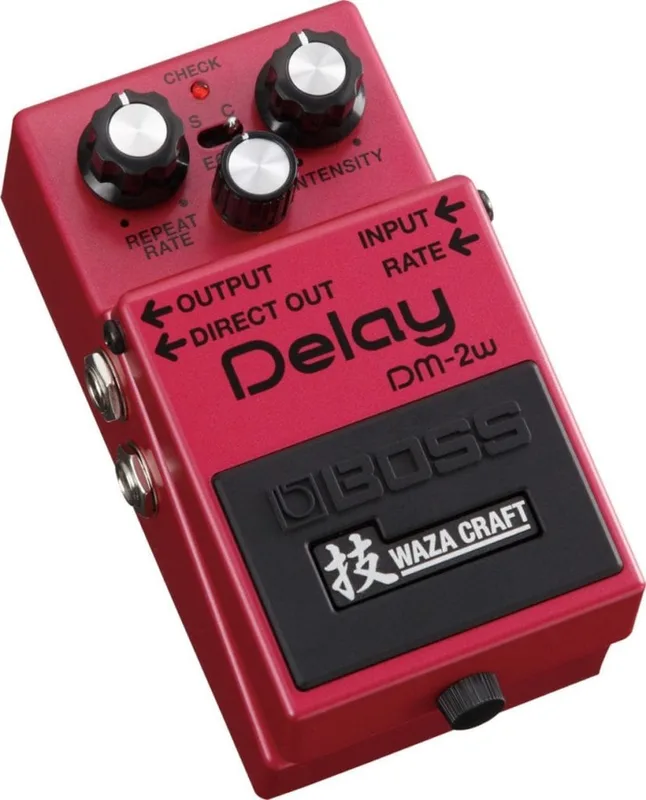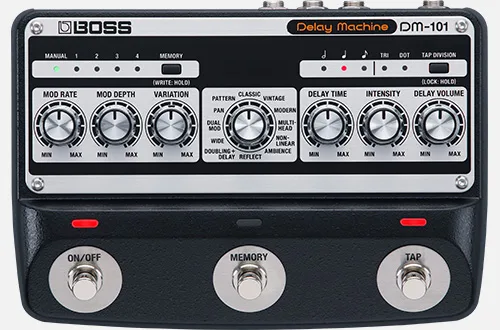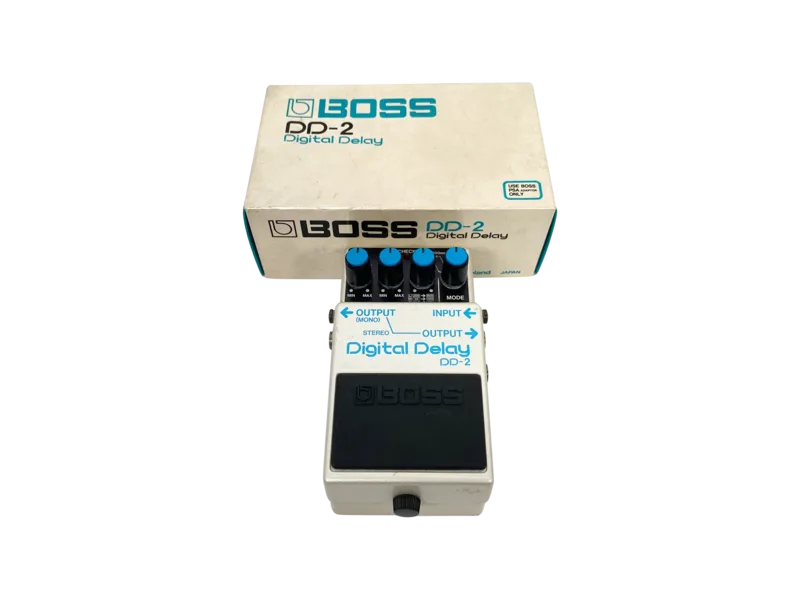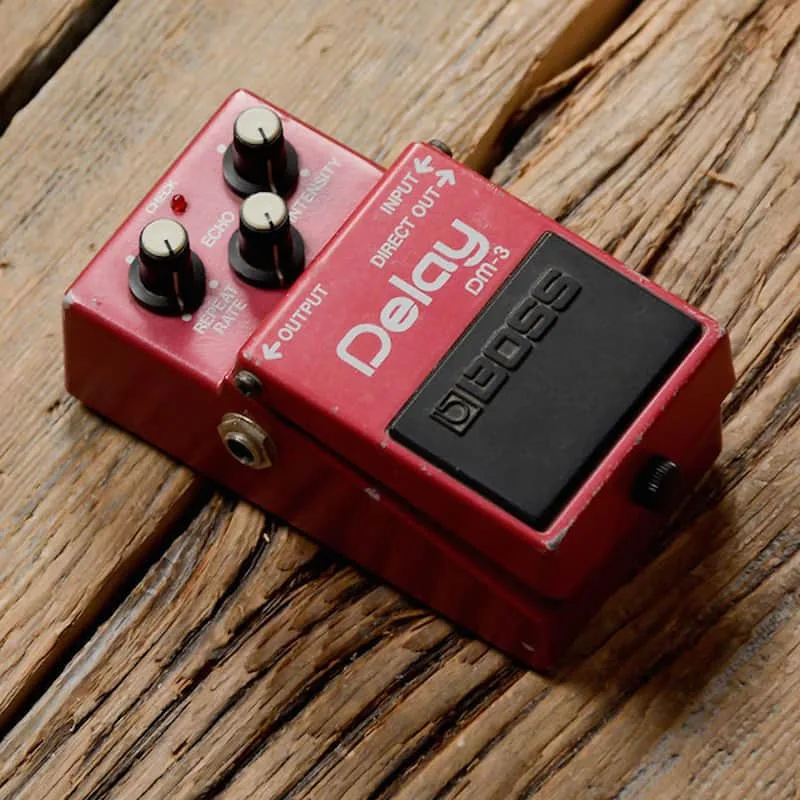


The Boss DM-3 is an analog delay pedal released in 1984, the follow-up to the DM-2 that had launched Boss's compact delay line in 1981. It stayed in production until the middle of 1988, and it holds a particular place in the company's history: it was the last all-analog delay pedal Boss made for 26 years, until the DM-2W Delay Waza Craft arrived in 2014123.
What it does
The DM-3 builds on the circuit of its older sibling, the DM-2, adding an additional filter and high-speed noise reduction, according to Pedal of the Day's review2. Boss's own history of its delay pedals describes the DM-3 as the next-generation but still analog replacement for the DM-2, and slightly more affordable than its predecessor1.
Its most distinctive feature is what it offers players running more than one amplifier. Boss notes that the DM-3 featured jacks for sending dry and effect signals to two separate amps1. Pedal of the Day puts the same feature in player's terms: "the DM-3 also features a Direct Out jack, which lets you run 2 amps, for a pseudo-stereo effect"2. That means the dry signal can go to one amp while the echoes go to another, spreading the guitar across the stage without a stereo rig.
History and status
The DM-3 arrived in 1984, following the DM-2, which Boss released in 1981 as its first compact analog delay pedal63. It was the last all-analog delay pedal in the BOSS lineup for 26 years, until the Waza Craft DM-2W appeared in 20141.
- 1981: Boss releases the DM-2, its first compact analog delay37
- 1984: The DM-3 follows, still analog, with the two-amp output jacks and added filter and noise reduction12
- Mid-1988: Boss discontinues the DM-31
- 2014: The Waza Craft DM-2W ends the 26-year gap, becoming the first all-analog delay in the Boss lineup since the DM-31
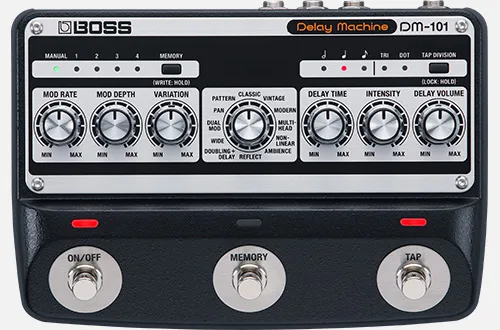
The DM-3 has been out of production since 1988 and is only available used. MusicRadar, reviewing the modern DM-101 Delay Machine, notes that after the DM-3 was discontinued in 1988 there was nothing from the company in terms of an analog delay for a long stretch3.
What it costs used
Because the pedal is long discontinued, pricing is a used-market matter. David Szabados, writing in the Legendary Tones shootout published on maxonfx.com and again on analogman.com, observed that clean examples of the DM-3 commonly sell for $200 and up on the used market, and that the pedal remains popular alongside the DM-256. Condition, naturally, moves that figure: the observation applies to clean examples specifically.
The DM-3 among Boss delays
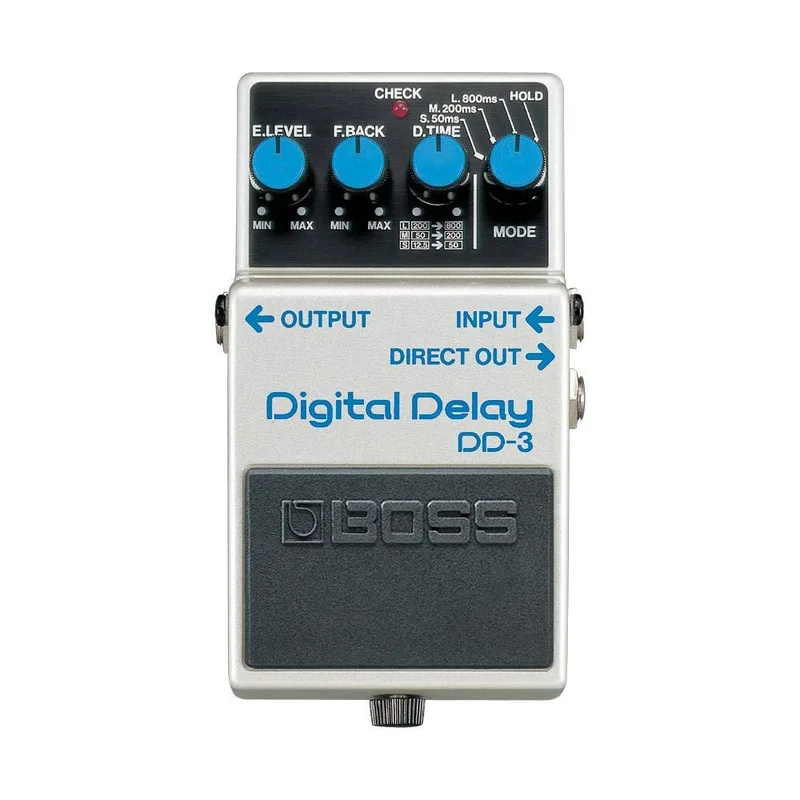
For a player comparing vintage Boss delays, the DM-3 sits directly after the DM-2 in the line: same analog approach, with the added filter and noise reduction on top2. After the DM-3 left the lineup in 1988, Boss's compact delays went digital, a direction that continued through pedals like the DD-3 Digital Delay and later models. Players who want the analog character in a current pedal have the DM-2W or the DM-101, the latter of which MusicRadar reviewed as Boss's return to a full analog delay design3.
Videos
Gear Confessions
blondegraemey
TheSuperFunAwesomeHappyTimePedalShow
Questions
Is the Boss DM-3 analog or digital?
The DM-3 is an analog delay pedal. Pedal of the Day calls it the last analog delay produced by Boss, and Boss's own history of its delay pedals confirms it was the last all-analog delay in the lineup until the Waza Craft DM-2W arrived in 2014. It followed the DM-2, the compact analog delay Boss released in 1981.
When was the Boss DM-3 made and when was it discontinued?
Boss released the DM-3 in 1984, following the DM-2 of 1981. It was discontinued in the middle of 1988, according to Boss's own history article. After that, MusicRadar notes, there was nothing from the company in terms of an analog delay for many years.
How much does a used Boss DM-3 cost?
Clean examples of the DM-3 commonly sell for $200 and up on the used market, according to David Szabados writing on maxonfx.com and analogman.com, and the pedal remains popular with players seeking vintage analog delay sounds.
Can the Boss DM-3 run to two amps?
Yes. The DM-3 has jacks for sending dry and effect signals to two separate amps, which Boss describes in its history of its delay pedals. Pedal of the Day describes the Direct Out jack as letting you run two amps for a pseudo-stereo effect.
What replaced the Boss DM-3 as an analog delay?
Nothing analog, for a long time. Boss's history article says the DM-3 was the last all-analog delay pedal in the Boss lineup for 26 years, until the introduction of the Waza Craft DM-2W in 2014. In the meantime Boss's delay line moved to digital designs such as the DDD and DD series.
Sources (7)
- Echoes in Time: The History of BOSS Delay Pedals, BOSS (articles.boss.info), 2024-01-10
- Boss DM-3 Analog Delay, Pedal of the Day, 2024-02-24
- Boss DM-101 Delay Machine pedal review, MusicRadar, 2023-07-10
- Boss DM-3 Analog Delay, Pedal of the Day, 2014-02-27
- Ibanez vs. Maxon AD-9 Delay Comparison, Analog Man (analogman.com), 2015
- Maxon AD-9 VS. Ibanez AD-9 Shootout, Legendary Tones (published on maxonfx.com, Godlyke, Inc.), 2004
- Boss DM-2 Analog Delay, Pedal of the Day, 2016-03-29