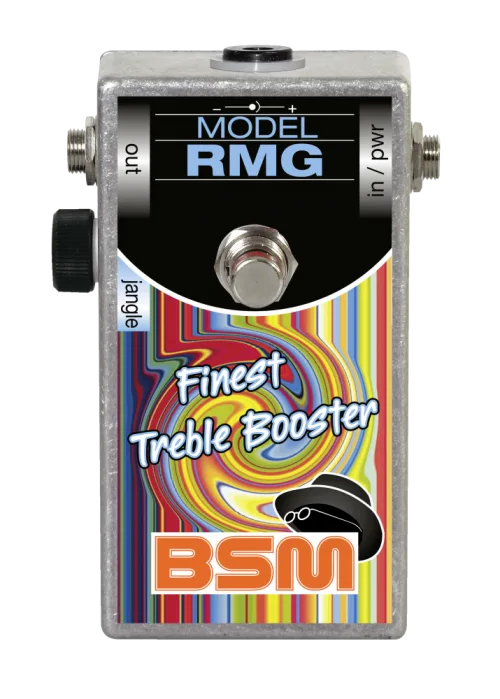

The BSM RMG Clean Boost is a treble booster and clean boost based on the British Vox Treble & Bass booster made in the late 1960s, a unit used by many British bands of that era. BSM built this version as a homage to Roger McGuinn of the Byrds: with the tone pot set to maximum, at the 5 o'clock position, the maker says the unit produces a very glassy tone, the classic "jingle jangle" sound of McGuinn's mid 1960s work with the band1.
Controls and what they do
The RMG carries a tone control that BSM describes as allowing an extraordinary amount of versatility, able to add a lot of twang and spank to any guitar sound. At its maximum setting it delivers the signature glassy jangle the pedal is named for1.
| Control | What it does |
|---|---|
| Tone | Shapes the boost from a versatile range of tones up to maximum twang and spank; at 5 o'clock it produces the glassy McGuinn-style jangle1 |
A bright LED lights when the booster is engaged1.
Power and output
The unit runs on a single 9 volt battery with a current consumption of approximately 50 uA, a very small draw by pedal standards. It can also be powered through an external Boss style DC jack, 2.1mm with tip negative; plugging in shuts the internal battery off automatically. For even more clean headroom, BSM says the RMG can be powered at 18 volts1.
The DC jack is tip negative, Boss style, at 2.1mm. The maker also specifies an 18 volt option for extra headroom, so check your supply's voltage setting before plugging in.
On the output side, BSM lists an average output level of 0dBm, with a maximum output voltage of 2V max when the strings are struck really hard2.
Where it sits on a board
BSM specifies that the RMG is 100% true bypass and is inserted between the guitar and the amplifier, not into an FX loop1. That placement matters for a booster of this type: it shapes the signal the amp's input stage receives, which is where the treble boost character does its work.
Sound and use
The maker's description centers on the McGuinn connection, but the RMG is pitched as a general-purpose tone shaper as well. According to BSM, it can make any standard Stratocaster sound like a Telecaster guitar, and it works great with tube or transistor amps and with acoustic guitar1.
"The RMG can also make any standard Stratocaster sound like a Telecaster guitar!"
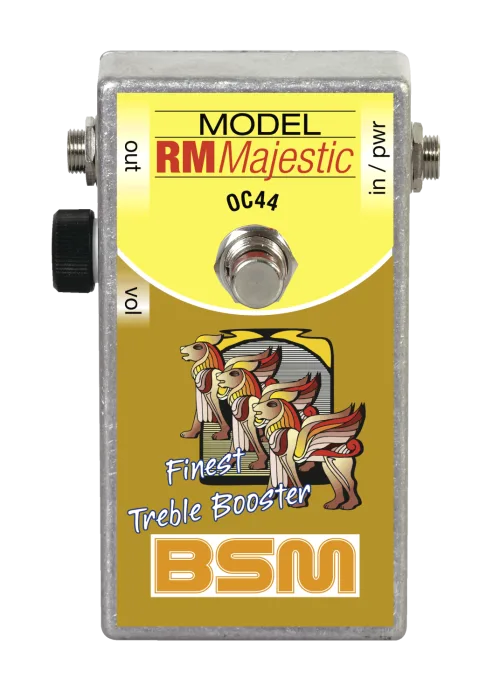
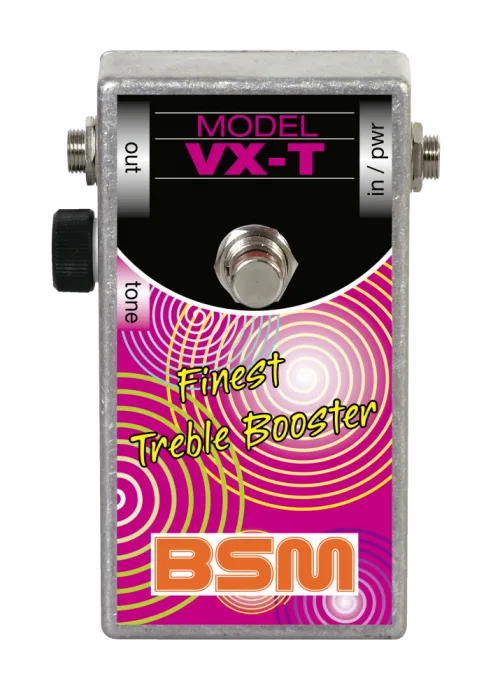
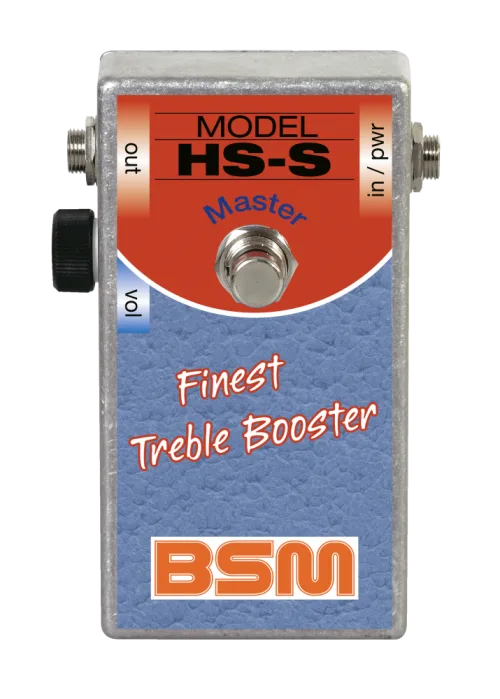
For players exploring the wider BSM range, the maker's lineup includes related designs such as the BSM RM Treble Booster, the BSM VX-T Treble/Mid Boost and the BSM HS-S Treble Booster, alongside other boost pedals of every kind. Questions about the RMG can be directed to BSM's tech-head and mastermind, Mr. Bernd C. Meiser, who the maker says would be happy to talk to you, by email or contact form1.
Videos
楽器.me
Questions
Is the BSM RMG Clean Boost true bypass?
Yes. BSM describes the RMG as 100% true bypass, and the maker specifies that it is inserted between the guitar and the amplifier rather than into an effects loop. A bright LED lights when the booster is engaged.
What kind of power jack does the RMG use?
The RMG takes an external Boss style DC jack, 2.1mm with tip negative. When a plug is inserted, the internal 9 volt battery shuts off automatically. The maker also says the unit can be run at 18 volts for more clean headroom.
Does the RMG work with a Stratocaster?
BSM says the RMG can make any standard Stratocaster sound like a Telecaster guitar, and that it works great with tube or transistor amps as well as with acoustic guitar. With the tone control at maximum it produces the glassy jangle associated with Roger McGuinn.
How much current does the RMG draw?
BSM lists the current consumption as approximately 50 microamps when powered by a single 9 volt battery. That is far below the draw of most pedals, so battery life is long and the unit places almost no load on a power supply.
Sources (2)
- RMG Clean Boost, treblebooster.net, 2025
- RMG Clean Boost, treblebooster.net, 2025