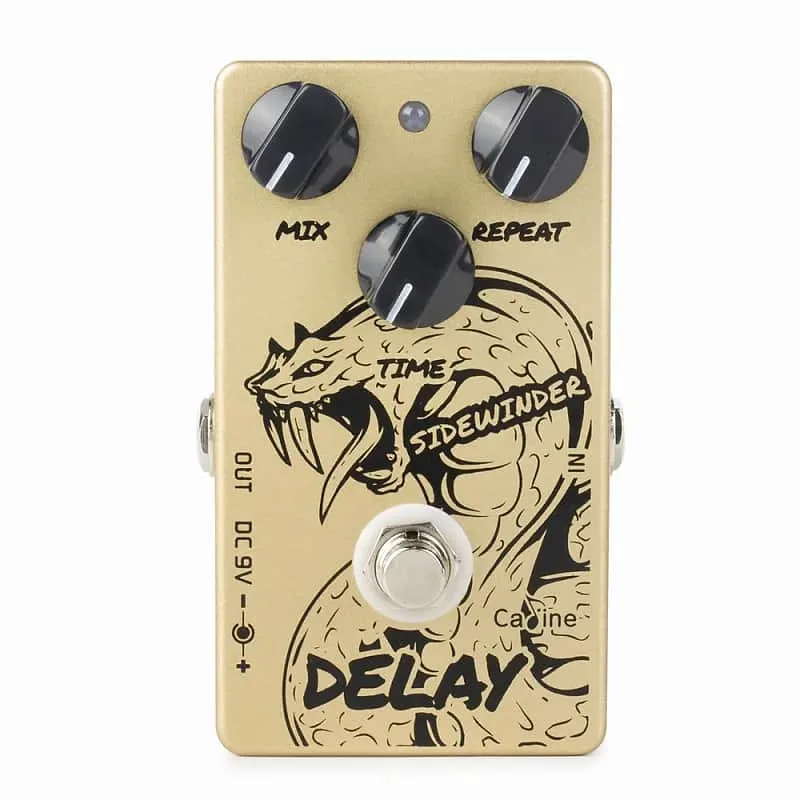

The CP-63 Sidewinder Delay is a compact delay pedal from Caline, a maker of budget-priced guitar pedals. Caline describes it as an analog sounding digital delay built to have the characteristics of a bucket brigade delay line, the old analog chip design that gives classic delay pedals their warm, darkened repeats. The delay time runs from 25 ms to 1000 ms, and the feedback control can be pushed into buildup, meaning the repeats pile up and sustain rather than fading cleanly after one or two passes1.
For a player, that puts the Sidewinder in the territory of the delay pedals most people associate with analog echo: short slapback, doubling, and longer repeats that soften as they go, with the option of runaway feedback for ambient sounds1.
What it does
Caline's own description of the circuit is worth quoting in full, because it sets out what the pedal is trying to sound like:
"The delay is an analog sounding digital delay with all the great characteristics of a bucket brigade delay line (BBD)."
A bucket brigade delay line, or BBD, is an analog chip that passes the signal along a chain of internal stages, which is what gave vintage delay pedals their characteristic tone: repeats that lose high frequencies with each pass. The Sidewinder uses digital circuitry to imitate that behavior rather than using an actual BBD chip, which is why RockBoard's PedalPedia lists the circuit type as analog while describing the delay as analog sounding1.
The 25 ms to 1000 ms range covers the everyday delay uses: at the short end, slapback and doubling; at the long end, repeats approaching a full second. Caline also notes that feedback can be pushed into buildup, so holding the feedback control high produces repeating echoes that grow rather than decay1.
Power and setup
The Sidewinder runs on 9V DC, center negative, the standard pedal supply polarity, and draws 50 mA1.
At 50 mA, the Sidewinder draws more current than many simple analog pedals. Check the current rating of your power supply's outputs or daisy chain before adding it to a crowded board.
Where it sits in Caline's delay range
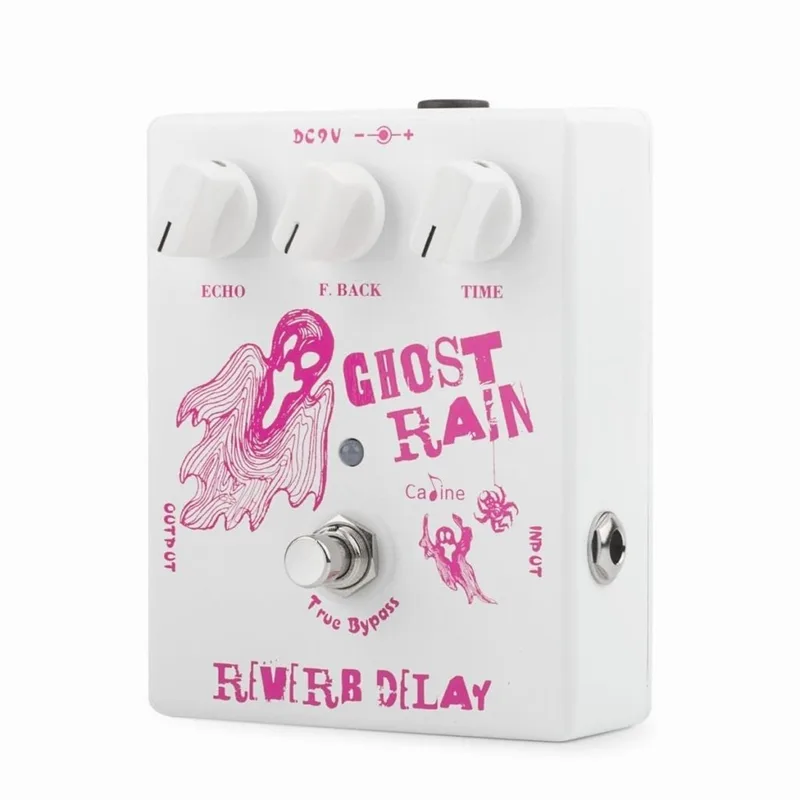
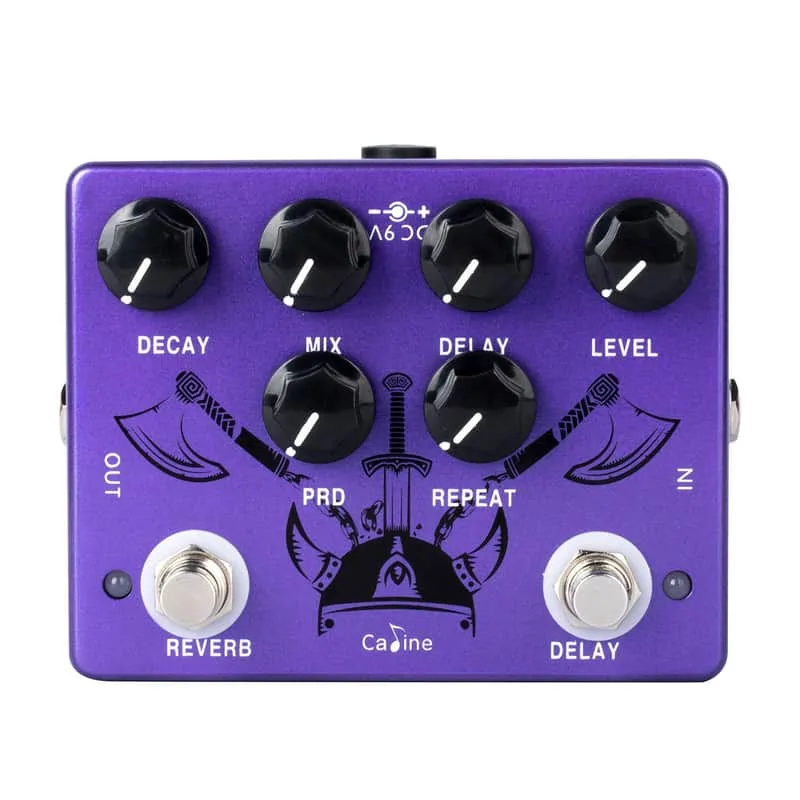
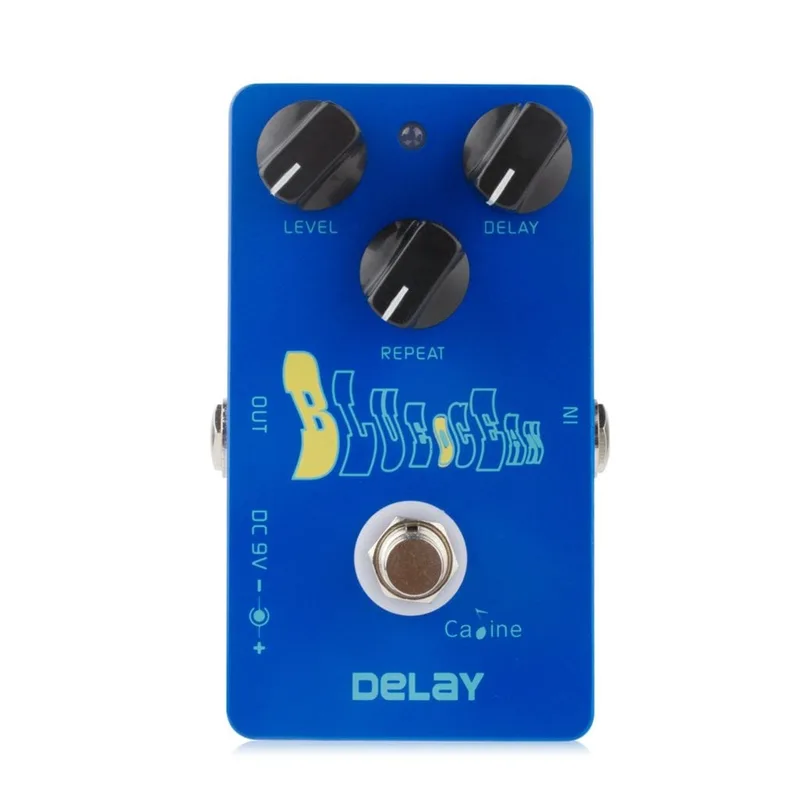
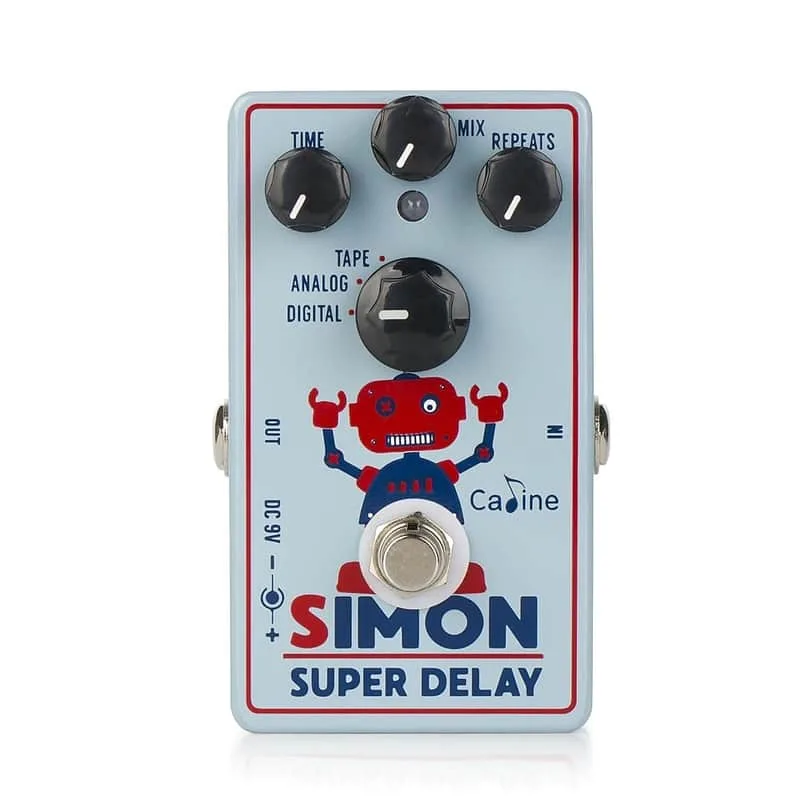
Caline makes several other delays and delay hybrids, and the Sidewinder's BBD-flavored single delay design is the simplest of them. The Caline Ghost Rain pairs a delay with reverb, the Caline CP-80 Ragnarok Reverb Delay adds separate switching for the reverb, the Caline Blue Ocean is a dual delay design, and the Caline CP-513 Simon Super Delay is a fully digital delay with digital, analog and tape modes. Players who want multiple delay voices in one box have those options; the Sidewinder is the straightforward single-delay take on the analog sound1.
Videos
Pozol greñas y rock!
Questions
Is the Caline CP-63 Sidewinder Delay analog or digital?
Caline lists the Sidewinder's circuit type as analog, but describes the delay itself as an analog sounding digital delay with the characteristics of a bucket brigade delay line. In practice that means a digital chip voicing to resemble the warm, darkened repeats of classic analog delay circuits, rather than a true analog BBD chip.
How long is the delay time on the CP-63 Sidewinder?
The Sidewinder covers 25 ms to 1000 ms of maximum delay time, according to Caline's product information. That spans tight slapback and short doubling sounds up to roughly a full second of repeat, and the feedback control can be pushed into buildup for repeating, self-sustaining echoes.
How is the CP-63 Sidewinder powered?
The pedal runs on 9V DC, center negative, and draws 50 mA of current. A standard 9V pedal power supply works, but at 50 mA it is worth checking the current budget of any daisy chain or isolated supply output before plugging it in alongside other pedals.
Sources (1)
- CP-63 Sidewinder Delay by Caline, RockBoard PedalPedia, 2026