The Chase Tone Metallic Blue Hi-Octave is a hi-octave octave fuzz pedal, described by the maker as an early 1970s style Hi-Octave with thick, warm even-order harmonics and increased note tracking. Chase Tone says it is a high octave effect that can ring modulate and produce low octaves depending on the pick attack and the player's unique technique, and points to the Hi-Octave sounds heard on late 1960s and early 1970s recordings, including the Live Band of Gypsies era and the "Valleys of Neptune's Lullaby For The Summer" LP1.
Chase Tone lists the Metallic Blue Hi-Octave as sold out and describes it as a limited production run1.
Sound and controls
The pedal's octave character depends heavily on how hard you dig in: Chase Tone says pick attack and the player's own technique determine whether it rings, modulates, or drops low octaves1. The Output control does more than set volume. Chase Tone describes it this way:
"Output: Maximizing this control increases output, sustain, punch, clarity and treble EQ."
The maker notes the Output control's sweet spot is set in comparison to the Intensity control, and that the optimal setting is usually between three quarters and maximum Output1.
Power and connections
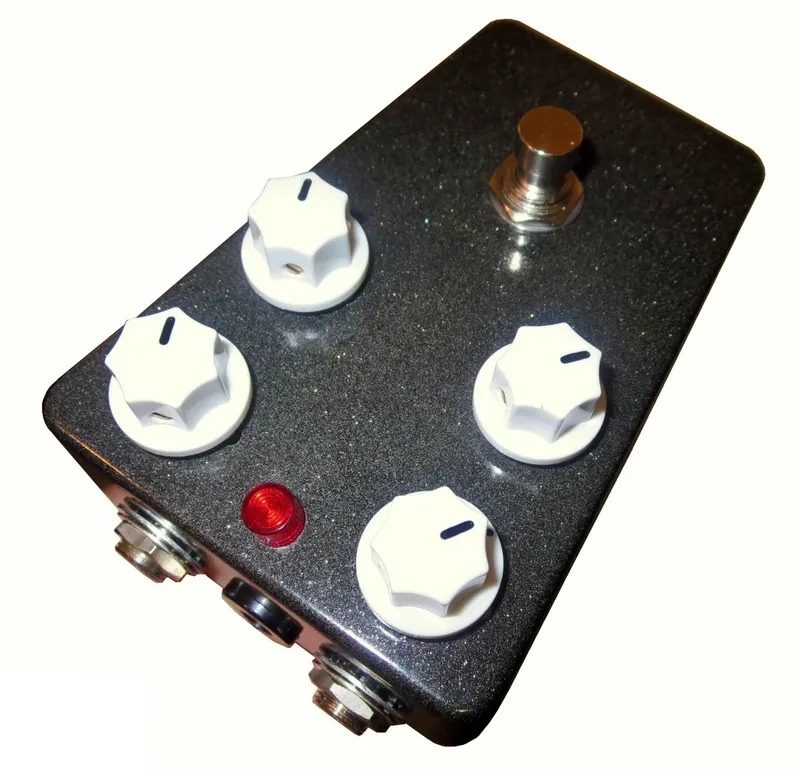
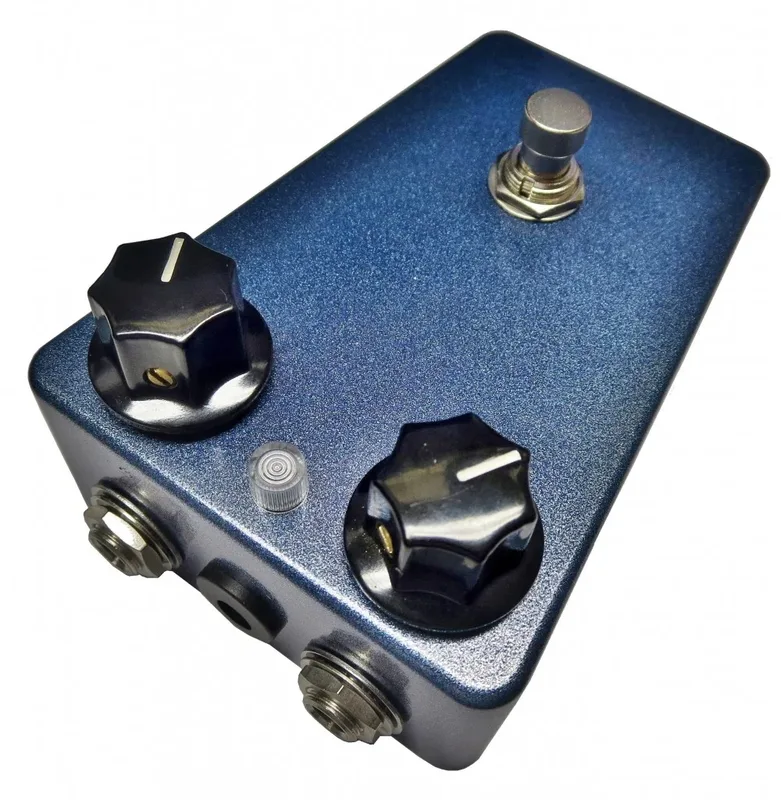
The pedal uses a standard polarity DC jack, with rear facing American made input and output jacks1. The enclosure is a futuristic trapezoidal design that Chase Tone describes as pedal board and gig bag friendly, finished in a high quality translucent Star Dust powder coat1.
Placement in a pedal chain
Chase Tone's guidance on where to put the Hi-Octave is straightforward:
"Placing the Metallic Blue Hi-Octave Stardust before overdrive and fuzz pedals is usually most optimal."
That puts it early in the chain, ahead of drives and fuzzes such as those in the Chase Tone fuzz range, so the pedals after it shape the octave-fuzz signal1.
Sources (1)
- Chase Tone™ Metallic Blue Hi-Octave, Chase Tone (chasetone.com)