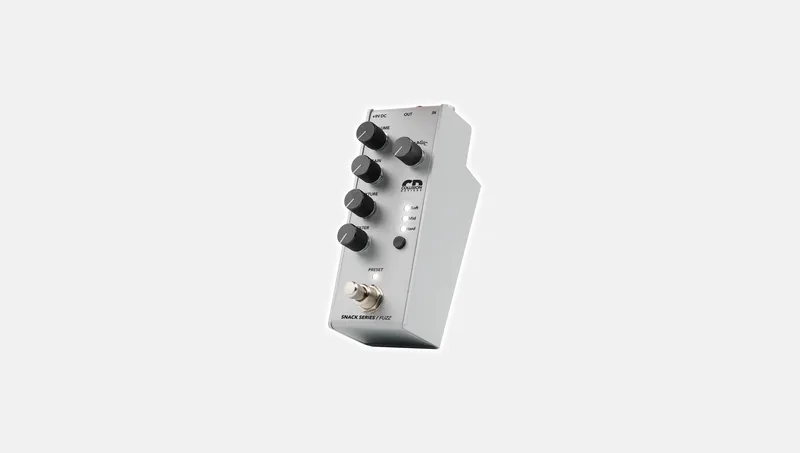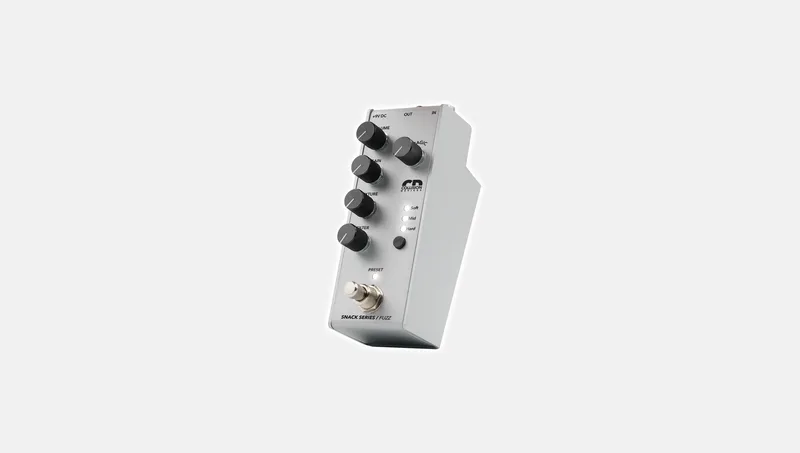


The Collision Devices TARS is a fuzz pedal with an analog resonant filter, built around the idea of combining the guitar and synth worlds in one box. Collision Devices describes it as a concept pedal: a fuzz circuit feeding a filter inspired by the Korg MS-20, the classic mono synth whose filter section is prized for its aggressive, vocal resonance1.
The fuzz side is voiced to cover a wide range. Collision Devices says it goes from grainy low-gain sounds to round and powerful fuzz and distortion tones, with a gain setting that shapes how far it pushes1. The filter side is where the TARS gets its character: a low-pass filter with a Cutoff control sweeping 15Hz to 44kHz, which the maker says creates fuzzy, noisy textures and helps the sound cut through the mix12.
Where the TARS came from
The TARS is built around a filter inspired by the Korg MS-20 filter section, the analog synth filter known for its aggressive resonance1. Paired with that filter is a gain setting that lets the pedal go from grainy low-gain sounds to round and powerful fuzz and distortion tones1. The Black & White version of the pedal carries the same gain feature, aimed at players who want to create fuzzy-noisy textures and cut through the mix4.
How the TARS is controlled
The TARS centers on the interaction between its fuzz gain and its MS-20 style filter. The Cutoff control sets where the low-pass filter sits across a 15Hz to 44kHz sweep21. Beyond that, the pedal offers several mode switches that change how the filter and fuzz relate:
| Control or mode | What it does |
|---|---|
| Cutoff | Low-pass filter sweep, 15Hz to 44kHz2 |
| 2P/4P | Filter slope of -12dB/Oct or -24dB/Oct2 |
| Filter + Fuzz | Runs the two blocks in serial or in parallel2 |
| Add Fuzz | Switches an additional filtered fuzz layer on or off2 |
The 2P/4P switch is the one players coming from synths will recognize: it chooses between a gentler 12dB-per-octave slope and the steeper 24dB-per-octave response associated with the MS-20's filter. The serial/parallel routing means the filter is not locked behind the fuzz, and the Add Fuzz mode layers a filtered fuzz on top of the main signal567.
What reviewers said
Guitar Pedal X named the TARS among its best new fuzz pedals of 2023, and reviewer Stefan Karlsson was direct about where it sits:
"One of the finest filter fuzzes out there for sure"
That same review lists the pedal's full mode set, the 2P/4P slopes, serial or parallel Filter + Fuzz routing, and Add Fuzz on/off, as the features that define it2.
Finishes and versions
The TARS has been offered in several finishes over its run:
- Standard: white enclosure with silver custom-made knobs and faders1
- Black: offered alongside the Standard finish1
- Black & White: a version listed as a fuzz with analog filter, in white finish with silver custom-made knobs and faders, priced at €332.504
- Mirror Polished: listed on the maker's discontinued index8
The TARS, the Black & White version, and the TARS DLX are all part of the Collision Devices lineup, with the TARS and Black & White version each priced at €332.50 EUR145. The Mirror Polished version appears on Collision Devices' discontinued page8.
TARS versus TARS DLX
The TARS DLX is a companion pedal in the same Collision Devices family, sold alongside the standard TARS, which is priced at €332.50 EUR14.
| TARS | |
|---|---|
| Type | Fuzz with a filter inspired by the Korg MS-201 |
| Filter slopes | 2P/4P: -12dB/Oct or -24dB/Oct72 |
| Filter + Fuzz routing | Serial or Parallel2 |
| Add Fuzz | On/Off2 |
| Sound range | Grainy low-gain sounds to round and powerful fuzz/distortion tones1 |
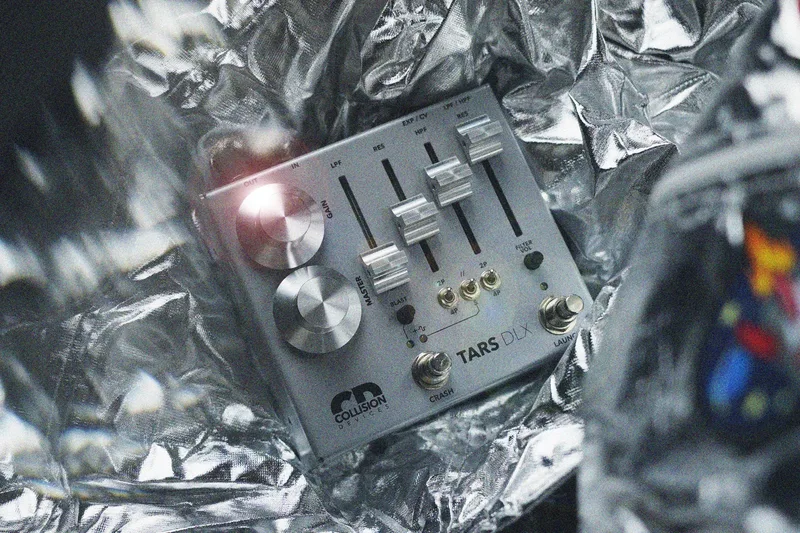
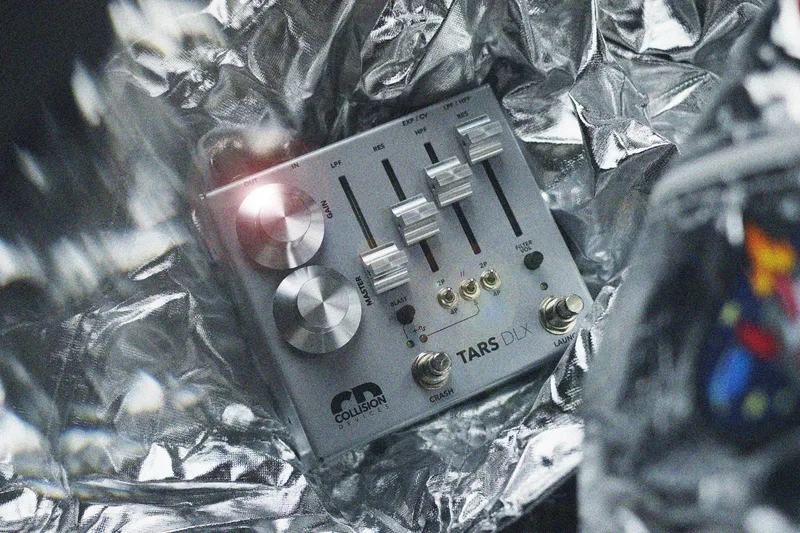
On the DLX, the fuzz circuit was reworked to open up the high end so it works as a low-gain fuzz or distortion, and gets more aggressive with the Gain maxed5. The BLAST circuit feeds part of the signal back into itself for what the maker calls huge and abrasive sounds5. Delicious Audio's coverage notes that when the Blast button is on, a feedback fuzz is added to the first fuzz, and that the Add Fuzz mode, triggered by the Crash footswitch, is unique to the pedal7. Pedal of the Day's 2025 review adds that the Add Fuzz configuration lets the filters work as EQ shaping or phasing effects6.
Both pedals keep the same core idea: fuzz and MS-20 style filters that can be used separately, in parallel or in serial5.
Where the TARS sits in the Collision Devices range
Collision Devices makes the TARS alongside the rest of its pedal range3. The pedal has appeared in more than one finish, including a version listed as "Tars "Mirror Polished""841 and a Black & White edition priced at €332.501, the same price as the standard TARS1. Reviewers have taken a strong view of where it stands among its type, with one calling it "One of the finest filter fuzzes out there for sure"2.
Videos
Collision Devices
The Pedal Zone
collector//emitter
Questions
Is the Collision Devices TARS analog?
Yes. The TARS is an analog pedal, and its resonant filter is an analog design inspired by the Korg MS-20 filter section. Collision Devices describes it as a fuzz with an analog resonant filter, and the TARS DLX successor carries the same analog filter approach with two MS-20 inspired filters.
How much current does the TARS draw?
The TARS draws 150mA from a 9V DC center-negative power supply, according to RockBoard's PedalPedia listing for the pedal. That current draw is on the higher side for an analog fuzz, so a dedicated spot on a power supply is the practical choice.
What is the difference between the TARS and the TARS DLX?
The TARS DLX is a reworked and expanded version of the TARS. It is a dual distortion and fuzz with two analog resonant filters, a second feedback fuzz circuit called BLAST, and an upgraded Add Fuzz mode with a high-pass filter. The original TARS has one fuzz circuit and one MS-20 style filter.
Can the TARS filter be used without the fuzz?
Yes. The TARS offers Filter plus Fuzz routing in serial or parallel, so the filter can run on its own rather than only after the fuzz. On the TARS DLX, Collision Devices states plainly that the fuzz and filters can be used separately, in parallel or in serial.
Sources (8)
- TARS - filter fuzz - COLLISION DEVICES, Collision Devices
- Guitar Pedal X, Guitar Pedal X, 2023-12-18
- TARS by Collision Devices, RockBoard PedalPedia, 2026
- TARS Black & White, Collision Devices
- TARS DLX, Collision Devices
- Collision Devices TARS DLX Dual Distortion/Fuzz w/Analog Filters, Pedal of the Day, 2025-07-13
- New Pedal: Collision Devices TARS DLX Dual Fuzz + Filter, Delicious Audio, 2024-12-31
- Discontinued pedals, Collision Devices