

The Colortone Lo-Fi Delay is a dual-channel delay pedal from Colortone Pedals, handcrafted in Sydney, Australia1. Premier Guitar described it on its 2023 release as "a grainy, analog tape-sounding, dub-style delay rebuilt from the ground up as a complete redesign of the original"2, so the pedal on sale today is a second-generation version of an earlier Colortone design.
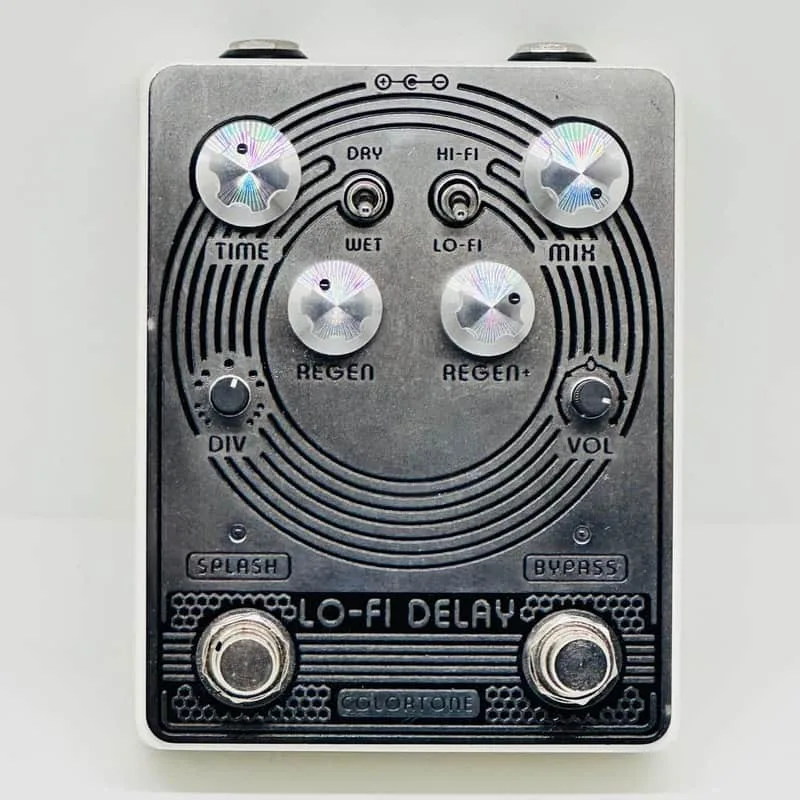
Where most delay pedals give you one delay line, this one gives you two: it is a tempo-synchronized dual-channel delay at its core, with each channel having its own independent Regen (decay) and Time controls2. Delicious Audio summed up what that buys a player: "It's perfect for introducing dub-style accents to specific stabs or phrases, incorporating ambient delay splashes, or injecting bursts of wild feedback into your performance"1.
The three delay voicings
A mode switch selects between three delay types: a pristine hi-fi delay and two lo-fi, tape-style delays with different filtering options1. Premier Guitar broke down how the three positions differ2:
| Position | Voicing | What it does |
|---|---|---|
| Up | HI-FI | A crisp, hi-fidelity, non-destructive repeated delay |
| Center | LO-FI | Darker repeats, like a tape delay with a slight hint of mechanical tape warble; uses a low-pass filter in the delay feedback line |
| Down | LO-FI | Same tape-style character, but uses a high-pass filter in the feedback line instead |
The hi-fi position is the clean tool of the three; the two lo-fi positions are where the pedal earns its name, trading fidelity for the darker, degraded character of a worn tape echo12.
Controls and the SPLASH footswitch
Each channel carries its own controls2:
- Regen: controls the decay duration and the number of regenerative repeats2
- Time: sets that channel's delay time2
- Regen+: a second decay setting the SPLASH footswitch calls up on demand1
- Div: controls an alternate speed, at a 1:1 ratio at 3 o'clock1
The SPLASH footswitch is the performance control at the heart of the pedal. Pressing it momentarily switches the decay time to match the Regen+ knob setting while it is held down1. Premier Guitar described it as a switch that "momentarily sends the delay into a predetermined amount of feedback and/or tempo change"2. Because you set the amount in advance with Regen+, the burst of repeats or feedback is controlled rather than a gamble, which is what makes the dub-style accents practical in a live setting.
WET and DRY modes
The pedal has two operating modes, and they change what SPLASH does2:
- WET mode acts like a normal delay. The delayed repeats are mixed against your dry signal, with the decay time set by the Regen knob. Momentarily pressing SPLASH switches the decay time to the Regen+ setting for as long as you hold it2.
- DRY mode is designed for running "quietly." The delay is silent until you hold the SPLASH footswitch down, at which point it activates2.
DRY mode is the dub player's tool: nothing repeats until you stab a note and hold the switch, so the effect lands only on the phrases you choose. WET mode is the conventional setup for a delay that is always in the mix21.
Power
The Colortone Lo-Fi Delay operates on a 9V DC center-negative input voltage, with 9V DC isolated power recommended2.
Colortone recommends an isolated 9V DC supply2, so plan on a dedicated isolated output on your power supply rather than a daisy chain shared with other pedals.
How it compares to other lo-fi delays
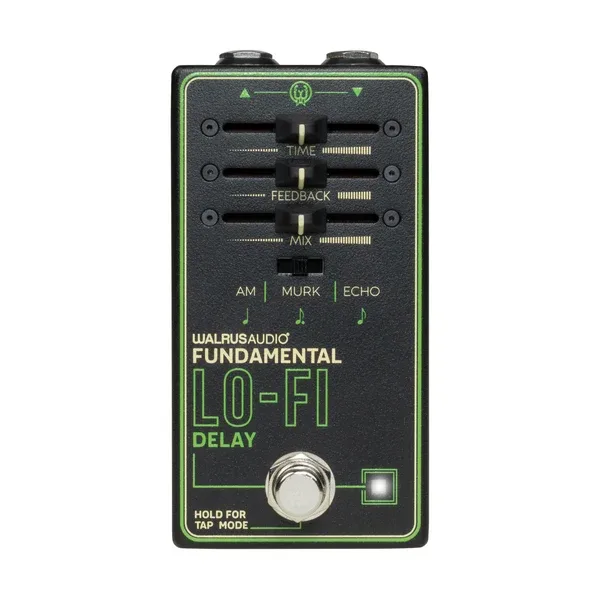
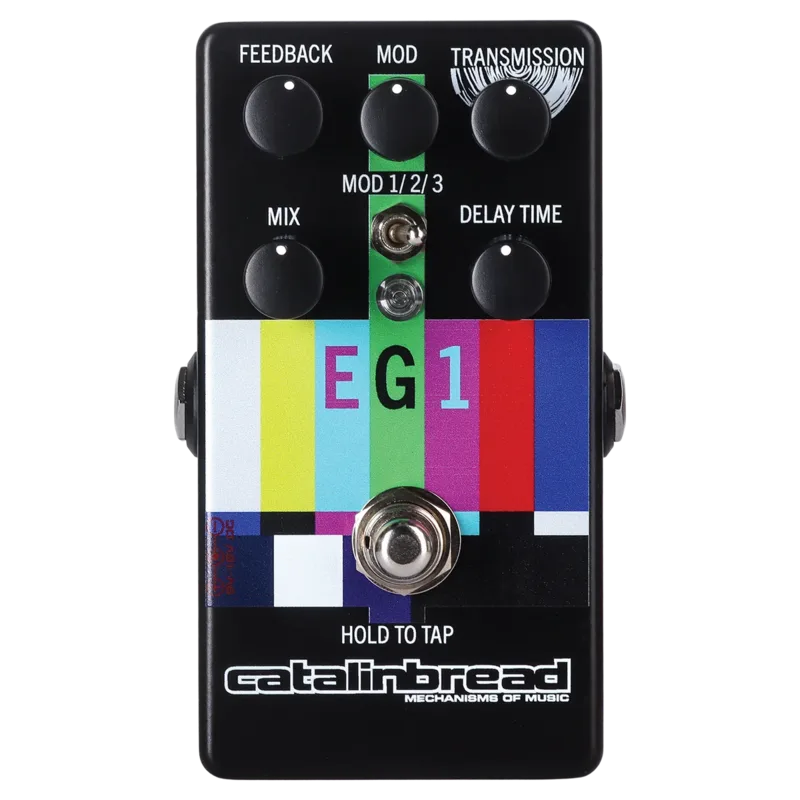
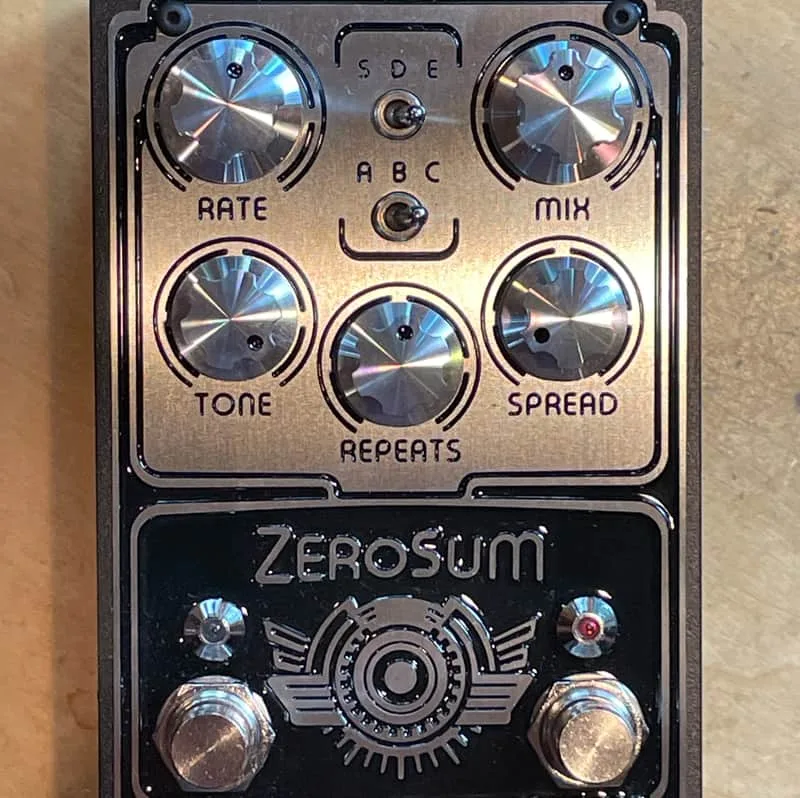
The lo-fi delay category covers several approaches. The Walrus Audio Fundamental Lo-Fi Delay takes a rhythmic, multi-tap approach with analog-style tone shaping, where short delay times gather into dense lo-fi ambience and longer times spread into syncopated patterns3. The Catalinbread EG1 Lo-Fi Delay is a tape-style lo-fi delay with a Mix control that runs from 100% dry to 100% wet, and a tap-input mode for setting delay time hands-free4. The Colortone stands apart from both on its dual-channel layout and its momentary SPLASH feedback switch, which neither of those pedals offers. Colortone has since expanded its delay line with the Colortone ZeroSum, a full-stereo rhythmic delay with Single and Dual Head modes.
Videos
colortonepedals
Mike Hermans
Brett Kingman
Questions
What delay types does the Colortone Lo-Fi Delay offer?
It offers three delay types: a pristine hi-fi delay and two lo-fi, tape-style delays with different filtering options. The hi-fi voicing gives crisp, non-destructive repeats, while the two lo-fi positions darken the repeats like a tape delay with a hint of mechanical warble, one using a low-pass filter and the other a high-pass filter in the feedback line.
What does the SPLASH footswitch do?
Pressing and holding the SPLASH footswitch momentarily switches the decay time to match the Regen+ knob setting, sending the delay into a predetermined amount of feedback and tempo change. In DRY mode, the delay only activates while SPLASH is held down, so you can drop delay splashes or bursts of feedback onto single stabs and phrases.
What is the difference between WET and DRY mode?
WET acts like a normal delay: repeats are mixed against your dry signal with the decay set by the Regen knob, and pressing SPLASH jumps the decay to the Regen+ setting. DRY runs quiet, with no delay until you hold SPLASH, which makes it suited to dub-style accents on specific notes or phrases rather than a constant wash of repeats.
What power supply does the Colortone Lo-Fi Delay need?
It runs on a 9V DC center-negative input, and Colortone recommends a 9V DC isolated power supply. That means a dedicated isolated output rather than a daisy chain shared with other pedals is the safe choice for this pedal.
Is the Colortone Lo-Fi Delay tempo-synced?
Yes. Premier Guitar describes it as a tempo-synchronized dual-channel delay at its core, with each channel having independent Regen and delay Time controls. A Div knob controls an alternate speed, sitting at a 1:1 ratio at 3 o'clock.
Where is Colortone made?
The Lo-Fi Delay is handcrafted in Sydney, Australia, by Colortone Pedals. Premier Guitar covered it in 2023 alongside two other Australian artisan guitar pedals from the same maker.
Sources (4)
- Colortone Pedals LoFi Delay, Delicious Audio, 2024-06-03
- Colortone Introduces Trio of Guitar Pedals, Premier Guitar, 2023-08-23
- Guitar Pedal X, Guitar Pedal X, 2026-09-16
- EG1 Lo-Fi Delay, Catalinbread Effects