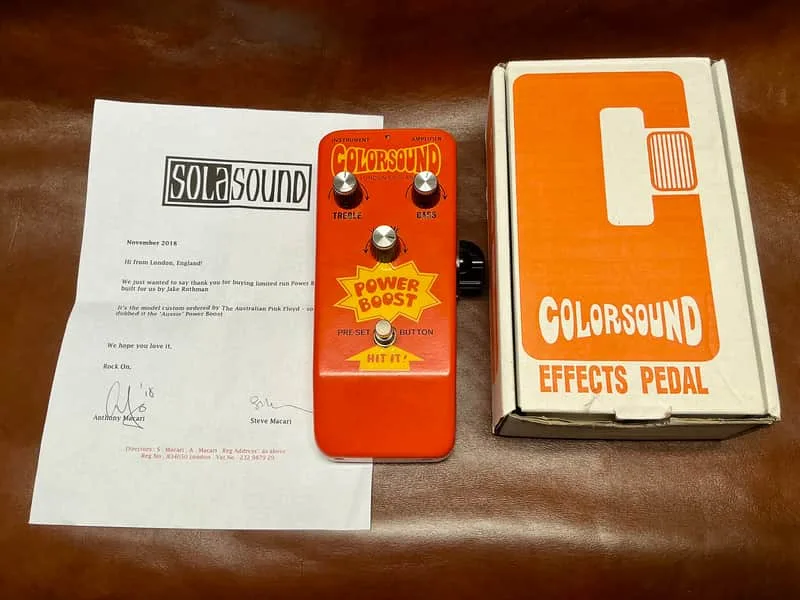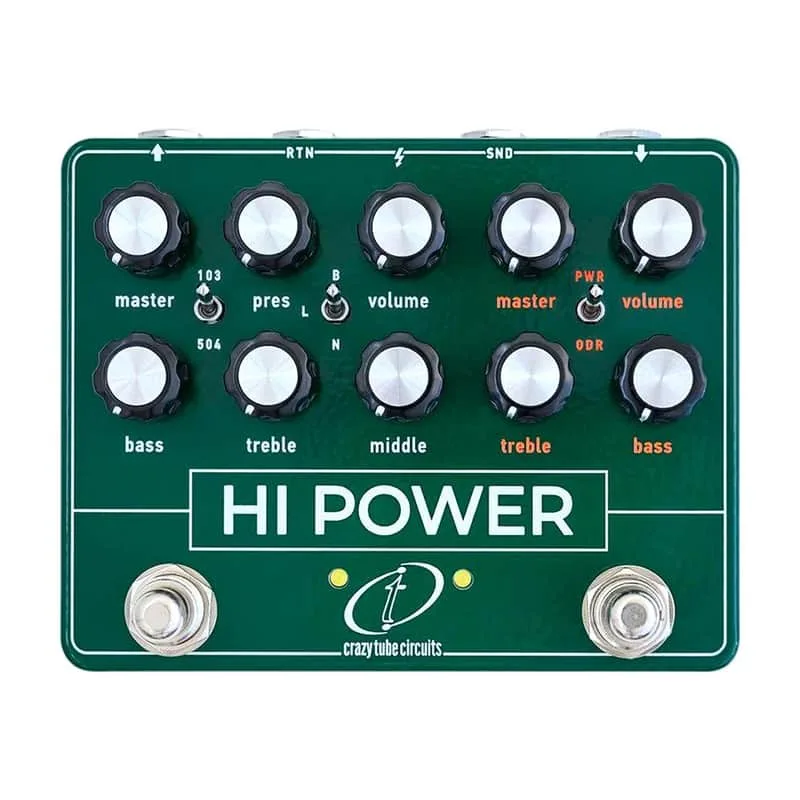


The Crazy Tube Circuits Hi Power is an all-analog dual booster/overdrive pedal that pairs two pieces of British amp and pedal history in one box: a Hiwatt-voiced amp section and a faithful reproduction of the Colorsound Power Boost/Overdriver circuits12. The left side is a 100W and 50W Hiwatt voiced clean/overdrive circuit, and the right side recreates the Colorsound Power Boost23. The combination is the one David Gilmour was known to use back in the day, notably on Pink Floyd's Wish You Were Here album, and the pedal aims to recreate those overdrive tones143.
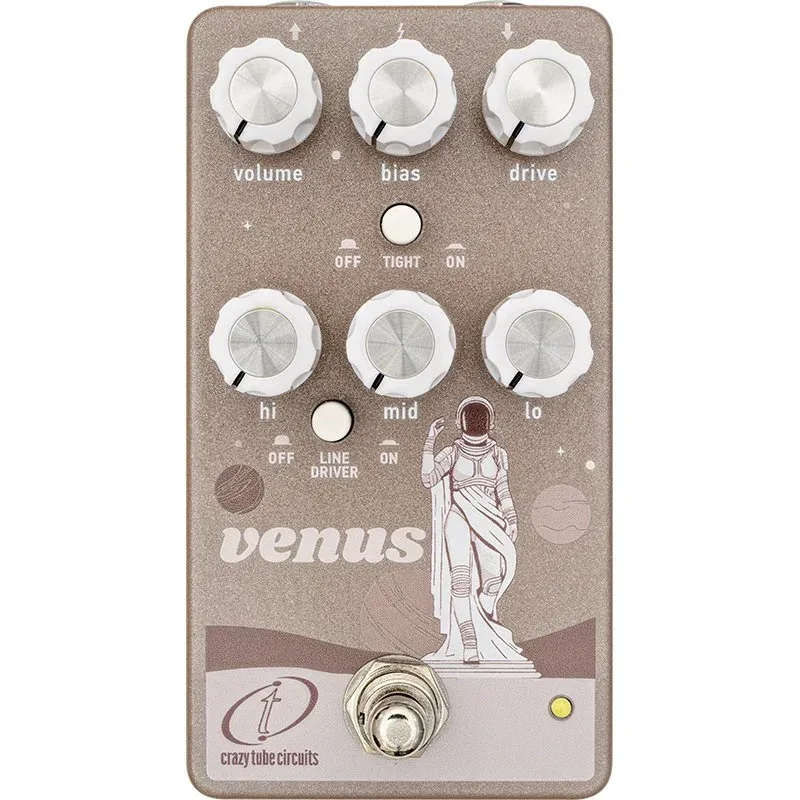
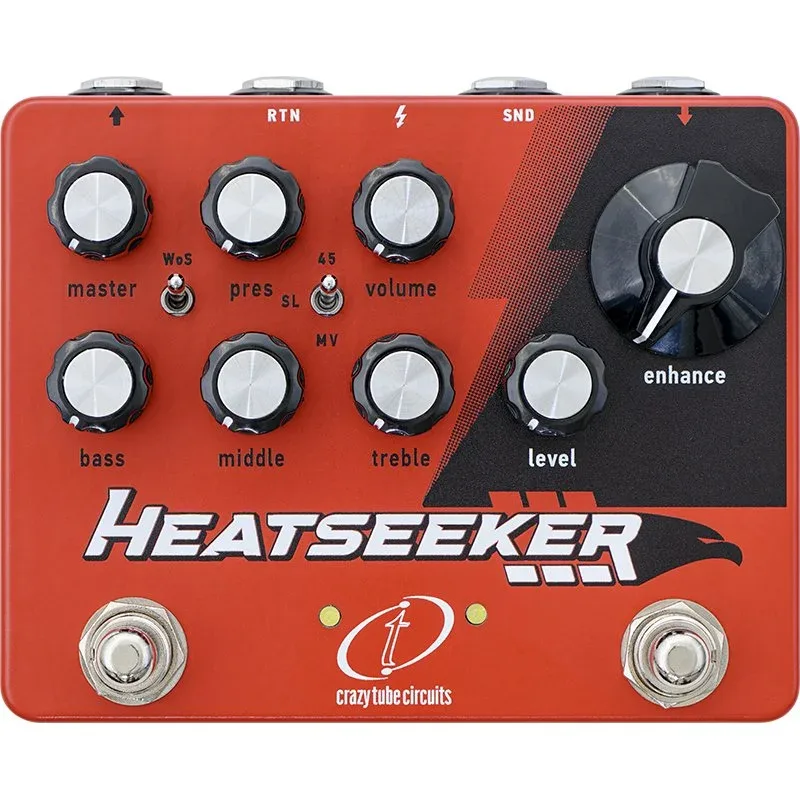
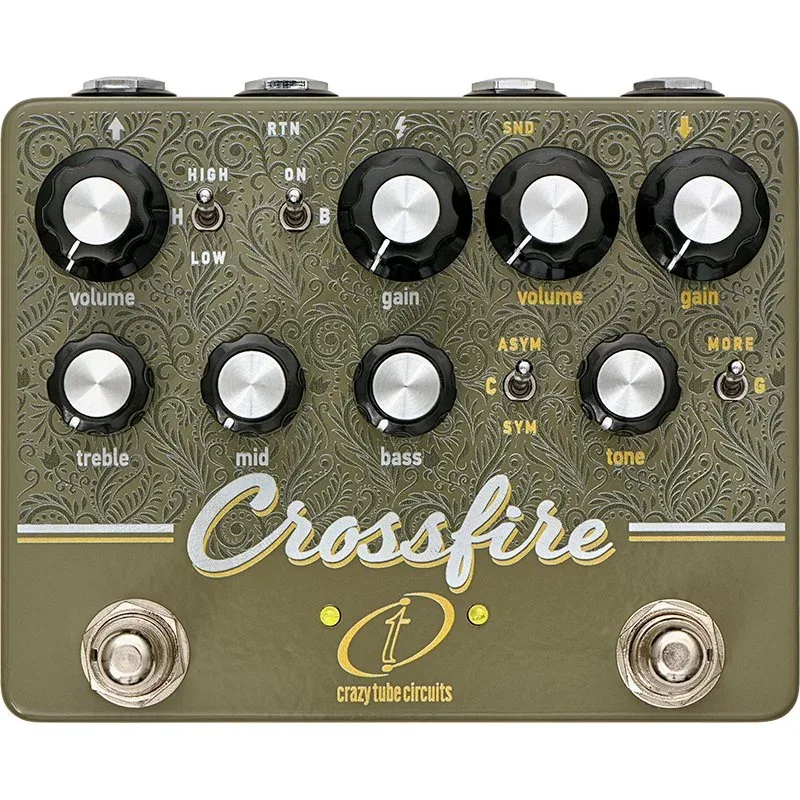
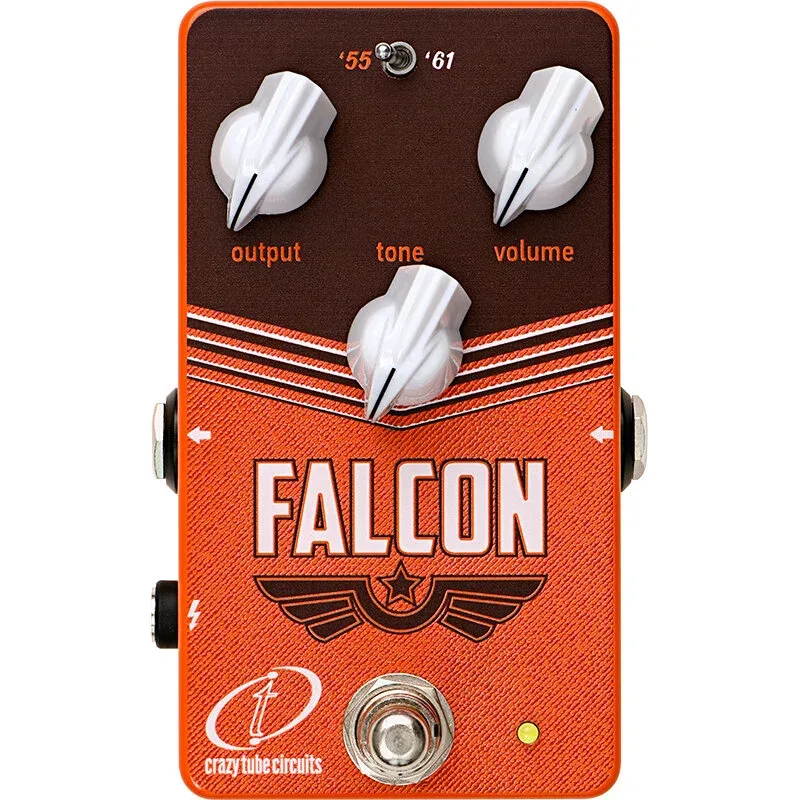
Crazy Tube Circuits has a track record of pairing classic amp and drive pedal sounds, and the Hi Power is part of the company's twin-pedal range1. It is made in Greece and sits alongside other amp-in-a-box designs in the range such as the Crazy Tube Circuits Venus and the Crazy Tube Circuits Heatseeker.
A Hiwatt amp and a Colorsound Power Boost in one pedal
The Hi Power is built as two independent circuits in one enclosure. The left side is a Hiwatt-voiced amp section covering both the DR103 100-watt and DR504 50-watt amps, selectable by a toggle13. The right side is a recreation of the Colorsound Power Boost and Overdriver, built with BC184 transistors running at 18V DC through an internal voltage booster42.
The two sections are independently footswitchable, with the boost placed before the amp1. Between them sits a send and return loop, so you can patch another effect into the chain between boost and amp, an arrangement Guitar World's reviewer highlighted as a genuinely useful flexibility1. Each side can also be used on its own, which gearnews.com noted makes the pedal versatile beyond the combined Gilmour-style setup4.
For players chasing the Wish You Were Here sound specifically, gearnews.com described the payoff: with both sides combined, "players can get those smooth lead lines with epic sustain, as used all over that Pink Floyd recording"4.
"players can get those smooth lead lines with epic sustain, as used all over that Pink Floyd recording"
The controls
The two halves of the pedal are laid out like the gear they recreate. Top-mounted jacks make it easy to integrate into a pedalboard setup4.
| Section | Controls | What they do |
|---|---|---|
| Boost (right side) | Volume, Master | Volume sets the gain, Master sets output volume1 |
| Boost (right side) | Bass, Treble | Temper the boost/drive character1 |
| Boost (right side) | PWR/ODR toggle | Chooses 18V Power Boost or 9V Overdriver voicing13 |
| Amp (left side) | Volume, Master | Gain and output volume, as on the boost side1 |
| Amp (left side) | Bass, Middle, Treble, Presence | A full four-band, amp-style EQ15 |
| Amp (left side) | 103/504 toggle | Chooses DR103 or DR504 amp voicing13 |
| Amp (left side) | B/L/N toggle | Normal channel, Brilliant channel, or both together for added gain1 |
| Internal | EQ and Volume Boost trimmers | Fine-tuning inside the pedal1 |
| Global | Buffer/True switch | Selects true bypass or buffered bypass1 |
The boost section's character changes a lot across its Volume knob. Guitar World's reviewer Trevor Curwen found the drive comes with a glassy top-end, and that the higher reaches of the Volume knob add a fuzzy edge until it gets raucously fuzzy up full1. The Bass and Treble knobs are there to temper that character.
PWR versus ODR
The boost side's voicing switch chooses between two versions of the original Colorsound circuit. PWR is the 18-volt Power Boost, the higher-voltage, more aggressive drive. ODR is the nine-volt Overdriver version, which Curwen described as "smoother and not quite as rampantly in-yer-face"1. Guitar World's 2025 roundup of notable pedals summarized the choice as 18 volts for aggressive drive and a nine-volt Overdriver mode for smoother break-up5.
103 versus 504
On the amp side, the 103/504 switch moves between the two Hiwatt models. The 103 setting is a recreation of the DR103 100-watt amp, with high headroom and greater dynamic response. The 504 setting toggles to the DR504 50-watt version, which eschews that headroom and dynamic response for more compression and gain13. A second toggle, B/L/N, selects the Normal channel, the Brilliant channel, or a combination of the two working together for added gain1.
Power, bypass and connections
The Hi Power runs from a 9V DC center negative power supply, which is not supplied with the pedal14. The Colorsound side's 18 volts come from an internal voltage booster, so no 18V supply is needed42.
The Hi Power does not ship with a power supply. You need a 9V DC center negative adaptor; the internal voltage booster handles the 18V the Colorsound side requires14.
Bypass is true bypass, but the Buffer/True switch lets you keep the signal buffered with the pedal off, an option worth considering on larger boards. Connections are standard throughout: input, output, send, return and a footswitch jack1.
What reviewers said
Guitar World's review, by Trevor Curwen, was positive overall. On the amp section, he found "really good dynamic response as the amp reacts to your playing across a range of authentic-sounding Hiwatt tones" from clean to everything-on-10 crunch1. With both sections engaged, he wrote that "together the boost seems to be the perfect complement to the amp, pushing it into some familiar clear yet smooth lead tones"1.
His likes and dislikes were summarized plainly:
- Likes: Effects loop, plenty of tweakability, compact size for a twin-footswitch pedal1
- Dislike: The Hiwatt side may need a fair bit of dialing in for optimum use with your own amp1
His verdict: "the Hi Power has an obvious appeal to Gilmour fans, but from a wider perspective it combines two classic tonal flavours" that are rare in pedal form, summed up as "Two respected vintage sounds in one pedal"1.
"Two respected vintage sounds in one pedal."
Guitar Pedal X's Stefan Karlsson framed the pedal as recreating "the overdrive tones of the legendary setup used by David Gilmour in the recordings of Pink Floyd's Wish You Were Here," calling it an all-analog dual booster/overdrive amp-in-a-box3. At launch in December 2023 it was available for orders via the Crazy Tube Circuits webstore and imminently at leading international dealers3.
Where it sits among overdrive pedals
As a dual drive/boost pedal with an effects loop and amp-style EQ, the Hi Power covers ground that a single overdrive pedal or a simple boost pedal does not: two footswitchable circuits, each usable alone, with the option to insert other effects between them. Players comparing it against other Crazy Tube Circuits amp-voiced pedals, like the Marshall-voiced Heatseeker or the Tube Driver-inspired Venus, will find the Hi Power is the company's take on a specifically British, Hiwatt-plus-Colorsound pairing415.
Videos
That Pedal Show
Pete Thorn
CrazyTubeCircuits
Questions
Does the Hi Power have a buffer or true bypass?
It is true bypass, and it also has a Buffer/True switch, so you can choose to keep a buffered signal path when the pedal is off. That is useful on long pedalboards where you want to avoid signal loss from cable capacitance.
What is the difference between the PWR and ODR settings?
The Boost section's toggle chooses between the 18-volt Power Boost sound and the nine-volt Overdriver version. PWR runs at 18 volts for aggressive drive, while ODR is smoother and less in-your-face, with gentler break-up. The pedal's internal voltage booster produces the 18 volts from the 9V supply.
Can the Hi Power's two sides be used separately?
Yes. The two sections are independently footswitchable, and each side can be used on its own. The boost comes before the amp in the signal path, and there is a send and return loop between the two sections so you can patch other effects in between.
Does the Hi Power come with a power supply?
No. It runs from a 9V DC center negative adaptor, which is not supplied. The Colorsound side gets its 18 volts from an internal voltage booster, so a standard 9V supply is all you need.
What transistors does the Hi Power use?
The Colorsound Power Boost side uses BC184 transistors, running at 18V DC thanks to an internal voltage booster. The BC184 is the transistor type associated with the original Colorsound Power Boost and Overdriver circuits the pedal reproduces.
Sources (5)
- Crazy Tube Circuits Hi Power review, Guitar World, 2024-04-20
- Crazy Tube Circuits channels the sound of Pink Floyd's Wish You Were Here in a pedal with the Hi-Power, Guitar World, 2023-12-07
- Guitar Pedal X, Guitar Pedal X, 2023-12-07
- Crazy Tube Circuits HI POWER, gearnews.com, 2023-12-07
- Guitar World's 30 favorite guitar pedals from the past 5 years, Guitar World, 2025-06-02