

The DOD Carcosa Fuzz is an analog fuzz pedal from DOD, built around silicon transistors with what the maker describes as carefully tuned filtering and gain staging1. It is a versatile fuzz rather than a one-sound box: DOD says it covers "a wide range of tones, from tight and focused distortion to wild, sputtery chaos"1, and reviewers broadly agreed, with MusicRadar calling it "a versatile fuzz with sounds ranging from smooth to very nasty at a very competitive price"2.
What sets the Carcosa apart from most fuzz pedals is its structure. A two-way toggle switch chooses between two voicings, Demhe and Hali, and a bias-style control called After reshapes the fuzz texture from woody and classic to splatty and broken. It is also true bypass, with enough output to work as a boost3.
Controls and the Demhe and Hali modes
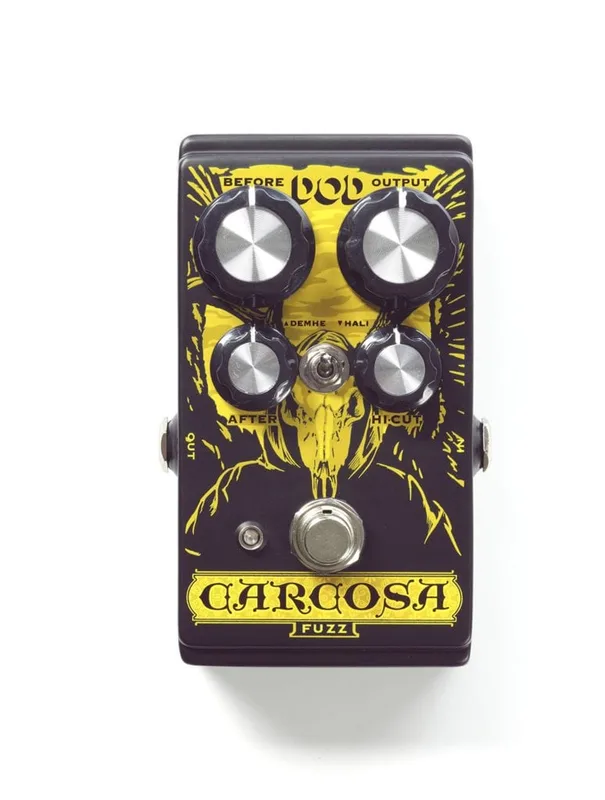
The Carcosa has four knobs and one toggle. DOD's product page lays out what each control does7:
| Control | What it does |
|---|---|
| Before | Increases or decreases the amount of fuzz (pre-gain)71 |
| After | A bias control that changes the texture of the fuzz7 |
| Output | Increases or decreases overall output level; DOD notes there is a lot of level here, so it can be used as a boost7 |
| Hi-Cut | Reduces high-frequency detail; DOD suggests starting at 9:00, going counter-clockwise for brighter pickups and clockwise for darker pickups7 |
| Toggle | Selects Demhe (up) or Hali (down) voicing7 |
The After control is where much of the pedal's range lives. Counter-clockwise, DOD says it attains loud "woody" fuzz tones that clean up with the guitar volume knob. Full clockwise gives splatty "broken" fuzz tones, "horn-like" vowel sounds and sustain. The middle ranges move from familiar classic fuzz to more modern "wall-of-sound" voicings7. Delicious Audio noted that when extreme bias (After) ranges are selected, "many wild and over-the-top sounds are possible"3.
The toggle chooses the pedal's starting character, and DOD frames the two modes around your amp24:
- Demhe (up): a bass and low-mid boost, which DOD says works great for clean channel usage7. In DOD's own write-up of a Guitar.com review, the Demhe setting "enables you to plug in to a 'clean' amp setup" with that low-end lift4.
- Hali (down): a bass cut, which DOD says works great for dirty channel usage7. Hali "cuts the bass of the pedal, ensuring it doesn't result in that dreaded woolly 'woof'" when stacked into an already-driven amp4.
The mode names are not arbitrary. MusicRadar's reviewer Trevor Curwen notes that instead of plain "Fuzz 1 or Fuzz 2," DOD's designer Tom Cram "gets all literary on us," naming the two modes after names taken from Robert W. Chambers's book The King in Yellow2.
Boost duty and volume-knob cleanup
Two practical questions for any fuzz pedal are whether it can back off to a boost and whether it responds to the guitar's volume knob. On both counts the Carcosa does well, according to DOD and reviewers alike712.
DOD says the pedal "can also be used as a bright dirty boost that can get into treble booster territory" in Hali mode7, and that the Output control alone has enough level for boost use7. MusicRadar's reviewer found the same from the playing side: "the Carcosa has tons of output and can be used as a clean or crunchy boost before you start getting into the realms of fuzz"2.
On cleanup, DOD says the pedal's "ability to clean up with the guitar's volume knob, especially in Demhe mode, adds a layer of expressiveness"1, and the woody end of the After control is specifically where those volume-responsive tones live7.
Where the circuit came from
The Carcosa's lineage traces back to the Maestro FZ-1S Super-Fuzz. MusicRadar reports that the pedal "has its origins in the circuitry of the Maestro FZ-1S"2, and designer Tom Cram told the story in DigiTech's origin-stories article: "I knew that the next DOD fuzz had to be a take on this circuit"8.
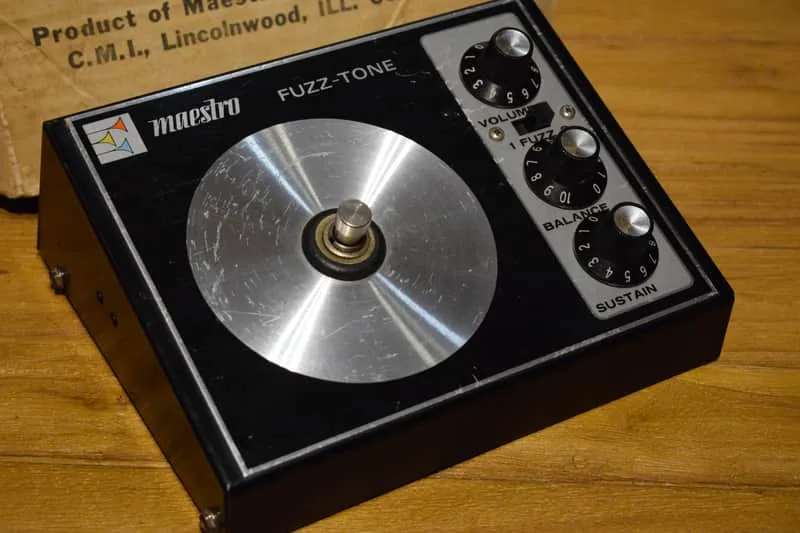
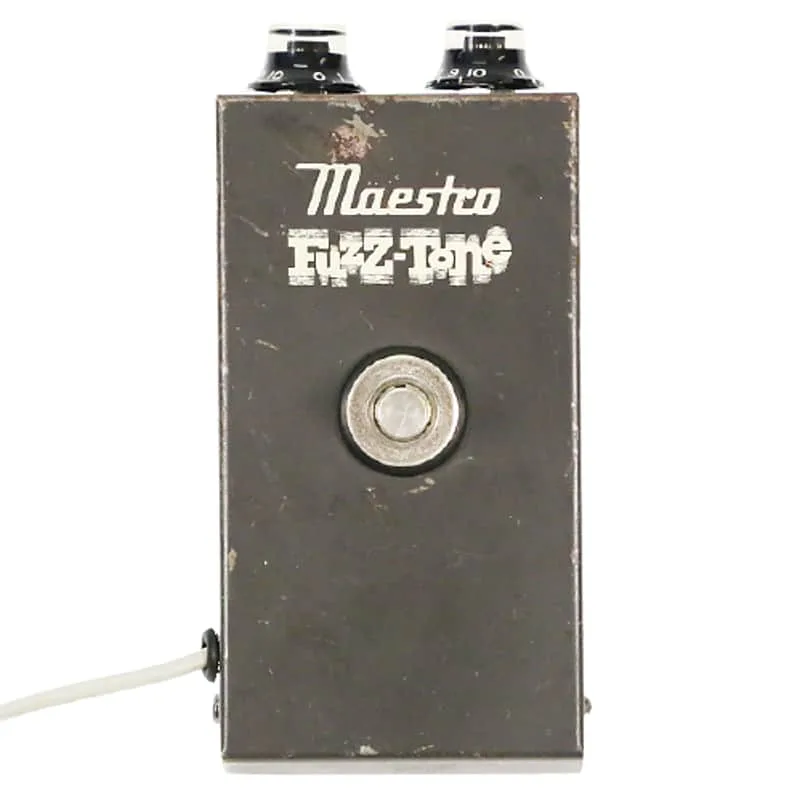
The Maestro family itself goes back further. The original Maestro FZ-1 Fuzz-Tone was designed by recording engineer Glenn Snoddy and engineer Revis V. Hobbs, with a three-germanium-transistor circuit9, after Snoddy and Hobbs set out to recreate the distorted sound of a failing console transformer using transistors and pitched the result to Gibson10. The FZ-1 was refined in 1965 and reborn as the FZ-1A, and a later FZ-1B version was crafted by Robert Moog using a nine-volt power supply911.
Cram's development process for the Carcosa was practical. He found a schematic online and had a colleague named Parker breadboard it, then built a version on tagboard based on the breadboarded circuit8. From there the circuit moved well beyond a clone:
- A clipping stage was added
- The voicing of both modes was changed
- Power-filtering was added
- Most of the part values were changed
- The taper of the pots was changed8
All told, Cram says "It took us both about a year of fiddling and numerous changes before we felt like we had it right"8.
The name and artwork have their own story. Cram had been reading a lot of Robert Chambers and Ambrose Bierce at the time, and the inspiration for the pedal name and graphics came from that early 19th century cosmic horror reading8. The graphic itself came from a dream: "The graphic was from a dream that I had, when I awoke I drew it out on a 3x5 card," Cram recalls, and the drawing was handed to the graphic designer who turned it into the final art8.
What reviewers said
Reception was positive across the press that covered it. When the pedal launched in 2016 as a Pro Guitar Shop-exclusive, MusicRadar's news desk wrote "We're liking the sounds of this a lot," noting it covered "classic to crazy" at $99.995.
MusicRadar's full review, by Trevor Curwen, praised its "versatile range of sounds" and summed it up as "a versatile fuzz with sounds ranging from smooth to very nasty at a very competitive price"2. Guitar.com's review, republished by DigiTech, called it "a surprisingly versatile fuzz pedal that does far more than just the filthy sounds its dark graphics imply," with "analog fuzz with tones that range from porcine fatness to desiccated shards"4. That review priced it at £129.0012, while Delicious Audio's 2023 buying guide listed it at $1246.
"a gnarly, thick fuzz that's actually a lot more versatile than its heavy metal visuals might make you assume"
In a 2017 video, MusicRadar demoed the Carcosa alongside other pedals using a Fender American Professional Stratocaster HSS and a Vox AC1514. Delicious Audio placed the Carcosa in its guide to the best Maestro FZ-1 Fuzz-Tone clones and evolutions, describing it as "a modern, silicon fuzz that can do a lot more than the other pedals on this list"62.
Where it sits in DOD's fuzz line
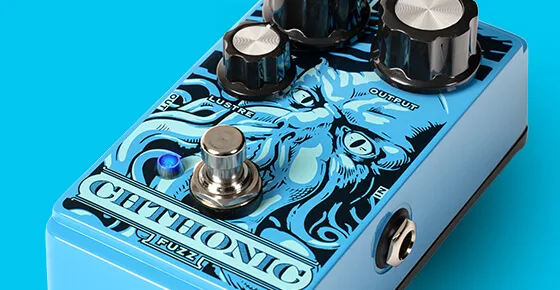
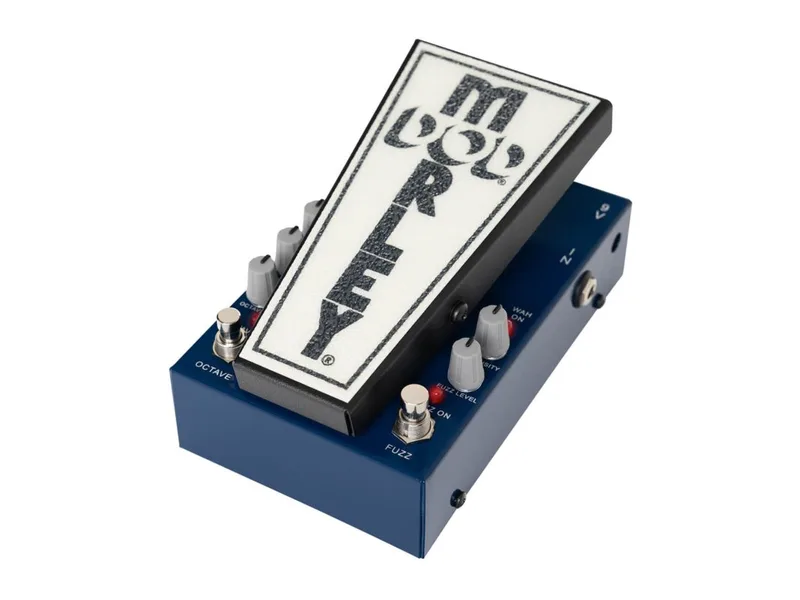
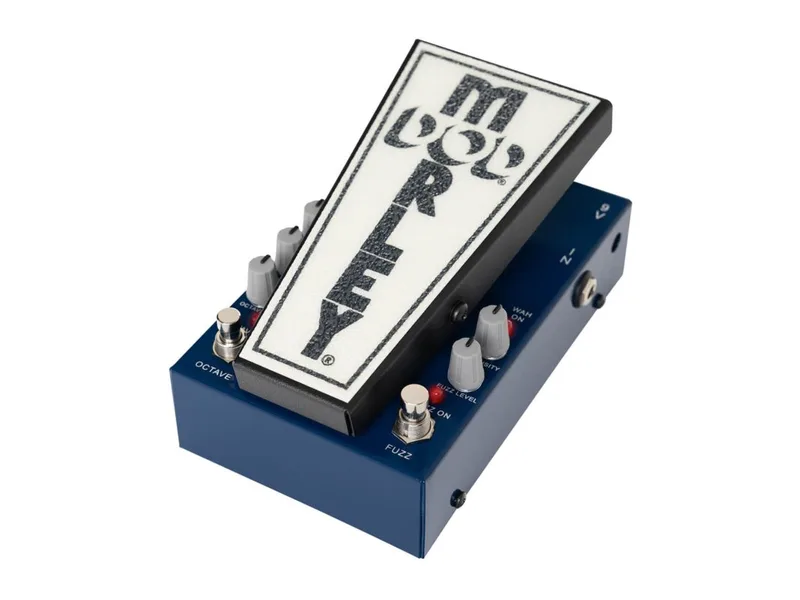
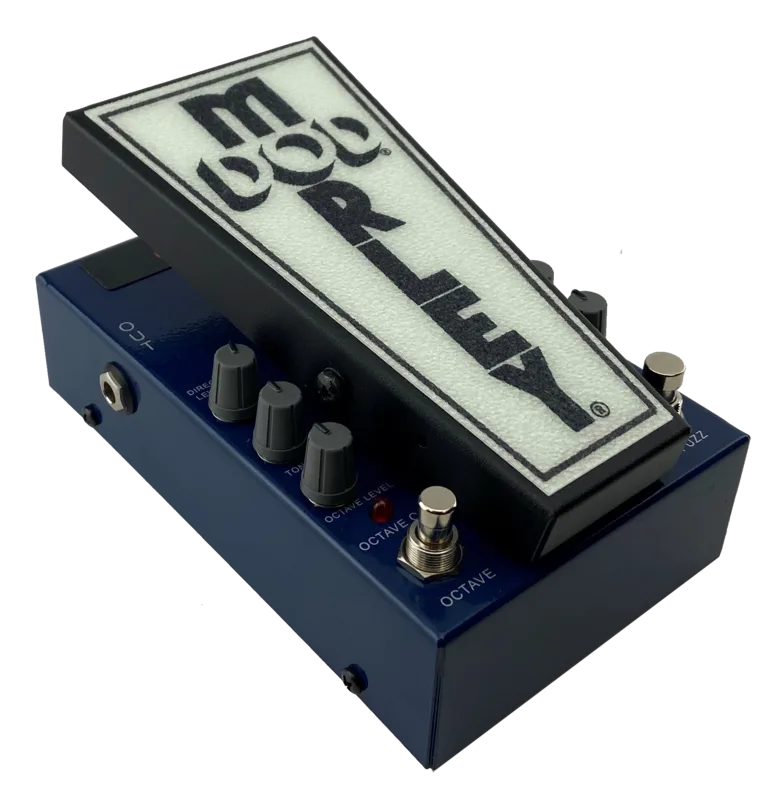
The Carcosa is not DOD's only fuzz. The company's later Chthonic Fuzz, first released in late 2023, is a two-transistor vintage-inspired design aimed at lower-output single-coil pickups, and DOD has also collaborated with Morley on the Wah-ocTo-Fuzz, a three-in-one wah, octave and fuzz pedal. For players comparing silicon fuzzes, the Carcosa's combination of dual voicings, a bias control and boost-level output remains its distinguishing feature721.
Videos
ProGuitarShopDemos
ProGuitarShopDemos
ProGuitarShopDemos
Questions
Is the DOD Carcosa true bypass?
Yes. The Carcosa is a true bypass pedal, so with the effect switched off your signal passes through without buffering. It also has tons of output on tap, which is part of why it can double as a boost.
Can the DOD Carcosa be used as a clean boost?
Yes. DOD says the Output control has a lot of level and can be used as a boost, and that in Hali mode the pedal works as a bright dirty boost that can get into treble booster territory. MusicRadar's reviewer found it could serve as a clean or crunchy boost before you reach the realms of fuzz.
Does the Carcosa clean up with the guitar volume knob?
Yes. DOD says it cleans up with the guitar's volume knob, especially in Demhe mode. With the After (bias) control turned counter-clockwise you get loud woody fuzz tones that respond to the volume knob; turned full clockwise the fuzz becomes splatty and broken instead.
Is the DOD Carcosa a silicon or germanium fuzz?
It is a silicon fuzz. DOD describes its use of silicon transistors combined with carefully tuned filtering and gain staging, and MusicRadar calls it DOD's take on silicon transistor-based fuzz pedals from the 70s.
Where does the name Carcosa come from?
From early 19th century cosmic horror literature. Designer Tom Cram had been reading a lot of Robert Chambers and Ambrose Bierce at the time, and drew the inspiration for the pedal's name and graphics from that reading. The mode names Demhe and Hali are taken from Chambers's book The King in Yellow.
Is the DOD Carcosa analog?
Yes. The Carcosa is an analog fuzz pedal, built around silicon transistors with tuned filtering and gain staging rather than digital processing.
Sources (14)
- Product Spotlight: DOD Carcosa Fuzz, DigiTech, 2025-06-12
- DOD Carcosa review, MusicRadar, 2017-05-18
- DOD Carcosa Fuzz, Delicious Audio, 2022-10-20
- Guitar.com Reviews the Carcosa Fuzz, DigiTech, 2022-10-12
- DOD's Carcosa pedal promises to take you to an "alternate fuzz universe", MusicRadar, 2016-07-19
- The Best Maestro FZ-1 Fuzz Tone Clones & Evolutions In 2023, Delicious Audio, 2023-05-15
- DOD Carcosa Fuzz Pedal, digitech.com, 2026-01-02
- Origin Stories, DigiTech, 2023-06-19
- The history and origins of the iconic Maestro FZ-1 Fuzz-Tone, Guitar World, 2021-10-20
- All About… Fuzz, Guitar.com, 2015-08-27
- BALTIC BLUE FUZZ (OC-BBFn), One Control USA
- DOD Carcosa Fuzz review, guitar.com, 2022-10-12
- 60 Seconds S1E32: DOD Carcosa, Guitar.com, 2024-07-05
- MusicRadar hands-on: DOD Carcosa Fuzz & KHDK Scuzz Box pedals, MusicRadar, 2017-03-01