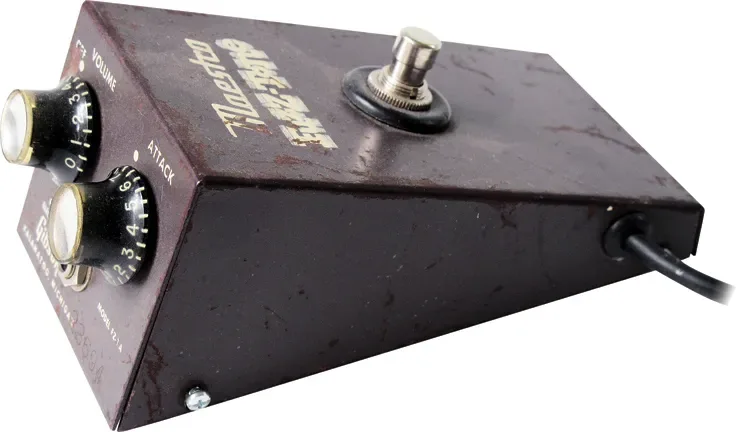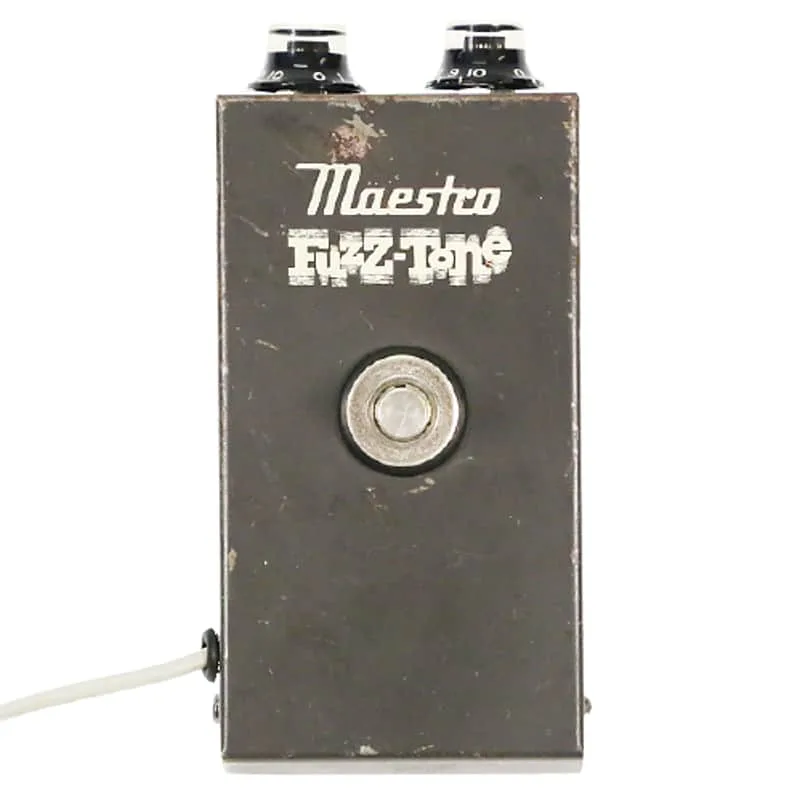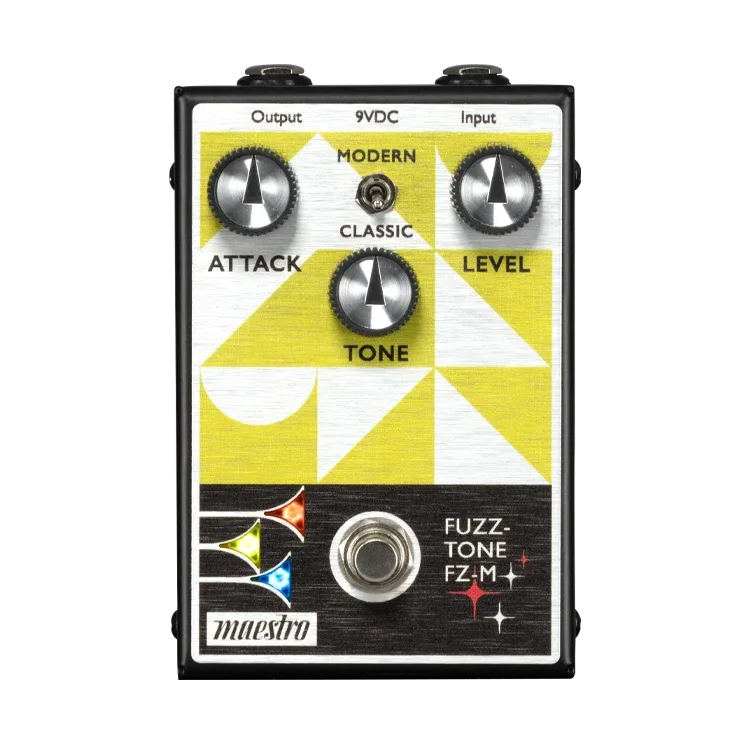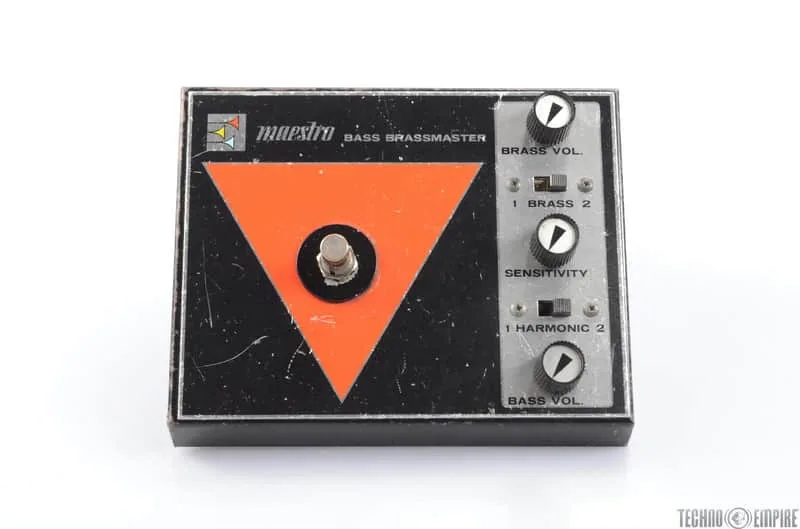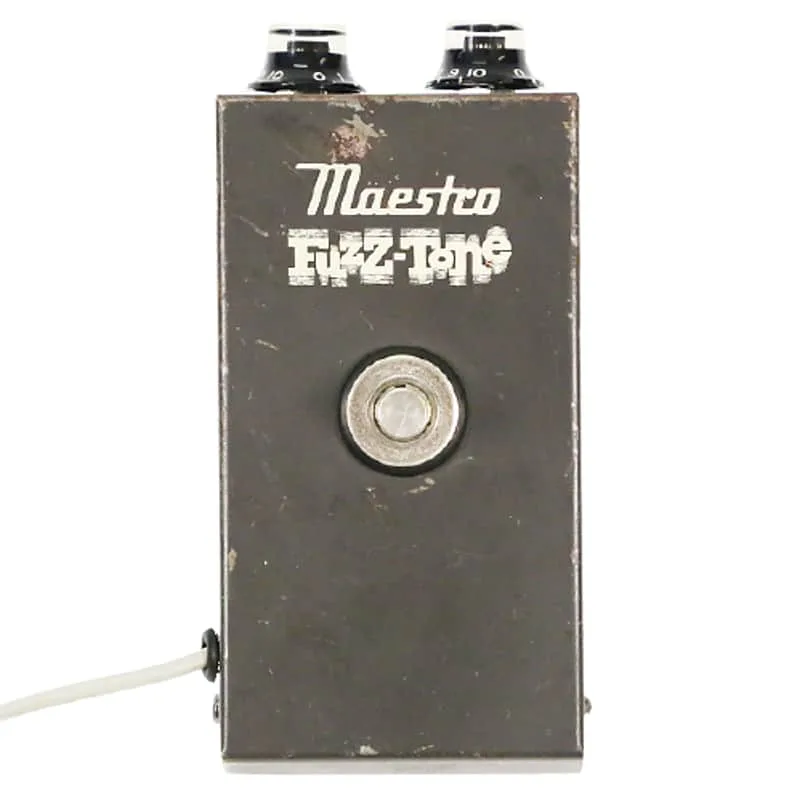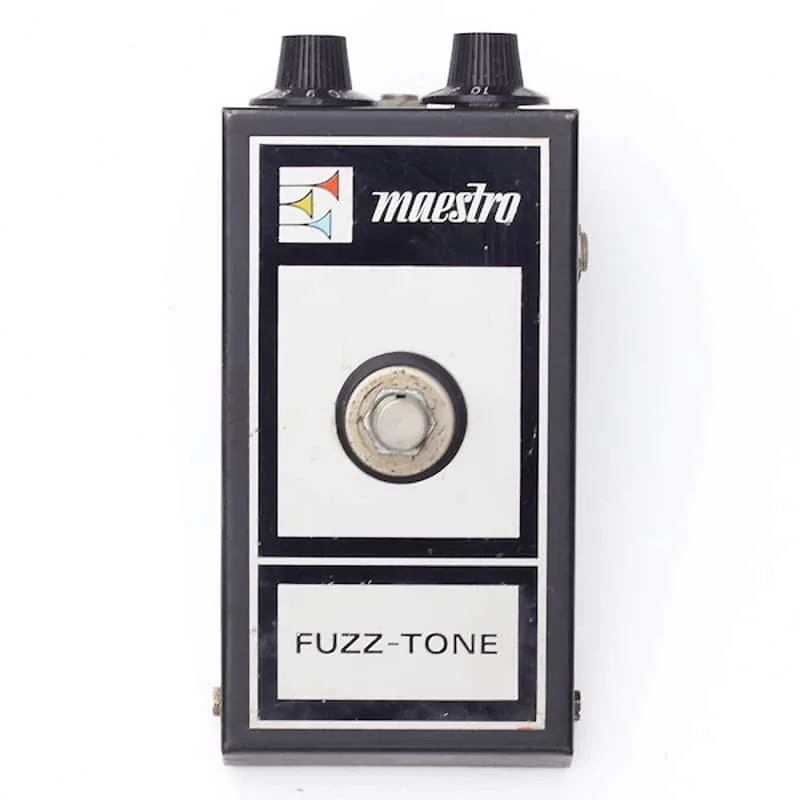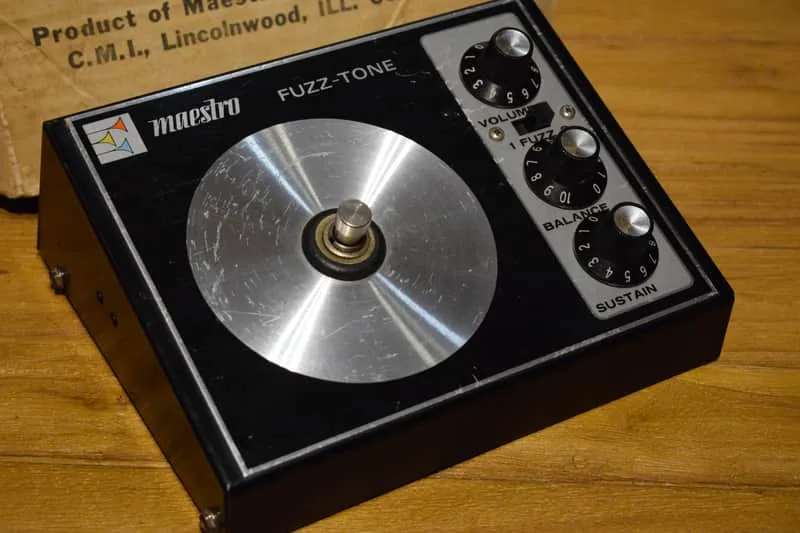


The Maestro FZ-1S Super-Fuzz is a fuzz pedal from the early 1970s, designed by Tom Oberheim1. It followed the original Maestro FZ-1 Fuzz-Tone, and Vintage Guitar magazine's history of the Maestro fuzzes describes it as arriving with the '70s "offering more control and an even harsher attack"2. General Guitar Gadgets, which publishes a DIY replica of the circuit, notes that it is not the so-called "Satisfaction" Fuzz-Tone, but says it "will give you the 'Satisfaction' sound, plus more!"1.
The controls: Balance, Volume and Sustain
Where the original Fuzz-Tone kept things simple, the Super-Fuzz gives the player three knobs and a toggle switch. The controls, as documented in the General Guitar Gadgets project21:
| Control | Component | Function |
|---|---|---|
| Balance | Dual 50k linear potentiometer (R1) | Balance control |
| Volume | 100k log potentiometer (R2) | Output level |
| Sustain | 100k linear potentiometer (R3) | Fuzz amount |
| Toggle switch | SPDT on-on (SW2) | Switching |
The Sustain control sets how hard the circuit clips, the Balance shapes the fuzz character, and the Volume sets the output level. Vintage Guitar's account of the line frames the FZ-1S as the point where Maestro gave players more control over the fuzz than the earlier three-knob-less FZ-1 offered2.
Power and connections
The Super-Fuzz runs on a 9 volt battery, and the General Guitar Gadgets replica documentation lists the following connections1:
- J1: stereo quarter-inch jack
- J2: mono quarter-inch jack
- J3: DC jack
- B1: 9 volt battery (not included in the kit)
- SW1: heavy duty 3PDT footswitch
The original pedal predates the modern standard of true bypass switching. General Guitar Gadgets publishes a redrawn Maestro Fuzz-Tone schematic with a true bypass option for builders who want the circuit switched fully out of the signal path1.
The circuit
The Super-Fuzz uses six transistors. Q1 through Q4 are 2N5089 or 2N5088 types, and Q5 and Q6 are 2N5133 or 2N5089 types. The clipping stage uses an LED at D11. The General Guitar Gadgets schematic was redrawn from the schematic included inside the original box, a practice the company describes as from "the good old days"1.
Rarity and the Maestro name today
Original FZ-1S units are hard to find. General Guitar Gadgets says "The originals are somewhat rare and/or expensive, so it makes a good candidate for building a DIY replica!"1. Tom Cram, in a DigiTech history piece on the vintage Maestro fuzzes, put it the same way: "These fuzzes are pretty rare, and finding one in that condition even rarer still, Not a scratch on it."3
For players drawn to the vintage circuit today, the DIY replica route through General Guitar Gadgets is the practical way to build a Super-Fuzz of their own1. The replica follows the original's approach closely: it uses a heavy duty 3PDT footswitch for the on/off switching, and its clipping stage centers on D1, an LED, which shapes the fuzz's character1. General Guitar Gadgets even nods to the pedal's most famous association in its own description, noting that "this will give you the 'Satisfaction' sound, plus more!" while cautioning that it is not the so-called "Satisfaction Fuzz-Tone" itself1.
Videos
Reverb
Adrian Täckman
Scott Davis
Questions
Who designed the Maestro Super-Fuzz?
The FZ-1S Super-Fuzz was designed by Tom Oberheim, who later became known for his work in synthesizers. General Guitar Gadgets, which offers a DIY replica of the circuit, notes the design on its project page and adds that the original box shipped with the schematic printed inside, which is how the circuit has been documented and redrawn for builders.
Is there a true bypass version of the Super-Fuzz?
The original FZ-1S was not a true bypass pedal in the modern sense. General Guitar Gadgets publishes a redrawn Maestro Fuzz-Tone schematic with a true bypass option for its DIY replica, built around a heavy duty 3PDT footswitch, so a builder can assemble a version of the circuit that switches fully out of the signal path when off.
What transistors does the Super-Fuzz circuit use?
The circuit uses six transistors. Q1 through Q4 are 2N5089 or 2N5088 types, and Q5 and Q6 are 2N5133 or 2N5089 types. The clipping stage also includes an LED at position D1, according to the General Guitar Gadgets project documentation.
Are original Maestro Super-Fuzz pedals rare?
Yes. General Guitar Gadgets describes the originals as somewhat rare and expensive, which is why it offers a DIY replica. Tom Cram of DigiTech, writing about the vintage Maestro fuzzes, said they are pretty rare and that finding one in mint condition is rarer still.
Sources (3)
- Maestro™ FZ-1S™ Super-Fuzz™ Clone: Schematic & Layout, General Guitar Gadgets, 2014-05-14
- Maestro Fuzz-Tone, Vintage Guitar magazine, 2015-12-08
- Origin Stories, DigiTech, 2023-06-19