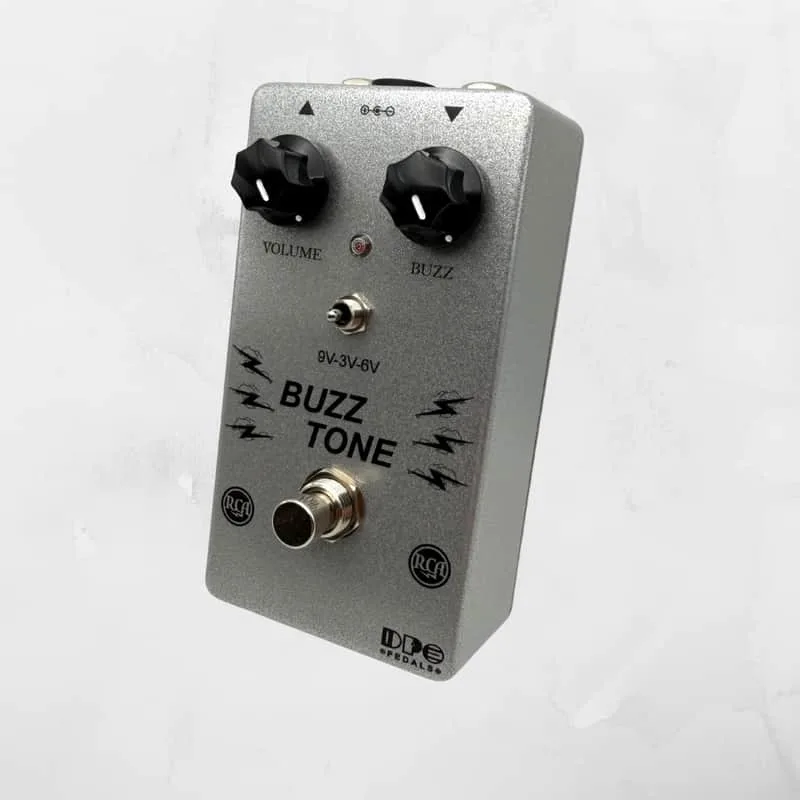

The DPE Pedals Buzz Tone is a germanium fuzz pedal that recreates the Selmer Buzz Tone, a British fuzz from the 1960s. Delicious Audio, which profiled the pedal in March 2022, describes it as "a clone of a fuzz pedal the '60s", built with NOS hand-selected germanium transistors and hand-selected, high-quality components1.
DPE did not copy the old circuit exactly. According to Delicious Audio, the modified circuitry gives a smoother response throughout the gain ranges, and an updated power section reduces floor noise at high gain while helping keep voltages stable1.
Controls and the voltage selector
The Buzz Tone's standout control is its voltage selector switch, which offers three circuit voltages: 3V, 6V and 9V1. Delicious Audio describes the switch as offering "two different headroom settings" across its positions1. Lowering the circuit voltage starves the germanium transistors, which changes how the fuzz breaks up; 9V gives the transistors their full supply. The original Selmer Buzz Tone ran at 3V, so the lowest setting is closest to how the vintage unit behaved3.
The same control appears on other versions of the circuit. PedalPCB's DIY Buzz Tone Fuzz PCB, a build-it-yourself board of the same design, lists a Voltage toggle that "Selects 3V, 6V, or 9V mode", alongside a Volume control for output volume and a Depth control for the amount of fuzz4.
| Control | What it does | Where it appears |
|---|---|---|
| Voltage selector | Selects 3V, 6V or 9V circuit voltage | DPE Buzz Tone1, PedalPCB PCB4 |
| Volume | Controls output volume | PedalPCB PCB4 |
| Depth | Controls amount of fuzz | PedalPCB PCB4 |
Power and bypass
The pedal takes its power from a 9V DC power jack of the Boss style, the standard center-negative barrel connector used by most pedalboard power supplies1. The voltage selector changes the circuit voltage internally, not the adapter you plug in.
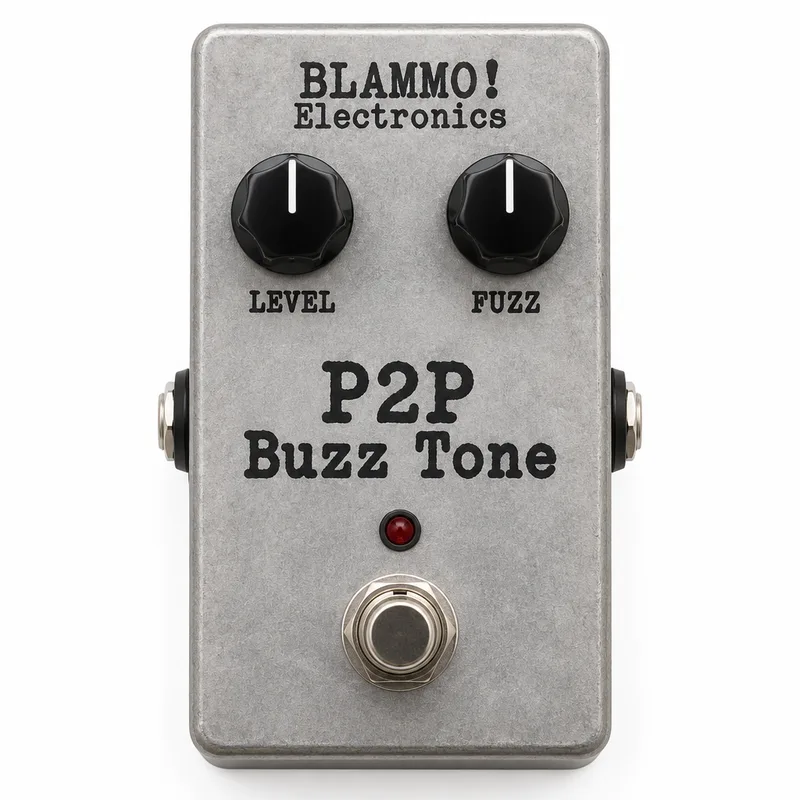
It is true bypass, so the guitar signal passes around the circuit when the pedal is off, and it uses a soft click footswitch rather than a heavy mechanical one1. The BLAMMO! Electronics P2P Buzz Tone, another modern take on the circuit, is also true bypass and uses a high-quality low-profile 3PDT footswitch5.
Where the circuit came from: the Selmer Buzz Tone
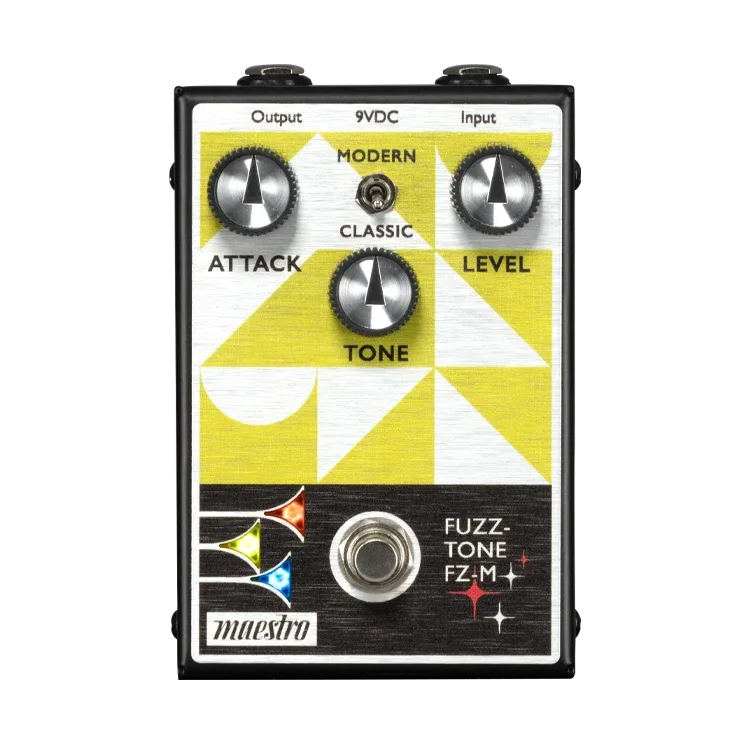
The original Selmer Buzz Tone is a British fuzz pedal that was presented at the British Musical Instrument Industries Trade Fair in August 19666. Fuzzboxes.org notes that it was "both visually and electronically inspired by its American counterpart", the Gibson Maestro Fuzz-Tone, and that Selmer had already been offering the Maestro Fuzz-Tone to the British market before the surge in demand for fuzz boxes in 19656. Its basic fuzz circuit was later redesigned and found its way into Selmer's Fuzz-wah pedal, introduced in 19686.
The Selmer original has a rough reputation. GuitarPlayer's history of rare British fuzzboxes calls it "a rare pedal, and there's a reason so few of them have survived: they sound terrible!"7
"The Selmer Buzz Tone is a rare pedal, and there's a reason so few of them have survived: they sound terrible!"
That reputation is the context for DPE's approach: Delicious Audio quotes the maker's aim as having "took the old-school Selmer Buzz Tone and recreated a version that not only sounds better, but reacts better"1.
Other pedals with the Buzz Tone name
The Buzz Tone name has appeared on several other pedals, and they are not all the same circuit.
- The Jext Telez Buzz Tone, reviewed by Pedal of the Day in 2018, is a germanium fuzz using "vintage and era-correct germanium transistors", which the reviewer found also had "trace elements of overdrive packed right in"2.
- The Jordan Buzz Tone is a different animal entirely: RockBoard's PedalPedia describes it as a remake of the Jordan Boss Tone in pedal form, built by Mahoney Guitar Gear8. Guitar Pedal X reports the revived Jordan range includes a Buzz Tone based on the 1967 original, listed at $100 as of April 20259.
- The BLAMMO! Electronics P2P Buzz Tone is a point-to-point built version of the circuit5.
- PedalPCB's Buzz Tone Fuzz is a DIY PCB for players who want to build the circuit themselves4.
Videos
Mike Hermans
Questions
Is the DPE Pedals Buzz Tone true bypass?
Yes. The Buzz Tone is a true bypass pedal, so with the effect switched off the guitar signal passes through without the circuit coloring it. It uses a soft click footswitch rather than a heavy mechanical switch, which makes engaging the fuzz less noisy on a live board.
What power supply does the DPE Buzz Tone use?
It runs from a 9V DC power jack of the Boss style, meaning a standard center-negative 9V adapter with a 2.1mm barrel plug, the same connector most pedalboard power supplies provide. The voltage selector on the pedal changes the circuit voltage internally, not the supply you plug in.
What does the voltage switch on the Buzz Tone do?
It selects the circuit voltage: 3V, 6V or 9V. Lower voltages starve the germanium transistors, changing the headroom and character of the fuzz, while 9V gives the circuit its full supply. Delicious Audio describes it as offering two different headroom settings across its positions.
Does the DPE Buzz Tone use germanium transistors?
Yes. The Buzz Tone is built with NOS hand-selected germanium transistors, the same transistor type as the vintage fuzzes the original Selmer circuit came from. Germanium transistors are prized for their softer, warmer clipping character compared with silicon.
What is the original Selmer Buzz Tone?
A British fuzz pedal presented at the British Musical Instrument Industries Trade Fair in August 1966, inspired visually and electronically by the Gibson Maestro Fuzz-Tone. Selmer had already been selling the Maestro in Britain before the 1965 fuzz boom. GuitarPlayer calls it a rare pedal that few have survived because they sound terrible.
Sources (9)
- DPE Pedals Buzz Tone Fuzz, Delicious Audio, 2022-03-02
- Jext Telez Buzz Tone Germanium Fuzz, Pedal of the Day, 2018-01-24
- Kasleder Pipergate (Buzz Tone / Syd Barrett-Inspired), Delicious Audio, 2023-06-22
- Buzz Tone Fuzz, PedalPCB.com
- P2P Buzz Tone, BLAMMO! Electronics
- Selmer Buzz Tone • Fuzzboxes, Fuzzboxes.org, 2021-05-13
- Five Rare British Vintage Fuzzboxes (That Aren't Tone Benders or Fuzz Faces!), GuitarPlayer, 2021-08-31
- Buzz Tone by Jordan, RockBoard PedalPedia, 2026
- Guitar Pedal X, Guitar Pedal X, 2025-04-17