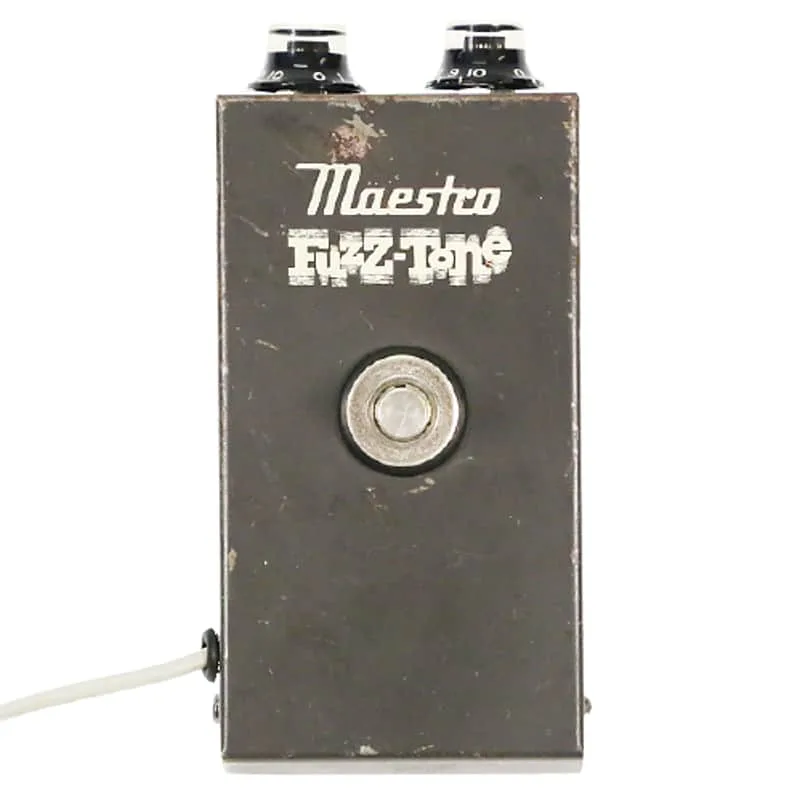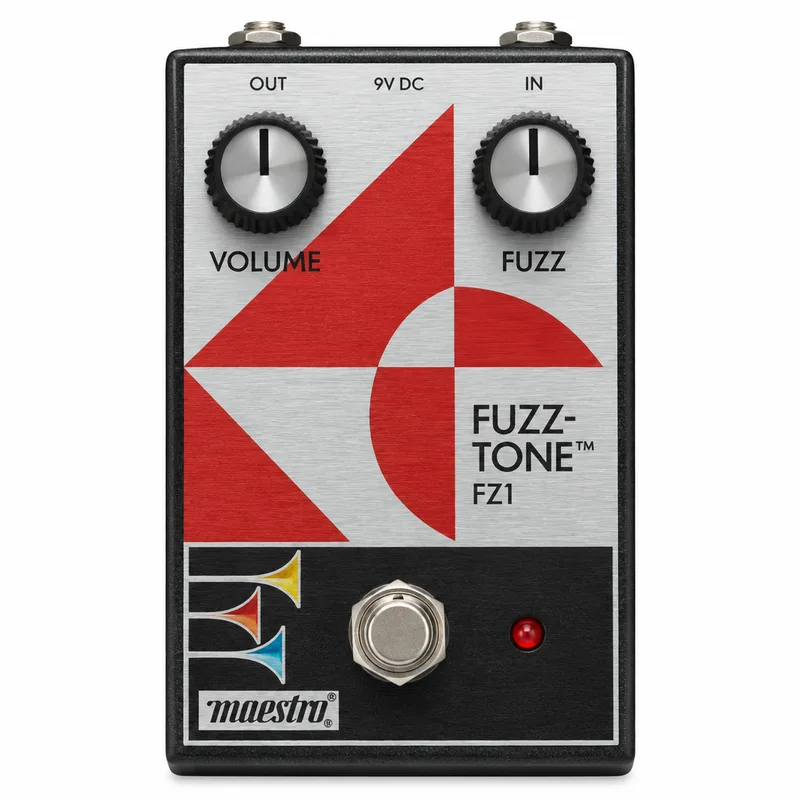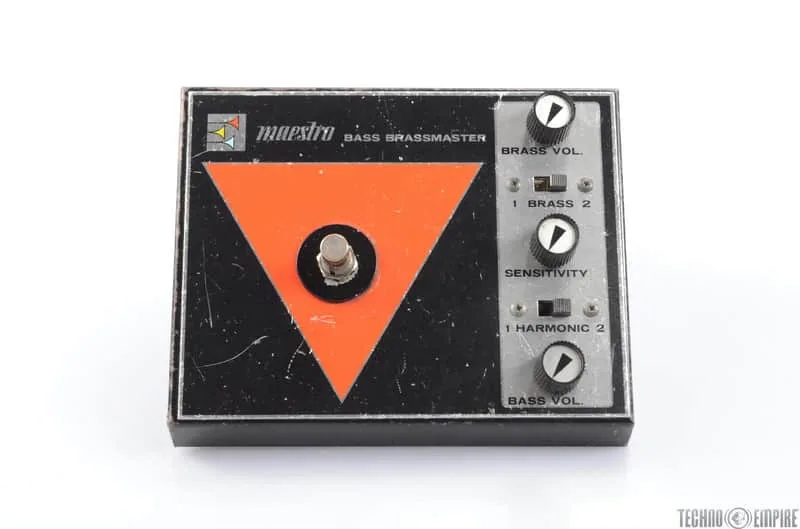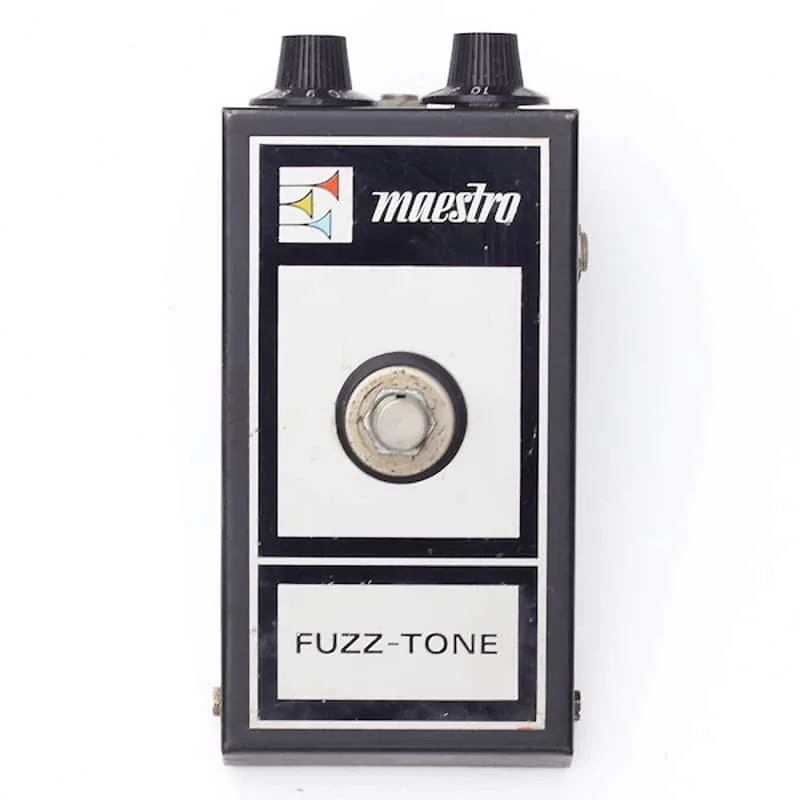


The Maestro Fuzz-Tone is the fuzz pedal that started the whole category. Introduced in 1962 by Gibson's subsidiary Maestro, the FZ-1 was the first fuzz pedal to reach the market, and it became the sound of one of the most famous guitar riffs ever recorded: Keith Richards' part on the Rolling Stones' "(I Can't Get No) Satisfaction" in 1965123. Its circuit went on to influence the Tone Bender, the Fuzz Face and many other fuzz designs of the mid-1960s4.
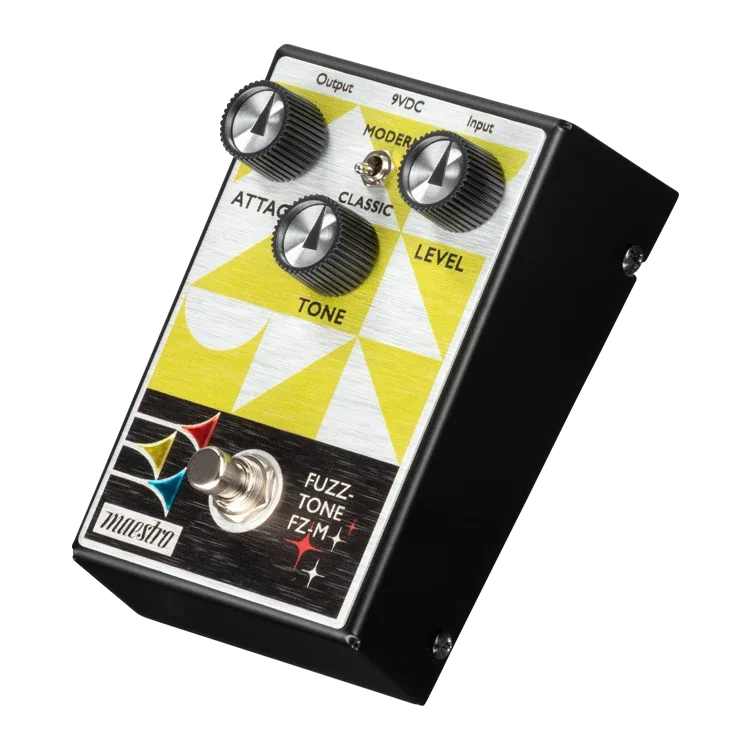
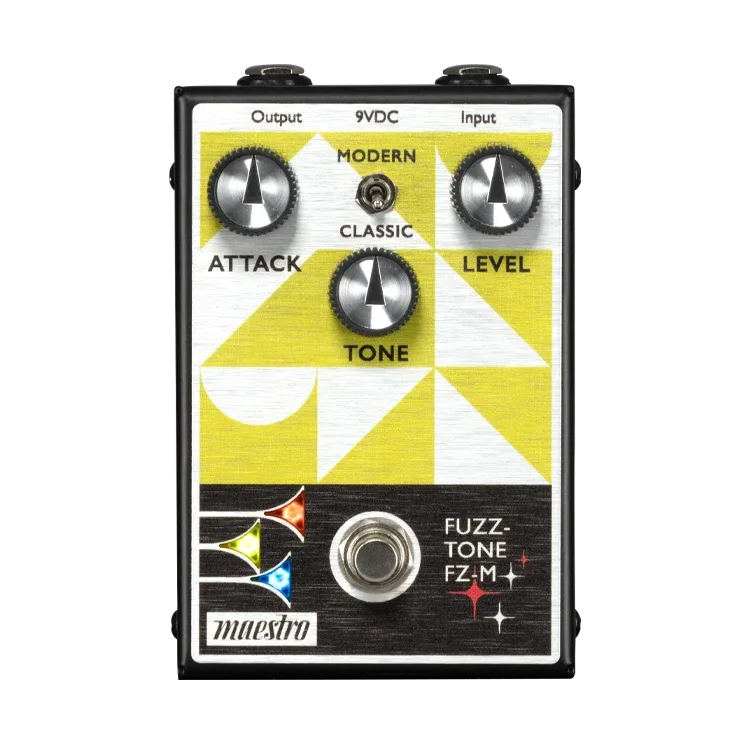
The original models are long out of production, but the name came back in January 2022, when Gibson relaunched Maestro as a pedal brand and issued the Maestro Fuzz-Tone FZ-M, a modern reissue with both an FZ-1 inspired fuzz sound and a thicker, more modern fuzz tone in one box152.
A faulty preamp, a Nashville engineer and the first fuzz pedal
The Fuzz-Tone traces back to a broken piece of studio gear. The story goes that engineer Glenn Snoddy's faulty preamp circuit caused a distorted sound during a recording session at Owen Bradley's Quonset Hut studio in Nashville, and that distorted sound led to the creation of the fuzz effect1. Snoddy worked out the details of the Fuzz-Tone with Revis Hobbs, and the transistor circuit was manufactured by Gibson's Maestro subsidiary61.
Gibson introduced the FZ-1 as the first mass-market fuzz pedal, originally marketing it as a device to make electric guitars sound like brass instruments78. Employing three germanium transistors, the simple circuit was slow to take off at first4. It was also, in its day, an American product, sold predominantly in the United States9.
The Fuzz-Tone came out of a faulty preamp circuit that caused a distorted sound in a recording session, which led to the creation of the fuzz effect1. The circuit itself was the work of a Nashville studio engineer7, and Gibson introduced it as the Maestro FZ-1 Fuzz-Tone, the first mass-market fuzz pedal107. Transistorized fuzz pedals first hit the market in 1962 with the Maestro FZ-1118, though one account dates the first commercially available Fuzz-Tone to 1963, originally marketed as a device to make electric guitars sound like brass instruments8. It went on to influence the design of many future fuzz and distortion pedals1.
The pedal's fame arrived in 1965. Keith Richards used an FZ-1 on the Rolling Stones' "(I Can't Get No) Satisfaction," and MusicRadar reports he originally reached for it to fake temporary sax tones on the demo, then ended up keeping the sound612. The Fuzz-Tone became the first fuzz effect to gain widespread popularity13.
From the FZ-1A and FZ-1B to the FZ-M
Maestro released several variations of the Fuzz-Tone over the following decade and a half1:
| Model | Year | What changed |
|---|---|---|
| FZ-1 | 1962 | The original, three germanium transistors, Volume and Attack controls463 |
| FZ-1A | Late 1965 | A refined version with a smoother sound32 |
| FZ-1B | 1968 redesign | A more aggressive sound27 |
| FZ-1S Super-Fuzz | 1970s | A different look and distinctly different sound, designed by Tom Oberheim714 |
Gibson also reissued the pedal as the FZ-1A in the 1990s before discontinuing that model7. Vintage Fuzz-Tones are now sought after by collectors and musicians, and the originals are considered classics1.
The biggest circuit change is under the hood. Where the FZ-1 used germanium transistors, the FZ-M uses silicon, a choice its designer Craig Hockenberry explained to MusicRadar415:
"But instead of using germanium transistors we're using silicon transistors."
The reason given was reliability and availability, and the Classic mode is voiced on the FZ-1A circuit415.
The FZ-M controls: Attack, Tone, Level and the classic/modern switch
The FZ-M keeps a three-knob layout plus a mode toggle1617:
| Control | What it does |
|---|---|
| Attack | Controls the amount of fuzz16 |
| Tone | Shapes the fuzz's frequency balance18 |
| Level | Sets output volume; it can go way beyond unity gain when desired2 |
| Mode toggle | Two-position mini-toggle selecting Classic and Modern sounds15 |
The Mode toggle is what makes it two pedals in one. Classic mode is based on the FZ-1's raucous fuzz tone, while Modern mode is a lot thicker, with a slightly different voicing19220. Hockenberry told GuitarPlayer the Classic mode sound is based on the FZ-1A, using discrete transistors15.
The pedal is all-analog, with circuitry laid out on glass-epoxy boards, and power comes through a 2.1mm center-negative jack for an external adapter151620.
What reviewers said about the FZ-M
Reviewers of the 2022 reissue were broadly positive. Guitar.com scored it 9/10, finding it gutsy and distinctive, much more than just a straight retro reboot17. The same reviewer noted a tightness to the bottom end that balances the raspy aggression of the treble, making it a joy for spirited chord work, though single notes can sound scratchy17. Another review called it a versatile fuzz that's built like a tank and nails the classic sounds, and a lot more besides, while noting it is a little bulky overall20.
"Gutsy and distinctive, this multi-voiced fuzz is much more than just a straight retro reboot."
That review found a tightness to the bottom end in Classic mode that balances the raspy aggression of the treble, calling it a joy for spirited chord work, though single notes can sound scratchy17. GuitarPlayer's reviewer found Classic mode sounds like an early Fuzz-Tone, with a slightly scooped response and a frazzy fuzz sound, and summed the pedal up as "a good all-around fuzz that can deliver circa-'60s tones as well as heavy rock grind"15. Guitar World's reviewer called it versatile, solidly built and sensibly priced, with the only real criticism being that it is a little bulky overall20.
Videos
Sweetwater
Gibson TV
VINTAGEGEARHOLLYWOOD
Questions
Is the original Maestro Fuzz-Tone germanium?
Yes. The original FZ-1 employed three germanium transistors in a simple circuit. The 2022 FZ-M reissue differs here: its designer says it uses silicon transistors instead of germanium, chosen for reliability and availability, with the Classic mode voiced to sound like the FZ-1A.
Who invented the Maestro Fuzz-Tone?
The Fuzz-Tone was invented by Glenn Snoddy, an engineer at Owen Bradley's Quonset Hut recording studio in Nashville, after a faulty preamp circuit caused a distorted sound in a recording session. Vintage Guitar's history also credits Revis Hobbs, who worked out the details with Snoddy, and it was manufactured by Gibson's Maestro subsidiary.
What fuzz did Keith Richards use on Satisfaction?
Keith Richards used a Maestro FZ-1 Fuzz-Tone on the Rolling Stones' 1965 "(I Can't Get No) Satisfaction." MusicRadar reports he originally used it for temporary sax tones on the demo and ended up keeping the sound, giving his riff something no riff had before.
Is the Maestro Fuzz-Tone still made?
The original 1960s models are no longer in production and vintage units are sought after by collectors. Gibson relaunched the Maestro brand in January 2022 with the Fuzz-Tone FZ-M, a modern reissue in the Original Collection, so a new version is currently available.
Sources (20)
- The Maestro Fuzz-Tone, tru-fi.com
- Maestro Fuzz-Tone FZ-M, Gibson (www.gibson.com)
- BALTIC BLUE FUZZ (OC-BBFn), One Control USA
- Interview: "It's arguably the first guitar effects pedal ever", MusicRadar, 2022-02-21
- Maestro Knocks Out Another Batch of Classic Analog Stompboxes, GuitarPlayer, 2022-11-09
- Maestro Fuzz-Tone, Vintage Guitar magazine, 2015-12-08
- The history and origins of the iconic Maestro FZ-1 Fuzz-Tone, Guitar World, 2021-10-20
- FUZ-1 | Guitar Player (October 2005) | Demeter Amplification, Guitar Player, 2005-10
- Gary Hurst Tone Bender 'MKI' • Fuzzboxes, fuzzboxes.org, 2021-05-20
- The Best Guitar Effects Pedals of All Time, GuitarPlayer (www.guitarplayer.com), 2021-06-25
- Introducing the Electro-Harmonix J Mascis Ram's Head Big Muff Pi, MusicRadar, 2022-08-16
- Hear the oldest guitar effects pedal demo ever from 1962, MusicRadar, 2023-03-30
- The legendary Maestro Fuzz-Tone appears poised to make a comeback in 2022, Guitar.com, 2022-01-06
- Maestro™ FZ-1S™ Super-Fuzz™ Clone: Schematic & Layout, General Guitar Gadgets, 2014-05-14
- Maestro FZ-M Fuzz-Tone Review, GuitarPlayer, 2022-04-06
- Fuzz-Tone FZ-M by Maestro, RockBoard PedalPedia, 2026
- The Big Review: Maestro Original Collection pedals, Guitar.com, 2022-02-10
- Gibson revives Maestro as a fully-fledged pedal brand with five new stompboxes, Guitar.com, 2022-01-18
- Gibson re-launches Maestro Electronics with Original Collection pedal range, gearnews.com, 2022-01-18
- Maestro Fuzz-Tone FZ-M review, Guitar World, 2022-05-09
 Keith Richards