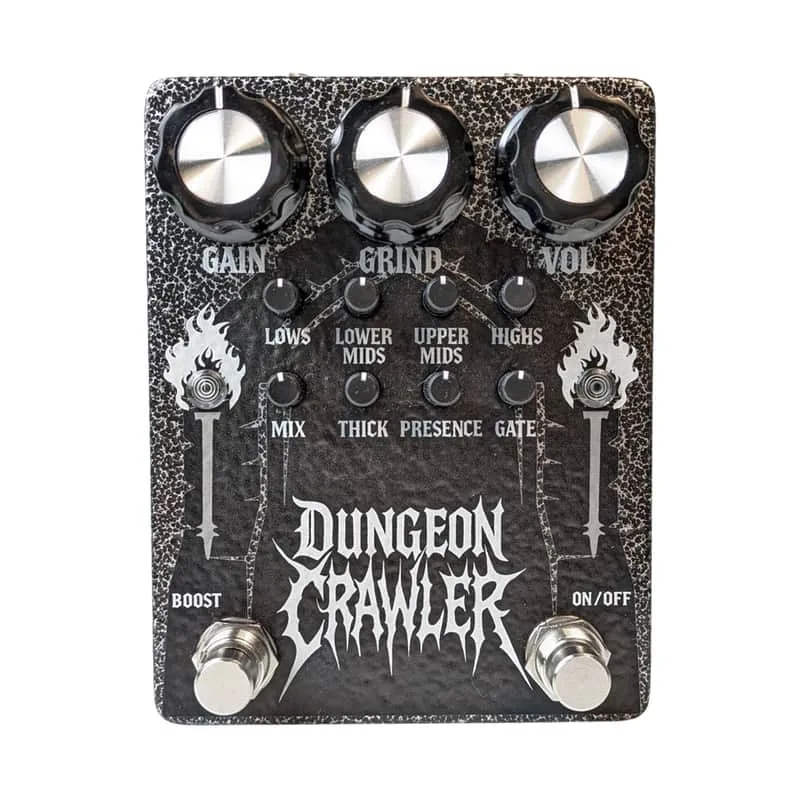


The Dr. Scientist Dungeon Crawler is a high-gain distortion pedal from Canadian maker Dr. Scientist, announced in September 2026 and aimed squarely at extreme metal. Dr. Scientist describes it as a MOSFET-based distortion designed to take a clean amp all the way to death metal, doom metal or black metal territory1. Delicious Audio called it "the brand's most amp-like and ferocious distortion pedal to date"2.
The circuit is built around three cascading high-gain MOSFET stages and six gyrator EQ stages1. Guitar Pedal X identified the clipping transistors as 2N7000 MOSFETs and credited them with the pedal's saturation and sustain3. The signal path is analog, with film capacitors1.
Three MOSFET stages and how the clipping works
Where many distortion pedals clip the signal with diodes, the Dungeon Crawler does all of its clipping and saturation inside three dedicated MOSFET gain stages. Delicious Audio described it as "a completely original circuit rooted in three dedicated MOSFET gain stages to handle all internal clipping and saturation"2. Guitar Pedal X named the devices: "The 3 x Very High Gain 2N7000 MOSFET Clipping Stages at the heart of the circuit are what give it that amazing saturation"3.
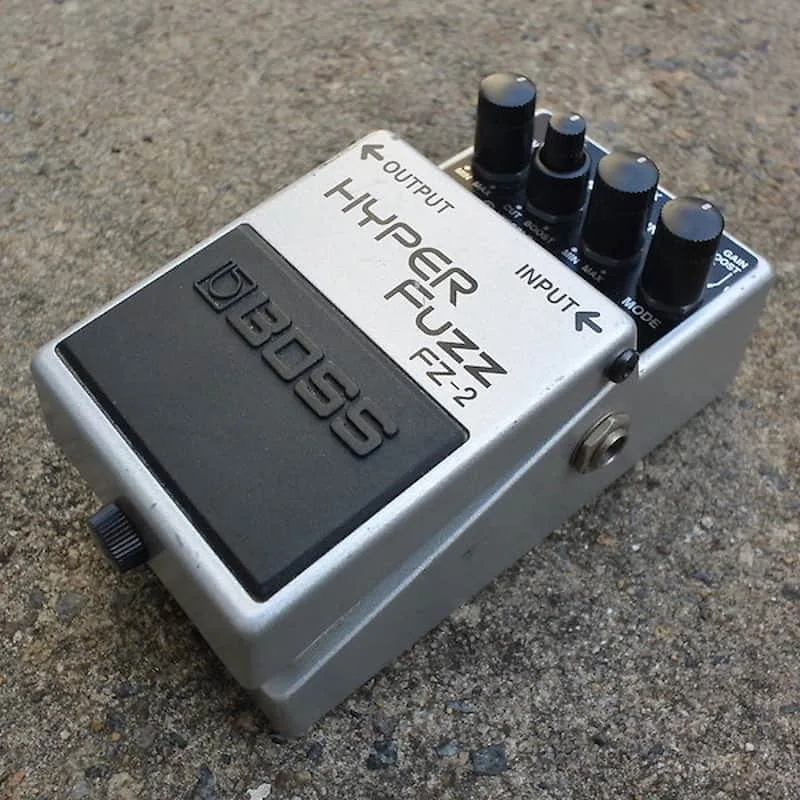
On top of the MOSFET gain, a Grind control introduces something different: a silicon NPN transistor rectifier stage. Delicious Audio says this stage "capture[s] the tattered, aggressive edge of a Boss FZ-2"2, and Guitar Pedal X describes what it does in practice: "Grind is a Silicon NPN Rectifier Stage which adds further nastiness and a coarser texture to your output"3. For a player, that means the Grind knob is not another gain control but a texture control, adding a rougher, gated-feeling edge associated with rectifier-style circuits.
The gain range is wide. Delicious Audio writes that the three cascading stages "deliver a massive gain range, moving effortlessly from a subtle breakup to total death metal saturation"2, so the pedal can be dialed back for lighter breakup rather than living only at maximum gain.
The controls
Dr. Scientist's product page lists the control set1:
| Control | What it does |
|---|---|
| Gain | Increases the amount of distortion |
| Volume | Controls the effect signal level |
| Lows | Adjusts the low frequencies, post gain |
| Lower Mids | Adjusts frequencies around 420Hz, post gain |
| Gate | Turn down for no gate, increase for stronger gate |
| Grind | Silicon NPN rectifier stage for coarser texture3 |
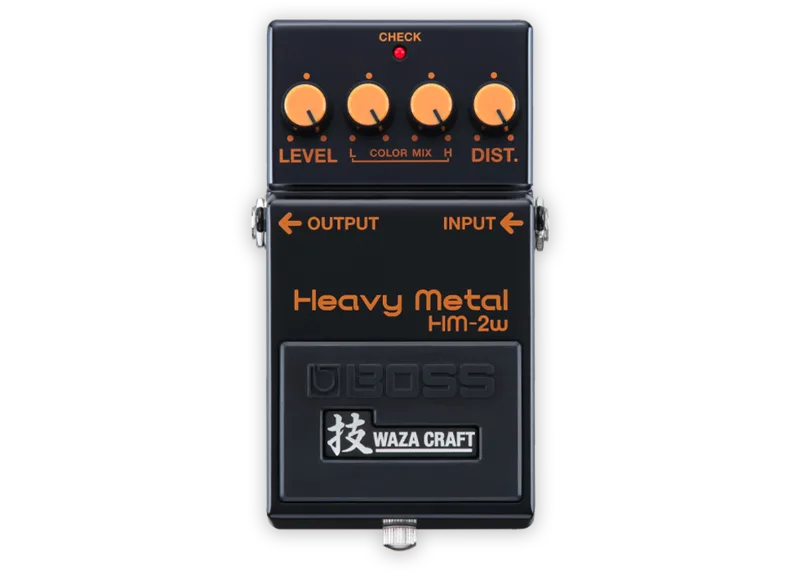
The EQ is active and gyrator-based, the same approach Boss used on the HM-2 Heavy Metal. Delicious Audio notes that "its active EQ is built around gyrator stages that channel the chainsaw bite of the classic Boss HM-2" and that the gyrator equalization "offers deep, surgical frequency shaping (from scooped mid-ranges to aggressive boosts)"2. Because the Lows and Lower Mids controls sit post-gain, they shape the distorted signal rather than the signal feeding the clipping stages.
The noise gate and the Boost footswitch
Two features address the practical problems of high-gain playing. First, a built-in noise gate: "A built-in noise gate tightly clamps down between heavy riffs"2. Its strength is set by the Gate knob, from off at full counterclockwise to a stronger gate as you turn it up1. At the gain levels this pedal is built for, that keeps the gaps between riffs quiet.
Second, a Boost footswitch. Dr. Scientist describes it simply: "Engage for increase in Gain and Volume"1. Delicious Audio frames it for lead playing, saying the secondary footswitch "instantly engages a Boost mode, kicking up both volume and gain for screaming leads"2. Guitar Pedal X adds a detail worth knowing before you buy: "The Boost here is additive, and not stand alone - where it whacks up the volume and gain of your output. There are no internal fine-tune controls"3. In other words, the boost is a fixed jump in level and gain, not a separately voiced second channel.
The main Bypass footswitch engages or disengages the effect1.
Built on the Boss HM-2 and FZ-2
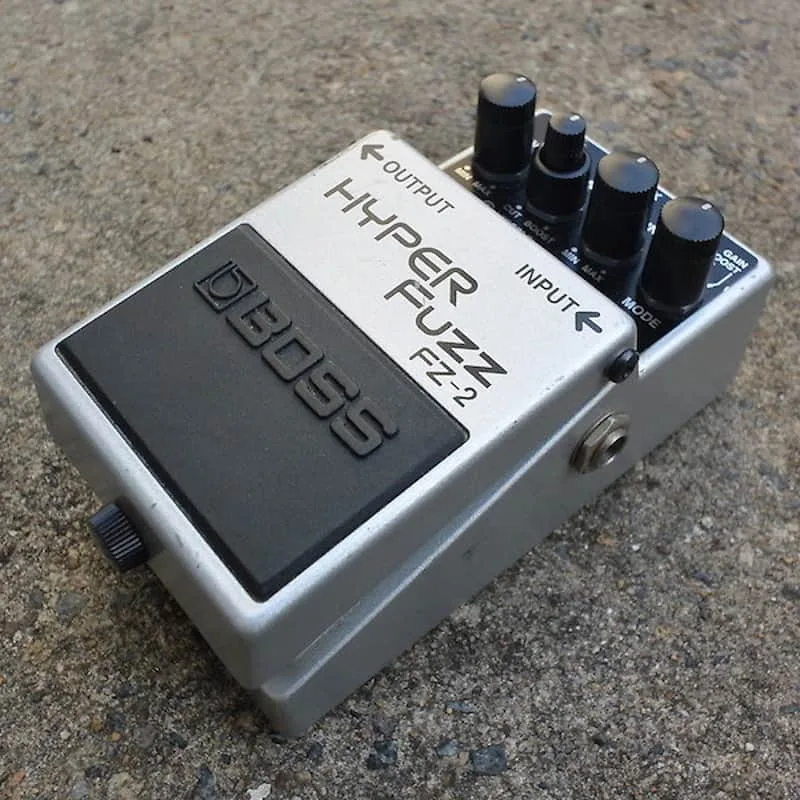
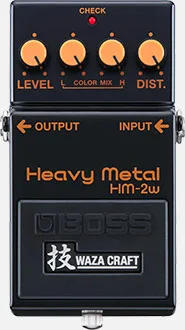
The Dungeon Crawler's two clearest ancestors are Boss pedals from the late 1980s and early 1990s. The Boss HM-2 Heavy Metal is the black pedal whose scooped, cutting active EQ defined the Swedish death metal guitar sound; the Boss FZ-2 Hyper Fuzz is the gray pedal whose aggressive edge the Dungeon Crawler's Grind stage reaches for45. Delicious Audio ties both together: the gyrator EQ channels the HM-2's chainsaw bite, while the Grind control is "FZ-2-inspired... for extra upper-register grit"2.
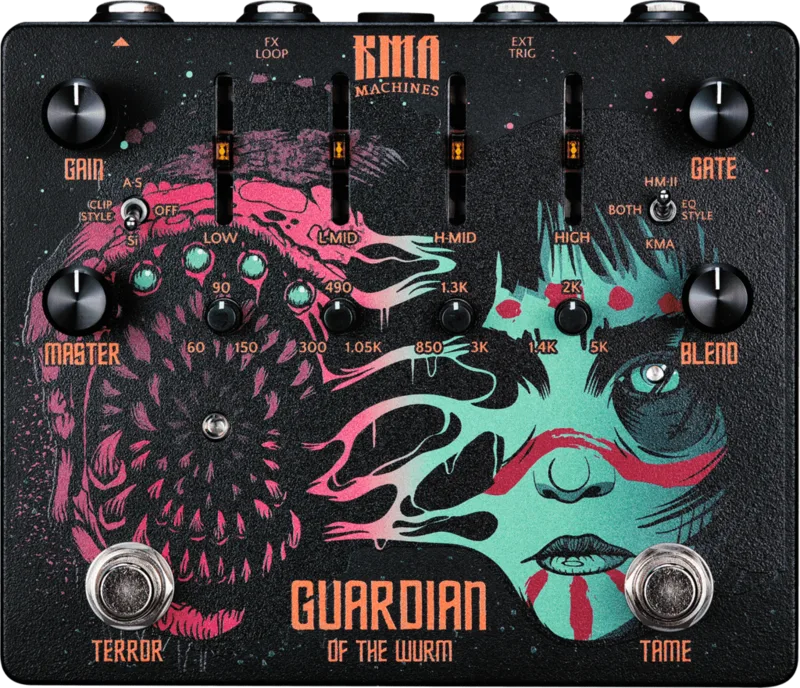
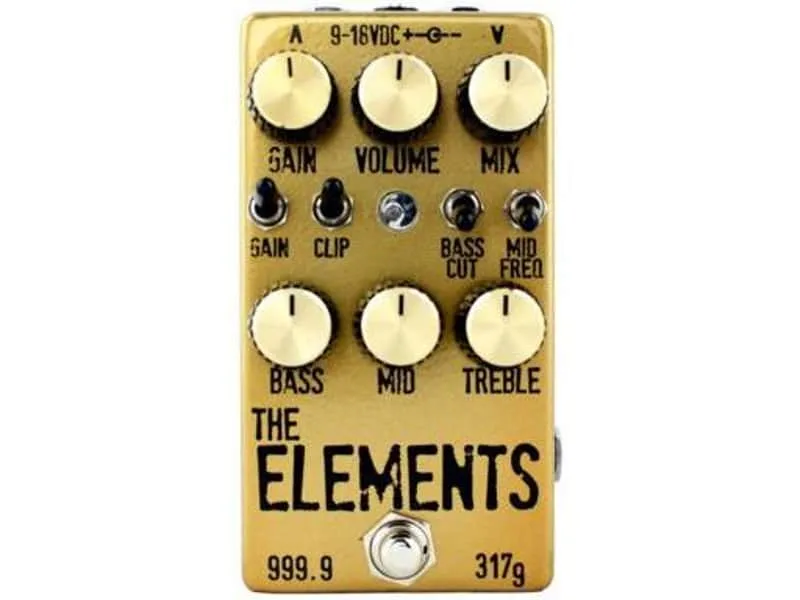
The HM-2 lineage is a crowded field. Guitar Pedal X notes that HM-2-style variants include the Klirrton Grindstein, the KMA Guardian of the Worm, the Lichtlaerm Medusa and Boss's own HM-2W reissue6. What separates the Dungeon Crawler from those is its clipping: where HM-2 descendants typically recreate or reference the original's character, the Dungeon Crawler is an original circuit whose saturation comes from MOSFET stages, with the HM-2 connection coming through the gyrator EQ architecture rather than a clone of the whole pedal2.
What reviewers said
Guitar Pedal X reviewed the pedal at release in September 2026, pricing it at $249 USD3. The reviewer's overall verdict was positive, with one qualification about the low end:
"It's not the sludgiest of distortions or necessarily the most thudding and thunderous in the low end - but it sounds magnificent throughout its range"3
For players who want maximum low-end sludge, that is the caveat to weigh; for everything else in the pedal's range, the reviewer found it sounded magnificent3.
Videos
Dr. Scientist Sounds
Dr. Scientist Sounds
Dr. Scientist Sounds
News
Questions
Does the Dr. Scientist Dungeon Crawler use MOSFETs or diodes for clipping?
MOSFETs. The Dungeon Crawler is built around three cascading 2N7000 MOSFET gain stages that handle all of the internal clipping and saturation, rather than diode clipping. A separate silicon NPN transistor rectifier stage, controlled by the Grind knob, adds a coarser texture on top.
What does the Boost footswitch do on the Dungeon Crawler?
The second footswitch engages a Boost mode that raises both output volume and gain at the same time, which Dr. Scientist positions for lead playing. It is additive rather than a standalone second sound, and there are no internal fine-tune controls for it, so what you get is a straight jump in level and gain.
Does the Dungeon Crawler have a noise gate?
Yes. A built-in noise gate clamps down between riffs, which matters at the high gain settings the pedal is designed for. The Gate knob sets how hard it works: turned down the gate is off, and turning it up gives a stronger gate.
What power supply does the Dungeon Crawler need?
It runs on 9V DC from a center negative 2.1mm plug and draws 100mA. That draw is high enough that a standard battery-style supply is not the way to run it, so plan on a proper 9V pedal power supply with at least 100mA available on its tap.
Sources (6)
- Dungeon Crawler, Dr Scientist, 2026
- New Pedal: Dr. Scientist Dungeon Crawler, Delicious Audio, 2026-09-15
- Guitar Pedal X, Guitar Pedal X, 2026-09-17
- TONEHOME, TONEHOME
- Boss reignites the Hyper Fuzz Hype with new teaser, Guitar.com, 2020-11-13
- Guitar Pedal X, Guitar Pedal X, 2025-09-05