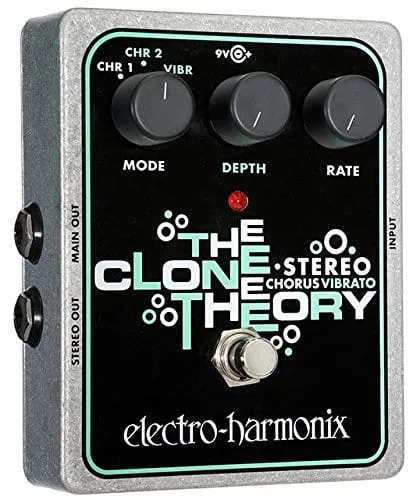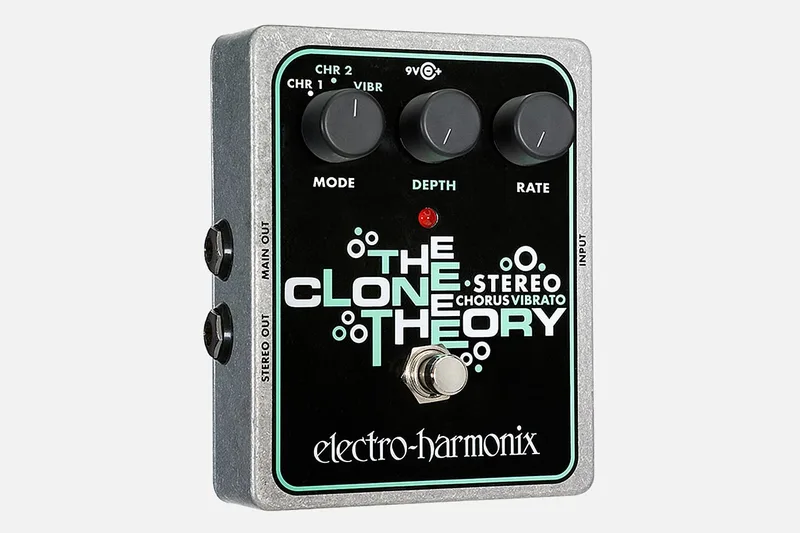


The Electro-Harmonix Clone Theory is an analog chorus and vibrato pedal first released in 19771. Electro-Harmonix revived the name in 2007 as the Stereo Clone Theory, a re-creation of the original 1970s circuit in a stereo enclosure23. The maker describes its character as "Lush chorus and vibrato with a sparkling wash and liquid elegance!"2, and the RockBoard PedalPedia notes the re-creation "is renowned for its very edgy chorus"3.
The pedal's best-known user is Peter Hook of Joy Division and New Order, who created his signature bass sound using the original Electro-Harmonix Clone Theory4. On the JHS Pedals channel, Josh Scott has also covered vintage Clone Theory variants on film5.
The Stereo Clone Theory was discontinued by Electro-Harmonix in 20246. It remains a secondhand and vintage-market pedal.
Chorus and vibrato in a stereo pedal
The Clone Theory is a stereo modulation unit built into a diecast aluminum Hammond-style chassis6. It carries two controls, Depth and Rate. Electro-Harmonix says the Depth control "adjusts the modulation depth" and the Rate control "adjusts the RATE of modulation"2. RockBoard's PedalPedia entry puts it more colorfully: the depth and rate controls "swing from one extreme to the other, giving the user an entire realm of possibility for tone"3.
The stereo outputs are the pedal's main practical draw. The unit has a 1/4" audio input jack, a 1/4" main audio output jack, and a 1/4" second audio output jack for stereo operation2. MusicRadar's reviewer, Chris Vinnicombe, found that "the stereo spread opens up some very interesting possibilities to enliven your sound"6, though he also reported good results using it the traditional way, mono into the front of a single amplifier6.
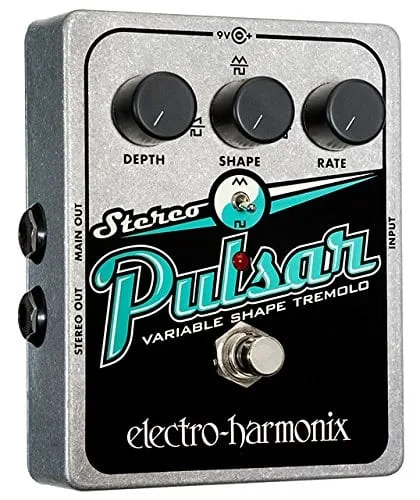
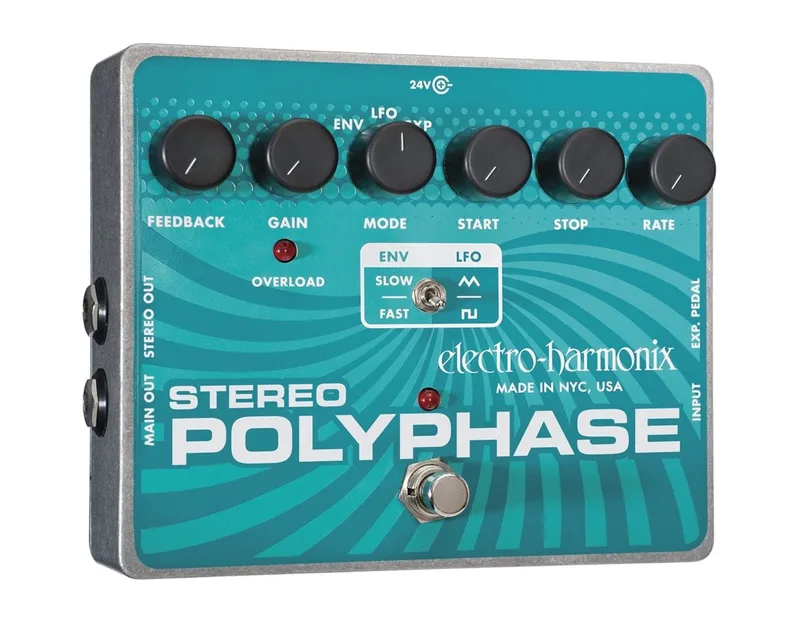
Within the Electro-Harmonix range, the Clone Theory sits alongside the Stereo Pulsar and the Stereo Polyphase as one of the maker's stereo modulation units7.
The three modes: CHR 1, CHR 2 and vibrato
A mode switch selects between three voices: two chorus modes and one vibrato mode2. MusicRadar's review breaks down what each does6:
| Mode | What it does |
|---|---|
| CHR 1 | A chorus voice with a preset depth that its designers regard as the "perfect chorus"6 |
| CHR 2 | Gives you more control over the pedal's tonal shape and adds extra depth6 |
| Vibrato | Removes the dry signal entirely, leaving only the modulated signal6 |
The vibrato mode is where the pedal gets distinctive. Vinnicombe found it possible "to add anything from a subtle wobble to a completely inebriated warble that wavers in pitch," describing it as great fun but not a sound to trigger by accident at a gig6.
From the Sad1024 to the MN3007 and the Stereo Clone Theory
The Clone Theory's circuit history spans two 1970s versions before the modern reissue. According to PastFX, the 1970s Sad1024 version incorporates an "Edge" (Bright switch). When the bucket brigade chip was replaced with the MN3007, the bright switch was removed and a VIB/Flange switch was added8. The DIY community at tagboardeffects has traced the schematic to a mono version of the old MN3007 Clone Theory9.
MusicRadar describes the modern pedal as "an old name from the seventies E-HX catalogue that's been revived and given a fresh lick of paint"6. The 2007 Stereo Clone Theory is that revival2. Vintage originals also vary in appearance: on the JHS Pedals channel, Josh Scott noted one black and white variant that is "only one color normally there would be red text or there's an inverse version as well"5.
What reviewers said
MusicRadar's Chris Vinnicombe gave the revived Clone Theory a mixed but broadly positive review6:
- Overall: "The Clone Theory is slightly underwhelming for an E-H pedal," though the vibrato mode "widens its appeal considerably" and makes it a reasonable value choice. It was not his favorite Electro-Harmonix chorus6.
- Noise: He noted discernible hiss from the pedal, saying none of Electro-Harmonix's pedals are the quietest stompers available6.
- Practicalities: He flagged fiddly battery access, since there is no quick-release battery hatch and the back plate must be unscrewed6.
- Sonics: His verdict summary read "Not quite the knock-out sonics we'd hoped for"6.
"The Clone Theory isn't our personal favourite Electro-Harmonix chorus, though the vibrato mode widens its appeal considerably."
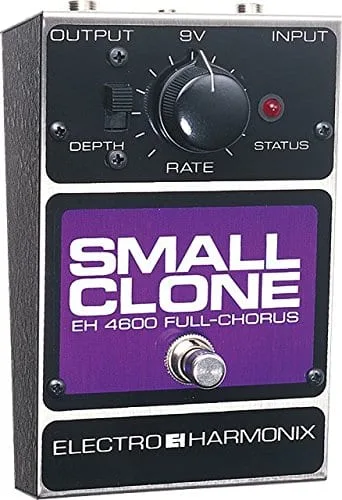
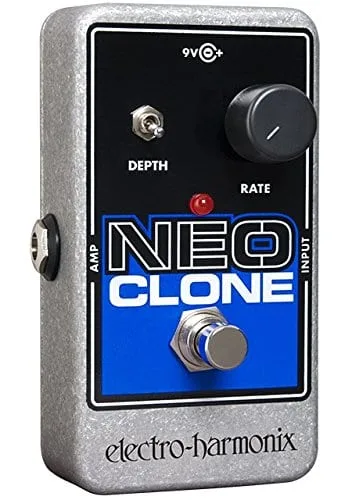
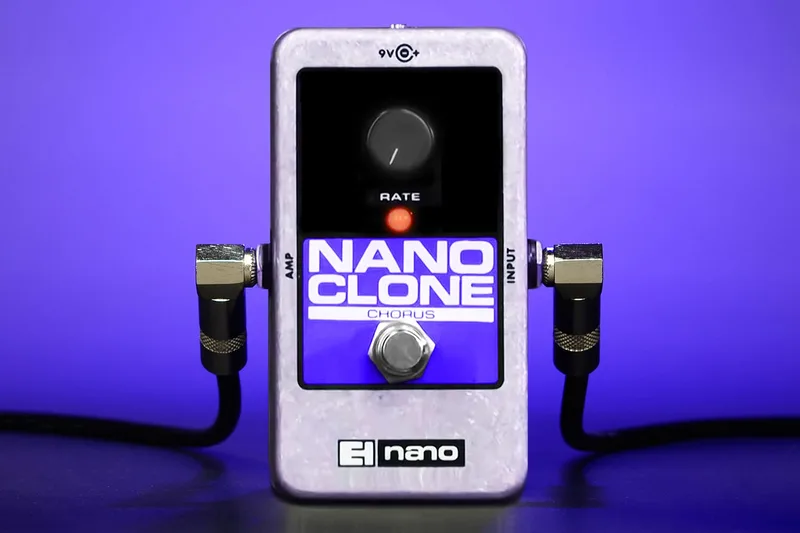
For players comparing Electro-Harmonix chorus pedals today, the maker's line also includes the Small Clone Chorus, the Neo Clone, the Nano Clone and the Eddy analog vibrato and chorus pedal, alongside multi-effects units like the Mod 11 and Mod Rex.
Videos
ProGuitarShopDemos
EHX
blondegraemey
Questions
What is the difference between the Clone Theory and the Small Clone?
The Clone Theory is a stereo modulation unit with three modes, two chorus voices and one true vibrato voice, while the Small Clone is a simpler single-effect chorus pedal. The Clone Theory also has a longer history, dating back to 1977, and its stereo outputs let you spread the effect across two amplifiers.
Does the Electro-Harmonix Clone Theory have stereo outputs?
Yes. The Stereo Clone Theory, the 2007 reissue of the original pedal, has a main 1/4 inch audio output plus a second 1/4 inch output jack for stereo operation. MusicRadar's reviewer found the stereo spread opens up interesting possibilities to enliven your sound.
Is the Clone Theory analog?
Yes. Electro-Harmonix describes the Stereo Clone Theory as an analog chorus and vibrato pedal. The original 1970s versions used bucket brigade chips, first the Sad1024 and later the MN3007.
How do you change the battery in the Clone Theory?
There is no quick-release battery access hatch. To change the battery you have to unscrew the back plate of the diecast aluminium chassis, which MusicRadar's reviewer called fiddly.
Has the Stereo Clone Theory been discontinued?
Yes. Electro-Harmonix discontinued the Stereo Clone Theory in 2024, according to the maker's own product page. It was released in 2007 as a re-creation of the original 1970s Clone Theory.
What does the vibrato mode do on the Clone Theory?
The vibrato mode removes the dry signal entirely, so you hear only the pitch-modulated signal. MusicRadar's reviewer found it ranges from a subtle wobble to a completely inebriated warble that wavers in pitch, great fun but not a sound to trigger by accident at a gig.
Sources (9)
- How the Boss CE-2 Chorus pedal took over the world, Guitar World, 2025-08-17
- Stereo Clone Theory, Electro-Harmonix, 2024
- Stereo Clone Theory by Electro-Harmonix, RockBoard (rockboard.de PedalPedia), 2026
- Modulation Nation: Chorus, Phasing, and Flanging, Premier Guitar, 2018-09-20
- Totally Normal Behavior (Ep. 4), Featuring an early Death by Audio unit and the Conn Multi-Vider, JHS Pedals (YouTube), 2022-06-17
- Electro-Harmonix Clone Theory review, MusicRadar, 2008-01-04
- Electro-Harmonix Stereo Polyphase review, MusicRadar, 2007-12-11
- New Division, PastFx, 2026
- Guitar FX Layouts: Electro Harmonix Clone Theory, tagboardeffects.blogspot.com, 2014-05-19