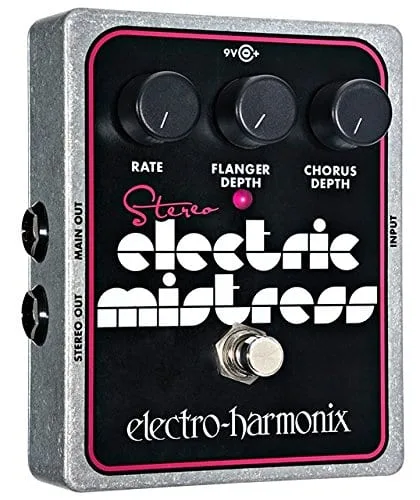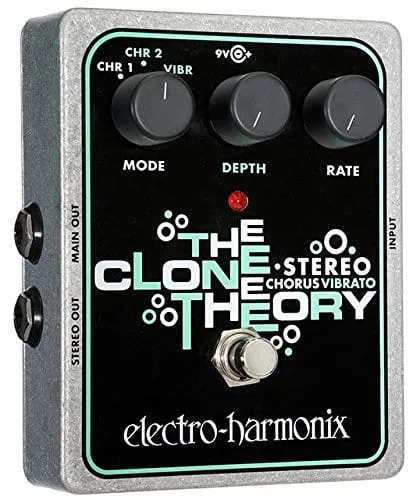


The Electro-Harmonix Stereo Clone Theory is an analog chorus and vibrato pedal with stereo outputs, part of Electro-Harmonix's revived line of big-box modulation pedals. Electro-Harmonix describes it as delivering "lush chorus and vibrato with a sparkling wash and liquid elegance," and calls it a re-creation of the original 1970s Clone Theory, which the company says is renowned for its very edgy chorus1. The original Clone Theory dates back to 1977, when it helped popularize the chorus effect alongside flangers like the EHX Electric Mistress and ADA Flanger2. The stereo re-creation was released in 20071.
The Stereo Clone Theory was discontinued in 20241. It remains available on the used market, and the pages below cover what it does for a player deciding whether to track one down.
Chorus and vibrato in a stereo pedal
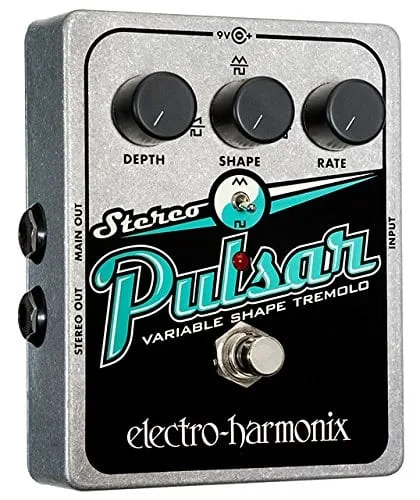
The Clone Theory sits in Electro-Harmonix's family of stereo modulation units. MusicRadar describes it as "a stereo modulation unit wth a diecast aluminium Hammond-style chassis," a sibling of the Stereo Pulsar and the Stereo Polyphase in the EXHO range34. The pedal is built into what the maker calls a tough and compact die-cast chassis1.
The stereo outputs are the pedal's main practical draw. With a main output and a second audio output, both on 1/4" jacks, the pedal can feed two amps or a stereo rig1. MusicRadar's reviewer Chris Vinnicombe found that "the stereo spread opens up some very interesting possibilities to enliven your sound"4.
The pedal's controls are simple:
| Control | What it does |
|---|---|
| Rate | Adjusts the rate of modulation1 |
| Depth | Adjusts the modulation depth1 |
| Footswitch | Selects effect engaged or bypass1 |
| Mode switch | Selects between two chorus modes and one vibrato mode1 |
RockBoard's PedalPedia notes that the depth and rate controls "swing from one extreme to the other, giving the user an entire realm of possibility for tone"5.
The three modes: CHR 1, CHR 2 and vibrato
The mode switch offers three voices: CHR 1, CHR 2 and vibrato14.
- CHR 1 is a chorus voice with a preset depth that its designers regard as the "perfect chorus"4.
- CHR 2 gives you more control over the pedal's tonal shape and adds extra depth4.
- Vibrato removes the dry signal entirely, leaving only the modulated signal4.
MusicRadar's reviewer found CHR 2 the more versatile of the two chorus settings, noting that "with our stereo set-up it's easy enough to make a decent fist of lush Andy Summers-style washes"4. On CHR 1, he heard "a nice vintage-style analogue chorus sound, but to our ears it doesn't quite have the three-dimensional mojo of a Small Clone"4.
The vibrato mode is where the pedal gets distinctive. Vinnicombe found it ranges widely in character:
"it's possible to add anything from a subtle wobble to a completely inebriated warble that wavers in pitch like a knackered old turntable."
He called it great fun, but not a sound to trigger by accident at a gig4.
Where it came from
The Clone Theory is an old name from the seventies Electro-Harmonix catalog that was revived and, in Vinnicombe's words, "given a fresh lick of paint"4. The original 1977 pedal helped make chorus more popular at a time when players were also coaxing chorus sounds from flangers2. The 2007 Stereo Clone Theory is a re-creation of that original1.
The vintage circuit itself evolved. The 1970s Sad1024 version incorporated an "Edge" bright switch; when the bucket brigade chip was replaced with the MN3007, the bright switch was removed and a VIB/Flange switch was added6. A DIY schematic documented on Tagboard Effects was based on a mono version of the old MN3007 Clone Theory7.
The original Clone Theory has a notable player attached to it: Peter Hook of Joy Division and New Order created his signature bass sound using the original Electro-Harmonix Clone Theory8.
What reviewers said
MusicRadar's review of the revived pedal was mixed. On the plus side, the vibrato mode "widens its appeal considerably, making it a reasonable value choice"4. On the minus side, the reviewer found the pedal "slightly underwhelming for an E-H pedal" overall4, with "not quite the knock-out sonics we'd hoped for" and fiddly battery access4. He also noted noise: "none of Electro-Harmonix's pedals are the quietest stompers available, with discernible hiss from this Clone Theory in particular"4. His bottom line: "The Clone Theory isn't our personal favourite Electro-Harmonix chorus, though the vibrato mode widens its appeal considerably"4.
A 2022 JHS Pedals video on YouTube, presented by Josh Scott, shows an unusual variant: a Clone Theory finished in just black and white, where the pedal normally carries red text, with an inverse version also existing9.
Clone Theory and the Small Clone
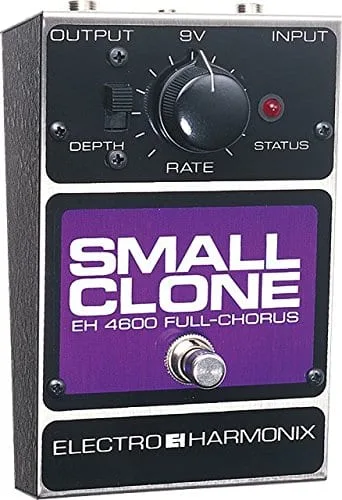
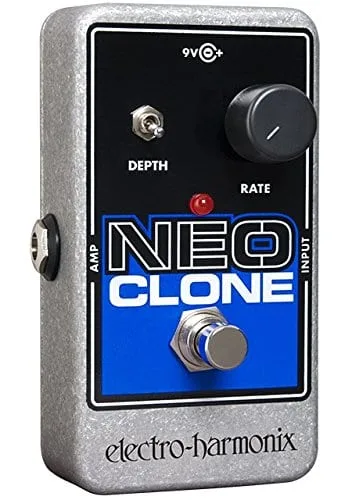
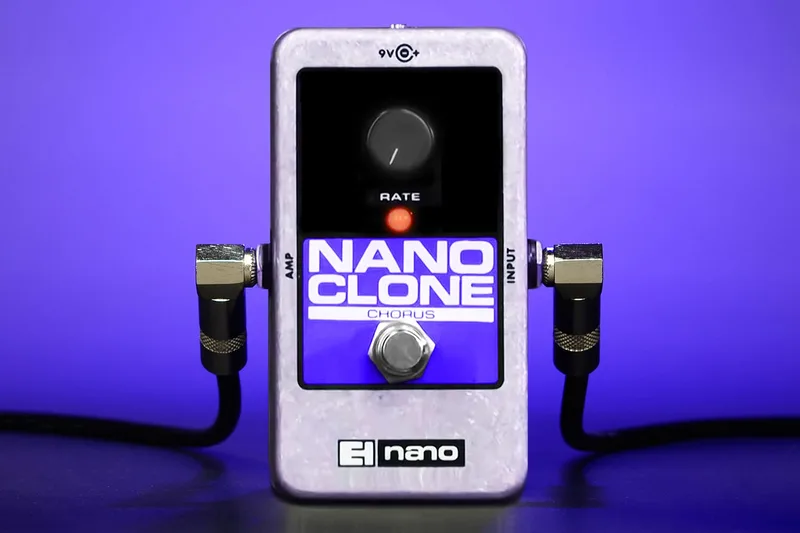
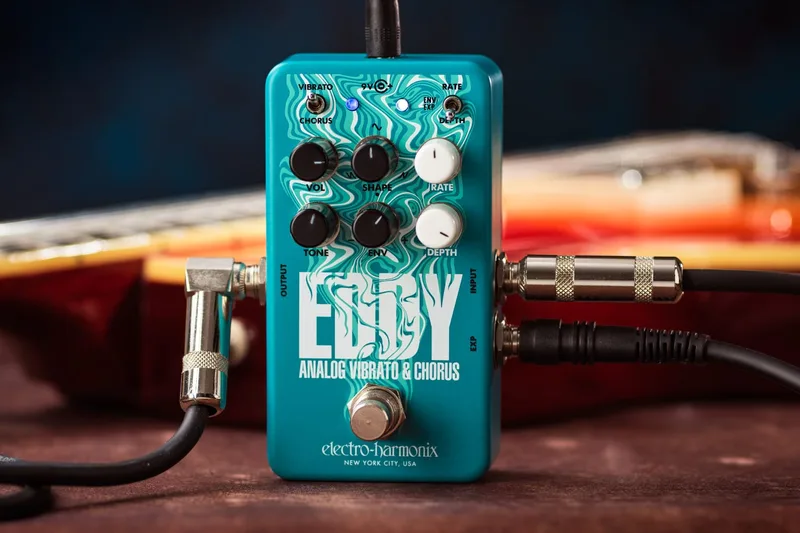
For players comparing chorus pedals, the main alternatives within Electro-Harmonix's own line are the Small Clone Chorus and its compact versions, the Neo Clone and Nano Clone. The Clone Theory differs from the mono Small Clone in its stereo outputs and its three-mode switch, which adds a vibrato voice the Small Clone does not have1. MusicRadar's reviewer, though, preferred the Small Clone's chorus sound itself, finding the Clone Theory's CHR 1 mode lacked its three-dimensional character4. The company's later Eddy analog vibrato and chorus pedal, announced in 2020, carries the Clone Theory's chorus/vibrato pairing forward in a smaller enclosure10.
Videos
ProGuitarShopDemos
EHX
docSanchezFX
News
Questions
What is the difference between the Clone Theory and the Small Clone?
The Clone Theory is a stereo modulation unit with two chorus modes and a vibrato mode, while the Small Clone is a mono chorus. MusicRadar's reviewer found the Clone Theory's CHR 1 mode a nice vintage-style analog chorus but felt it lacked the three-dimensional character of a Small Clone. The Clone Theory's vibrato mode and stereo spread are what set it apart.
Does the Electro-Harmonix Clone Theory have stereo outputs?
Yes. The Stereo Clone Theory has a main 1/4 inch output jack plus a second 1/4 inch audio output jack, so it runs in stereo. MusicRadar's reviewer noted that the stereo spread opens up interesting possibilities to enliven your sound, and used a stereo setup to get lush Andy Summers-style chorus washes.
Is the Clone Theory analog?
Yes. Electro-Harmonix lists the Stereo Clone Theory's circuit as analog, and it is a re-creation of the original 1970s Clone Theory. The vintage circuit went through changes: the 1970s Sad1024 version had an Edge bright switch, and when the bucket brigade chip was replaced with the MN3007, that switch was removed and a VIB/Flange switch was added.
How do you change the battery in the Clone Theory?
There is no quick-release battery access hatch, so you have to unscrew the back plate to swap the 9V battery, which is included. MusicRadar's reviewer flagged the fiddly battery access as a downside. An optional 9.6VDC-200mA power adapter is available but not included.
Has the Stereo Clone Theory been discontinued?
Yes. Electro-Harmonix discontinued the Stereo Clone Theory in 2024. The pedal was originally released in 1977, revived in 2007 as a re-creation of the original 1970s Clone Theory, and remained in the range until its 2024 discontinuation.
What does the vibrato mode do on the Clone Theory?
The vibrato mode removes the dry signal entirely, so you hear only the pitch-modulated signal rather than a chorus blend. MusicRadar's reviewer found it ranges from a subtle wobble to a completely inebriated warble that wavers in pitch like a knackered old turntable, great fun but not a sound to trigger by accident at a gig.
Sources (10)
- Stereo Clone Theory, Electro-Harmonix, 2024
- How the Boss CE-2 Chorus pedal took over the world, Guitar World, 2025-08-17
- Electro-Harmonix Stereo Polyphase review, MusicRadar, 2007-12-11
- Electro-Harmonix Clone Theory review, MusicRadar, 2008-01-04
- Stereo Clone Theory by Electro-Harmonix, RockBoard (rockboard.de PedalPedia), 2026
- New Division, PastFx, 2026
- Guitar FX Layouts: Electro Harmonix Clone Theory, tagboardeffects.blogspot.com, 2014-05-19
- Modulation Nation: Chorus, Phasing, and Flanging, Premier Guitar, 2018-09-20
- Totally Normal Behavior (Ep. 4), Featuring an early Death by Audio unit and the Conn Multi-Vider, JHS Pedals (YouTube), 2022-06-17
- New Eddy Analog Vibrato & Chorus by Electro-Harmonix, Premier Guitar, 2020-12-02