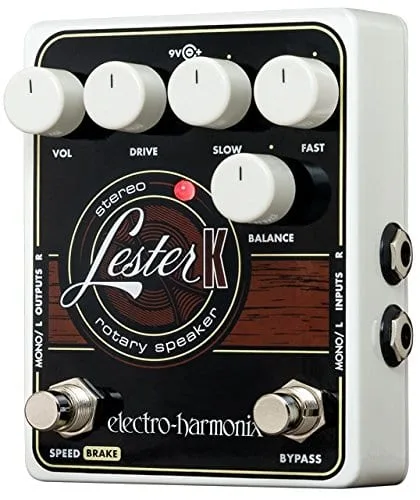


The Electro-Harmonix Lester K is a stereo rotary speaker emulator pedal: a digital stompbox that recreates the sound of a rotating speaker cabinet, the kind associated with electric organ. Electro-Harmonix describes it as "Rotary speaker emulation at its finest!", with stereo or mono inputs and outputs, tube-emulated overdrive, adjustable Fast and Slow modes, and the classic rotary speaker ramp up and ramp down between speeds1. It was released in 2015 and discontinued in 20251.
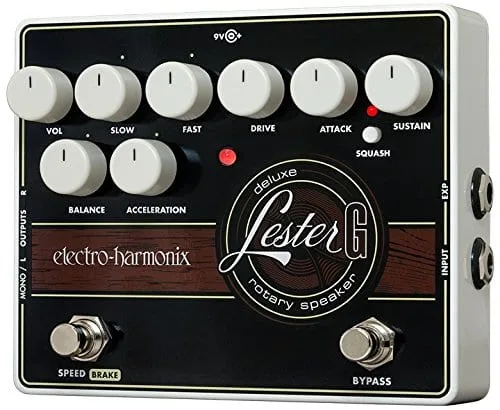
The pedal was announced at NAMM in January 2016 alongside its sibling, the Lester G Deluxe. Where the Lester G is the guitar-focused model, Guitar World reported that "the more compact Lester K was created for the keyboard player who wants to enhance the quality of organ type sounds on their instruments"2. Gearnews likewise described the Lester K as designed for keyboards3. Nothing stops a guitarist using one, but the design intent was organ sounds.
The Lester K was discontinued by Electro-Harmonix in 20251. It is no longer in production; remaining units are used or old stock.
What it does
A rotary speaker cabinet, such as the Leslie systems the pedal emulates, spins a low-frequency rotor and a high-frequency horn at different speeds, producing a doppler-style modulation that speeds up and slows down rather than switching instantly. The Lester K simulates this with stereo outputs, which Electro-Harmonix says provide "a lush, realistic sound with either stereo or mono inputs"1. The pedal reproduces the classic rotary speaker speed up and speed down behavior as it moves between its Fast and Slow modes1.
The Drive knob adds tube-emulated overdrive, simulating the tone of an overdriven rotary speaker cabinet's tube amplifier1. This is a variable control, so the overdrive can be dialed from subtle to pronounced.
The controls
The Lester K has four knobs and two footswitches. The BALANCE knob is the one that shapes the character of the rotation most directly, since it sets the mix between the simulated low-frequency rotor and high-frequency horn1.
| Control | What it does |
|---|---|
| VOL | Controls the output volume1 |
| BALANCE | Controls the mix between the simulator's low-frequency rotor and high-frequency horn1 |
| DRIVE | Controls the amount of overdrive, simulating the tone of an overdriven rotary speaker cabinet's tube amplifier1 |
| FAST | Varies the speed of the rotating speaker effect in FAST mode1 |
| SPEED/BRAKE footswitch | Selects the speed mode of the Lester K1 |
| BYPASS footswitch | Selects bypass or effect mode1 |
The SPEED/BRAKE footswitch works in two stages. A short press switches between Fast and Slow modes; holding it down for half a second puts the pedal into Brake mode, where the rotation decelerates to a stop, mimicking the behavior of a real cabinet being braked5.
Power
The Lester K draws 135mA1. Its dimensions are 4.75 x 4 x 2.25 in1. The specifications list no battery option, and no adapter is specified in them, so a player powering it from a pedalboard supply needs an output that matches the pedal's requirements.
Lester K versus Lester G
The two pedals announced together at NAMM 2016 cover the same effect from different angles. The Lester G is the guitar model; the Lester K is the more compact keyboard model2. At launch the pair sold for $298 and $237 respectively in the US4.
The feature difference matters to players comparing them. MusicRadar's review of the Lester G put it plainly:
"You can get the Lester K Stereo Rotary Speaker (£139) without these features, but they're a big part of the authentic Leslie sound."
The "features" in question are the Lester G's onboard compressor and drive circuitry, which the Lester K omits6. The K does still carry its own Drive knob for tube-emulated overdrive1, but a player who wants the G's compressor section needs the G. UK pricing also differed between reviews: MusicRadar listed the K at £1396, while a 2025 Guitar.com review of the Boss RT-2 cited the Lester K at $218/£1637.
Where it sits among rotary pedals
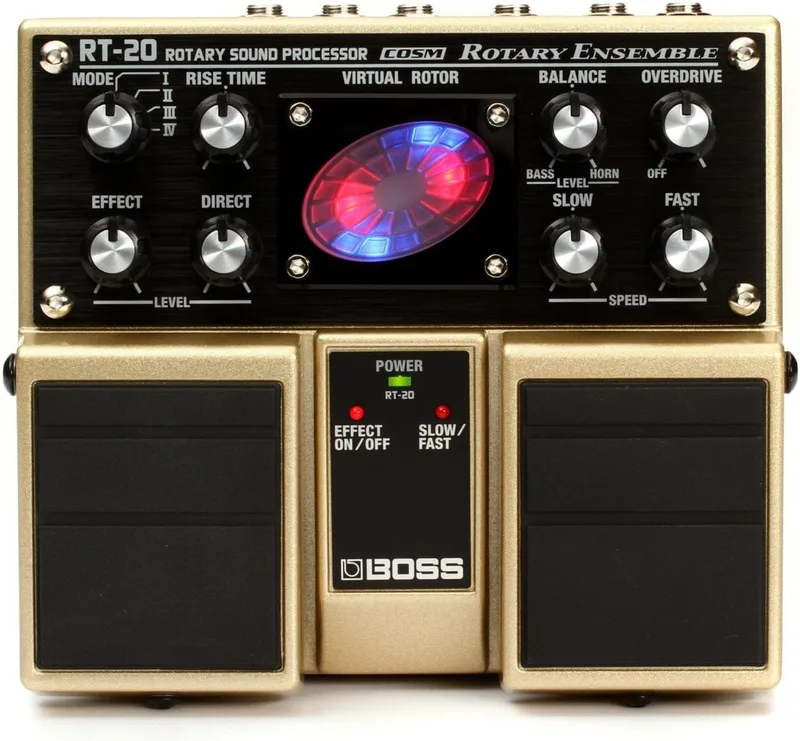
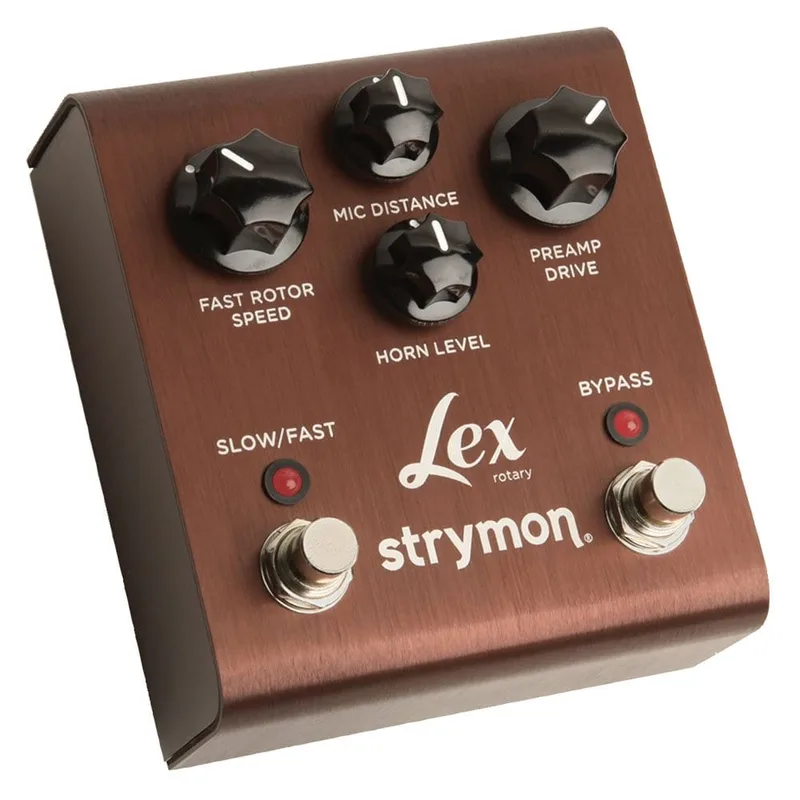
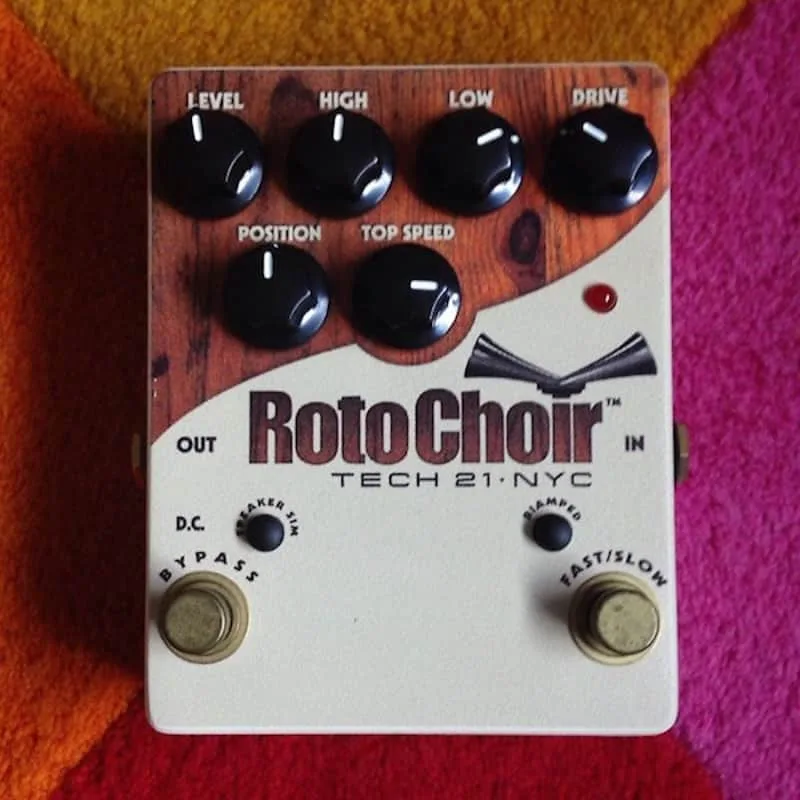
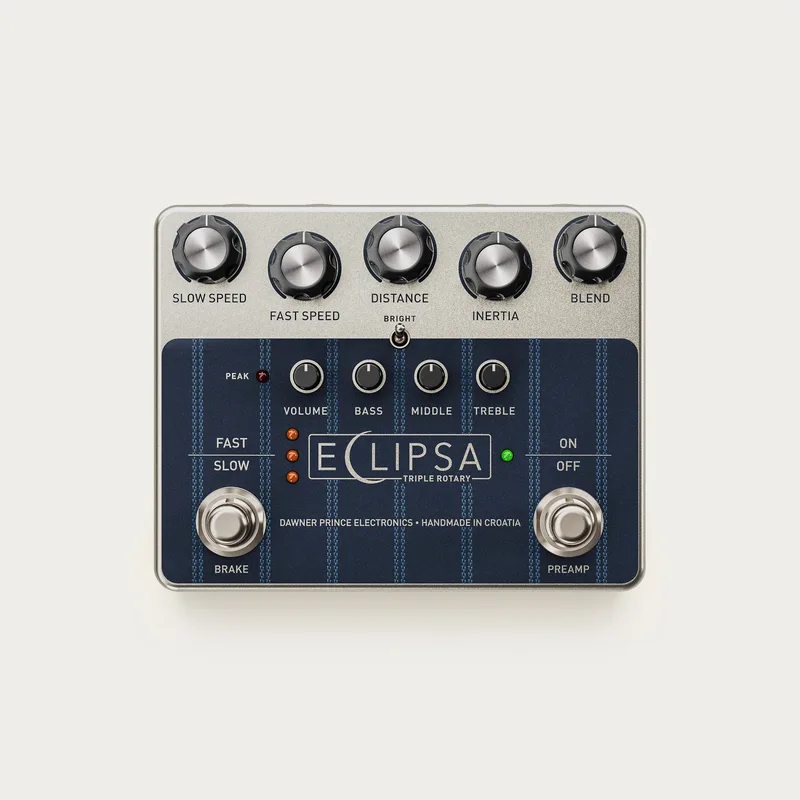
The Lester K is one of several rotary speaker emulators on the speaker simulation shelf. Players comparing options today also have the Boss RT-20 Rotary Ensemble, the Strymon Lex, the Tech 21 RotoChoir, the Pigtronix Rototron, the Dawner Prince Eclipsa, the Danelectro BK-1 Big Spender Spinning Speaker, the DigiTech Ventura Vibe, and the Keeley I Get Around Rotary Simulator, along with organ-focused units like the Neo Instruments Ventilator and neo-instruments mini VENT II. With the Lester K discontinued, the Lester G line and these alternatives are where the search now leads.
Hooking it up
The Lester K is flexible about connections. Its input jacks are labeled MONO/L and R, so a single mono instrument plugs into MONO/L, and a stereo source uses both1. The outputs mirror this: MONO/L and R output jacks can be connected to two separate amps or to two inputs on a mixing board for the full stereo effect1. Used with a mono input, the stereo outputs still carry the effect1.
Videos
EHX
EHX
Sound Affects
Questions
Is the Lester K true bypass?
No. The Lester K uses a high quality buffered bypass, not true bypass. When the pedal is off, the signal passes through its buffer rather than a passive switch. Some players prefer this on long cable runs; others pair it with a bypass looper.
What is the difference between the Lester K and Lester G?
The Lester G is the guitar-focused model of the pair, while the more compact Lester K was created for keyboard players who want to enhance organ type sounds. MusicRadar's review notes the K omits the G's onboard compressor and drive circuitry, which it calls a big part of the authentic Leslie sound. The K still has its own Drive knob for tube-emulated overdrive.
Is the Electro-Harmonix Lester K discontinued?
Yes. Electro-Harmonix discontinued the Lester K in 2025. It was released in 2015 and announced alongside the Lester G at NAMM in January 2016. Discontinued stock may still be found on the used market.
Is the Lester K analog or digital?
The Lester K is a digital pedal. Electro-Harmonix lists its circuit as digital in the product specifications. The pedal uses stereo outputs to create its rotary speaker effect with either stereo or mono inputs.
Does the Lester K have a compressor or drive circuit?
The Lester K has a Drive knob that controls the amount of tube-emulated overdrive, simulating the tone of an overdriven rotary speaker cabinet's tube amplifier. However, MusicRadar's review notes it lacks the Lester G's onboard compressor and drive circuitry.
Can the Lester K be used with mono inputs and outputs?
Yes. The Lester K works with either mono or stereo inputs. Its input jacks are labeled MONO/L and R, and its MONO/L and R output jacks can be connected to two separate amps or two inputs on a mixing board.
Sources (7)
- Lester K, Electro-Harmonix
- NAMM 2016: Electro-Harmonix Introduces Lester G and Lester K Rotary Speaker Emulation Pedals, Guitar World, 2016-01-05
- Electro-Harmonix Lester G and Lester K deluxe rotary speaker pedals announced for NAMM Show, gearnews.com, 2016-01-06
- NAMM 2016: Electro-Harmonix delivers "the ultimate rotary speaker effect" with its new Lester G and Lester K pedals, MusicRadar, 2016-01-05
- EHX Introduces Rotary Speaker Emulation Pedals, Guitar Interactive Magazine, 2016-01-06
- Electro-Harmonix Lester G Deluxe Rotary Speaker review, MusicRadar, 2016-06-24
- Boss RT-2 Rotary Ensemble review: doesn’t compromise on features, Guitar.com, 2025-10-01