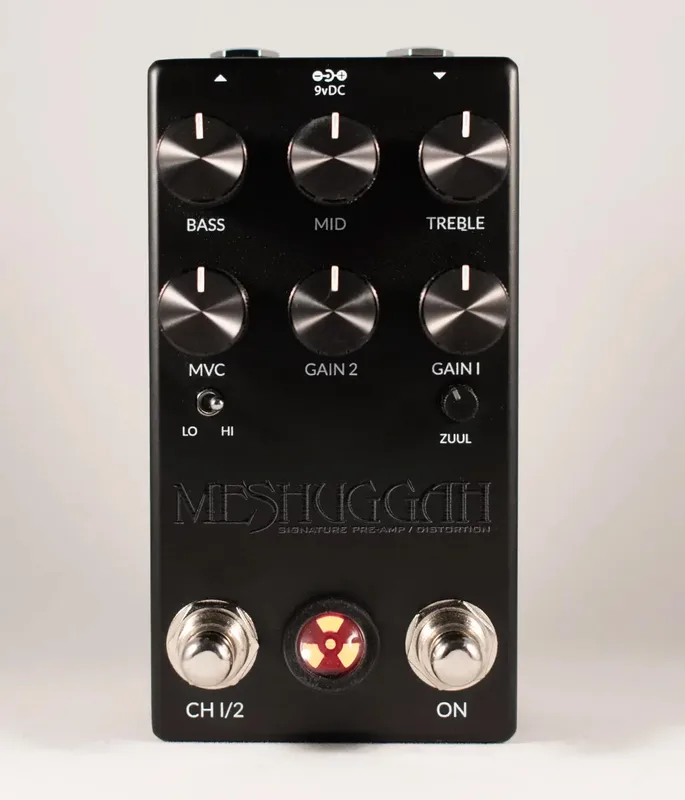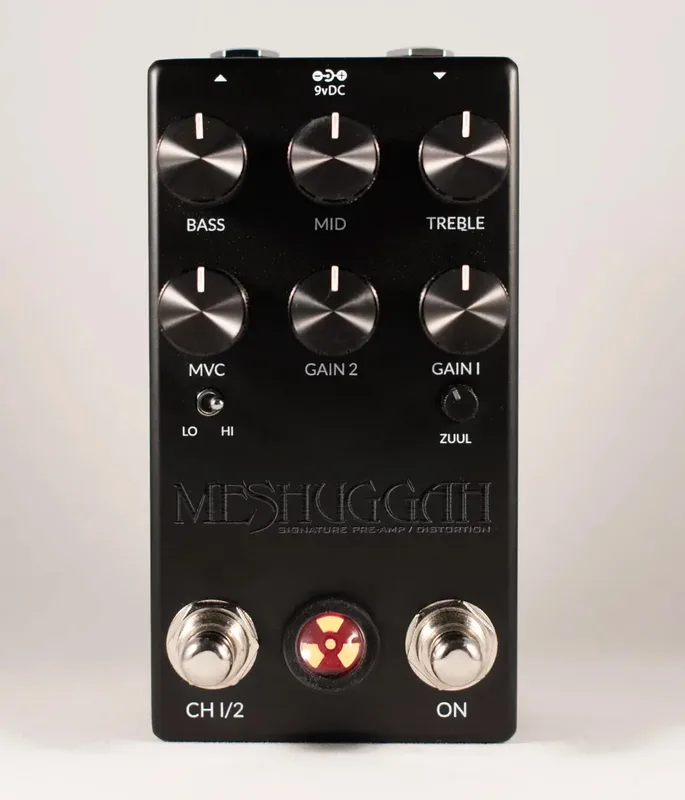


The Fortin Meshuggah is a two-channel preamp/distortion pedal from Fortin Amps, released in 2025 and built in the USA. It puts the preamp and gain structure of the Fortin Meshuggah amp, a limited-edition 50W tube head designed for the band Meshuggah in 2016, into a pedalboard format12. Fortin describes it as more than a distortion: a specialized preamp designed to handle the massive harmonic demands of extended-range guitars, tuned to keep a low F string articulate even under extreme gain3.
It was designed by Mike Fortin in direct collaboration with Meshuggah's Fredrik Thordendal and Mårten Hagström, the two guitarists the original amp was built for34. It carries a built-in Fortin Zuul noise gate, a three-band active EQ, and two footswitchable channels, and it lists at $349.99 USD3.
The Meshuggah amp's preamp in a pedal
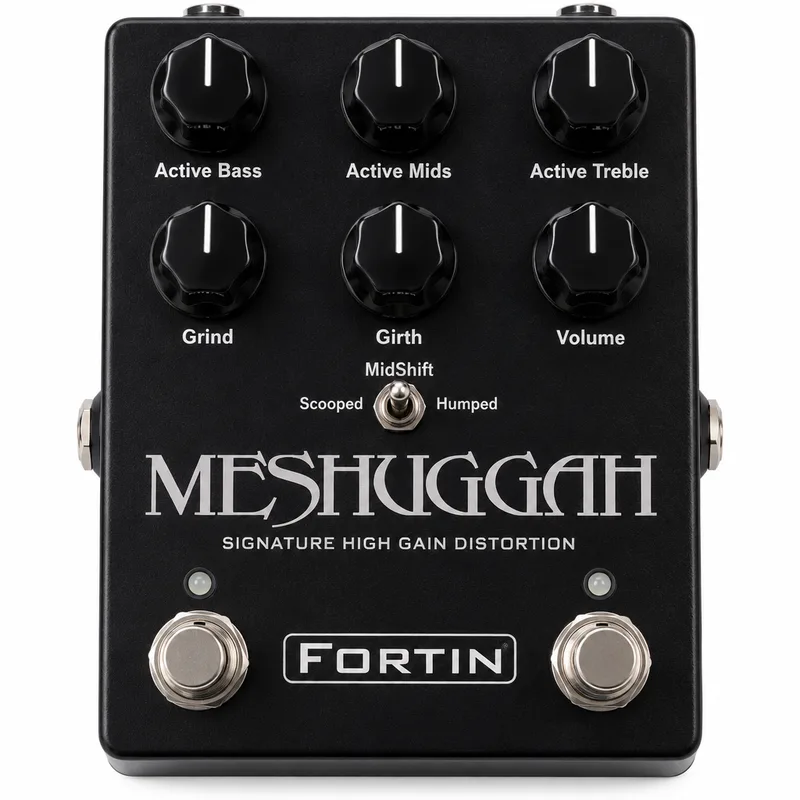
The pedal traces back to late 2016, when Fortin was tasked with creating an amp for Thordendal and Hagström that could cover the diverse tones used on the album The Violent Sleep of Reason. The result was the Meshuggah Signature 50W Amplifier: a limited-edition, point-to-point handwired 50W tube head, built with New Old Stock parts and custom Heyboer transformers, with a gain structure designed specifically for 8-string articulation21. MusicRadar's Jonathan Horsley calls it one of the most legendary and hard-to-find guitar amps, a 50-watt single-channel fire-breather you now have to hunt secondhand4.
To meet the demand of the modern in-the-box and pedalboard player, Fortin released the Meshuggah Preamp in 2025, shrinking the circuit of the 50W head into a portable format1. Guitar World's reviewer notes the pedal, as the name suggests, is based on the preamp and gain structure of Meshuggah's amps6, and Guitar Pedal X describes it as based on the signature Blackout Amp7.
The pedal features two foot-switchable gain stages, Red and Green, which Fortin describes as covering everything from crushing rhythm to searing lead tones2. The channel layout has a quirk worth knowing: Gain 1 and Gain 2 both apply to Red Channel 1, while only Gain 2 impacts Channel 27. Guitar World's reviewer confirms that on the Green channel, only Gain 2 is operative6.
Controls
| Control | What it does |
|---|---|
| On/off footswitch | Relay-based soft footswitch, true bypass; pedal powers up in the state it was powered off in3 |
| Green/Red channel select footswitch | Switches between the two gain stages284 |
| Lo/Hi gain toggle | Selects the gain mode6 |
| MVC (Master Volume Control) | Master volume that works with the Hi and Lo modes to sculpt gain34 |
| Gain 1 | Gain control, active on the Red channel67 |
| Gain 2 | Gain control, active on both channels67 |
| Bass, Middle, Treble | Three-band active EQ with cut and boost36 |
| Zuul | Built-in noise gate using Fortin Zuul tech2 |
The EQ is a hugely responsive 3-band active design: as Fortin puts it, you don't just cut frequencies, you can add them3. Gearnews describes it as highly interactive, allowing precise frequency sculpting with both cut and boost capabilities8.
Lo and Hi gain modes
A Lo/Hi toggle switch selects between two gain modes. Fortin says the two modes make the tone range from a chug to a harsh fuzz3. Guitar World's reviewer found Lo voiced for "chimey" vintage tones, while Hi promises sonic devastation6. MusicRadar's Jonathan Horsley characterized the difference in feel: Hi Gain mode gives a more compressed, modern feel, while Lo gives an "open, raw vintage" feel4. Both modes work alongside the MVC master volume dial to sculpt gain48.
The built-in noise gate
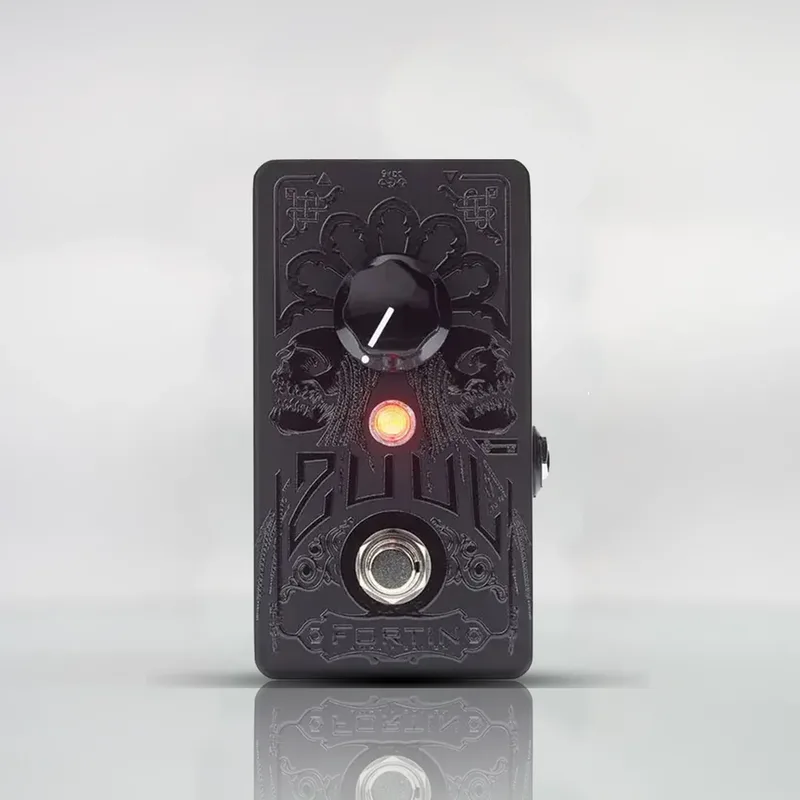
Inside the pedal sits what Fortin calls the industry standard Fortin Zuul noise gate, using the tech from the Zuul, Fortin's standalone noise gate pedal, which Guitar World notes is already popular for metal26. Fortin describes the gate as a crucial component for the dead-silent stops between riffs that Meshuggah's style depends on2, and gearnews calls it key to the ultra-tight, articulated staccato riffs the band is known for8.
Power
No battery. Fortin says the Meshuggah is quite power hungry, which is why there is no battery clip. It requires a 9V DC center-pin negative, fully regulated external adapter or power supply, which is not included3.
Fortin specifies a power draw of 106mA at 9V DC3, while Guitar World and RockBoard's PedalPedia listing both give approximately 125mA56. Gearnews reports the pedal requires a 9V DC supply with a minimum of 106mA8. Give your isolated supply enough headroom for the higher figure.
Running it into a power amp or IR loader
As a preamp, the pedal is meant to feed a power section or a cab sim rather than sit in front of a dirty amp like an overdrive. Fortin says Mike Fortin got as close as he could to the tone and, most importantly, the feel of the amp, and that if you run the Meshuggah into the power section of a Meshuggah amp, or even into the IR section of the Neural DSP Nameless X suite, the tonal differences are extremely hard to hear35. MusicRadar quotes the same claim from Fortin's FAQs4.
Built with Thordendal and Hagström
The pedal was designed in close collaboration with Thordendal and Hagström4, the two guitarists whose signature amp it descends from. Fortin frames the product as crafted in direct collaboration between the sonic visionaries of Meshuggah and the innovative mind of Mike Fortin3. The amp itself remains a rare, sought-after piece: MusicRadar reports that Lee Malia of Bring Me The Horizon told them he wanted one4.
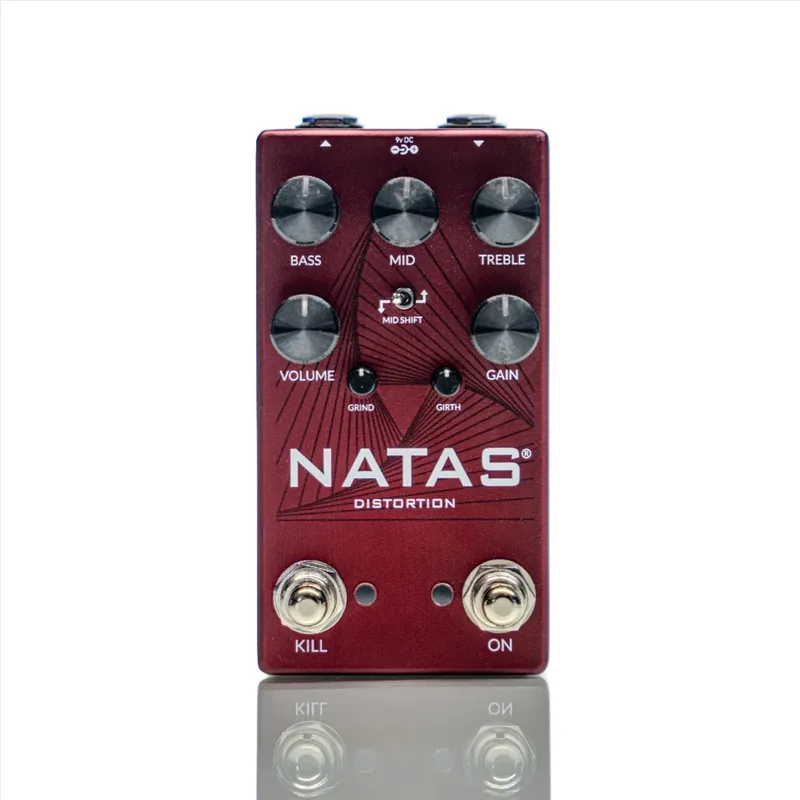
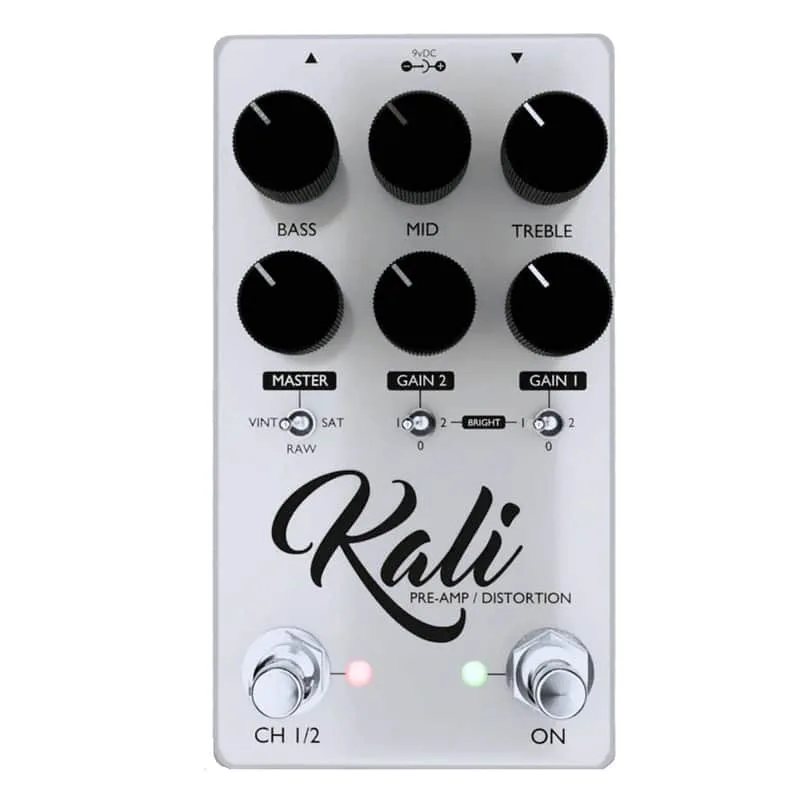
The Meshuggah pedal sits in Fortin's preamp pedal line alongside the NATAS ($299) and the later KALI, both also amp circuits converted to pedal format7. See Fortin Natas and Fortin KALI for those, or the wider field in distortion pedals and preamp pedals.
What reviewers said
Guitar World's review concluded the pedal delivers "some of the tightest, most vicious modern metal tones you'll find anywhere"6. Guitar Pedal X's Stefan Karlsson, reviewing it at launch, wrote:
"It sounds superb to me - and really seems to fully capture that Meshuggah sound"7
He also noted it delivers saturated, tight, palm-muted djent sounds7. In Guitar Pedal X's 2025 year-end roundup of the best new distortion pedals, the Meshuggah earned a SILVER award, with Karlsson calling it "a super tight and potent focused disorient - one of the tightest and fiercest I have encountered"9.
Videos
FortinAmps
Ola Englund
TONE WARS
News
Questions
Does the Fortin Meshuggah pedal have a noise gate?
Yes. It includes a built-in noise gate using the tech from Fortin's Zuul, the noise gate Fortin also sells as its own pedal and which is already popular for metal. Fortin describes it as a crucial component for the dead-silent stops between riffs that Meshuggah's music depends on.
Can the Fortin Meshuggah run on a battery?
No. Fortin says the Meshuggah is quite power hungry, which is why there is no battery clip. It needs a 9V DC center-negative, fully regulated external power supply, which is not included, delivering at least the 106mA the maker specifies.
Is the Fortin Meshuggah pedal true bypass?
Yes. It uses industry-standard DPDT relay true bypass switching with a relay-based soft footswitch, and the pedal powers up in the same state it was powered off in, so it returns to the channel and on/off setting you left it in.
Can I run the Fortin Meshuggah into a power amp or IR loader?
Yes. It is a preamp, designed to feed a power section or a cab sim. Fortin says that run into the power section of a Meshuggah amp, or into the IR section of the Neural DSP Nameless X suite, the tonal differences from the amp are extremely hard to hear.
How close is the Meshuggah pedal to the Fortin Meshuggah amp?
It shrinks the circuit of the 50W head into a portable format, and Fortin says Mike Fortin got as close as he could to the tone and, most importantly, the feel of the amp. Paired with a Meshuggah amp power section or Nameless X IRs, the differences are extremely hard to hear.
Sources (9)
- Artist Spotlight, Fortin Amplification (fortinamps.com), 2025
- Artist Spotlight, Fortin Amps, 2016
- MESHUGGAH, Fortin Amps
- “For guitarists who crave an unrelenting, aggressive tone that stands out in any mix”: The Fortin Meshuggah head is the amp every metal player wants, MusicRadar, 2025-04-22
- Meshuggah PreAmp by Fortin Amplification, RockBoard (PedalPedia), 2026
- Fortin Meshuggah Preamp/Distortion pedal review, Guitar World, 2025-05-11
- Guitar Pedal X, Guitar Pedal X, 2025-04-24
- Fortin Amps Launches Meshuggah Pedal, gearnews.com, 2025-04-22
- Guitar Pedal X, Guitar Pedal X, 2025-12-05
 Ola Englund