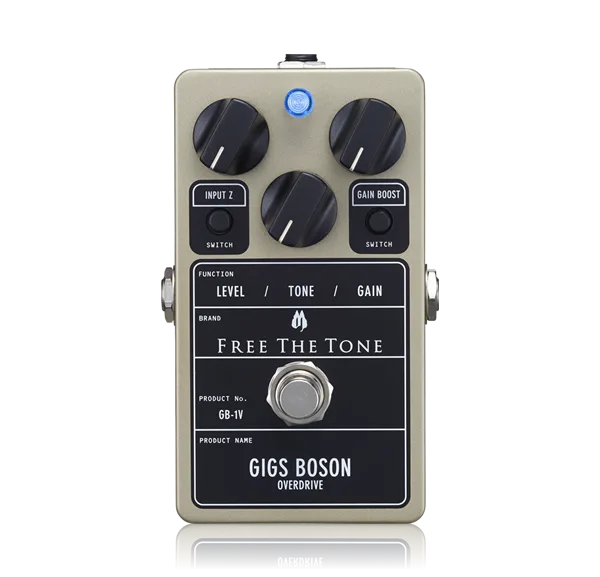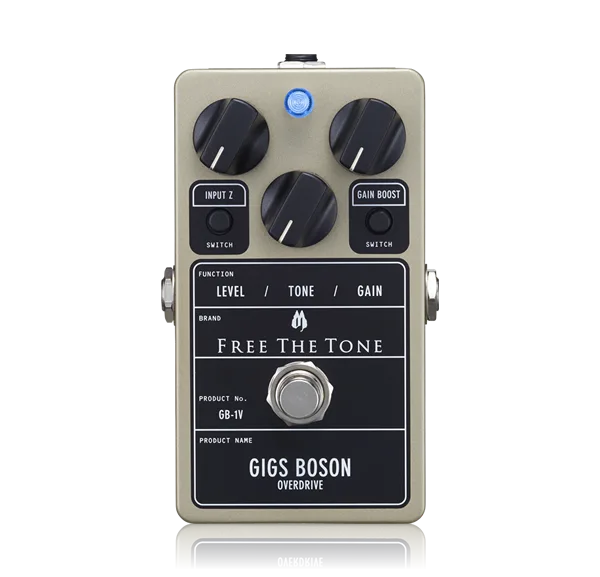


The Free The Tone Gigs Boson is an overdrive pedal from Japanese maker Free The Tone, released on 20 October 2012 as the GB-1V1. It is a compact three-knob drive with two mini switches, built around Free The Tone's HTS (Holistic Tonal Solution) circuit rather than the true bypass switching most pedals use. Free The Tone positioned it as an extremely versatile overdrive with a wide gain range usable for blues, jazz and rock2.
The pedal is discontinued: Free The Tone's product page lists it as production ended1. When it was announced in the United States it carried a suggested retail price of $245.002, and the maker's Japanese page lists it at ¥25,300 (tax included)3.
A smooth, harmonically rich overdrive
In its launch announcement, Free The Tone described the player's ideal overdrive pedal as "smooth, warm, creamy and harmonically rich, with tons of sustain," positioning the Gigs Boson as its take on that ideal2. The maker also claims a dynamic range and signal-to-noise ratio beyond what its DC9V power supply would suggest1, a point MusicRadar echoed, noting "a broader dynamic range than usually associated with DC9V power supplies"4.
Reviewers found the range covered a lot of ground. MusicRadar found the GB-1V "caters for most tones a blues rock guitarist would wish for, from same-as-if bypassed through edgy crunchy tones to thick overdrive with impressive sustain"4. Pedal of the Day's Mike B wrote that the pedal "really accentuates the nuances of your picking or fingerstyle playing with ease, and can also rip some sick overdrive tones when cranked up"5.
The enclosure is a matte silver/gold colored metal casing with black rotary dials and a black main panel, which MusicRadar said "simply exudes class"4. The pedal weighs approximately 230 g without a battery5.
The controls: Gain, Tone, Level and two mini switches
The top panel carries three knobs and two small push-switches34:
| Control | What it does |
|---|---|
| GAIN | Sets the amount of drive213 |
| TONE | High/low frequency adjustment2 |
| LEVEL | Sets the output volume213 |
| GAIN BOOST switch | Adds volume and saturation, more drive and gain46 |
| INPUT Z switch | Selects input impedance, 1MΩ or 100kΩ12 |
The gain boost switch sits under the first and last dials alongside the input switch, and MusicRadar found that engaging it "increases volume and saturation"4. Their later review described the first mini push-switch as "a gain boost that brings, yes, more drive and gain"6.
The Input Z switch is the more unusual of the two. It selects between 1 megohm and 100 kilohms input impedance, and it works even with the effect off, changing high-frequency nuance beyond what the tone circuit does1. MusicRadar's review team explained that the 100 kilohm setting "drops the input impedance from 1 megohm to 100 kilohms to reduce the level of the high-frequency range," calling it a "make smoother" switch6. Their verdict on where to leave it:
"for reduced brittle high-end without losing too much of the good treble part, the 100 kilohms setting is ideal"
Power and connections
The Gigs Boson runs on DC9V and draws approximately 9mA, so it is easy on a pedalboard power supply3. Power comes from either a 9V type 006P battery or an AC adapter through the DC9V input jack31. Connections are simple: a 1/4-inch input jack, a 1/4-inch output jack, and the DC9V adapter jack51. The output load impedance is rated at 10kΩ or above1.
HTS input circuit instead of true bypass
The Gigs Boson does not use true bypass. Instead it carries Free The Tone's HTS (Holistic Tonal Solution) circuit, developed by the company's Yuki Hayashi, which MusicRadar describes as a distinct three-stage approach covering the input, effect and output stages6. Free The Tone says the HTS circuit manages the signal holistically from input to output so that the effect sound and the bypass sound always keep the same quality1.
Pedal of the Day described the HTS input circuit as preventing degradation of the guitar signal even when the pedal is bypassed5. The switching itself is silent, with no switch clicking, which MusicRadar listed among the pedal's benefits4. Players comparing bypass approaches can read more in the site's coverage of buffer pedals.
History and the GB-1V
Free The Tone released the Gigs Boson, model number GB-1V, on 20 October 20121. The company presented it as part of its standard effectors series, "a new series of effects pedals based on advanced technology and extensive experience"2. According to Guitar Interactive Magazine's Jonathan Graham, "The origin of the name 'Gigs Boson' came from the Higgs Boson particle which was discovered last summer"7.
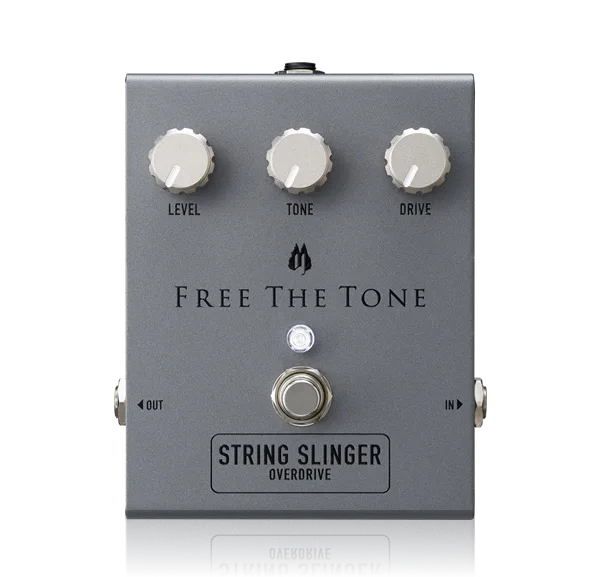
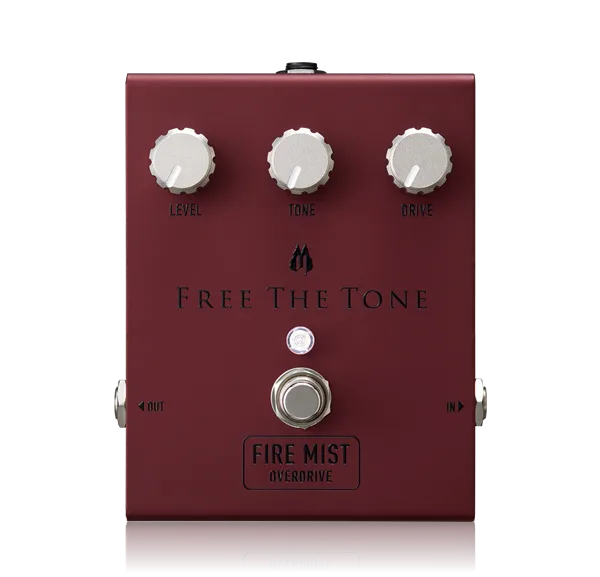
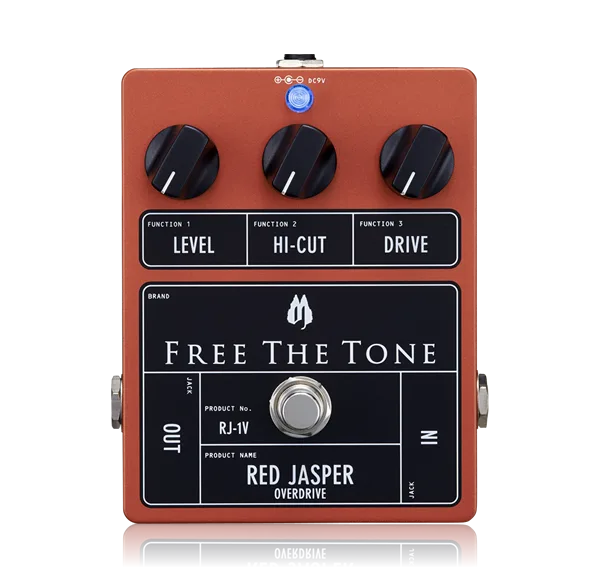
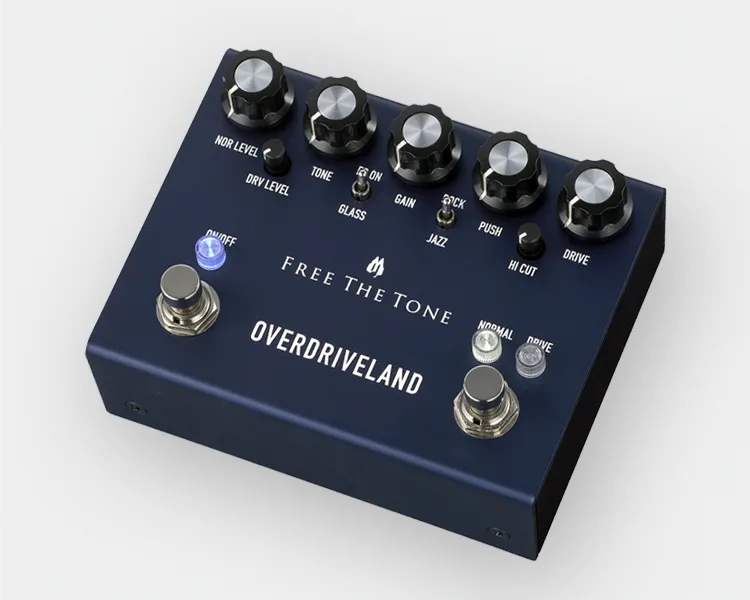
The pedal now sits among Free The Tone's other discontinued and current overdrives, including the String Slinger SS-1V, the Fire Mist FM-1V, the Red Jasper RJ-1V and the Overdriveland ODL-1.
What reviewers said
MusicRadar praised the pedal's build and presentation, writing "you can't help but admire it's quiet sophistication"4. Their later review summed up the sound as "Great sounds with gorgeous harmonics"6. Pedal of the Day's Mike B was similarly positive about the maker overall: "The thing is, the folks over at Free The Tone don't really make any bad gear, as least none that we've come across yet"5.
Videos
FreeTheToneMovie
Brett Kingman
Pedal of the Day
Questions
Is the Free The Tone Gigs Boson discontinued?
Yes. Free The Tone's product page for the Gigs Boson GB-1V lists it as production ended, so it is no longer made. It was released on 20 October 2012 and carried a suggested retail price of $245.00 when announced in the United States in 2013.
What does the Input Z switch do on the Gigs Boson?
It switches the pedal's input impedance between 1 megohm and 100 kilohms. The 100 kilohm setting rolls off some high-frequency content, which MusicRadar's reviewers described as ideal for reducing brittle high end without losing too much of the good treble. The switch works even when the effect is off.
Why is it called the Gigs Boson?
According to Guitar Interactive Magazine, the name came from the Higgs Boson particle, which had been discovered the summer before the pedal's announcement. Free The Tone swapped the H for a G to give the pedal its name.
Who designed the Free The Tone Gigs Boson?
The pedal's HTS (Holistic Tonal Solution) circuit was developed by Yuki Hayashi of Free The Tone, according to MusicRadar's review. The circuit manages the signal from input to output so the effect and bypass sounds keep the same character.
Sources (7)
- GIGS BOSON / GB-1V|Products 商品紹介|Free The Tone, Free The Tone
- Free The Tone Unveils Gigs Boson Overdrive, Premier Guitar, 2013-07-30
- GIGS BOSON / GB-1V|Products 商品紹介|Free The Tone, Free The Tone
- Hands on with the Free The Tone Gigs Boson Overdrive and Iron Forest Distortion pedals, MusicRadar, 2012-11-30
- Free The Tone Gigs Boson Overdrive, Pedal of the Day, 2015-10-24
- Free The Tone Gigs Boson Overdrive review, MusicRadar, 2013-03-01
- Free The Tone Unveils Gigs Boson Overdrive, Guitar Interactive Magazine, 2013-07-31