

The Fulltone Ranger is a treble booster pedal from Fulltone's Custom Shop, built as a recreation of the Dallas Rangemaster, the classic 1960s germanium treble booster. Where the original had a single knob, the Ranger adds a six-position rotary switch that selects which range of frequencies gets boosted, from full range up to the bright treble cut of the original circuit1. Like the Rangemaster it is based on, it is fueled by a germanium transistor1.
Fulltone announced the Ranger on 18 September 2019, describing it as a Custom Shop take on the Rangemaster. At announcement there was no word on price or availability beyond "coming soon"1.
What a Rangemaster-style treble booster does
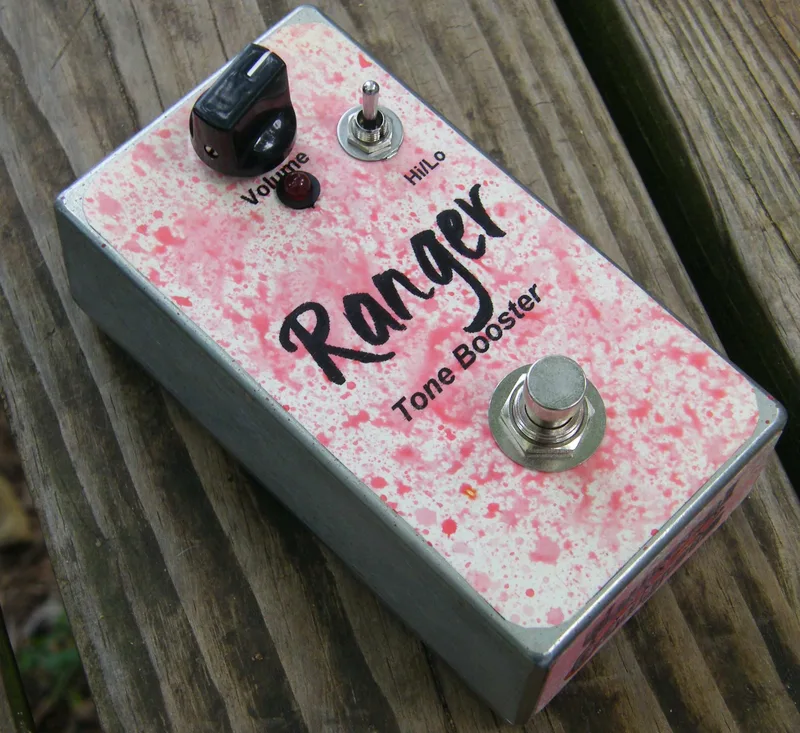
A treble booster sits in front of the amp and does two jobs: it increases the signal strength of the guitar going into the amplifier, and it emphasizes the upper mid and treble frequencies4. In the 1960s players used boxes like the Dallas Rangemaster to push dark, non-master-volume amps harder, so the amp broke up earlier and the top end cut through. The Rangemaster came in a funky little folded steel desktop-style enclosure5, and technically it is a highly colored boost rather than a clean boost: it changes the guitar's tone as well as its level6.
The original circuit is a single-transistor design. DIY Fever's technical analysis notes the transistor should be a PNP germanium, or even silicon7, which is why vintage units vary in character and why builders today hunt for low-noise old-stock germanium parts.
The six-position rotary switch
The Ranger's main departure from the one-knob original is a six-position rotary switch offering a range of boostable frequencies1:
| Position | What it boosts |
|---|---|
| Full range | The whole signal |
| Low mid boost | Low midrange |
| Mid boost | Midrange |
| Rangemaster #1 | Treble boost with a .0047 capacitor |
| Rangemaster #2 | Treble boost with a .0068 capacitor |
| Highest | The top frequencies |
The two Rangemaster positions reproduce the original's treble-boost voicing with two different capacitor values, so a player can choose between the classic setting and a slightly different treble curve, while the other four positions extend the pedal into ranges the one-knob original never offered1.
Germanium transistor and the limited run
Like the original, the Ranger is fueled by a germanium transistor1. Beyond the standard version, Fulltone's Mike Fuller promised a limited run of 60 units fitted with low-noise N.O.S. 1965 Mullard OC75 transistors1, the kind of new-old-stock germanium part that vintage-circuit builders seek out for its low noise.
Powering it
Fuller got the pedal to run from a regular 9V negative-ground power supply, as well as a battery1. That matters because the original Rangemaster circuit, built around a PNP germanium transistor, is often associated with positive-ground arrangements that cannot share a supply with modern pedals. A negative-ground Ranger can sit on the same daisy chain or isolated supply as the rest of a pedalboard.
The Ranger was announced in September 2019 with no price or availability given, only "coming soon"1. Check the maker's product page for current status.
Where it sits among boost pedals
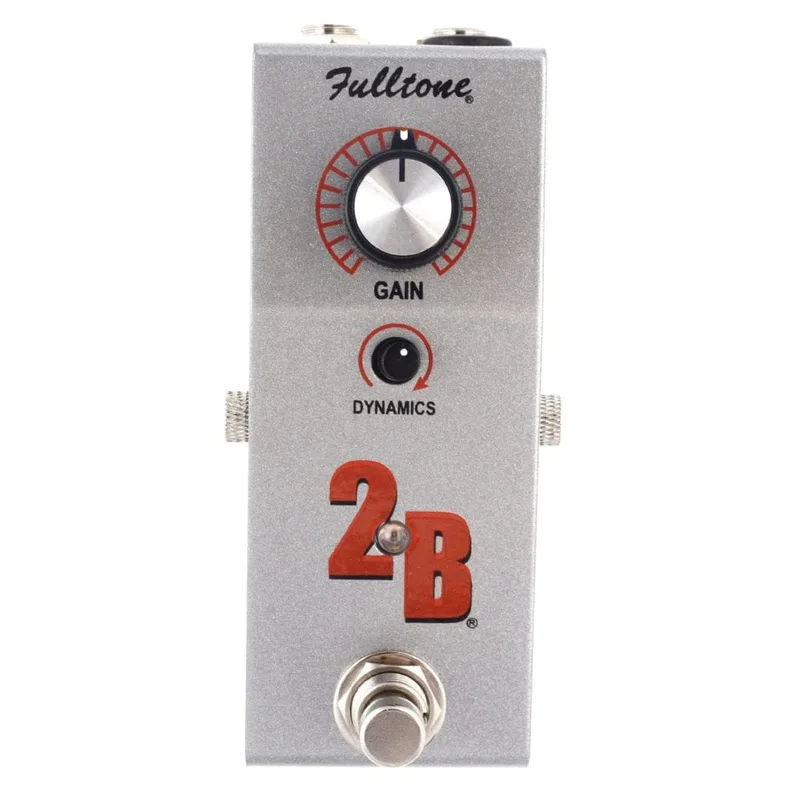
RockBoard's listing calls it "The Fulltone Custom Shop CS-Ranger. The greatest Rangemaster treble booster clone ever?" and lists its circuit type as analog2. It is one of several takes on the Rangemaster idea: EarthQuaker Devices has described the Rangemaster as "the classic and much imitated one knob Rangemaster Treble Booster"8, and the circuit has been copied and reissued widely, including a 2012 JMI re-issue built in England9. Within Fulltone's own line, the Ranger is the company's Rangemaster-style entry, distinct from its other boost pedals such as the Fulltone 2B and the Fulltone 2B JFET Booster, which take different approaches to raising a guitar's level.
Videos
FulltoneMusicalProductsLLC
Chicago Music Exchange
Martial Allart
Questions
Does the Fulltone Ranger use a germanium transistor?
Yes. Like the original Dallas Rangemaster it is built around a germanium transistor. Fulltone also promised a limited run of 60 units fitted with low-noise new-old-stock 1965 Mullard OC75 germanium transistors, the same type prized in vintage treble boosters.
Can the Fulltone Ranger run on a battery?
Yes. When Fulltone announced the pedal in September 2019, Guitar World reported that designer Mike Fuller got it to run from a regular 9V negative-ground power supply as well as a battery. The negative-ground design means it can share a power supply with most modern pedals.
What does the rotary switch on the Ranger do?
The six-position rotary switch selects which range of frequencies the pedal boosts: full range, low mid boost, mid boost, a Rangemaster-style treble boost with a .0047 capacitor, a second treble setting with a .0068 capacitor, and a highest setting. It lets one pedal cover several vintage boost flavors.
What is a Rangemaster treble booster?
The Dallas Rangemaster was a 1960s treble booster in a small folded-steel desktop enclosure. It raised the guitar's signal strength into the amp and emphasized the upper mid and treble frequencies, and players used it to push dark amps into singing overdrive. It is a highly colored boost rather than a clean one.
Is the Fulltone Ranger analog?
Yes. RockBoard lists the Ranger's circuit type as analog, and the pedal follows the original Rangemaster's single-transistor germanium design rather than a digital emulation.
Sources (9)
- Fulltone readies the Ranger, a pimped-out Rangemaster treble booster, Guitar World, 2019-09-18
- Ranger by Fulltone, RockBoard (www.rockboard.de), 2026
- Ranger - Fulltone USA, Fulltone USA
- Dallas Rangemaster History, British Pedal Company
- Red Rooster, stompboxes.co.uk, 2025
- Boost pedals: the history of the stompbox that supercharged the sound of rock 'n' roll, Guitar World, 2023-07-26
- Effects > Dallas Rangemaster : DIY Fever, DIY Fever (diy-fever.com)
- EQ and Boost, EarthQuaker Devices, 2022-08-29
- TONEHOME, TONEHOME