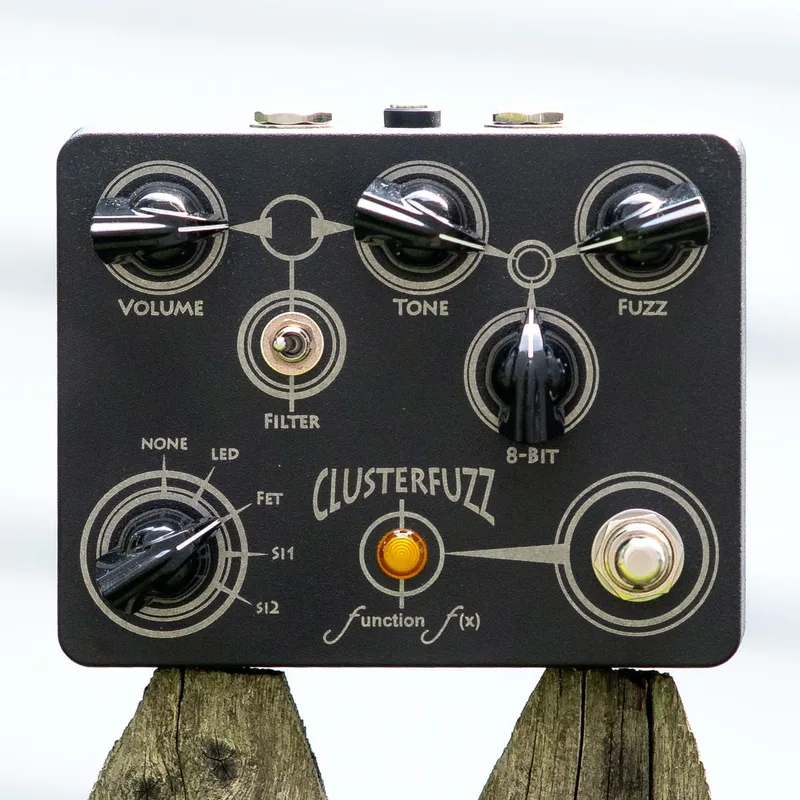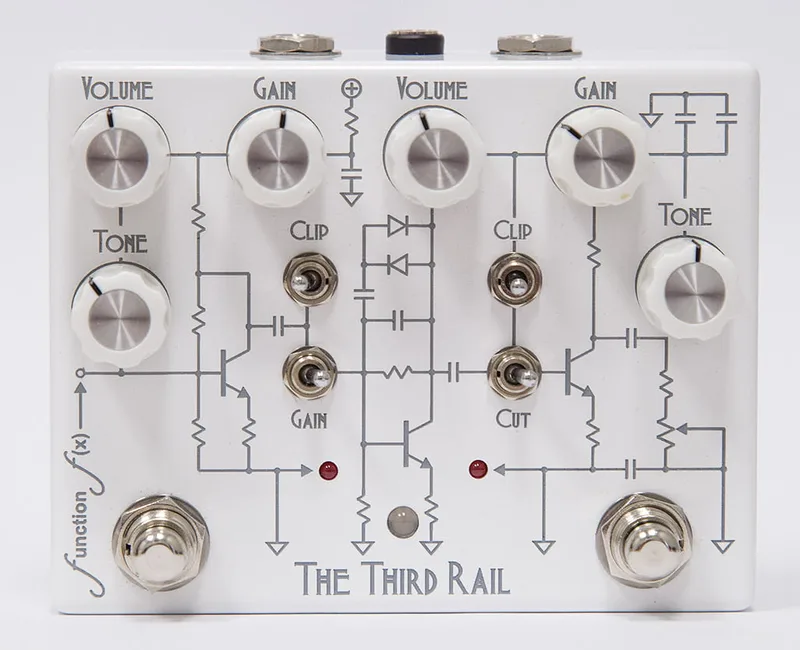


The Third Rail is a dual-channel overdrive pedal from Function f(x), a stompbox maker based in Elk Grove, Illinois1. It puts two independent, discrete overdrive circuits built on NPN transistors in one box, and each channel is identical2. Function f(x) calls it their first foray into the overdrive realm, with a design objective of "a versatile overdrive that could deliver a range of compression, saturation and touch sensitivity" for modern players2.
The manual describes its range as broad: "It can go from a very touch-sensitive low-gain overdrive all the way up through blistering lead drive tones"3. Premier Guitar's 2015 announcement called it "a novel design that utilizes modern components for consistent performance and a long operational life," and noted it was the company's second product, a follow-up to the Clusterfuzz4.
Two discrete overdrive channels in one box
Most dual overdrives put two different circuits in one enclosure. The Third Rail instead gives you two copies of the same discrete, transistor-based overdrive, so the two halves behave identically and can be set up as matching boosts or as two different gain stages2. Because the channels can run independently or in series, a player can use one alone, alternate between them, or stack them for what the maker describes as high gain saturation and compression2.
The pedal carries laser-etched artwork on its enclosure5. Function f(x) positions it as a versatile overdrive rather than a clone: the Pedal of the Day review found "the sound of the drive is unique in that Function f(x) does not seem to be copying anything but rather creating their own drive with options"6.
The controls: six knobs and four switches
The control surface is six knobs and four toggle switches, which Premier Guitar's announcement summed up as a "wide variety of tonal options from six control knobs, four toggle switches, and three bypass modes"4. The two channels are identical, but their switches differ in function:
| Switch | Channel | What it does |
|---|---|---|
| High Gain switch | Left | Raises the gain of the left channel2 |
| CUT switch | Right | Alters the value of the input capacitor, cutting lows; the maker notes it reduces the low end being amplified when stacking both circuits3 |
| Clip switch | Both | Selects Schottky, no diodes, or silicon diode clipping5 |
The right channel's low cut is the stacking aid: with both circuits in series, trimming the lows from the second one in the chain keeps the combined sound tighter3. The Pedal of the Day review described the same arrangement from the player's side, noting "the right channel features a low cut toggle, while the left side features a higher gain toggle"6.
Clipping options: Schottky, silicon or no diodes
Each channel has its own Clip switch with three positions. The manual spells out what each does3:
- Schottky diodes (left position): maximum sustain and compression
- Standard silicon diodes: a middle ground in compression and touch response
- No diodes: the transistors themselves do the work, for the most headroom and touch sensitivity
The maker frames the switch as choosing "different levels of compression, touch sensitivity and headroom"2. Because the switch is per channel, the two sides can clip differently, for example a compressed Schottky channel stacked into a cleaner diode-free channel.
Footswitches and bypass modes
The Third Rail has two soft-touch footswitches for near-silent operation3, and soft touch (true) bypass with a choice of three bypass modes: one channel on at a time, toggling between each channel, or both channels on at once with momentary bypass on the second footswitch for stutter effects5. The pedal remembers which mode you prefer even if you unplug the power supply2.
The Pedal of the Day review named the three modes and how they behave6:
| Mode | Name | Behavior |
|---|---|---|
| Blue | Independent | Each side used independently or together |
| Green | Flip-flop | One switch toggles between sides |
| Red | Third Rail | Momentary switch for both sides on or off upon release, switchable to off or on upon release with the second switch |
Red mode is the stutter-effect mode the maker describes: with both channels running, the second footswitch acts momentarily, so holding or tapping it cuts or restores the sound for rhythmic effects26.
Power
The Third Rail runs on a 9V DC center negative supply with a 2.1mm barrel connector, which the maker calls the industry standard53. Current draw is 35mA, dropping to 20mA when bypassed5. At 35mA it is comfortable on most isolated power supplies and daisy chains that can spare that headroom.
The manual specifies a 9VDC center negative 2.1mm barrel power supply3. Center negative is the common pedal standard, but check your supply's polarity marking before plugging in, since reversed polarity can damage the pedal.
Warranty and service
Function f(x) warrants the Third Rail against defective parts and workmanship for 1 year from the date of purchase, not covering damage caused by user error3. After the first year, the maker offers repair of damaged pedals either for free or for the cost of bench work depending on the issue1. The manual adds that a full PCB replacement may take as long as 4 to 6 weeks if critical parts are out of stock, with no costs paid upfront3.
What reviewers said
Published coverage was positive. Delicious Audio called it "a high end quality box that fills the role of the popular double tube screamer option in one fell swoop," meaning it covers the same pedalboard job as running two Tube Screamer-type overdrives, in a single enclosure1. The Pedal of the Day guest review emphasized originality, finding the drive sound unique rather than a copy of an existing circuit, with the switching modes as a major part of the appeal6.
Videos
ProGuitarShopDemos
Mike Hermans
gearmanndude
Questions
Is the Function f(x) Third Rail true bypass?
Yes. Function f(x) describes it as soft touch (true) bypass, with two soft-touch footswitches for near-silent operation. There are three bypass modes: one channel on at a time, toggling between the two channels, or both channels on at once with momentary bypass on the second footswitch for stutter effects.
Can you stack both channels on the Third Rail?
Yes. Each channel can be run independently or in series, and the both-on bypass mode runs the two channels together. The right channel's CUT switch reduces the low end being amplified when stacking both circuits, which keeps the combined sound from getting muddy.
Is the Third Rail a double Tube Screamer?
Not in circuit terms. It uses two discrete overdrive channels built on NPN transistors rather than Tube Screamer-style op-amp clipping. Delicious Audio's reviewer did say it fills the role of the popular double Tube Screamer option, meaning the same job on a pedalboard, in one box.
What warranty does Function f(x) give on the Third Rail?
One year from the date of purchase against defective parts and workmanship, not covering damage caused by user error. After that, the maker repairs damaged pedals either for free or for the cost of bench work depending on the issue, and a full PCB replacement can take as long as 4 to 6 weeks if critical parts are out of stock.
What did Function f(x) make before the Third Rail?
The Third Rail was the company's second product and the follow-up to the Clusterfuzz fuzz pedal, according to Premier Guitar's 2015 press coverage. Function f(x) is based in Elk Grove, Illinois.
Sources (6)
- New Pedals: Function F(x) The Third Rail Overdrive, Delicious Audio, 2016-05-31
- The Third Rail Dual Overdive, Function f(x), 2017-06-13
- Author: Function f(x) LLC, Function f(x) LLC, 2019
- Function f(x) Releases The Third Rail, Premier Guitar, 2015-09-10
- The Third Rail Dual Overdrive, Function f(x), 2025-05-02
- Guest Reviewer Fridays: Function f(x) Third Rail Overdrive, Pedal of the Day (pedal-of-the-day.com), 2016-07-01