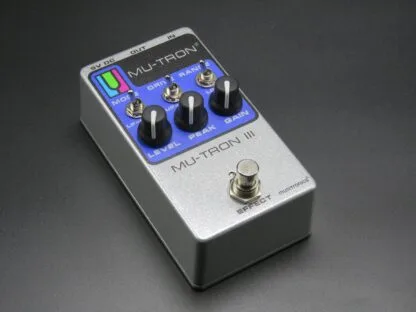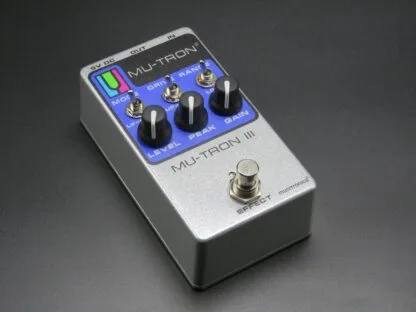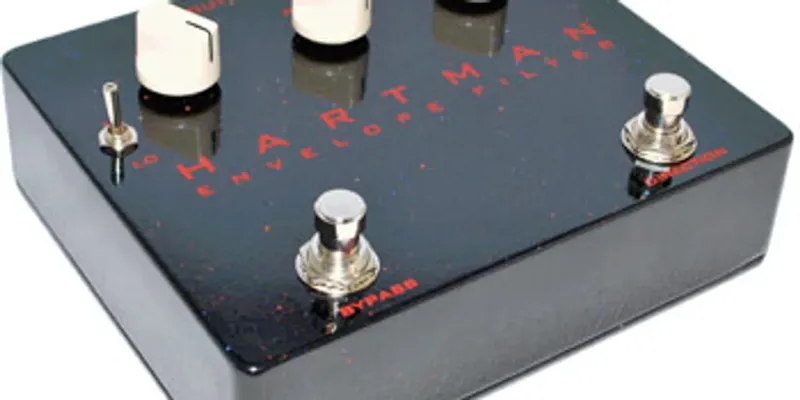

The Hartman Envelope Filter is an analog envelope filter pedal announced by Hartman Electronics of Berkeley, California on October 1, 2010. Hartman described it as "a recreation of a classic effect optimized for tone, flexibility, and ease-of-use," inspired by one of the great envelope filter pedals of the 1970s, the old Mu-Tron III1.
An envelope filter, sometimes called an autowah, listens to how hard you pick and opens and closes a filter in response, so your playing dynamics shape the sweep rather than a rocking foot pedal. The Hartman version does this with an optically controlled state-variable filter built from select, low-noise components, the same general approach as the Mutron it honors1.
An optical filter modeled on the Mutron
The pedal Hartman set out to recreate is the Mu-Tron III, which Mike Beigel designed for Musitronics and which Premier Guitar's profile of the effect calls "the first envelope-controlled filter in modular form"2. The original combined an envelope follower, which tracks your picking strength, with a voltage-controlled filter whose sweep is driven by that follower. The Mu-Tron line continues today, including the Mu-Tron III Envelope Filter from Musitronics3.
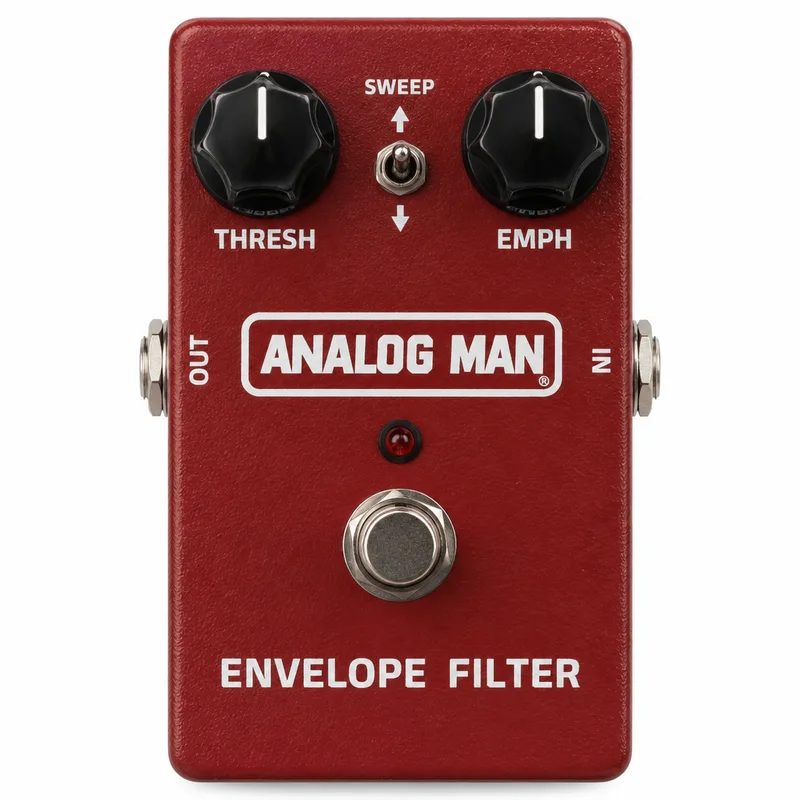
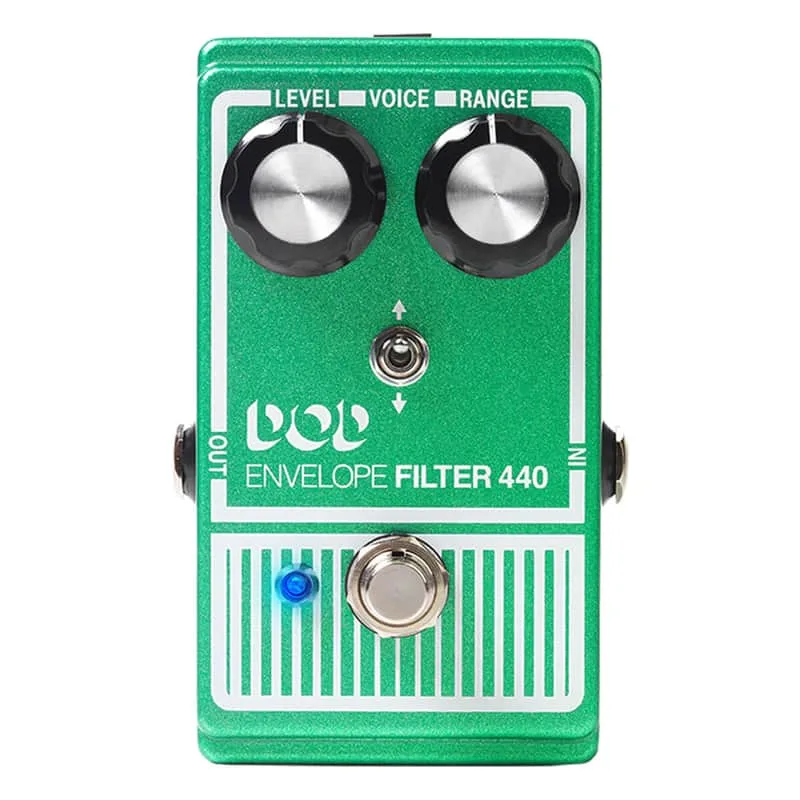
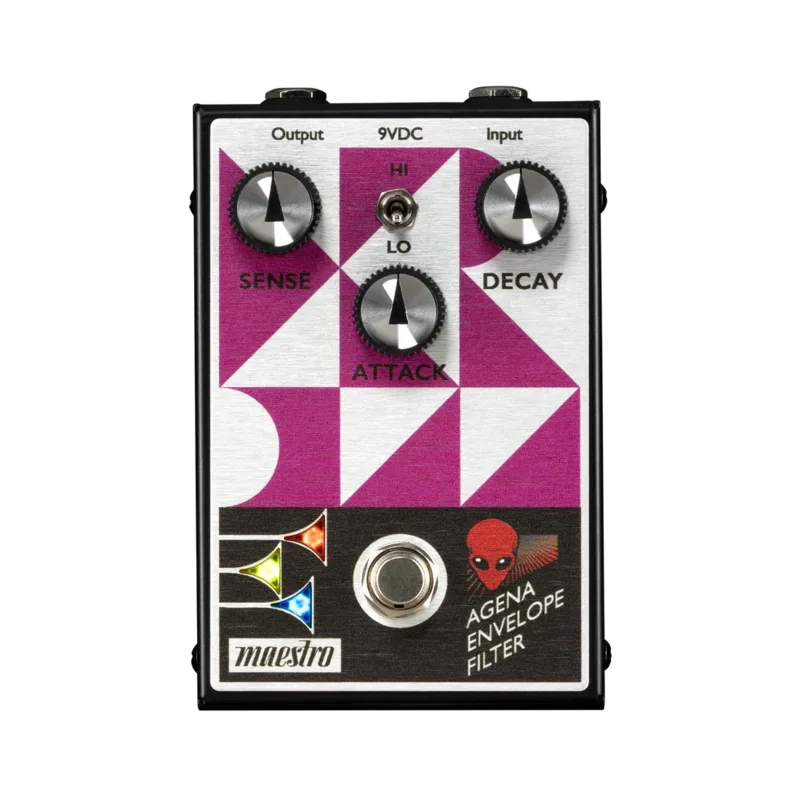
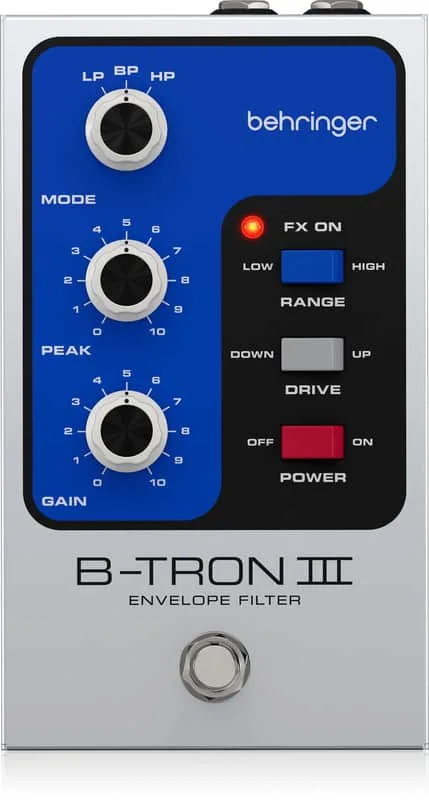
Hartman's take keeps the optical heart of that design: a light-dependent element controls the state-variable filter, so the sweep is shaped by light rather than by a transistor switch. Hartman billed the result as "of course, analog"1. For players comparing modern takes on the same circuit, the field includes the Analog Man Envelope Filter, the DOD Envelope Filter 440, the Maestro Agena Envelope Filter, and the Behringer B-Tron III Envelope Filter, an explicit homage to the Mu-Tron III.
Controls and the sweep direction footswitch
The control layout centers on two footswitches and an active Mix control:
| Control | What it does |
|---|---|
| Main footswitch | Engages and bypasses the effect, heavy-duty true bypass1 |
| Second footswitch | Changes filter sweep direction on the fly1 |
| Mix control | Actively blends filtered and unfiltered signal1 |
The second footswitch is the pedal's distinguishing feature. On most envelope filters, sweep direction is a toggle you set once and leave; the Analog Man Block Logo Envelope Filter, for example, uses a toggle that emulates the MuTron III's up/down switch, which dictates whether a filter sweep begins at the low or high point of the peak4. Putting that choice on a footswitch means you can flip between upward "wah" style sweeps and reversed, downward sweeps mid-phrase, which Hartman described as giving "on-the-fly access to a broad palette of classic filter sounds"1.
The active Mix control is another practical touch. Blending filtered and unfiltered signal lets you keep some of your dry character under the sweep, which is especially useful for bass players who do not want the low end swallowed by the filter1.
Factory preset internal trim pots permit additional tuning of filter voice and action. They ship set from the factory, so the pedal works out of the box, but opening it up gives you further shaping beyond the external controls1.
Power: 18VDC
The Hartman Envelope Filter runs on 18VDC through a 2.5mm external power jack1. That is double the 9V standard most modern pedals use, a choice consistent with recreating a 1970s design that wanted extra headroom for its filter circuit.
The 18VDC requirement and 2.5mm plug size mean this pedal will not run on a standard 9V center-negative daisy chain or a 9V battery. It needs its own 18V supply with the matching 2.5mm barrel1.
Developed with Mark Karan
Hartman developed the pedal with guitarist Mark Karan, whose credits listed in the announcement include Delaney Bramlett, Bob Weir & Ratdog, and Jemimah Puddleduck1. A working player's input shows in the feature set: the sweep direction footswitch and the Mix control are both performance-oriented choices, aimed at changing the filter's character without bending down mid-song.
Where it came from and where it was made
Hartman announced the pedal from Berkeley, California on October 1, 2010, and it is made in the U.S.A. with a one-year warranty1. It sits in a long line of Mutron-inspired recreations that followed the original's 1970s run, from the Beigel Sound Lab Envelope Controlled Filter designed by Mike Beigel himself to the Mu-FX Tru-Tron 3X Envelope Filter and the 3 Leaf Audio Proton Envelope Filter. For a broader look at the category, see filter pedals.
Videos
Jonah Stepro
Questions
Is the Hartman Envelope Filter based on the Mutron?
Yes. Hartman described it as inspired by one of the great envelope filter pedals of the 1970s, the old Mutron, and as a recreation of that classic effect. Like the original, it uses an optically controlled state-variable filter rather than a purely transistor-based design.
Is the Hartman Envelope Filter true bypass?
Yes. The pedal is housed in a rugged powder-coated metal enclosure with heavy-duty true-bypass switching, so your dry signal passes through untouched when the effect is disengaged.
Where is the Hartman Envelope Filter made?
It is made in the U.S.A. and carries a one-year warranty. Hartman announced the pedal from Berkeley, California on October 1, 2010.
What are the internal trim pots on the Hartman Envelope Filter for?
The factory preset internal trim pots permit additional tuning of the filter's voice and action. They ship set from the factory but can be adjusted to shape how the filter responds and sounds.
Sources (4)
- Hartman Electronics Announces Envelope Filter, Premier Guitar, 2010-10-01
- Builder Profile: The Mu-tron Story, www.premierguitar.com, 2013-09-12
- Mu-FX Tru-Tron 3X™ Envelope Filter, pedal-of-the-day.com, 2016-04-19
- Analog Man Envelope Filter Review, Premier Guitar, 2015-11-09