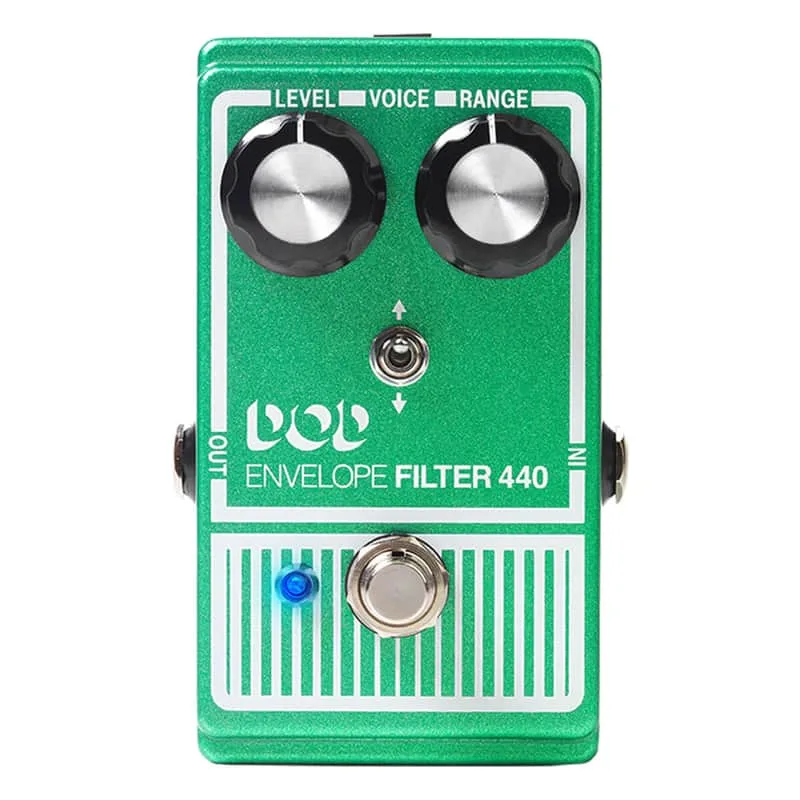


The DOD Envelope Filter 440 is an analog envelope filter, an auto-wah style effect that sweeps a filter in response to how hard you pick. DOD describes it as letting you "speak with vowel-like sounds, cry with slow-filter sweeps that react to your pick attack"1. Where a wah pedal moves the filter with your foot, the 440 moves it with your playing dynamics: dig in and the filter opens, back off and it closes. Delicious Audio describes the result as "a range of wah-like or synthy tones ideal for funk or creative sounds"2.
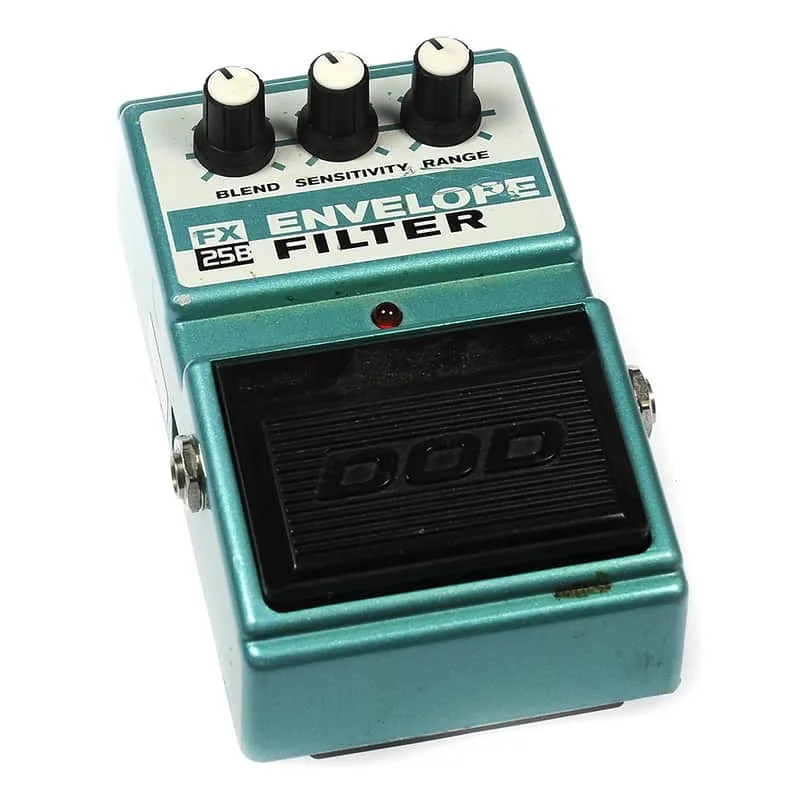
The pedal is made by DOD, now under DigiTech, and its profile owes much to one player: Jonny Greenwood of Radiohead, who used it on live versions of classics such as Paranoid Android3. A JHS Pedals history article notes that Greenwood actually used the 440 rather than the DOD FX25B he is sometimes associated with4.
The controls: Level, Range and the Up/Down switch
The 440 keeps the original's two-knob layout and adds one switch. Each control does one clear job82:
| Control | What it does |
|---|---|
| Level | Controls the sensitivity of the envelope based on your pick attack1 |
| Range | Controls the frequency range of movement of the envelope's sweep1 |
| Up/Down switch | Chooses which part of the sweep you want to emphasize1 |
The Level knob is the one you set to your instrument and touch. MusicRadar's reviewer Michael Astley-Brown explains that "level adjusts the sensitivity of the envelope; the higher the sensitivity, the lower the signal required to activate the" filter3. A quiet single-coil pickup needs more sensitivity than a hot humbucker; set it too high and the filter triggers on everything, too low and it never opens.
The Up/Down switch is the reissue's main addition over the original. Premier Guitar describes it as "the up/down voice switch that enables users to emphasize either the rise or fall of the sweep"7. The two settings have distinct characters:
- Up: "The up setting provides the classic 440 wah-style effects"7. GuitarPlayer's Art Thompson found the up position "brighter and more vocal," where "the sound is the most wah-like"9.
- Down: "Flick the switch down for a subterranean dive that adds body to bass tones or gives the guitar synth-like attack"7. Thompson describes the down position as "bassier and whooshier"9.
That down setting is also why the pedal works for bass players: the sweep adds body to low notes rather than thinning them out. DOD separately made the FX25B, a bass-oriented envelope filter with a blend control making it "equally responsive to both the guitar and bass"10.
History and versions
The 440 has lived three lives. The original vintage version was a simple two-knob pedal, with just Level and Range controls8. It went out of production long ago, and by 2021 Premier Guitar reported "the original discontinued DOD 440 Envelope Filter going for $200+ on eBay nowadays"5.
DOD reissued the pedal in 2014, before the company's temporary demise11122. Announced in June 2014 at an expected $150 US list price13, the first reissue was "based on original DOD Envelope Filter 440 circuit design with updated components"1 and added the modern touches the original lacked:
- True bypass, where the original "would color the tone even with the effect switched off"12
- A 9-volt DC power supply input, which "makes the Envelope Filter 440 far more pedalboard-friendly"12
- A lighter aluminum housing14
- A bright blue LED indicator "easy to see even on outdoor stages in bright sunlight"13
- The new Up/Down switch8
If you are shopping secondhand, the three versions are easy to tell apart: the original has two knobs and no switch, the 2014 reissue has the Up/Down toggle and a blue LED, and the 2023 reissue keeps that layout in the lighter aluminum chassis.
What reviewers said
Published reviewers have been positive about the reissue across both its runs. GuitarPlayer's Art Thompson summed up the 2023 version in two lines: "Envelope Filter 440: Awesomely funky auto-wah sounds. Handy voice switch"97.
Pedal of the Day, reviewing the 2014 reissue, took a measured view of how close it gets to the vintage unit: "While it might not be sonically identical to the original, it gets pretty close, and would be an excellent addition to a" pedalboard8. MusicRadar's review ties the pedal's reputation to its most visible user, crediting its standing "thanks largely to its use by Jonny Greenwood on live versions of Radiohead classics such as Paranoid Android"3.
How it compares to other envelope filters
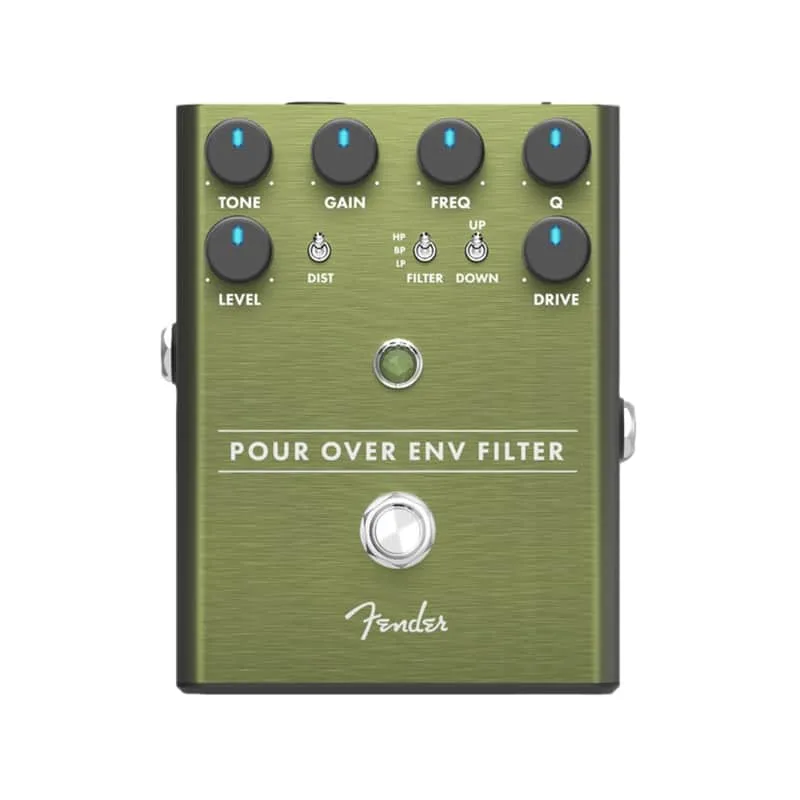
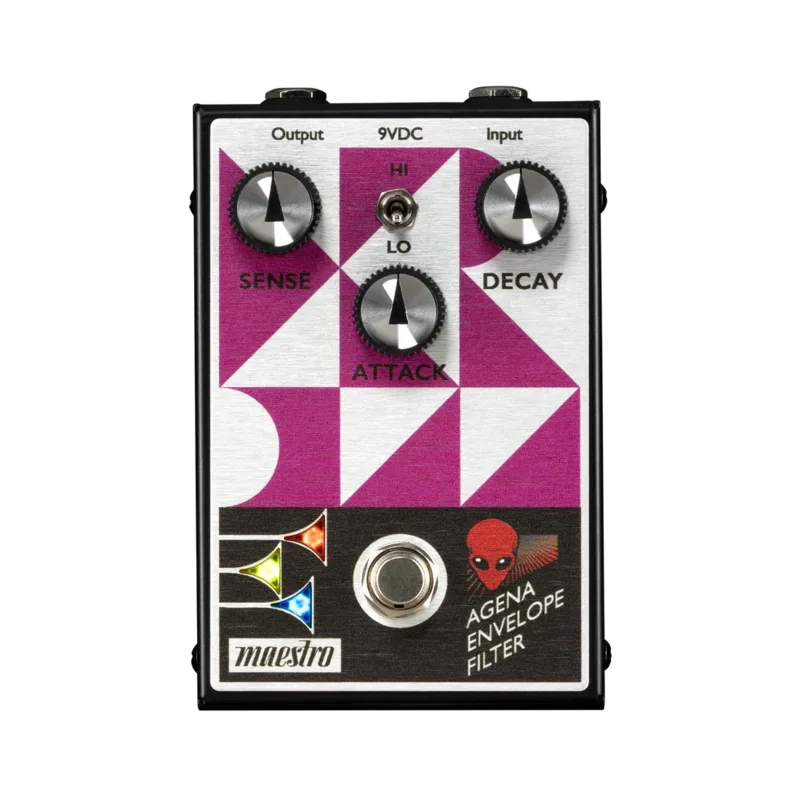
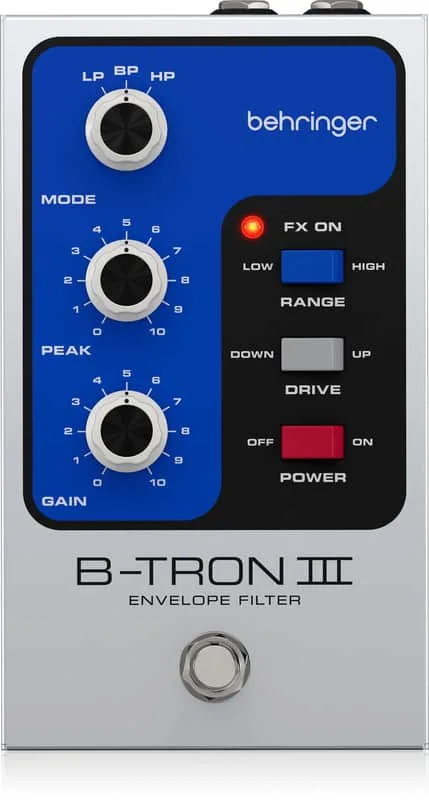
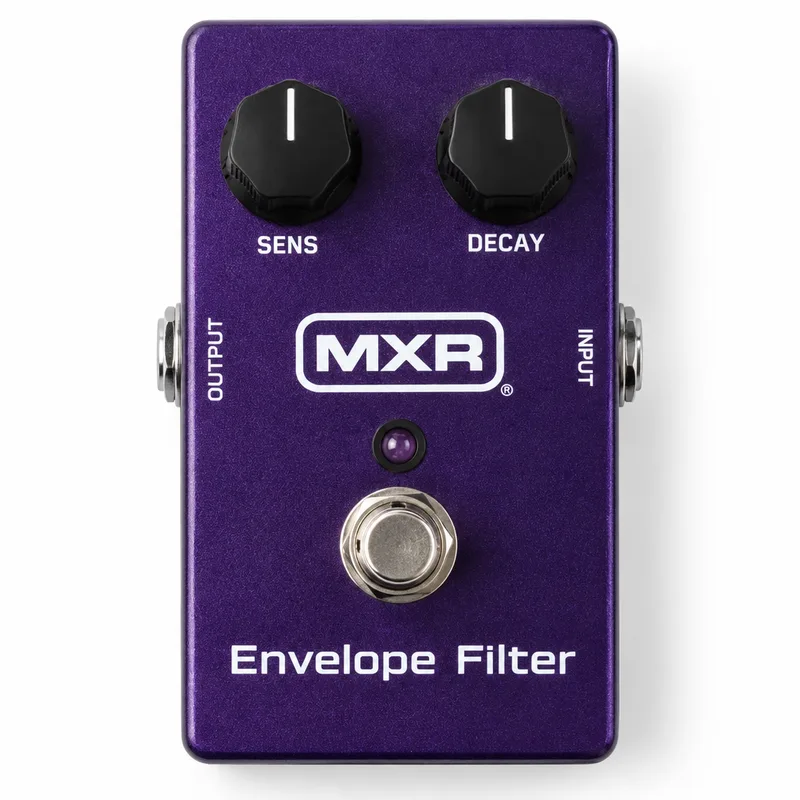
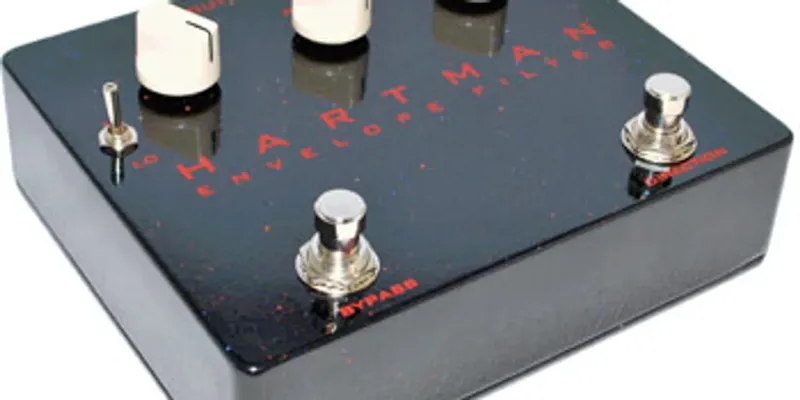
The 440's appeal is simplicity: two knobs and a switch, versus the deeper control sets of pedals like the Fender Pour Over Envelope Filter, which offers Tone, Gain, Freq, Q, Level, Drive, filter-type and mode switches815. Players who want more parameters have alternatives: the Maestro Agena Envelope Filter, the Behringer B-Tron III with its all-analog optical circuit, the MXR Envelope Filter, and the Hartman Envelope Filter. The 440 instead keeps the original's minimal layout, which for many players is the point.
Videos
ProGuitarShopDemos
Sweetwater
Eirik Stordrange
News
Questions
Is the DOD Envelope Filter 440 true bypass?
Yes. The reissue features true bypass operation, which keeps your tone pristine when the effect is off. The original 1970s 440 did not have true bypass and would color the tone even with the effect switched off, so this is one of the main differences between the versions.
Does the DOD 440 run on a 9V battery?
Yes. The reissue accepts a standard 9V alkaline battery or a 9V DC power supply, and DigiTech lists the PS0913DC supply as the matching adapter. The 9-volt DC power supply input is what makes the pedalboard-friendly power option possible.
What is the difference between the original DOD 440 and the reissue?
The reissue is based on the original circuit design with updated components, but adds true bypass, a 9-volt DC power input, a lighter aluminum chassis, a blue LED indicator, and an Up/Down switch the original never had. The original had just two control knobs, Level and Range, and colored your tone even when switched off.
Is the DOD 440 analog?
Yes. The reissue keeps DOD's analog circuit design, based on the original 440 circuit with updated components. Reviewers have described the pedal's sound as warm and funky analog auto-wah rather than a digital emulation.
Does the DOD Envelope Filter 440 work on bass?
Yes. The Up/Down switch's down setting is described as a subterranean dive that adds body to bass tones, and the up setting gives the classic 440 wah-style effects on guitar. DOD also made a separate bass-oriented version, the FX25B, with a blend control for both instruments.
What envelope filter did Jonny Greenwood use?
Jonny Greenwood of Radiohead used the DOD Envelope Filter 440, notably on live versions of Radiohead classics such as Paranoid Android. A JHS Pedals history article notes that he actually used the 440 rather than the DOD FX25B he is sometimes associated with.
Sources (15)
- DOD Envelope Filter 440, DigiTech, 2026-02-26
- Pedal Reissue: DOD Envelope Filter 440, Delicious Audio, 2023-03-14
- DOD Envelope Filter 440 review, MusicRadar, 2014-12-23
- RECREATING MY GUITAR RIG FROM 20 YEARS AGO, JHS Pedals, 2020
- Review: Mojo Hand Analogue Filter, Nebula & Luna, Premier Guitar, 2008-06-15
- DOD Envelope Filter 440 review, Guitar World, 2023-06-21
- DigiTech/DOD Relaunch DOD Envelope Filter 440 Effects Pedal, Premier Guitar, 2023-03-14
- DOD Envelope Filter 440 (2014), Pedal of the Day, 2016-11-08
- DOD Overdrive Preamp 250, Envelope Filter 440 and Meatbox Subsynth Reviews, GuitarPlayer, 2023-08-17
- FX25B Envelope Filter by DOD, RockBoard PedalPedia, 2026
- DigiTech Announce Release of DOD Envelope Filter 440, Guitar Interactive Magazine, 2014-06-16
- DigiTech Reissues DOD Envelope Filter 440, Guitar World, 2014-06-11
- Digitech reissues DOD Envelope Filter 440, MusicRadar, 2014-06-17
- DOD Offers 440 Envelope Filter, Vintage Guitar magazine, 2014-06-23
- Fender Pour Over Envelope Filter review, Guitar World, 2020-07-24