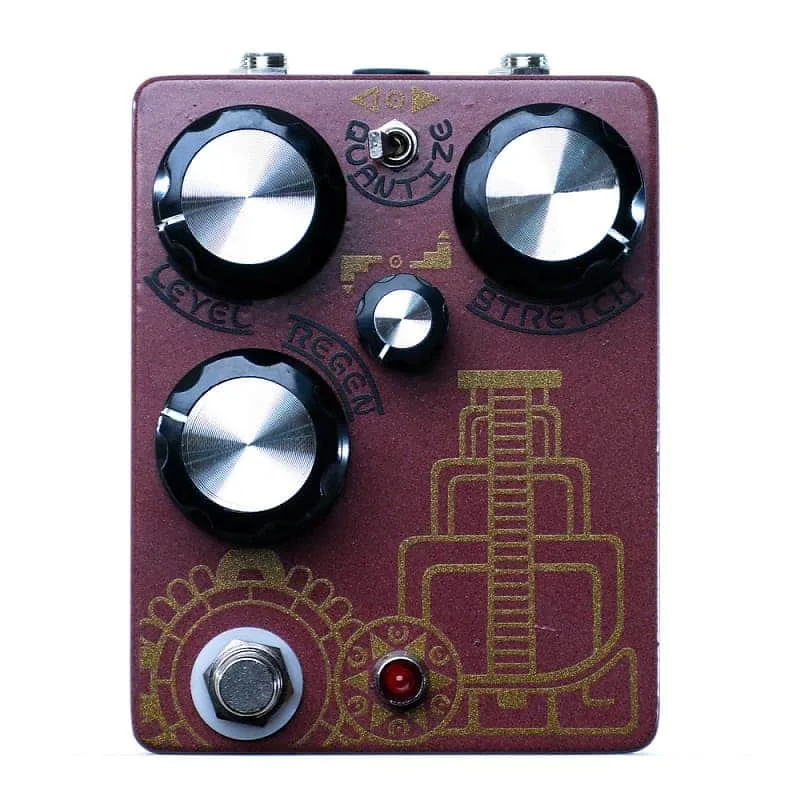


The Hungry Robot Borderland is an advanced digital reverb pedal with a tap tempo LFO and modulation section built in. Hungry Robot designed the reverb algorithm specifically with an ambient player in mind, and describes the Borderland as "the perfect pedal for creating lush, modulating, ambient textures"1. An adjustable low-pass filter shapes the reverb's character, ranging from a small room sound to a cavernous, dark hall1.
What sets the Borderland apart from a plain reverb is its modulation engine: eight LFO waveforms and four modulation modes, with the LFO rate set by knob or tapped in with a footswitch. A clock input on the pedal even lets a modular synth drive the tempo123.
The reverb and its controls
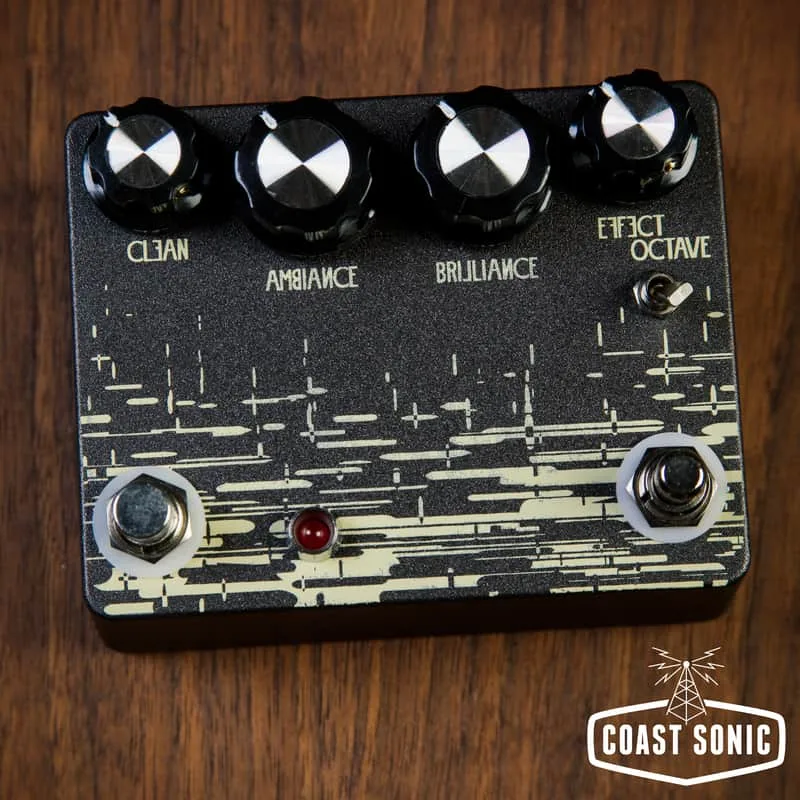
The core of the pedal is the reverb algorithm, with a low-pass filter that moves the character between small room and dark hall. Around it sit five knobs1:
| Control | What it does |
|---|---|
| Clean | Sets the volume of the original dry signal3 |
| Brilliance | Sets the cutoff frequency of the low-pass filter3 |
| Velocity | Manually sets the LFO rate3 |
| Waveform | Sets the waveform type; the 8 waveforms are listed on the back of the pedal3 |
| Modulation | Sets the depth of the modulation3 |
The LFO rate can also be set with the tap tempo option on the right footswitch instead of the Velocity knob1.
The four modulation modes
The modulation section offers four modes: tremolo, chorus, triple octave tremolo, and octave slide1. Two small toggles select which mode is active.
| Mode | What the LFO does | Toggle setting |
|---|---|---|
| Tremolo | Affects the volume of the reverb signal, creating a tremolo effect | Left toggle dB, right toggle OFF1 |
| Chorus | Modulates the reverb as chorus | Selected with the toggles1 |
| Triple Octave Tremolo | Three octaves of reverb; the LFO affects reverb volume, creating a vintage organ effect | Left toggle dB, right toggle ON3 |
| Octave Slide | Crossfades between original pitch and octave up, creating an octave slide effect | Left toggle HZ, right toggle ON3 |
Because the modulation applies to the reverb rather than the whole signal, the dry sound stays steady while the reverb swims around it, which is the combination ambient players use the pedal for1.
Footswitches and the clock input
The Borderland has three footswitches1:
- Left: sends the pedal into near infinite sustain, so a held note hangs in the reverb1
- Middle: master on/off for the effect3
- Right: tap tempo for the LFO rate1
The clock input is the unusual feature. It can receive a traditional tap tempo signal or 5V modular clock signals, gates and triggers1. That means a modular rig or anything sending 5V pulses can set the modulation rate directly, in sync with the rest of a system, instead of relying on the tap tempo switch.
The secret mode
An internal dipswitch unlocks a secret mode that replaces the reverb code with delay code3. The LFO section then applies the same four modulation types to the delay instead, so tremolo, chorus, triple octave tremolo and octave slide all work on the delay. Two knobs change jobs in this mode: the Ambiance knob becomes delay feedback, and the Brilliance knob becomes delay time3.
The Borderland lite
For players who only want the reverb, Hungry Robot also makes a more affordable Borderland lite version with only the reverb section3. The lite drops the LFO and modulation controls; the full pedal is the one to look at if the tap tempo modulation and clock input are the draw.
Power and placement
The Borderland runs on 9V DC with a negative center 2.1mm barrel plug and draws 97 mA1. With true bypass switching3, the dry signal passes through untouched when the pedal is off. At 4.7" x 3.7"1 it takes up a moderate slice of a pedalboard.
The 97 mA current draw is higher than a simple analog pedal, so plan power supply capacity accordingly when building the board.
Videos
aBunchOfPedals
Eirik Stordrange
Ambient Endeavors
Questions
Is the Hungry Robot Borderland true bypass?
Yes. The Borderland's switching is true bypass, so your dry signal passes through the pedal untouched when the effect is off. It runs on 9V DC with a negative center 2.1mm barrel plug and draws 97 mA.
What does the left footswitch do on the Borderland?
The left footswitch sends the pedal into near infinite sustain, letting a note or chord hang in the reverb. The middle footswitch is the master on/off for the effect, and the right footswitch is tap tempo for the LFO rate.
How do the toggles select the Borderland's modes?
The four modulation modes are chosen with the two small toggles. For example, tremolo is left toggle at dB with the right toggle off, triple octave tremolo is left toggle at dB with the right toggle on, and octave slide is left toggle at HZ with the right toggle on.
Can the Borderland take a modular clock signal?
Yes. The clock input accepts either a traditional tap tempo switch or 5V modular clock signals, gates and triggers. That means a modular synth or other CV source can set the LFO rate instead of tapping it by foot.
Is there a cheaper version of the Borderland?
Yes. Hungry Robot also offers a more affordable Borderland lite version that keeps only the reverb section, dropping the LFO and modulation controls of the full pedal.
What is the Borderland's secret mode?
An internal dipswitch activates a secret mode that replaces the reverb code with delay code. The LFO section then applies the same four modulation types to the delay, the Ambiance knob becomes delay feedback, and the Brilliance knob becomes delay time.
Sources (3)
- The Borderland, Hungry Robot Pedals
- The Borderland by Hungry Robot Pedals | RockBoard | PedalPedia, RockBoard PedalPedia
- Hungry Robot Borderland Modulated Reverb, Delicious Audio, 2021-12-01