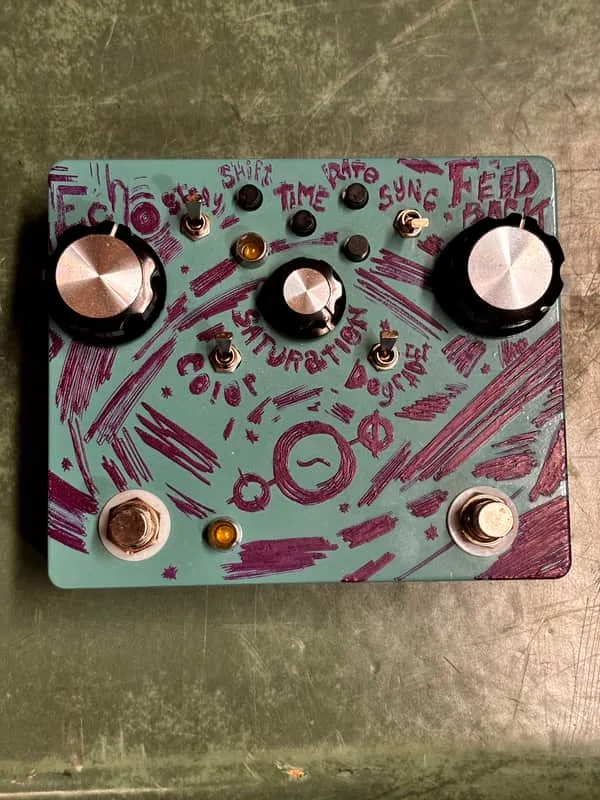


Hungry Robot The Aether is a modulating delay pedal: a delay with a built-in modulation engine. At its heart is a PT2399, tap tempo delay, and the maker says the modulation LFO core is simple but versatile, inspired by the Wardenclyffe but with more features1. The initial vision for the design came shortly after the release of the Wardenclyffe Deluxe, with the maker aiming to steal design philosophies and incorporate the tonal characteristics that made the Wardenclyffe special, in delay form1.
The controls
The Aether carries the standard Echo, Feedback and Time controls you would expect on any delay, then adds a modulation section and two color controls of its own1.
| Control | What it does |
|---|---|
| Echo, Feedback, Time | Standard delay controls for echo level, repeats and delay time1 |
| Rate | Sets the speed of the modulation core, one of three ways to set LFO speed1 |
| Shift | Determines the depth of the modulation1 |
| Sync toggle | Middle position lets the LFO run at whatever speed you want; up position syncs it to the delay time; down position syncs it to delay time in half-time for slower, evolving modulation1 |
| Degrade toggle | Adds lofi textures and artifacts to the delay line by removing a section of the delay circuitry that keeps the delay stable with longer delay times1 |
| Saturation | A gain adjustment that overdrives the delay chip1 |
The Saturation control leans on what the maker sees as the PT2399's strength: "In my opinion, the PT2399 chip takes gain and drive better than any other chip." Hungry Robot Pedals, maker product page1
Where it came from
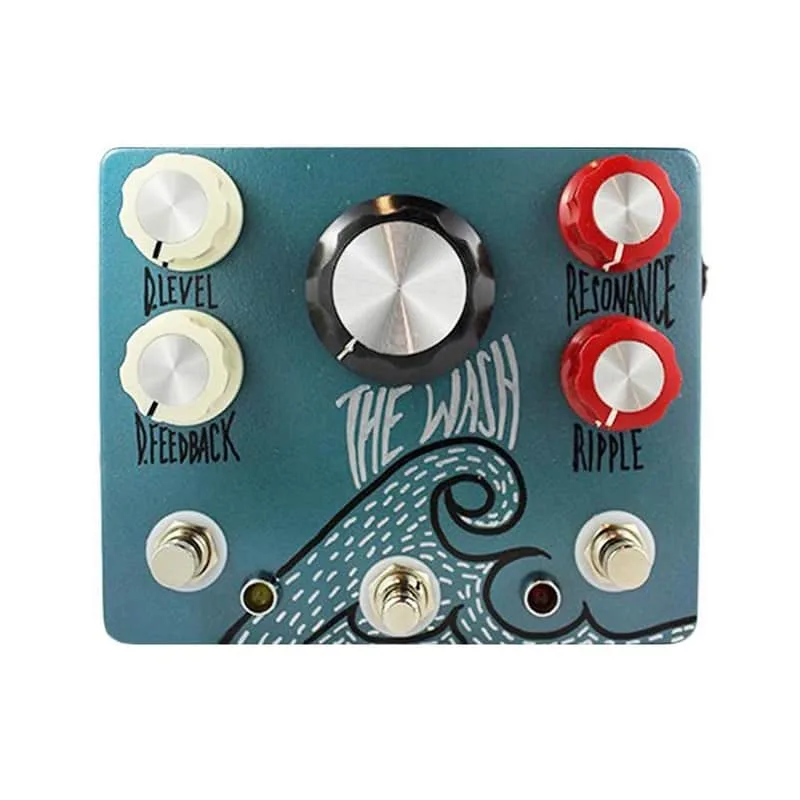
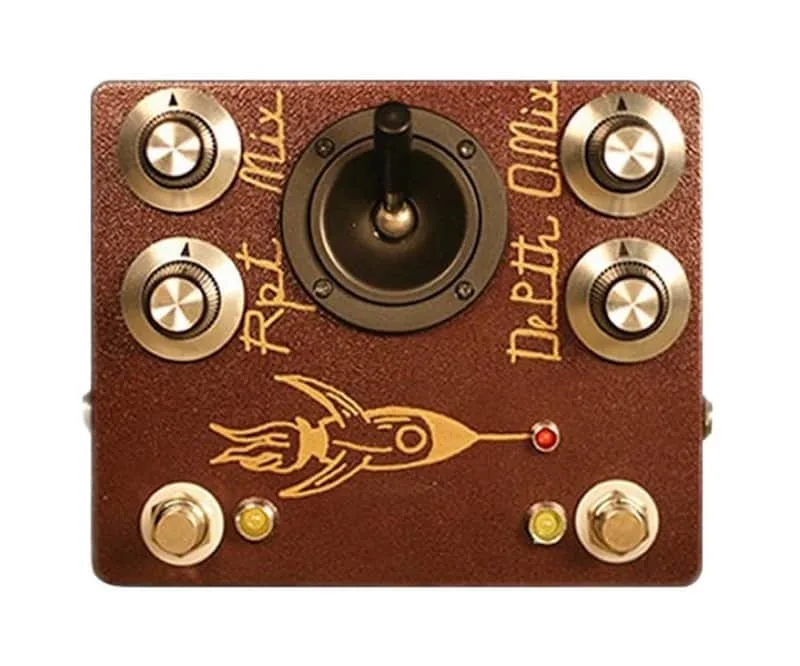
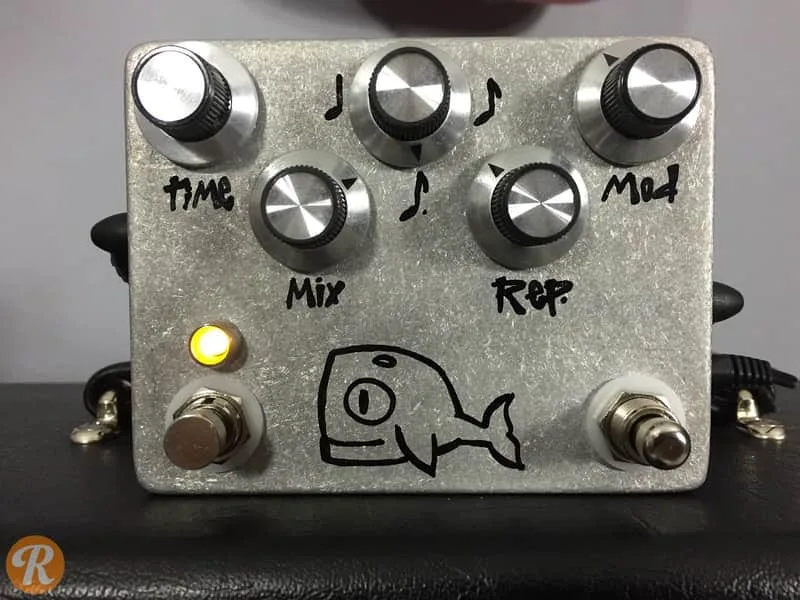
The Aether grew out of the Wardenclyffe line. Hungry Robot says the pedal uses a modulation LFO core inspired by the Wardenclyffe but with more features, and that the design vision came shortly after the Wardenclyffe Deluxe was released1. It sits in a delay family that also includes The Wash, The Kármán Line and the Moby Dick V2, each taking a different approach to the delay format1.
Videos
aBunchOfPedals
Eric Merrow
BUZZBEE TV
Questions
Does the Hungry Robot The Aether have tap tempo?
Yes. Hungry Robot describes The Aether as a PT2399, tap tempo delay, and the maker lists tap tempo as one of three ways to set the speed of the modulation core, alongside the Rate knob and the Sync toggle.
What delay chip does The Aether use?
The Aether is built around the PT2399 chip. Hungry Robot says that, in the maker's opinion, the PT2399 takes gain and drive better than any other chip, which is why the pedal pairs it with a Saturation knob that overdrives the delay chip.
What does the Degrade toggle do on The Aether?
The Degrade toggle adds lofi textures and artifacts to the delay line. Hungry Robot explains that it removes a very vital section of the delay circuitry, the part that keeps the delay stable with longer delay times, so the repeats break up in a characterful way.
Can the modulation speed sync to the delay time?
Yes. The Sync toggle has three positions: in the middle the LFO runs at whatever speed you want, in the up position it syncs to the delay time, and in the down position it syncs to the delay time in half-time for slower, evolving modulation.
What are the Warm Analog and Bright Tape voices?
The available material does not describe Warm Analog and Bright Tape voices on The Aether, so this page cannot say what they do.
Sources (1)
- The Aether, Hungry Robot Pedals