

The Moby Dick is a delay pedal from Hungry Robot, a maker whose name was largely built on it. Delicious Audio calls it "well known for its chimey, tape-emulating delay line"1, and the maker positions the current pedal as "a spiritual successor to its namesake, but loaded with new quality-of-life and sonic ingredients"2. What began in 2015 as a straightforward mono pedal with five knobs has grown, across a V2 and a V3, into a stereo, eight-control tape-style delay with a multi-tap Multihead function.
The core idea has stayed the same through every version: a delay that emulates the character of a vintage tape machine, with modulation, saturation and lo-fi imperfections available as controls rather than fixed traits. Hungry Robot describes the original's sound as "chimey, tape-emulating delay line with slight lo-fi imperfections and subtle modulation"3, and the current pedal as combining "experimental features alongside the warmth and charm of a vintage tape delay"2.
The controls on the V3
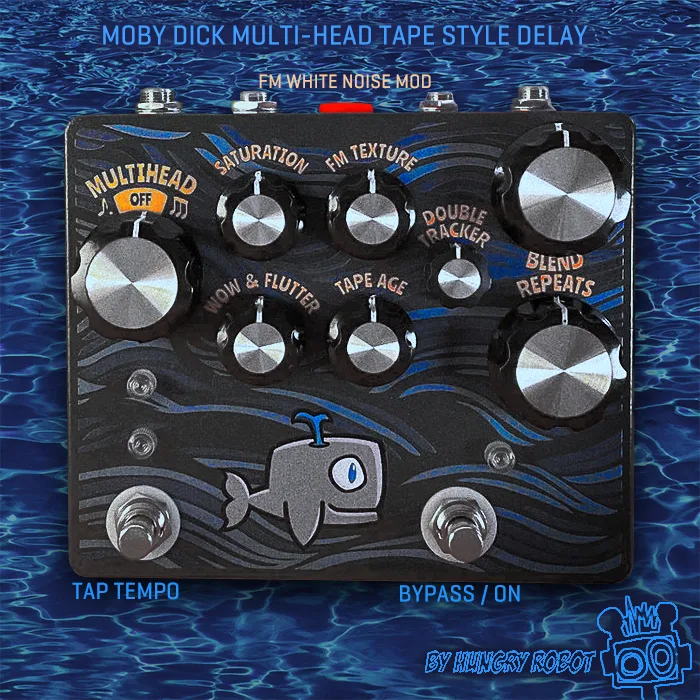
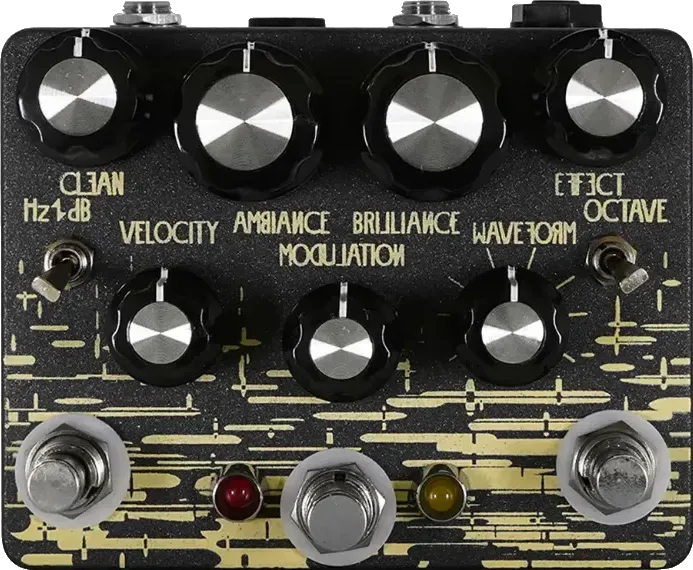
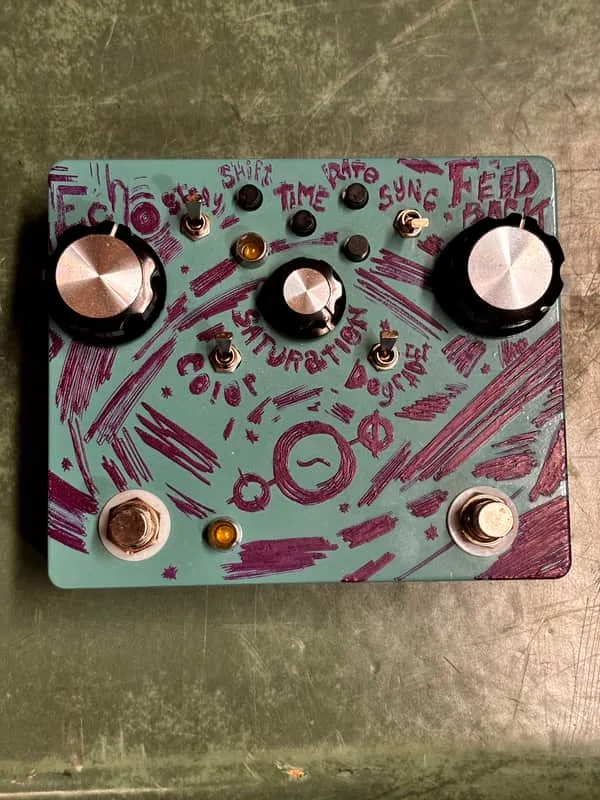
The V3, announced in February 2026, expands the mono five-knob design into what Delicious Audio calls "a sophisticated eight-control" stereo workstation1. Guitar Pedal X lists the control set as Multihead, Saturation, FM Texture, Wow & Flutter, Tape Age, Double Tracker, Blend and Repeats, plus a Tap Tempo footswitch and a Bypass footswitch7.
| Control | What it does |
|---|---|
| Multihead | A dual-function multi-tap control for rhythmic complexity and layering2 |
| Saturation | Adds harmonic richness1 |
| Wow & Flutter | Generates organic pitch instability1 |
| Tape Age | Darkens repeats with a filtering weariness1 |
| Double Tracker | Introduces fullness and subtle chorus via layered doubling1 |
| FM Texture | A white noise frequency modulation circuit that introduces lo-fi degradation and de-resolution1 |
| Blend | Functions traditionally, blending wet and dry1 |
| Repeats | Functions traditionally, setting the number of echoes1 |
Delicious Audio calls FM Texture "the experimental heart" of the pedal, and describes the voicing knobs as interacting "to conjure everything from pristine multi-head echo to degraded, nearly granular artefacts"1. Tap tempo remains onboard1.
Guitar Pedal X's reviewer was positive about the V3 overall:
"This is a really cool properly full stereo multihued tape style delay."
Stefan Karlsson, Guitar Pedal X7
The controls on the V2
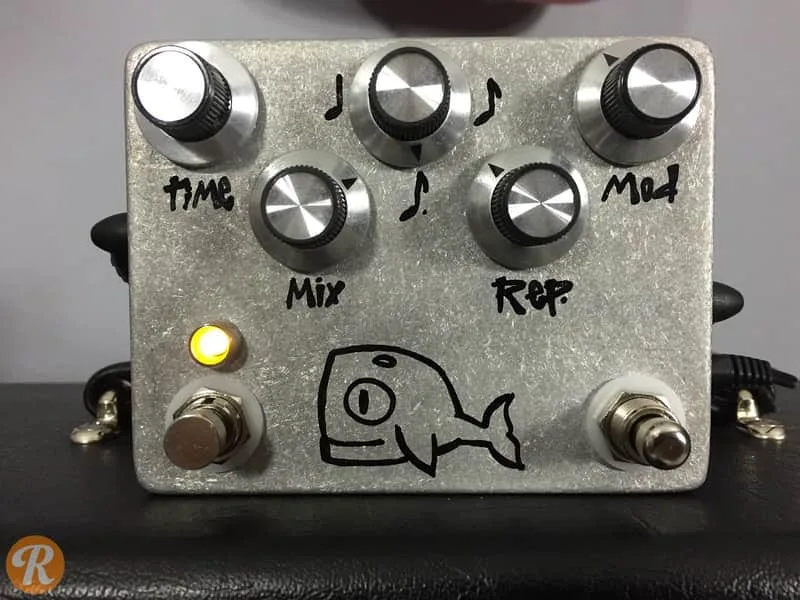
The Moby Dick V2 kept the five-knob format but changed what one of those knobs does. The V1's subdivision knob, which selected Quarter, Eighth or Dotted Eighth, was not carried over into the V289. The full control set: Mix, Repeat, Lo-Fi, Modulation and Time, plus a tap-tempo switch6.
| Control | What it does |
|---|---|
| Time | Sets the delay length, with a max of just about 1000ms10 |
| Mix | Blends your wet and dry signals10 |
| Repeats | Sets the number of echoes10 |
| Modulation | Adds warble and vintage tone; depth increased dramatically for V210 |
| Lo-Fi | Dials in added tape saturation to the delay line10 |
The Lo-Fi circuit works by applying pre-gain amplification to the front end of the PT2399 delay chip, which responds with an overdriven, saturated character110. Hungry Robot's own explanation of the chip: "What I love about the PT2399 delay chip is that it has a wonderfully organic character when gain is applied"3.
The Mod control also grew in range on the V2. The maker says it "increases the modulation depth dramatically, allowing it to travel beyond subtle chorusing into more extreme pitch bending territory"3. Combined with a cranked Lo-Fi knob, the maker says Mod "creates the most amazing broken tape-deck quality," while dialed back the pedal "retains the character of the original"3. Pedal of the Day found the two together "produce a wide array of sounds, including pitch bending, dramatic chorusing and amazing broken tape-deck qualities"10.
The V2 also moved to a smaller enclosure. Guitar.com described it as "a slimmer, pedalboard-friendly enclosure"5, and Gearnews noted it is "a lot smaller than the original"6. It is true bypass6 and runs from an external 9V center-negative power supply only, with no battery option6.
History and versions
The original Moby Dick Delay appeared in 2015 with five controls on a 1590BB enclosure: Time, Mix, Subdivision (Quarter / Eighth / Dotted Eighth), Repeats and Modulation, plus Tap Tempo and Bypass footswitches710. Pedal of the Day's 2015 review called it "a no frills, basic delay that echoes (no pun intended) the tape machines and analog delays of ages past," with an analog signal path, built-in subtle modulation, 1000ms of delay time and three subdivisions9. Tempo could be set with the onboard soft switch or an external tap9. The reviewer's verdict: "Overall, the Moby Dick is a truly warm and analog" delay, "a useable and sonically stunning piece of equipment"9.
- V1 (2015): Mono, five controls, 1590BB enclosure, subdivision knob, same base circuitry as the V2 but without the Lo-Fi saturation knob710
- V2 (2018): Smaller 125B enclosure, five controls, Lo-Fi replaces Tap Division, deeper modulation, tap tempo, roughly 1000ms of delay, listed at $197.10765
- Classics reissue (2022): On its 10-year anniversary, Hungry Robot brought back older discontinued models, including the original Moby Dick, as direct-only pedals built one-by-one as orders come in8
- V3 (2026): Eight controls, full stereo ins and outs, Multihead multi-tap function, reissued in expanded edition7
The V2 landed well with reviewers. Gearnews' Jef, who owns and uses the original for lo-fi delay, wrote after the V2 announcement: "My only problem now is that I want one. Damn you, Hungry Robot, and your addictive effects pedals!"6. Pedal of the Day said of the V2: "let's just say that our expectations were" exceeded10, describing it as "this shimmery, old school, retro tape delay" that brings "analog delay and modulation to the forefront of your pedalboard"10.
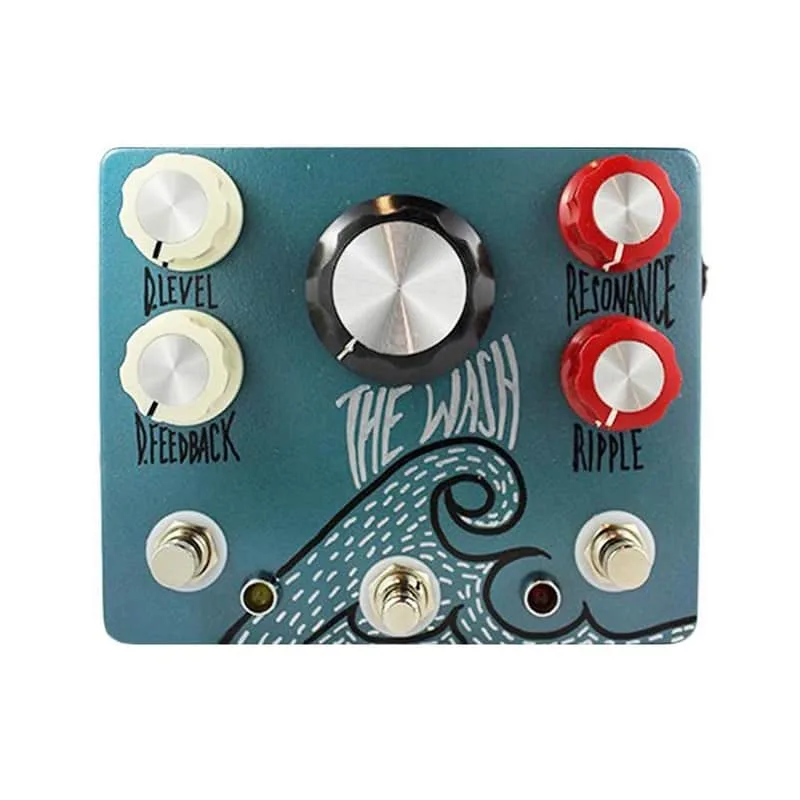
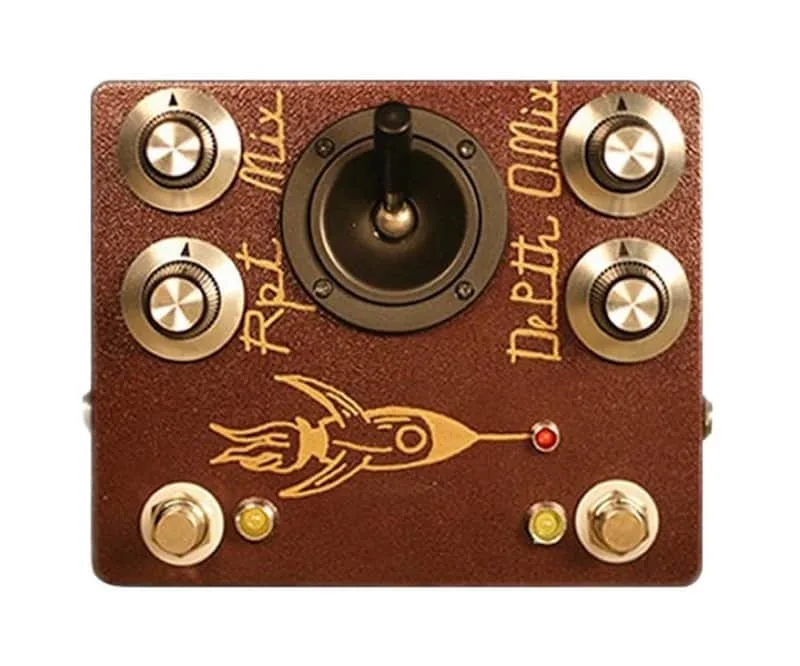
The current pedal, sold simply as The Moby Dick, is the V3-era Multihead Tape Style Delay, offered on the maker's site with a discount and delivery-month selection at purchase4. Hungry Robot's broader delay line over the years has also included The Wash and The Kármán Line.
Videos
Eirik Stordrange
shnobel
Mark Johnston
Questions
What delay chip does the Moby Dick use?
The delay line is built around the PT2399 delay chip. Hungry Robot likes it because it has a wonderfully organic character when gain is applied, and the Lo-Fi control on the V2 works by pushing pre-gain amplification into the front end of that chip to add tape saturation to the repeats.
What is the difference between the Moby Dick V2 and V3?
The V2 is a smaller-footprint update of the original with five controls: Mix, Repeats, Lo-Fi, Modulation and Time, plus tap tempo. The V3 expands it to eight controls, adding Saturation, Wow & Flutter, Tape Age, Double Tracker and FM Texture, and moves from a mono design to full stereo inputs and outputs.
Does the Moby Dick V3 have tap tempo?
Yes. Tap tempo remains onboard on the V3, alongside a bypass footswitch. The original 2015 Moby Dick already offered tap control via its onboard soft switch or an external tap of your choice, and the V2 carried a tap-tempo switch as well.
Is the Moby Dick stereo?
The V3 is fully stereo, with full stereo inputs and outputs. The original and the V2 were mono designs; the V3 is the version described as a properly full stereo tape-style delay.
What is the maximum delay time on the Moby Dick?
Around 1000ms. The original was listed with 1000ms of delay time, and reviewers put the V2's maximum Time setting at just about 1000ms as well. Hungry Robot has not published a different maximum for the V3.
Is the Hungry Robot Moby Dick analog or digital?
It is built on the PT2399 delay chip. Pedal of the Day described the original as having an analog signal path, while Guitar.com called the V2 a digital delay; the chip itself is a digital delay IC often used for its warm, tape-like character. Sources describe the sound as sitting where analog delay meets tape delay.
Sources (10)
- Updated Pedal: Hungry Robot The Moby Dick Stereo Tape Delay, Delicious Audio, 2026-02-12
- The Moby Dick, Hungry Robot
- The Moby Dick, Hungry Robot Pedals
- The Moby Dick, Hungry Robot
- Hungry Robot Pedals unveils Moby Dick V2, Guitar.com, 2018-07-19
- Summer NAMM 2018: Hungry Robot Moby Dick V2 upgrades an impressive delay pedal, gearnews.com, 2018-07-01
- Guitar Pedal X, Guitar Pedal X, 2026-02-04
- Hungry Robot, Hungry Robot Pedals, 2022-07
- Hungry Robot Pedals Moby Dick Delay, Pedal of the Day, 2015-04-12
- Hungry Robot Pedals The Moby Dick Delay V2, Pedal of the Day, 2018-08-22