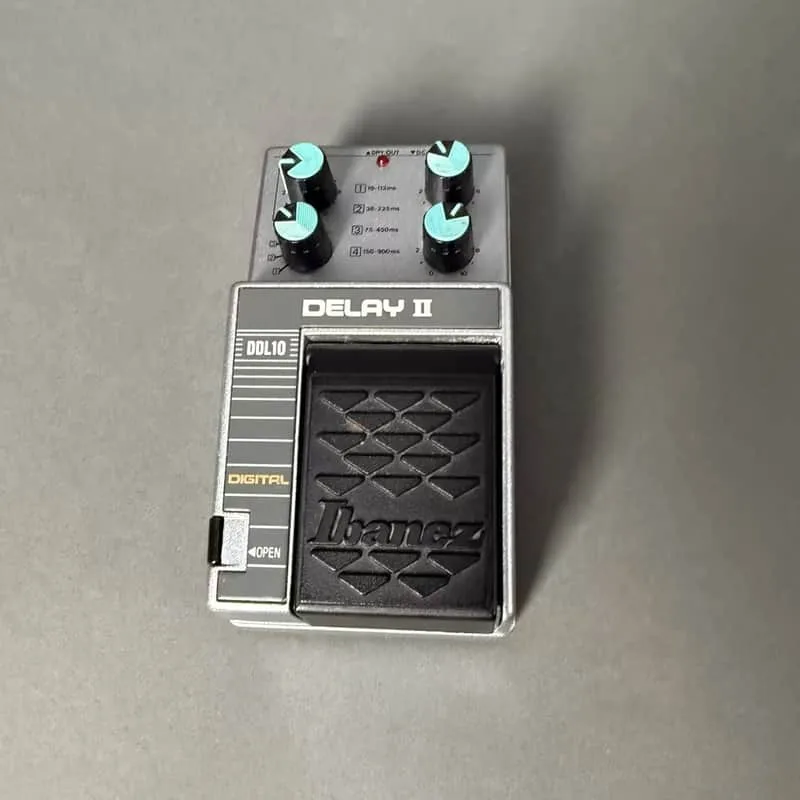

The Ibanez DDL10 Digital Delay II is a digital delay pedal from Ibanez's Power Series 10, made in Japan and produced from 1986 to 1987. It is a straightforward delay unit with variable delay times ranging from 19 to 900 milliseconds, and its stereo output jacks deliver a dry and a normal effect out, which TONEHOME describes as allowing dramatic doubling, slapback and delay effects, especially when a second amp is used, creating a full stereo effect1. It belongs to the wider family of Ibanez delay designs covered on the delay pedals type page.
How the delay works
Because the DDL10 is digital, the original signal, such as a guitar sound, is converted into a digital representation of that sound. TONEHOME notes that digital conversion can alter tone, but says the high resolution, or "sample rate", of the new Ibanez series "keeps this to an almost inaudible level"1.
The controls
The DDL10 divides its delay range and mix across four main controls1:
| Control | What it does |
|---|---|
| Mode selector | Divides delay times into four intervals |
| D-Time knob | Ultra fine tuning of the delay time |
| Repeat control | Varies multiple repeats |
| D-Level control | Selects how much effect is mixed with the dry signal |
The Mode selector and D-Time knob work together: the Mode selector picks one of four delay intervals, and the D-Time knob then fine-tunes the time within it1.
Slapback and other settings
TONEHOME's material for the DDL10 does not give specific slapback settings, so any starting point for that sound would have to come from the pedal's own controls rather than a published figure. What the same page does describe is the pedal's sound quality: Ibanez claimed that the high resolution or "sample rate" of the new Ibanez series keeps tonality change to an almost inaudible level1.
Availability and collectibility
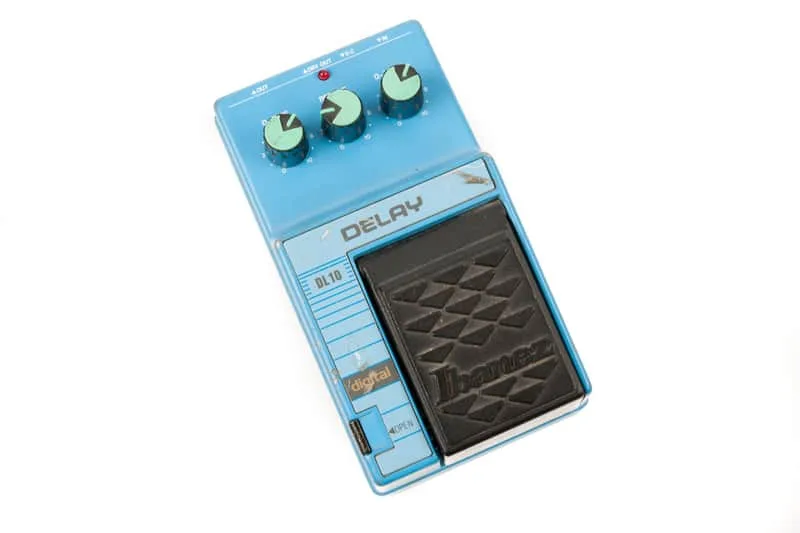
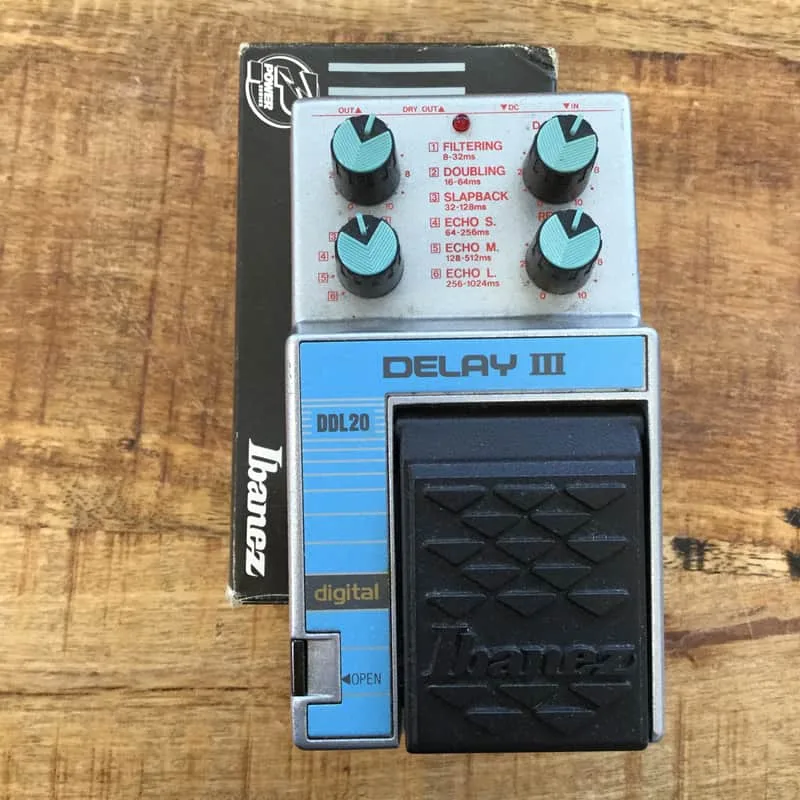
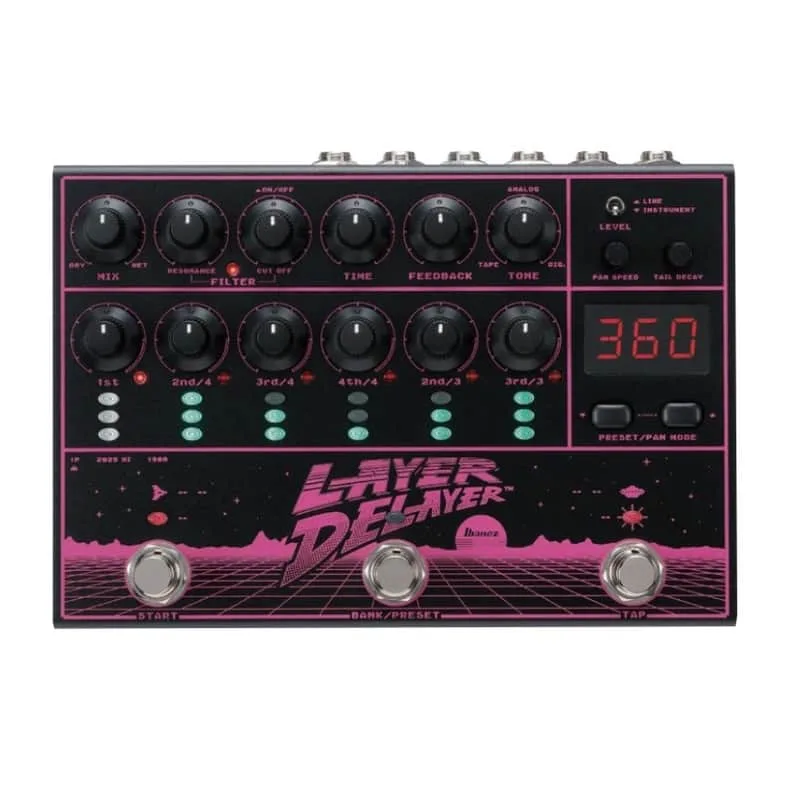
The DDL10 has not been re-issued, and TONEHOME lists its availability as rare and its collectibility as average1. A 1986 pocket manual for the pedal is preserved as a scanned image on the TONEHOME page1. Players interested in later Ibanez delays can compare it with the Ibanez DL10 Digital Delay from the same Power Series 10, the Ibanez DDL20 Digital Delay III, or the modern Ibanez LD303 Layer Delayer.
Videos
Adrian Whyte
Questions
Is the Ibanez DDL10 analog or digital?
It is a digital delay. The DDL10 converts the incoming guitar signal into a digital representation of that sound, and TONEHOME notes that the high resolution, or sample rate, of this Ibanez series keeps the tonality change of that conversion to an almost inaudible level. Its delay times run from 19 to 900 milliseconds, set with a Mode selector and a D-Time knob.
Does the Ibanez DDL10 have stereo outputs?
Yes. The DDL10 has stereo output jacks that deliver a dry and a normal effect out. TONEHOME describes this as allowing dramatic doubling, slapback and delay effects, especially when a second amp is used, creating a full stereo effect.
How do you get a slapback sound on the Ibanez DDL10?
According to TONEHOME, the classic slapback effect made famous in the 1950s and 1960s with tape delay is achieved at around 80 to 120 milliseconds, with the effect level set to about half the volume of the original signal. Use the Mode selector and D-Time knob to reach that range and the D-Level control to set the mix.
Has the Ibanez DDL10 been reissued?
No. TONEHOME lists the DDL10 as not re-issued. It was produced from 1986 to 1987, and the site rates its current availability as rare and its collectibility as average.
How rare is the Ibanez DDL10?
TONEHOME, a reference site for Ibanez products, lists the DDL10's availability as rare and its collectibility as average. The pedal was made in Japan during a short 1986 to 1987 production period and has never been reissued.
Where was the Ibanez DDL10 made?
The DDL10 was made in Japan. TONEHOME dates the unit to 1987 and lists a production period of 1986 to 1987.
Sources (1)
- TONEHOME, TONEHOME (www.tonehome.de), 1987