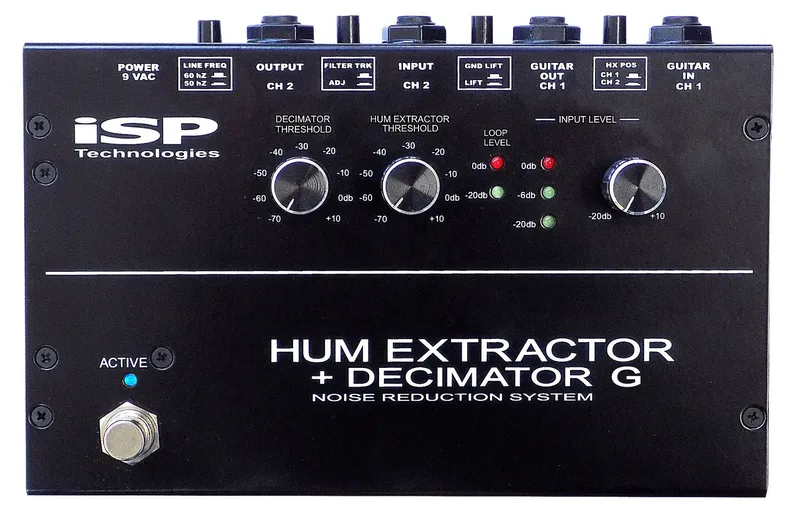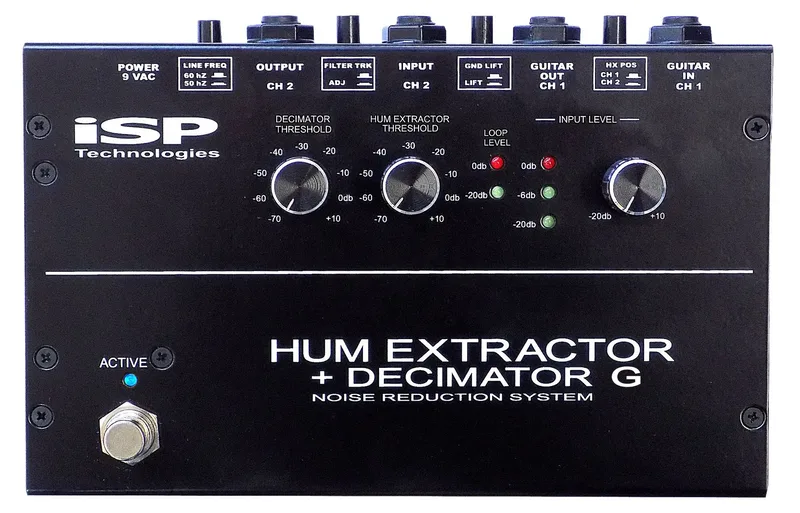


The ISP Technologies Hum Extractor + Decimator G is a two-channel noise reduction unit that tackles two different noise problems in one box. The Hum Extractor section, which ISP Technologies describes as patent pending, eliminates power line frequency hum, the low-frequency buzz that comes from ground loops, lighting dimmers and electrical wiring. The Decimator section handles broadband noise, the hiss and hash that high-gain amplifiers and distortion pedals add to a signal, with up to 80db of maximum noise reduction1.
ISP Technologies positions it as a "two channel, ultimate noise reduction system"1. For a player whose rig suffers from both hum and hiss, it addresses the two problems in a single unit rather than requiring a separate hum removal pedal and a separate noise gate.
Hum removal and noise reduction in one two-channel unit
The unit's two channels divide the work. The Hum Extractor channel targets power line frequency hum, the steady low-frequency tone that sits under a guitar signal and gets worse with single-coil pickups, long cable runs and poorly grounded stage power. ISP Technologies describes this section as patent pending, meaning the company has filed for legal protection on the specific method it uses to remove hum1.
The Decimator channel is the noise reduction side. Where a conventional noise gate simply mutes the signal when you stop playing, the Decimator section is specified to deliver up to 80db of maximum noise reduction, pulling down the broadband hiss that high-gain preamps, distortion pedals and overdriven amplifiers generate1.
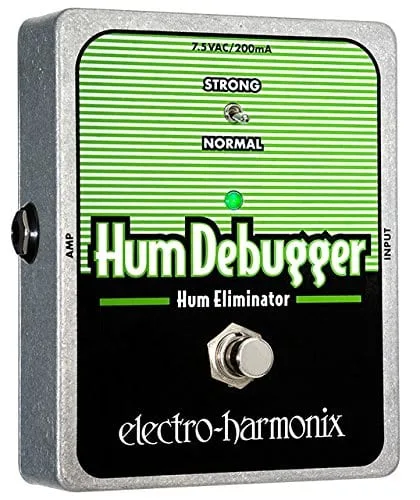
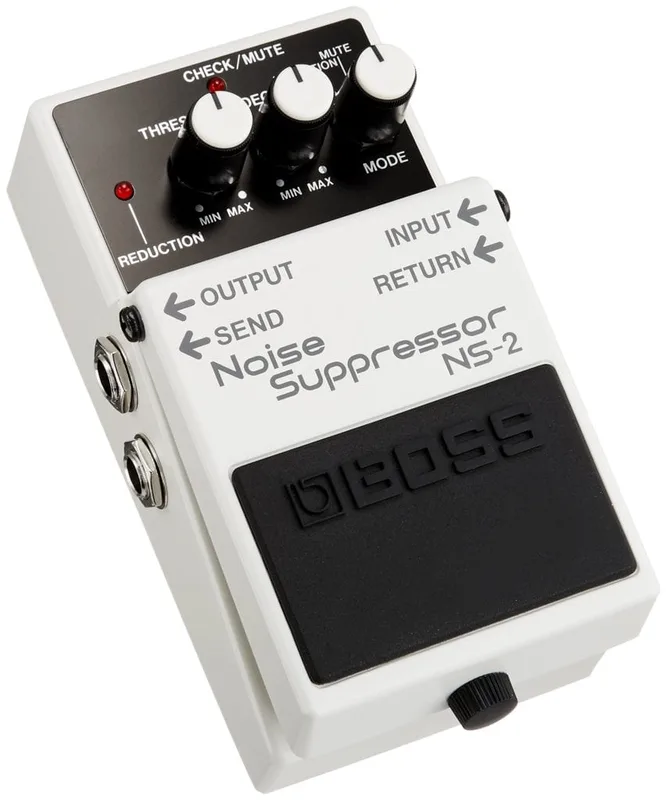
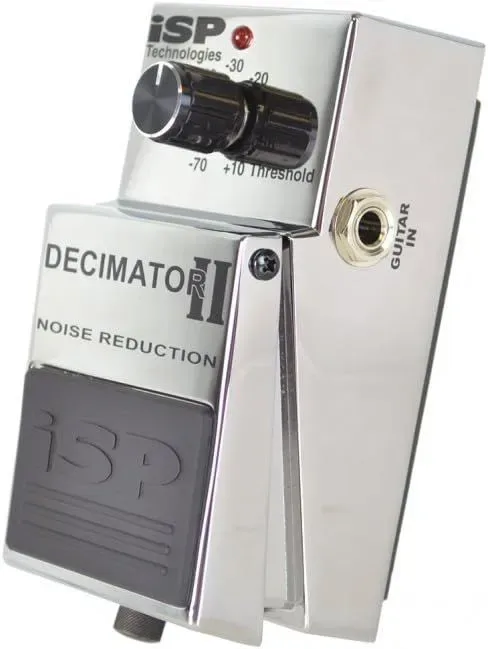
For players comparing options, the two-channel approach is the distinguishing feature. A pedal such as the Electro-Harmonix Hum Debugger addresses hum alone, while a gate like the Boss NS-2 Noise Suppressor or ISP's own Decimator II G String addresses broadband noise alone. The Hum Extractor + Decimator G covers both jobs in one enclosure213.
"two channel, ultimate noise reduction system"
Levels, trim and matching the unit to a rig
The unit gives the player a way to set how hard the circuits are driven. It offers 21.5db of input level trim, with an input level range of -8dbu to +13.5dbu1. In practice, input trim lets a player match the unit to the output level of the gear in front of it, whether that is a low-output vintage pickup or a hot line-level signal from a preamp, so the noise reduction circuits work from a known starting level rather than guessing at what is signal and what is noise.
The published specifications for the pedal and the rack version match on the core numbers: both are two-channel designs with up to 80db of maximum noise reduction, 21.5db of input level trim and the same input level range13.
| Specification | Value |
|---|---|
| Channels | Two (Hum Extractor plus Decimator)1 |
| Maximum noise reduction | 80db1 |
| Input level trim | 21.5db1 |
| Input level range | -8dbu to +13.5dbu1 |
| Circuit type | Digital2 |
Power and physical format
The Hum Extractor + Decimator G runs on 9V AC RMS at 1.5 amps1. That is an AC power requirement, not the 9V DC center-negative supply most pedals use, and the 1.5 amp draw is far above what a standard pedalboard power brick offers on a typical 9V output.
The unit requires a 9V AC RMS supply rated for 1.5 amps1. This rules out battery power and most standard 9V DC pedalboard outputs, so plan for a dedicated AC adapter and check that the power supply can deliver the full current.
Physically, the pedal measures 7.15 inches wide, 1.85 inches high and 4.5 inches deep, and weighs 1.2 lbs1. At more than seven inches across, it takes up substantially more pedalboard real estate than a compact mini gate, so board space is worth considering alongside the power requirement.
The rack version
ISP Technologies also builds the design as the HUM EXTRACTOR + DECIMATOR G RACK, a rack unit that carries the same two-channel architecture and the same core specifications as the pedal, including the 80db of maximum noise reduction, the 21.5db of input level trim and the 9V AC power requirement3. Players who keep their effects off the floor, in a rack drawer or in a studio setup, can get the same hum extraction and noise reduction in that format. The rack unit has its own page covering it in detail: ISP Technologies Hum Extractor + Decimator G Rack.
Where it sits among ISP Technologies noise reduction products
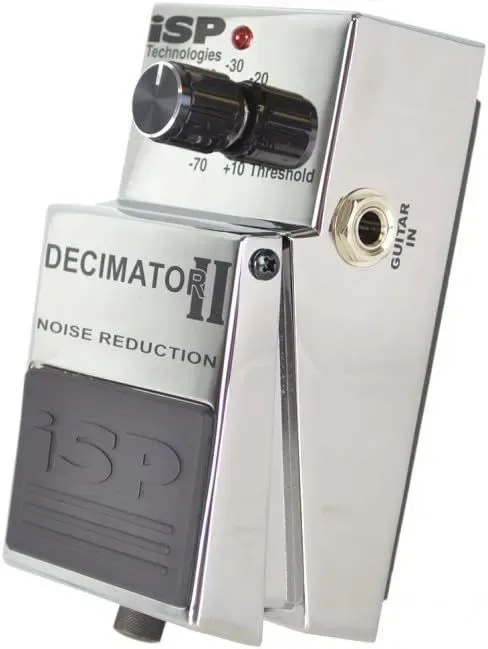
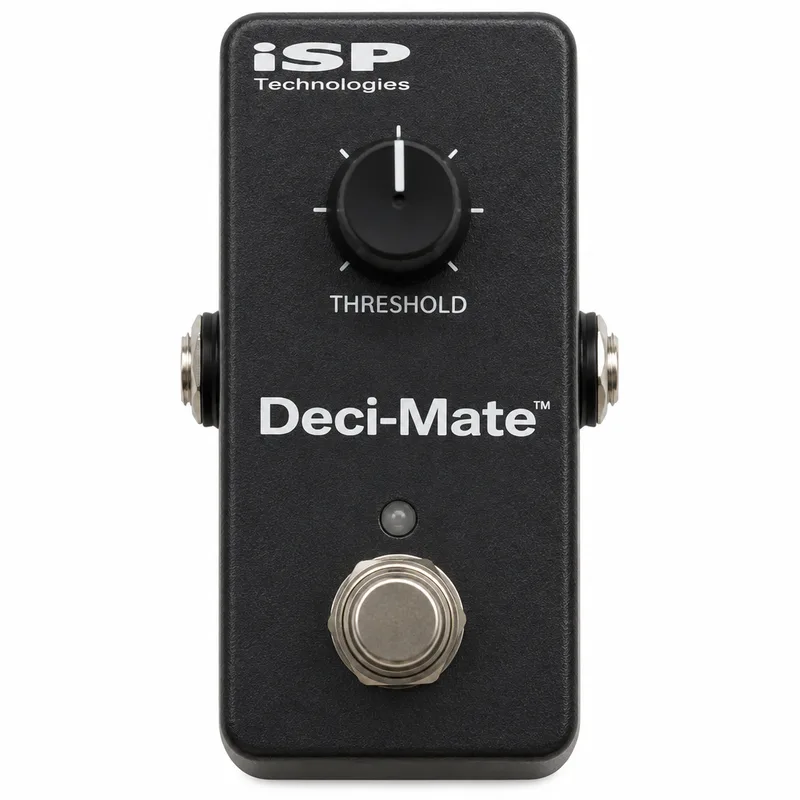
ISP Technologies sells a family of noise reduction products, and the Hum Extractor + Decimator G is the one that combines hum removal with Decimator noise reduction in a single pedal, a design RockBoard's PedalPedia describes as patent pending2. Its other Decimator pedals, such as the Decimator II G String, the Decimator II and the compact Deci-Mate, are listed alongside it in the company's range1.
Videos
Sweetwater
mofongotron
Forlorn Hope
Questions
What does the Hum Extractor + Decimator G remove?
It removes two kinds of noise at once. The Hum Extractor section eliminates power line frequency hum, the low-frequency buzz that comes from ground loops and electrical wiring, while the Decimator section reduces hiss and broadband noise from high-gain rigs, with up to 80db of maximum noise reduction.
Is the Hum Extractor + Decimator G analog or digital?
It is a digital design. RockBoard's PedalPedia listing for the pedal records the circuit type as digital, which sets it apart from many noise gate pedals built around analog voltage-controlled amplifier circuits.
How much noise reduction does the Decimator section give?
The Decimator section provides up to 80db of maximum noise reduction, according to ISP Technologies' published specifications for both the pedal and the rack version. The unit also has 21.5db of input level trim, with an input level range of -8dbu to +13.5dbu.
Does it come as a rack unit?
Yes. ISP Technologies makes the Hum Extractor + Decimator G in two forms: a floor pedal and a rack unit called the HUM EXTRACTOR + DECIMATOR G RACK. Both are two-channel designs with the same core specifications, including 80db of maximum noise reduction and 9V AC power.
Sources (3)
- ISP Technologies, ISP Technologies
- Hum Extractor + Decimator G by ISP Technologies, RockBoard PedalPedia, 2026
- ISP Technologies, ISP Technologies