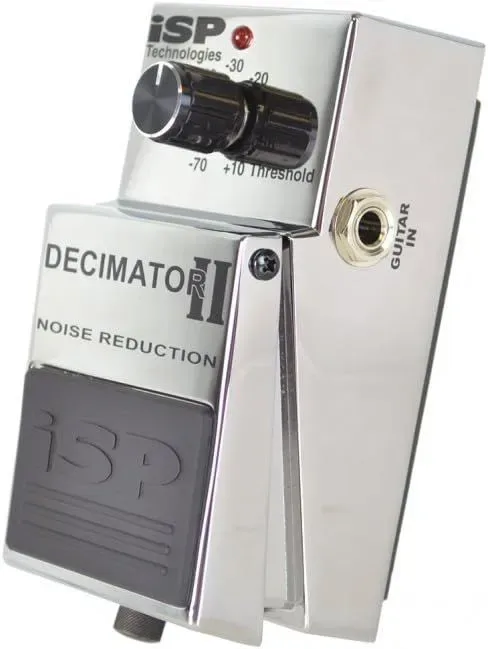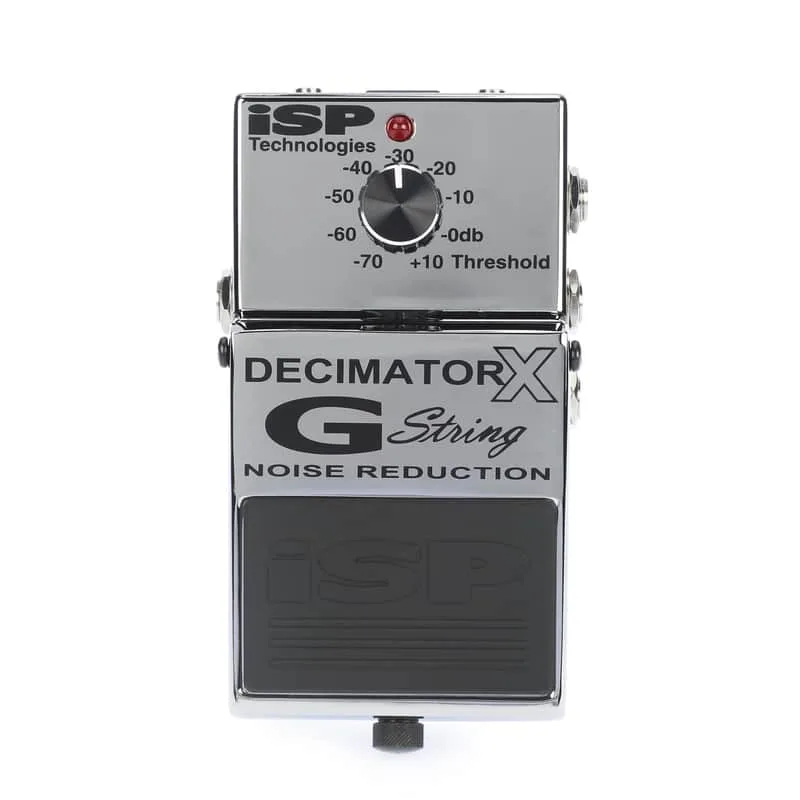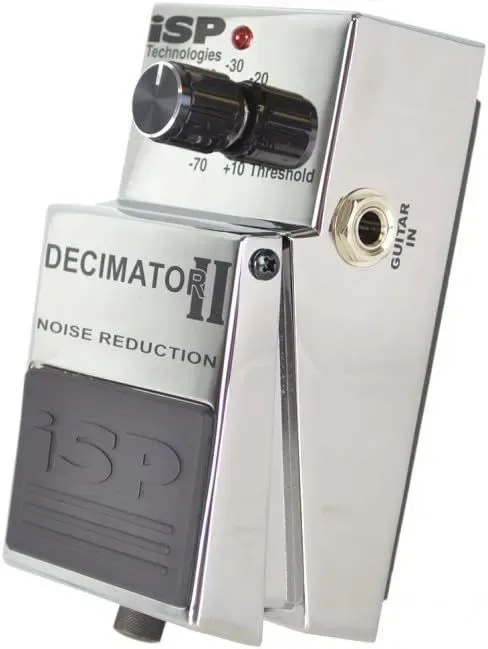


The ISP Technologies Decimator II is a noise gate pedal, the second generation of the company's Decimator noise reduction design. ISP describes it as a pedal that "ups the ante over the original Decimator design to give you even better noise" reduction1. It arrived in June 2013, when Premier Guitar reported that ISP Technologies introduces the Decimator II alongside the Decimator G String II2, and Guitar Interactive Magazine described the pair as the second generation of the Decimator noise reduction line3.
What it does to your sound
A noise gate sits in your signal chain and quiets the hiss and hum that comes through when you are not playing, which matters most with high-gain distortion. The Decimator II's headline feature is what ISP calls linearized Time Vector Processing in its expander tracking. According to the maker, this gives "incredibly smooth sustain" and decay on longer notes1. Premier Guitar's noise gate buying guide describes the same feature as "designed to provide smooth sustained-note decay" that is virtually free of release ripple4.
That release behavior is the difference between a gate that chops the end of a sustained note and one that lets it fade naturally. ISP's press release at launch said the design "increases the smoothness of the release response of the expander and provides the most transparent release response"2. The improvements were covered under two new patents pending at the time of release23.
At launch, the second-generation pair brought these changes over the original Decimator design32:
- Linearized Time Vector Processing in the expander tracking1
- A smoother, more transparent release response2
- LINK IN and LINK OUT connections on both the Decimator II and the G String II, letting the two pedals work together in a rig2
- Two new patents pending covering the improvements23
The G-String version
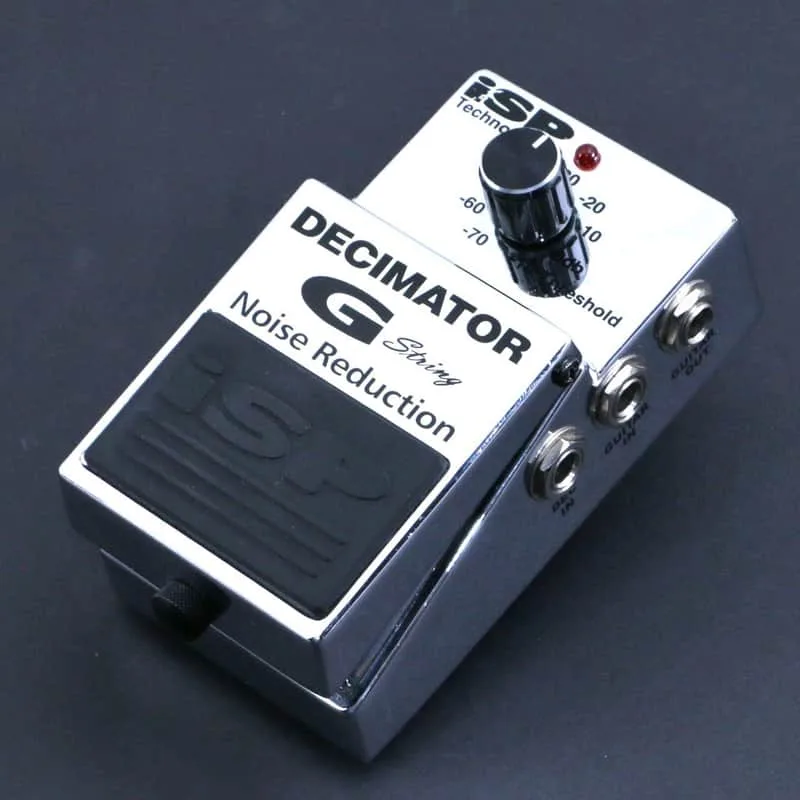
Alongside the standard pedal, ISP released the Decimator II G-String, a noise gate that tracks the guitar signal separately from the gated signal. Pedal of the Day's reviewer explained the approach: "What makes this noise gate so special is the fact that it tracks your guitar first." That matters for players who switch between clean and distorted amp channels, because the gate can follow your playing rather than the noisy channel itself. The same reviewer's verdict on the G-String was that it is "a fantastic way to clean up your signal without sacrificing your tone or your ability to change between channels and settings on your amp"5.
The two versions side by side:
| Decimator II | Decimator II G String | |
|---|---|---|
| Tracking | Gated signal | Guitar signal tracked separately from the gated signal5 |
| Link connections | LINK IN and LINK OUT2 | LINK IN and LINK OUT2 |
| Dimensions | 2.3" high, 2.7" wide, 5" deep1 | Same dimensions6 |
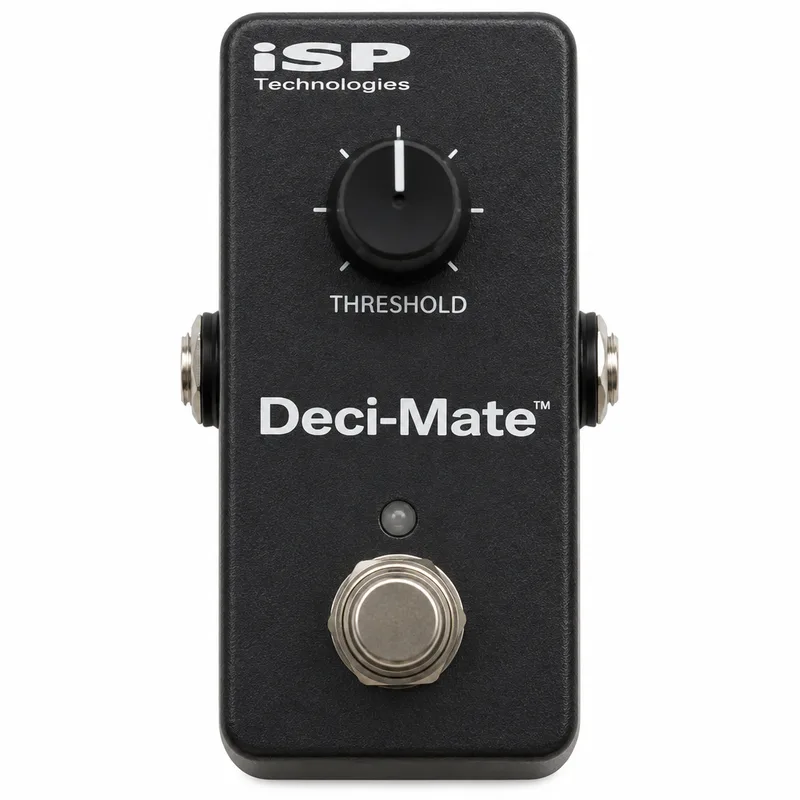
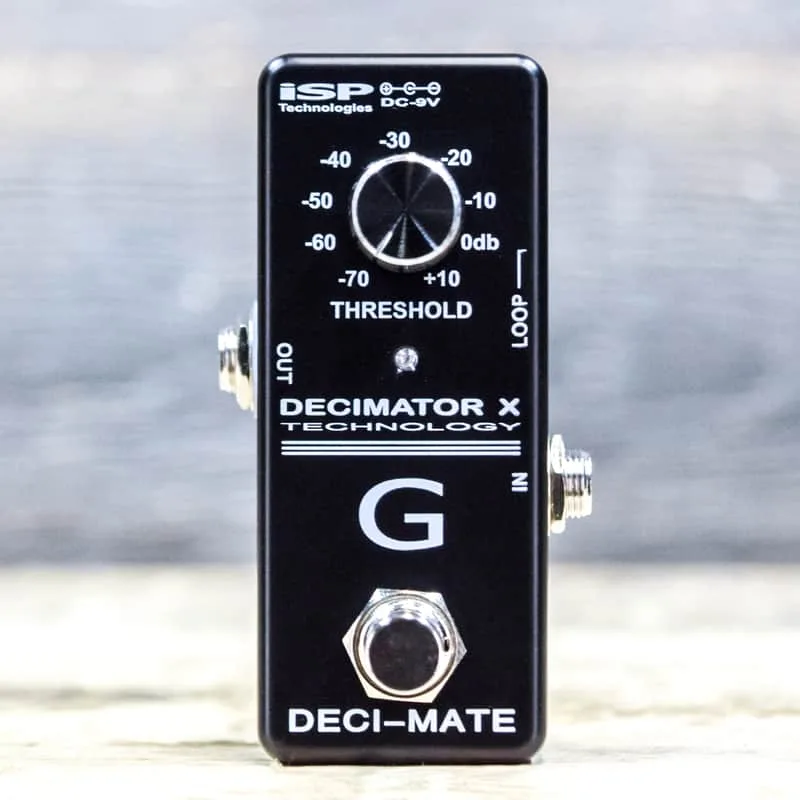
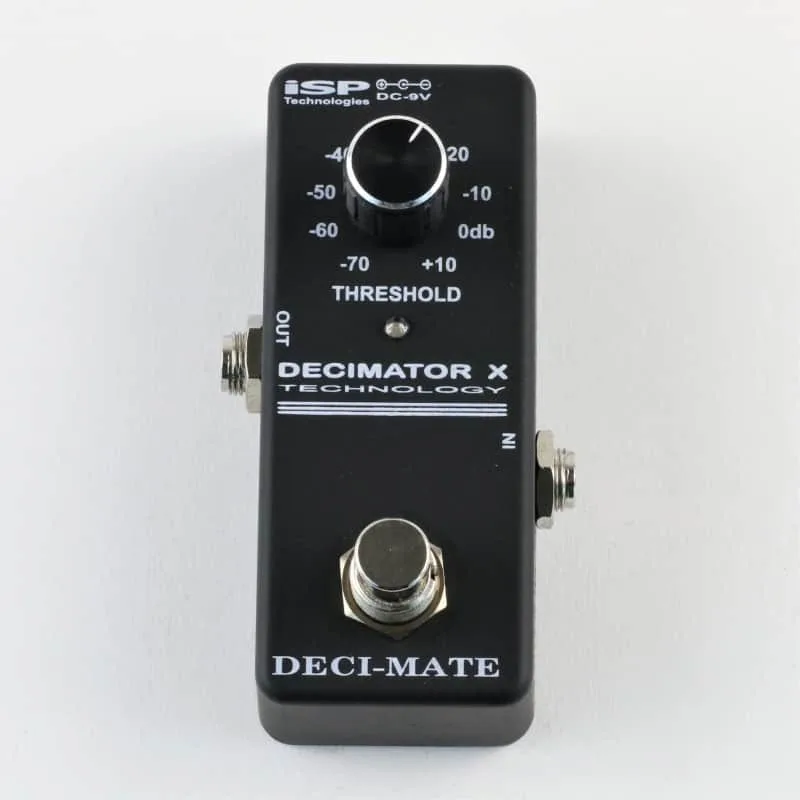
The Decimator II and Decimator G String II are the 2013 second-generation versions. ISP has since moved the line forward with the Deci-Mate micro pedal in 2018 and the Decimator X adaptive noise reduction pedals announced in 2024, so the Decimator II sits earlier in the company's range.
Power and size
The Decimator II runs on a 9V DC power supply, which ISP sells separately, and it also accepts a 9V battery1. Current draw is 35mA1, a modest figure most standard pedalboard supplies handle without trouble. The pedal measures 2.3 inches high and 2.7 inches wide1, and the G String version shares those dimensions6. Inputs and outputs are a single 1/4" jack each1.
Videos
Sweetwater
Guitar Lava
AndyBillyGoat
Questions
Does the ISP Decimator II come with a power supply?
No. ISP Technologies lists the power source as a 9V DC power supply sold separately, so you will need to add one to your order or run the pedal from an existing pedalboard supply. The pedal also takes a 9V battery, and it draws 35mA, which is worth knowing when planning what a shared power supply has to carry.
What is Time Vector Processing?
Time Vector Processing is the tracking technology ISP Technologies uses in the Decimator II's expander, the part of a noise gate that turns the volume down when you stop playing. In the Decimator II it is linearized, which the company says gives incredibly smooth sustain and decay. Reviewers describe it as designed to provide smooth sustained-note decay that is virtually free of release ripple.
What is release ripple in a noise gate?
Release ripple is the unevenness some noise gates produce as they close on a fading note. Instead of a clean decay, the gate's gain can step or flutter as the signal crosses the threshold, which makes sustained notes sound choppy. ISP designed the Decimator II's linearized Time Vector Processing to virtually eliminate release ripple, so longer notes decay smoothly.
How big is the ISP Decimator II?
ISP Technologies lists the pedal at 2.3 inches high, 2.7 inches wide and 5 inches deep. The Decimator II G String shares the same dimensions, so either version takes up a modest footprint on a pedalboard, though the 5-inch depth is longer than many compact gates.
Sources (6)
- ISP Technologies, ISP Technologies
- ISP Launches Decimator II & G String II Noise Gates, Premier Guitar, 2013-06-20
- ISP Technologies Release the Decimator II and Decimator G String II Updates, Guitar Interactive Magazine, 2013-06-24
- Tools for the Task: Noise Gate Pedals, Premier Guitar (www.premierguitar.com), 2019-06-14
- Guest Reviewer Fridays: ISP Decimator II™ G-String, Pedal of the Day, 2016-06-03
- ISP Technologies, ISP Technologies