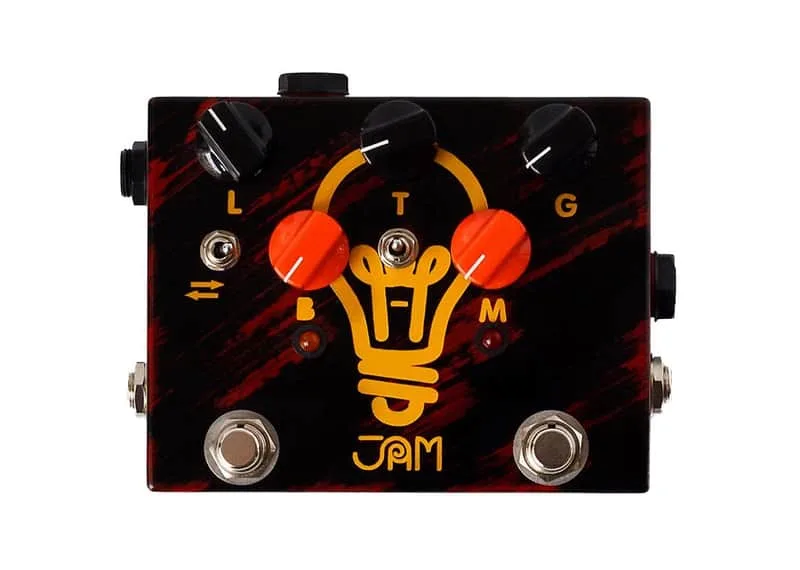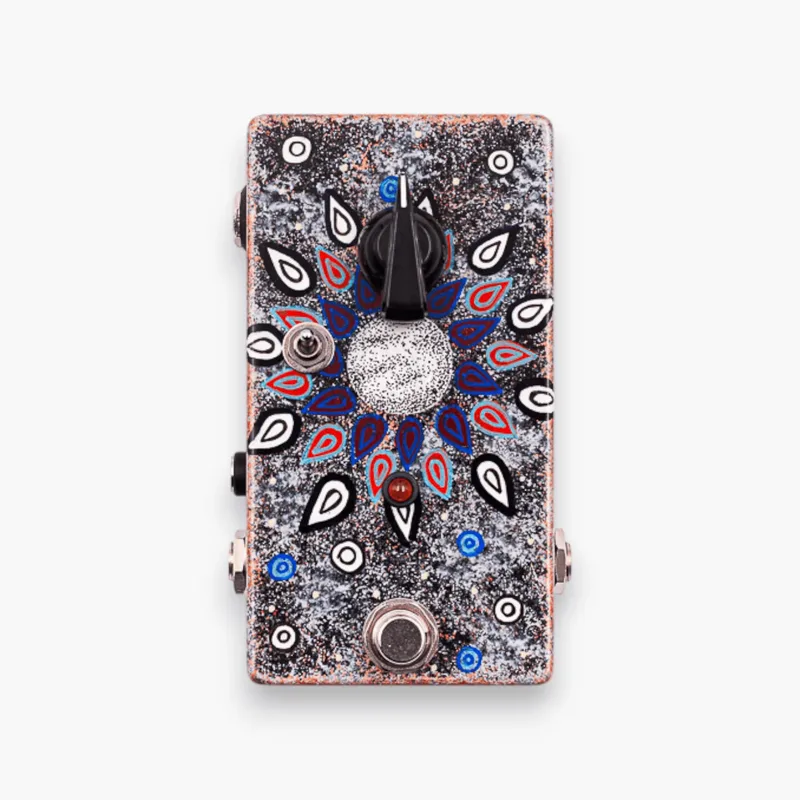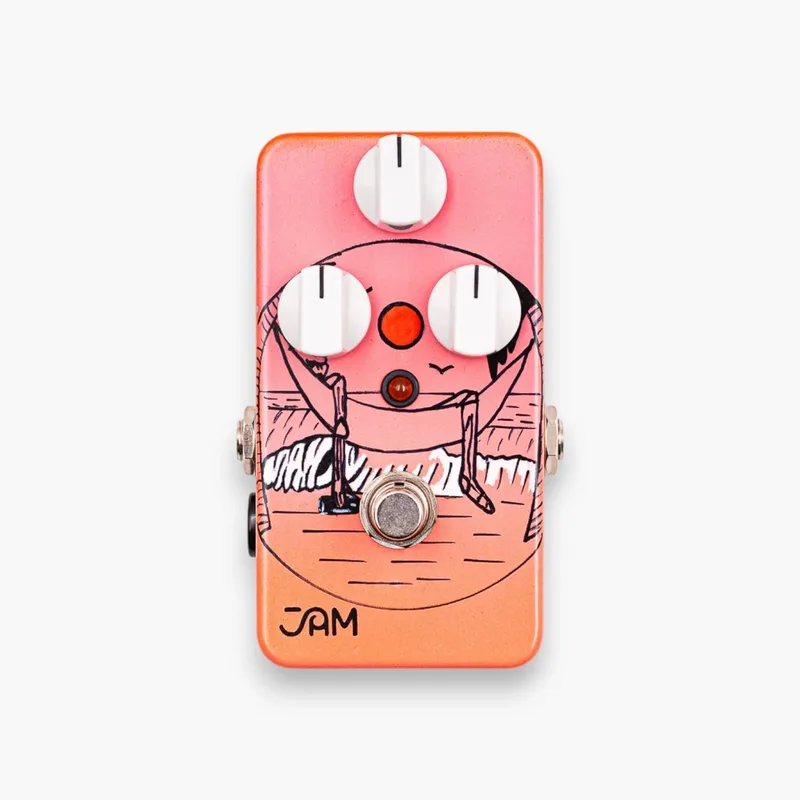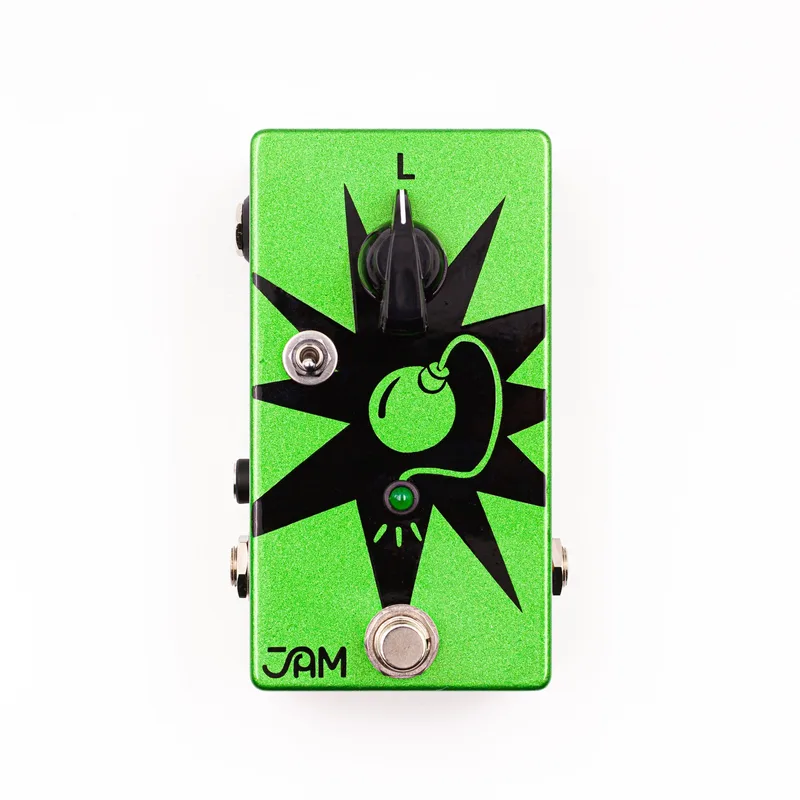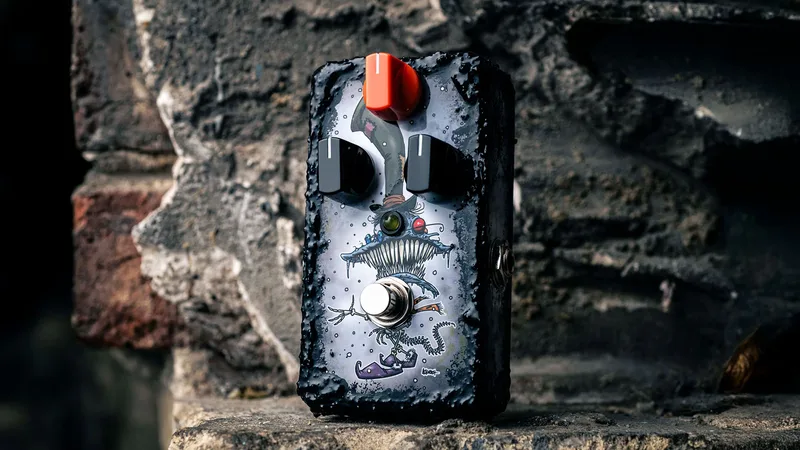


The Achenbach Chill is an analog tremolo pedal from JAM Pedals, a maker better known in some circles for its boost and overdrive designs such as the LucyDreamer Supreme and the Boomster mk.2. JAM describes the Chill as "a no-frills analog sine-wave tremolo that captures the lush, flowing pulse of vintage Fender-style amplifie"1, and says the circuit produces "smooth, vintage-style amplitude modulation suited to surf, western and slow pulsing textures"1. It is a tremolo in the amplitude sense, shaping the volume of the signal rather than its pitch, and it carries a second role as a boost pedal when the modulation is switched out.
Controls and how it works
The pedal's two main controls are Depth, which sets how strongly the volume pulses, and Level, which sets the output level1. The circuit uses carbon-composition resistors, which JAM says "give the circuit an extra layer of harmonic richness"1.
| Control | What it does |
|---|---|
| Depth | Sets the strength of the tremolo modulation |
| Level | Sets output level |
Because the Chill is an amplitude tremolo, the sine-wave shape it modulates with is smooth rather than square or sharp-edged, which is where the vintage amplifier association comes from. JAM's own description points at surf, western and slow pulsing textures as the territory it covers1.
Using it as a clean boost
The Chill doubles as a boost pedal. JAM's instruction is to "Set Depth to zero to remove modulation, then use Level as a harmonically rich clean boost"1. With the pulse removed, the Level control raises the signal on its own, so the pedal can sit on a board as a boost into an amp or another effect and be called on for tremolo only when wanted. Players comparing it with dedicated boost pedals should note that JAM describes the boost as harmonically rich rather than strictly clean, a character it ties to the carbon-composition resistors in the circuit1.
Power, connections and practical details
The Chill runs on a 9V battery or 9V DC, center-negative, and draws 6 mA1. That current draw is low enough to sit comfortably on a shared supply with other pedals. Bypass is true bypass, so the circuit is removed from the signal path when the pedal is off1.
The pedal accepts a 9V battery as well as a 9V DC center-negative supply, which is worth knowing if you run it away from a pedalboard power source1.
JAM lists the pedal at a regular price of £264.00 GBP, tax included, as of 25 October 20261. For UK buyers, the maker ships DDP with 20% UK VAT and all duties included, with no extra charges on delivery1. The maker also offers a 30-day money-back guarantee with a refund, described on its product page as no questions asked1.
Versions and artwork
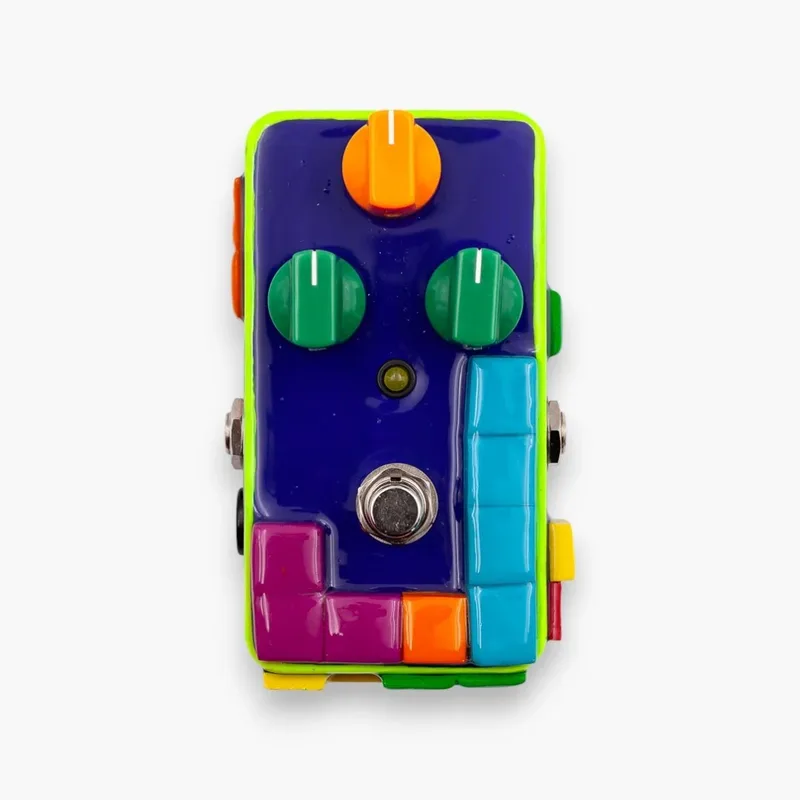
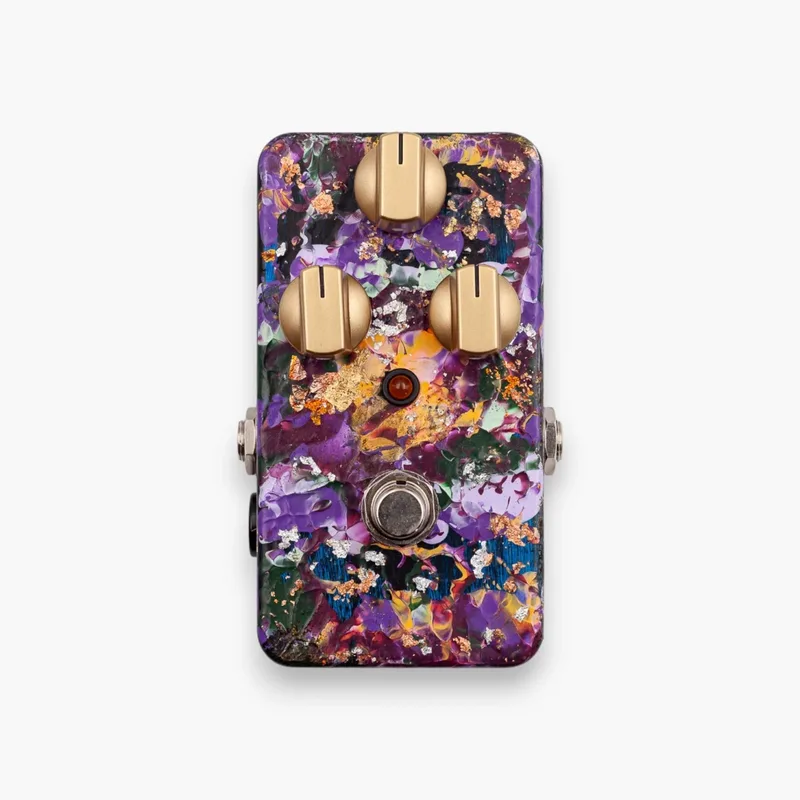
JAM offers the Chill in limited artwork versions. The maker states that "Every limited artwork pedal is a one-of-a-kind hand-painted piece"1, and that these pieces differ in detail from the photos shown on the product page1. Other pedals in the Chill family listed on the site include the "Tetris" Chill, the "Amethyst" Chill and the "Bliss!" Chill.
Videos
JAM pedals
JAM pedals
JAM pedals
Questions
Is the JAM Pedals Achenbach Chill true bypass?
Yes. JAM Pedals lists the Achenbach Chill's bypass as true bypass, so when the pedal is off, your guitar's signal passes through the mechanical switch without going through the circuit. That keeps the pedal out of the signal path entirely when disengaged, which matters on a pedalboard where several effects sit between the guitar and the amp.
How do you use the Achenbach Chill as a clean boost?
JAM Pedals says to set the Depth control to zero, which removes the tremolo modulation, and then use the Level control as a harmonically rich clean boost. With the pulse taken out, the pedal pushes the signal level up on its own, so it can serve as a boost into an amp or another pedal when you are not using the tremolo effect.
Is the Achenbach Chill analog or digital?
The Achenbach Chill is analog. JAM Pedals describes it as an analog sine-wave tremolo, meaning the amplitude modulation happens in the analog signal path rather than through digital processing. The maker also notes that carbon-composition resistors in the circuit add what it describes as an extra layer of harmonic richness.
What polarity does the Achenbach Chill power supply need?
The Achenbach Chill runs on 9V DC with centre-negative polarity, the standard arrangement used by most pedal power supplies and daisy chains. It can also run from a 9V battery, and its current draw is low at 6 mA, so it is easy to fit into an existing pedalboard power setup.
Sources (1)
- “Achenbach” Chill, JAM Pedals (jampedals.com)