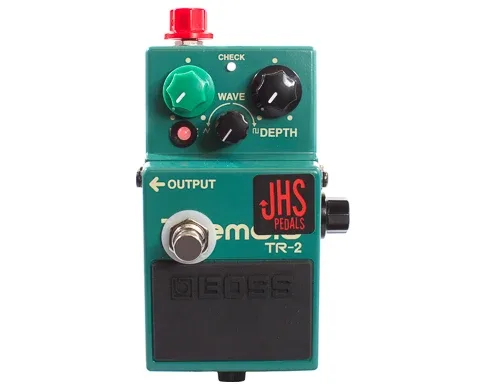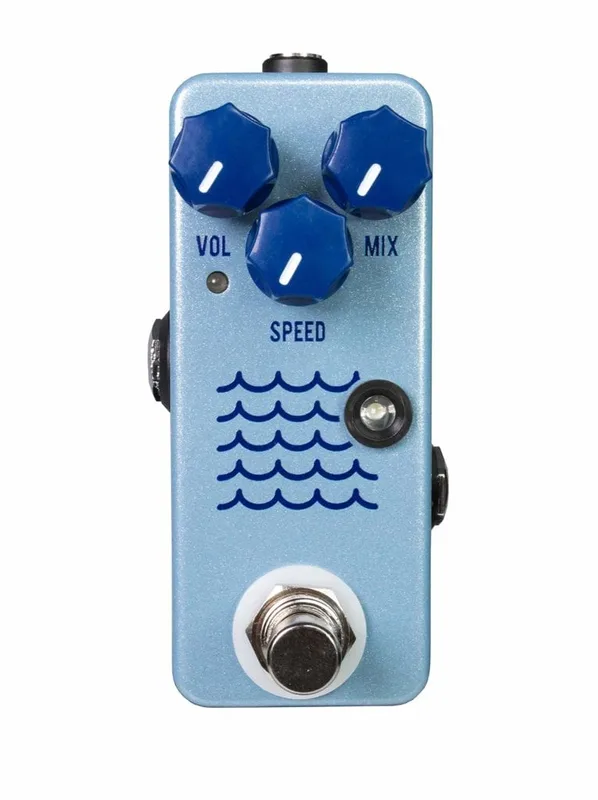


The JHS Pedals Tidewater is a mini tremolo pedal that recreates the built-in tremolo of vintage Fender blackface and Vox amps. JHS Pedals describes it as faithfully recreating "this beloved amp tremolo with a warmth and character you would only expect from a vintage amp"1. Where tremolo was once something you got by turning a knob on the amp itself, the Tidewater puts that sound in a box measuring 3.6" x 1.5" x 1", small enough to sit in a gap on almost any pedalboard1.
A mini amp-style tremolo in the Fender and Vox tradition
Tremolo, the rapid cycling of a signal's volume up and down, was commonly found built into many '60s tube amps, such as Fender's Vibrolux and the Vox AC304. The Tidewater is JHS's take on exactly that flavor of effect. Gearnews calls it "JHS Pedals' love letter to classic amp trem," noting that it "focuses squarely on vintage Vox and Fender Blackface-style movement"5. Guitar World's reviewers put it the same way: "The JHS Tidewater wants to recreate that sweet, tasteful amp-style tremolo without taking up too much space"3.
The pedal arrived as part of JHS's run of mini-format effects. Delicious Audio reported it at launch as "a simple, three-knob tremolo in mini format called Tidewater," an entirely new circuit inspired by the built-in tremolo from vintage Vox and Fender amps2.
"Have you ever ridden the sonic waves of a vintage Fender blackface or Vox tremolo flowing like water from the speaker?"
Controls, DIP switches and power
On the outside the Tidewater keeps things simple, with three knobs shared by every review of the pedal653:
| Control | What it does |
|---|---|
| Volume | Sets overall output at unity, below unity, or above unity for a boosted tone1 |
| Speed | Sets how fast the tremolo pulses within the current speed range1 |
| Mix | Blends the tremolo effect with your dry signal, from fully dry to full effect5 |
The Volume control is worth noting on its own: because it can go above unity, the pedal can push the front of your amp slightly harder even while the tremolo is engaged1.
Inside the pedal, three small DIP switches on the back of the PCB control the range of speed available. When all three switches are in the down position, the range of speed is faster; when all three are up, the range is slower1. Guitar World describes the same feature: "flick them up for slower speed"3. Gearnews highlights this as a way to slow the speed range even further than the knob alone allows5.
The DIP switches are internal, so changing the speed range means opening the pedal up. Set them once for the range you want and use the Speed knob for day-to-day adjustment.
Power comes from a standard 9V DC center-negative supply, the same as most compact pedals1. The current draw is just 3mA1, low enough that it will run happily from even the most modest output on a power supply, alongside several other pedals.
Using it as a boost
There is a trick built into the Mix control. In JHS's own demo video, Josh turns the Mix all the way off and cranks the Volume, at which point the pedal functions as a clean boost preamp, with the tremolo effect out of the path6. For a player short on board space, that means one mini box can cover both tremolo and a boost duty.
In the same video, Josh walks through the pedal's basics: "what Tide Water tremolo it's tiny it's a tremolo"6.
What reviewers said
Published reviewers have been consistent about the pedal's strengths and its limits:
- Gearnews praises the "simple Volume, Speed, and Mix layout that makes it extremely easy to dial in smooth, musical puls[es]"5
- MusicRadar's mini pedal guide lists "Really easy to use," "Fender/Vox-esque tone," and a "Super bright LED" as plus points, with "Doesn't do extreme sounds" as the minus7
- Guitar World's tremolo roundup found it "sounds super authentic," recreating the amp-style tremolo sound3
The common thread is that the Tidewater does one thing well: the warm, amp-style pulse of a vintage Fender or Vox. Players looking for extreme speeds, unusual waveforms, or tap tempo will not find them here. MusicRadar's verdict makes the trade-off plain: easy to use and authentic in tone, but not a pedal for extreme sounds7.
Tidewater and the Kodiak
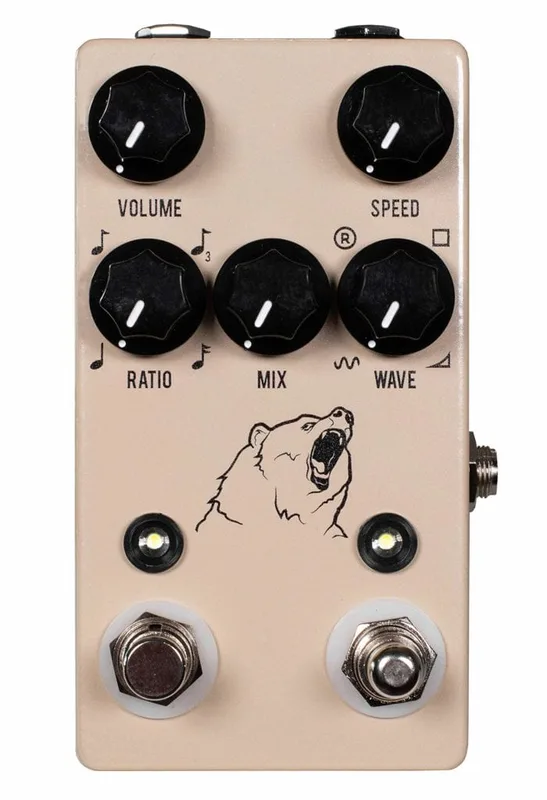
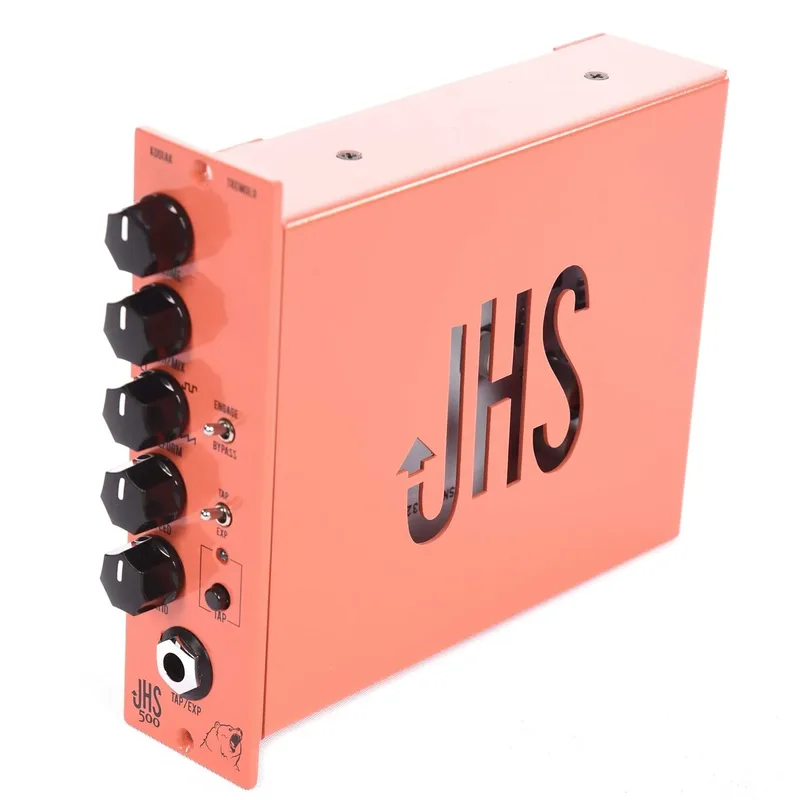
The Tidewater is not JHS's only tremolo. A few months earlier in 2018, JHS announced the Kodiak Tremolo, a full-size tap tempo tremolo. Where the Kodiak is built for control over the effect, the Tidewater is built for size and simplicity: three knobs, internal speed-range switches, and a footprint of 3.6" x 1.5" x 1"12.
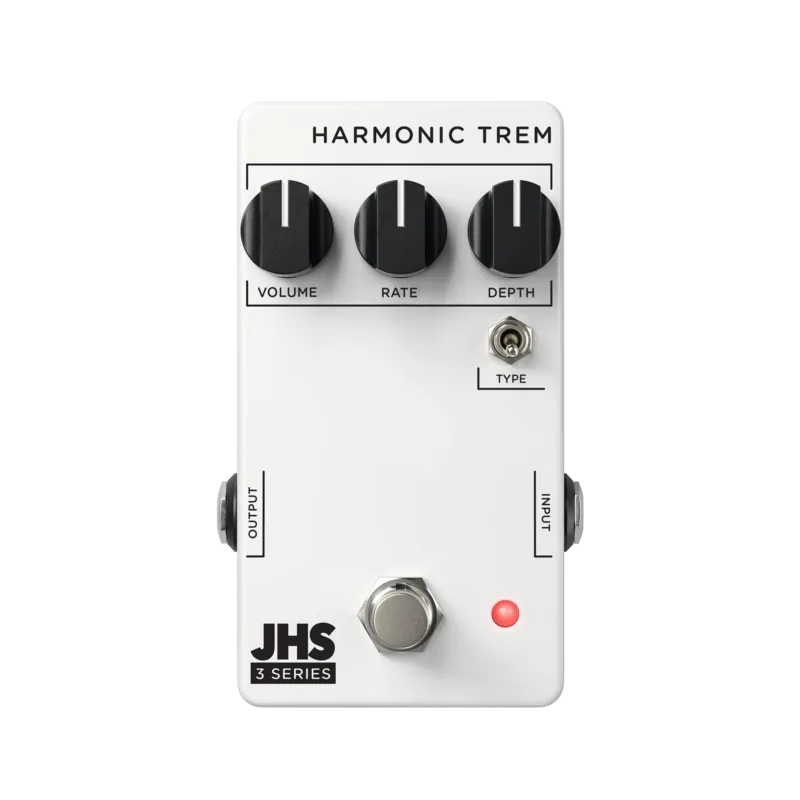
The Tidewater also does not do harmonic tremolo, the different circuit that splits and modulates bass and treble rather than the whole signal.
Videos
Eirik Stordrange
Mike Hermans
Sound Affects
Questions
Can the JHS Tidewater be used as a boost pedal?
Yes. In JHS's own demo, turning the Mix knob all the way off and cranking the Volume turns the pedal into a boost preamp, with the effect effectively out of the signal path. The Volume control also runs at, below, or above unity gain on its own, so a slight lift is available at any mix setting.
How do you change the speed range on the Tidewater?
Inside the pedal there are three small DIP switches on the back of the PCB. With all three switches down, the available speed range is faster; with all three up, the range is slower. The switches shift the range the Speed knob sweeps rather than setting speed directly, so you set the fine adjustment with the knob.
How much current does the JHS Tidewater draw?
JHS lists the Tidewater as consuming 3mA, which is low enough that it places almost no demand on a pedalboard power supply. It runs on standard 9V DC center-negative power, the same as most compact effects.
What is the difference between the JHS Tidewater and the Kodiak?
The Tidewater is a mini pedal with three knobs (Volume, Speed, Mix) and internal DIP switches for the speed range, aimed at vintage amp-style tremolo. The Kodiak, released earlier in 2018, is a full-size tap tempo tremolo with multiple controls, four waveforms, and an expression and tap tempo jack, built for more control over the effect.
Does the Tidewater do harmonic tremolo?
No. The Tidewater is built around the amplitude tremolo found in vintage Fender blackface and Vox amps, not the harmonic tremolo circuit. JHS makes that effect separately in its 3 Series Harmonic Tremolo, released in 2022 at $99.
Sources (7)
- TIDEWATER, JHS Pedals
- JHS Unveils The Tidewater Mini Tremolo, Delicious Audio, 2018-11-21
- Best tremolo pedals 2026: vintage vibes to chopped tones, Guitar World, 2022-05-05
- Best tremolo pedals for guitar: Shake up your tone, MusicRadar, 2019-10-23
- The 9 Best Tremolo Pedals for Any Budget: Vintage Pulses and Modern Vibes, gearnews.com, 2025-12-22
- Did You Know Your JHS Pedal Could Do This? (Pulp N Peel, Kilt, Kodiak, Flight Delay & more!), JHS Pedals (YouTube channel), 2025-01-08
- Best mini pedals: Small-scale stompboxes, MusicRadar, 2023-02-23