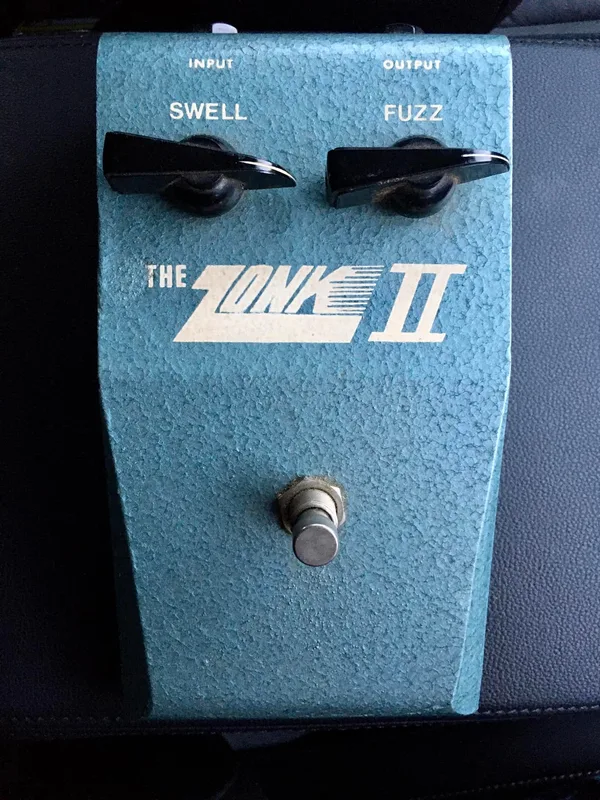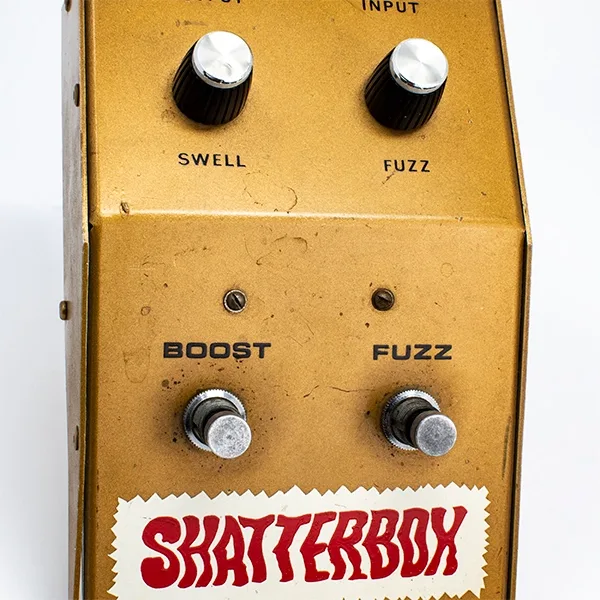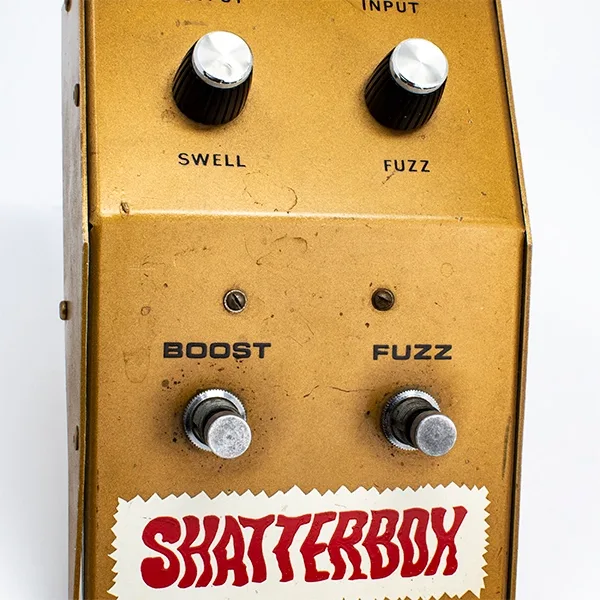

The John Hornby Skewes Shatterbox is a 1960s British fuzz pedal that packs two effects into one enclosure: the Hornby Skewes Treble Booster and the Zonk Machine II fuzz. Fuzzboxes.org calls it "an early 'multi-effects' fuzz box that combined the Hornby Skewes Treble Booster with the Zonk II"12. Where most fuzz boxes of the era did one thing, the Shatterbox let a player stack its two circuits, an early example of the combined-effects idea that multi-effects pedals would later take much further.
It was produced in exceptionally limited numbers and original units are rare2. Vintage Guitar describes it as housed in a "bare-bones folded-steel box"3.
Two footswitches: boost, fuzz or both
The Shatterbox's defining feature is its switching. It carries two footswitches, one for the boost and one for the fuzz, so a player can run the treble boost alone, the fuzz alone, or both together1. Vintage Guitar confirms the layout: the unit "had footswitches for Boost and Fuzz"3.
Inside an original 1960s unit, the boost switch is DPST, and there is a 4k7 trimpot between the fuzz control's pin 3 and chassis ground, a factory trim rather than a player-facing control2. The original unit also contains two 125uF capacitors2.
Circuit, versions and rarity
The Shatterbox is the Zonk Machine fuzz circuit and the Treble Booster circuit sharing one box. Guitar FX Layouts describes it as combining "two effects; The JHS Zonk fuzz and a Treble Booster circuit"2, and Fuzzboxes.org identifies the fuzz half as the Zonk II1. Vintage Guitar traces the same lineage: Wilsic combined the Zonk circuitry with the Treble Boost to create the Shatterbox3. The Treble Booster itself began with a germanium transistor that was soon replaced by a silicon one5.
Two versions exist at the circuit level:
| Version | Transistors | Notes |
|---|---|---|
| Original PNP | PNP | The 1960s production units2 |
| NPN | NPN | An alternate layout for builders, using more common parts2 |
Guitar FX Layouts also published its layouts with LED switching added as an option2. One caution for builders: the blog's author reported that the Shatterbox layout "just motorboats" while the regular Zonk II built without incident, so the combined circuit is the trickier of the two to get working2.
The enclosure graphics were updated slightly between the stripboard and PCB construction eras1. The stripboard version shares its construction and parts selection with the youngest Zonk Machine pedals, dating to around late 1968 or early 19691. Potentiometer date codes on surviving units indicate the model was still in production into the early 1970s1.
Where it came from
The Shatterbox was designed in 1966 by Wilsic Sound for John Hornby Skewes of Leeds, according to the British Pedal Company's manual4. Fuzzboxes.org reports it was shown "for the first time" at the Frankfurt Musikmesse trade fair in the spring of 19691, and notes that Charlie Ramskir was likely involved in its development, though this is probable rather than confirmed1. John Hornby Skewes founded his musical-instrument company with his wife, Madge3.
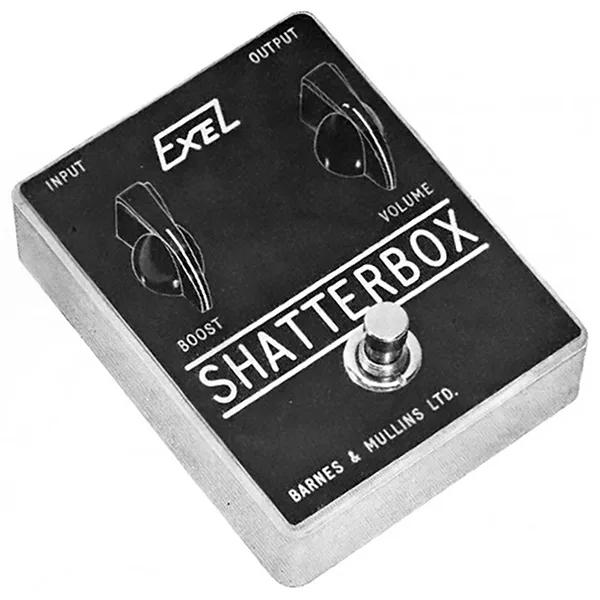
The Shatterbox was advertised in the British press and sold in Britain, where many of the originals remain. It has also been sighted in Canada, in Finland (two units), and in Belgium (one unit)1. A later Exel Shatterbox, sold by Barnes & Mullins, carried the name forward6.
Videos
jermsfuzz
Questions
What circuits is the John Hornby Skewes Shatterbox based on?
It combines two circuits in one box: the Hornby Skewes Zonk Machine II fuzz and the Hornby Skewes Treble Booster. Fuzzboxes.org describes it as an early multi-effects fuzz box that put the Treble Booster and the Zonk II together in a single unit.
Who designed the Shatterbox?
The British Pedal Company's manual credits Wilsic Sound with designing it in 1966 for John Hornby Skewes of Leeds. Fuzzboxes.org adds that Charlie Ramskir was likely involved in its development, though this is probable rather than confirmed.
When was the Shatterbox first shown?
Fuzzboxes.org reports it was shown for the first time at the Frankfurt Musikmesse trade fair in the spring of 1969. However, the British Pedal Company dates the design to 1966, and potentiometer date codes on surviving units suggest it was still in production into the early 1970s.
Was the Shatterbox sold outside Britain?
It was advertised in the British press and sold in Britain, where most surviving originals are found. Fuzzboxes.org has also sighted examples in Canada, in Finland (two units), and in Belgium (one unit), so a small number clearly reached other markets.
What is the difference between the PNP and NPN Shatterbox versions?
The original 1960s Shatterbox used PNP transistors. Guitar FX Layouts later published an alternate NPN version of the circuit, which lets builders use more common NPN transistors instead of the germanium PNP parts the original required.
Sources (6)
- John Hornby Skewes Shatterbox • Fuzzboxes, Fuzzboxes.org, 2021-05-28
- Guitar FX Layouts: Hornby Skewes Shatterbox, Guitar FX Layouts (tagboardeffects.blogspot.com), 2017-04-30
- Hornby Skewes Zonk Machines, Vintage Guitar magazine, 2016-02-12
- BPC-Product-Manual-2021-V1.pdf, British Pedal Company, 2021
- The Dallas Rangemaster, Vintage Guitar magazine, 2015-01-26
- Exel Shatterbox • Fuzzboxes, Fuzzboxes.org, 2022-02-15