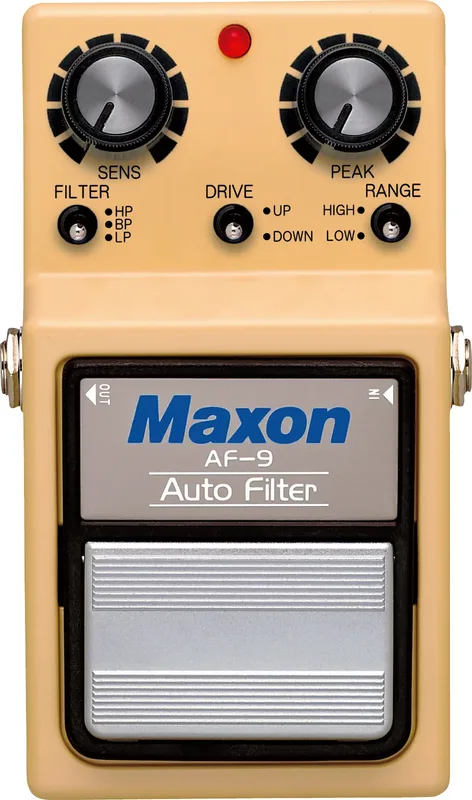


The Maxon AF-9 Auto Filter is an envelope filter: a pedal that listens to how hard you pick and sweeps a filter in response, producing the automatic wah-wah effect heard all over funk, fusion and rock records. Maxon describes it as taking "the most desirable auto-wah and swept filter effects" and packing them into a compact pedal1. Unlike a conventional wah pedal, there is nothing to rock with your foot: your attack on the strings drives the sweep.
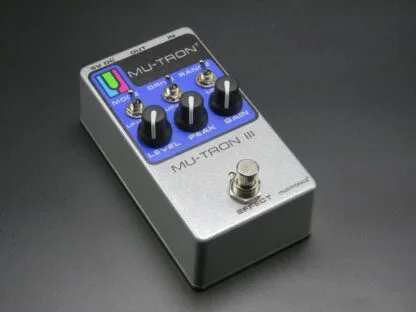
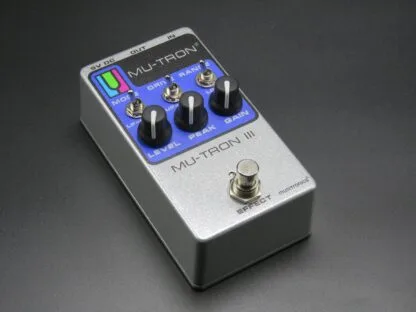
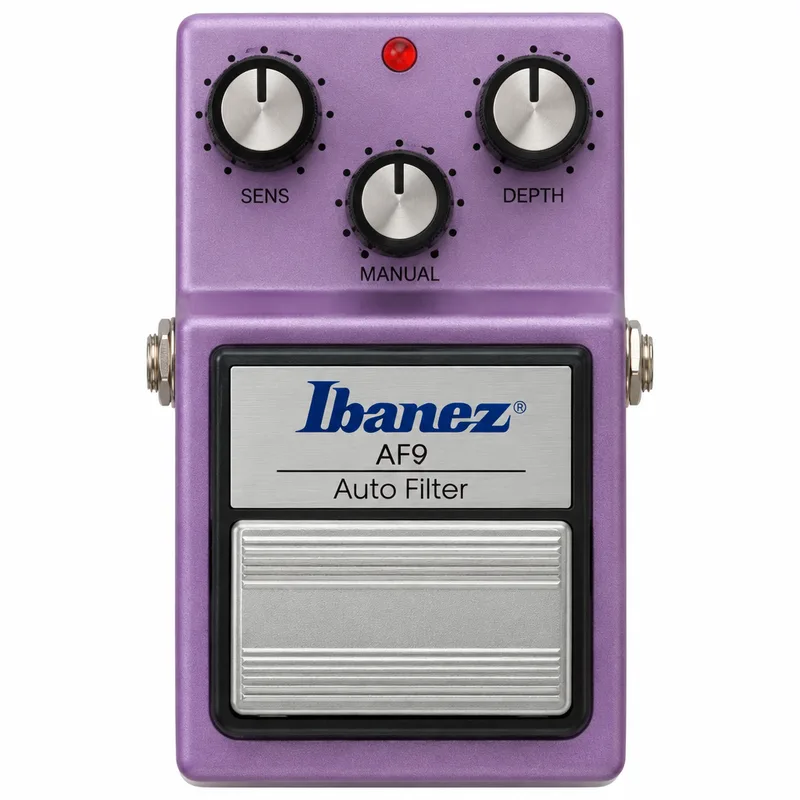
The circuit is analog and optical. Pedal of the Day calls the AF-9 "an optical analog envelope filter"2, and Maxon says its opto-coupler circuitry "produces the shimmering, watery filtering of legendary vintage units"1. The design is reminiscent of the classic Musitronics Mu-Tron III, the envelope filter that defined the effect in the 1970s2. The original AF-9 dates back to 19811, and it also appeared under the Ibanez name as the AF9 Auto Filter, a 9 Series pedal that TONEHOME rates as highly collectible today3.
Controls and how it works
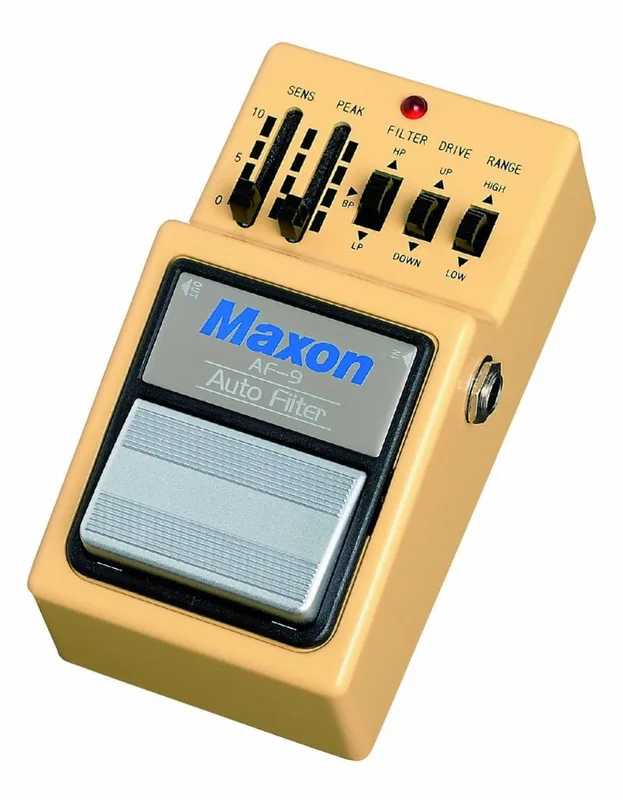
The AF-9 gives you three filter types to choose from: Low Pass, Band Pass and Hi Pass1. Low Pass sweeps down from the top of the spectrum and back, the most familiar auto-wah shape; Band Pass isolates a moving band of frequencies, the vocal, quacky setting; Hi Pass sweeps up from the bottom, thinning the sound in a way that suits bass and clean funk guitar.
Four controls shape the response:
| Control | What it does |
|---|---|
| Filter switch | Selects Low Pass, Band Pass or Hi Pass1 |
| Range switch | Sets the range of the sweep, with two options covering guitar and bass14 |
| Drive switch | Sets the direction of the filter sweep1 |
| Sensitivity (Threshold) | Controls how hard you have to pick to trigger the sweep15 |
| Peak | Sets the intensity of the effect15 |
The Sensitivity and Peak controls are the heart of the pedal. Vintage Guitar's reviewer found that "slider controls for sensitivity and peak let you dial in exactly when the effect is engaged (per your touch on the strings)"5, and MusicRadar called the sensitivity and peak sliders "wonderfully intuitive"4. Set the sensitivity so your softest notes stay clean and your hardest notes open the filter, and the pedal follows your dynamics note for note.
Guitar, bass and drop tunings
The AF-9's frequency range of 100 Hz to 4 kHz is wide enough that Maxon says it allows the pedal "to function with virtually any instrument or input signal"1. MusicRadar notes the two range options mean "both guitar and bass (or drop-tunings) can be used"4. For bass players, the Band Pass and Hi Pass settings at the lower range keep the fundamental intact while the filter moves around it, which is why envelope filters have long been a staple on bass pedalboards.
The current version: knobs and toggles instead of sliders
For most of its life the AF-9 used fader-style sliders for Sensitivity and Peak, with slide switches for the other settings. The current version changes that: "the Sensitivity & Peak faders have been replaced by rotary pots and the slider switches are now toggles"1.
The change was not a redesign of the sound. Maxon says it "was made out of necessity due to the discontinuation of the fader pots that had been used on this model for nearly 40 years"1. The filtering circuit itself was left alone.
Maxon adds that it "saw no reason to update the AF-9's classic, watery, 3-dimensional filtering that so many players have come to" rely on1. Players comparing versions should know the control layout differs between older and current units, but the effect is the same design.
The Mu-Tron III comparison
The AF-9's closest ancestor is the Mu-Tron III, the 1970s Musitronics envelope filter that Guitar World credits as the effect's founding instrument6. Both use an opto-coupler to read the signal and sweep a filter, and the AF-9 is widely described as reminiscent of the classic2.
On how close it gets, Guitar World's Nick Wells wrote:
"The Maxon AF-9 can also deliver some uncanny Mu-Tron III moments, but there really is no substitute for the real thing."6
Vintage Guitar's reviewer, comparing the AF-9 against other auto-wahs, found that "the filter switch (high pass/band pass/low pass) allowed us to tailor the sound more than with other auto-wahs"5. MusicRadar's overall verdict was blunt: "An excellent pedal."4
Who plays it
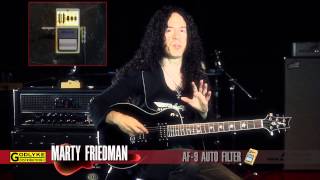
Maxon's product page carries an endorsement from Marty Friedman, formerly of Megadeth and Cacophony, who calls the Auto Filter "one of my favorite 'go-to' pedals" and says it "really helps you give your playing a human voice"1.
Videos
Godlyke Inc.
Camilo Velandia
Mike Hermans
Questions
Is the Maxon AF-9 Auto Filter an optical or a digital pedal?
It is an optical analog pedal. The AF-9 uses opto-coupler circuitry, in which a light-dependent element responds to your signal's level to sweep the filter, the same approach as the vintage envelope filters it draws on. There is no digital processing in the circuit.
Can you use the Maxon AF-9 with bass?
Yes. The pedal has two range options, and its frequency range of 100 Hz to 4 kHz lets it work with virtually any instrument or input signal, so bass and drop-tuned guitars are covered as well as standard guitar. The Range switch selects the sweep range that suits your instrument.
How does the AF-9 compare to the Mu-Tron III?
The AF-9 is reminiscent of the classic Musitronics Mu-Tron III and uses the same opto-coupler approach. Guitar World's Nick Wells wrote that it can deliver some uncanny Mu-Tron III moments, but that there really is no substitute for the real thing.
What frequency range does the AF-9 cover?
The filter sweeps from 100 Hz to 4 kHz. Maxon says this range allows the AF-9 to function with virtually any instrument or input signal, which is why the same pedal works for guitar, bass and drop tunings.
Why did Maxon change the AF-9's sliders to knobs and toggles?
Out of necessity. The fader pots used on the model for nearly 40 years were discontinued, so the current version replaces the Sensitivity and Peak faders with rotary pots and the slider switches with toggles. Maxon left the filtering circuit itself unchanged.
Sources (6)
- AUTO FILTER (AF-9), Godlyke Distributing, Inc.
- Maxon AF-9 Auto Wah Optical Envelope Filter, Pedal of the Day, 2017-07-07
- TONEHOME, TONEHOME
- Maxon AF-9 Auto Filter review, MusicRadar, 2017-12-26
- Maxon OD-9, SD-9, and AF-9, Vintage Guitar magazine, 2004-05-25
- The Mu-Tron III: “Without it, there ain't no Bootsy”, Guitar World, 2023-03-17