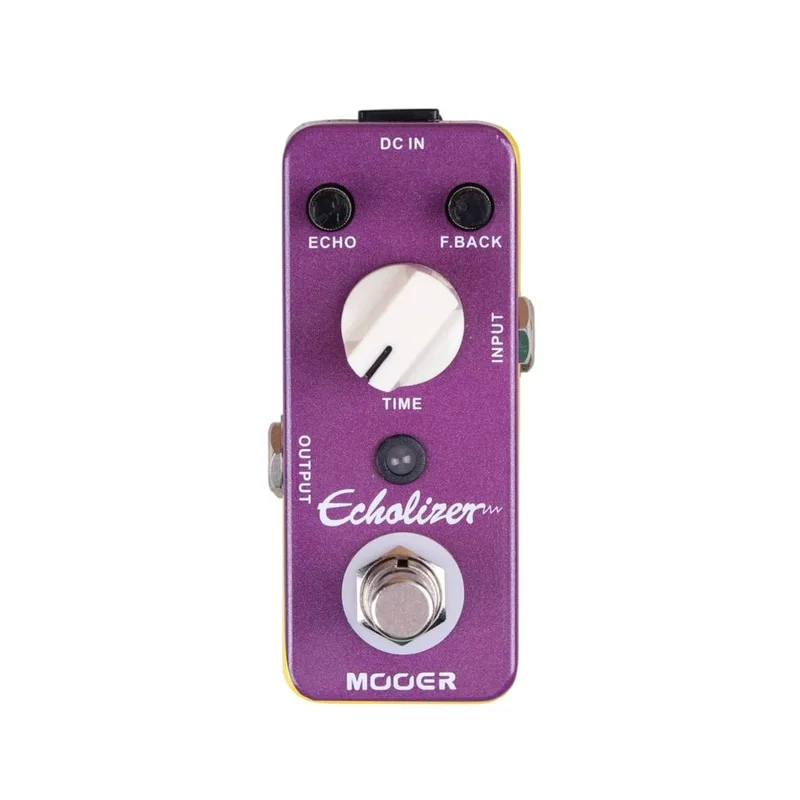


The Mooer Echolizer is a compact delay pedal from Mooer Audio. It is a digital pedal built to sound like an analog one: Mooer describes it as a "digital recreation of classic analog Stompbox delay to get a warm delay with degrading repeats and long delay times"1. In other words, the repeats get progressively darker and rougher as they fade, the way an analog echo unit behaves, rather than staying clean like a straight digital delay.
It is part of Mooer's micro pedal line, built into a full metal shell measuring 93.5mm deep by 42mm wide by 52mm high and weighing 160g1. MusicRadar's reviewer positioned it squarely for players whose boards are already full: "If you're of the opinion that you can never have too many delay pedals, but have run out of 'board space, this slim echo could be your solution"2.
The controls: Echo, Delay Time, Feedback
The Echolizer keeps things simple with what MusicRadar's Trevor Curwen calls "a standard three-knob array for echo volume, delay time and feedback"2. If you have used a basic echo pedal before, the layout will be familiar.
| Control | What it does |
|---|---|
| Echo | Sets the level of the delay effect in the mix3 |
| Delay Time | Sets the time between repeats, from 25ms to 600ms1 |
| Feedback | Sets how many repeats you hear and how they trail off2 |
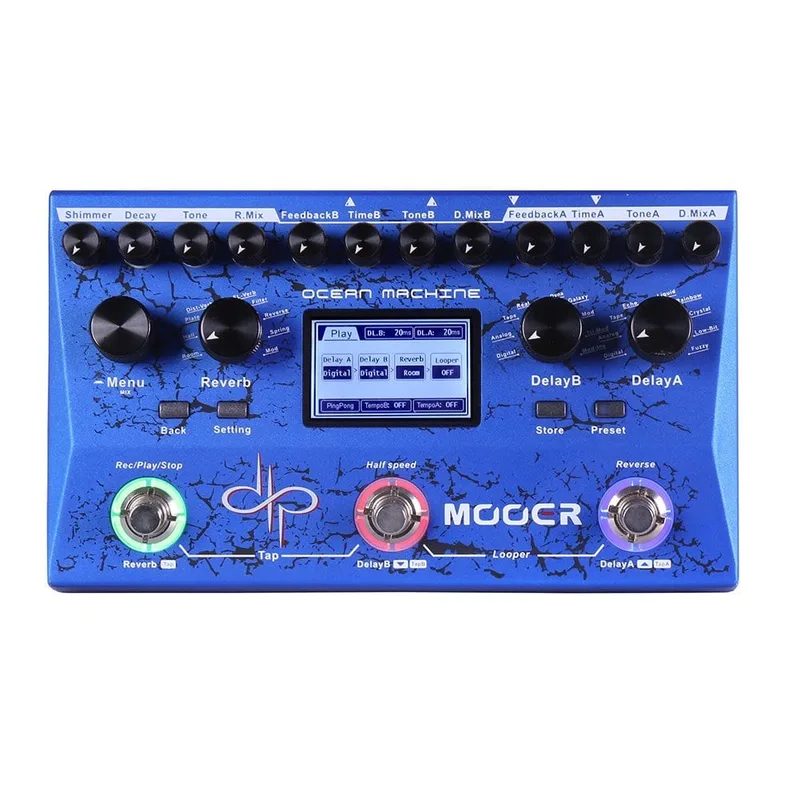
The Delay Time range of 25ms to 600ms covers slapback echo at the short end and medium-length repeats at the long end1. That is a working range for most classic echo sounds, though players wanting very long delays would look to larger units such as Mooer's own Ocean Machine.
Because there are no modes, presets or tap tempo, the pedal is meant to be dialed in by ear and left alone. Gus Green, reviewing for Delicious Audio, found that simplicity to be a strength rather than a limitation3:
"I feel like this would be a great pedal to just set and forget. It's a preset in itself3."
Gus Green, Delicious Audio3
How it sounds and how it compares
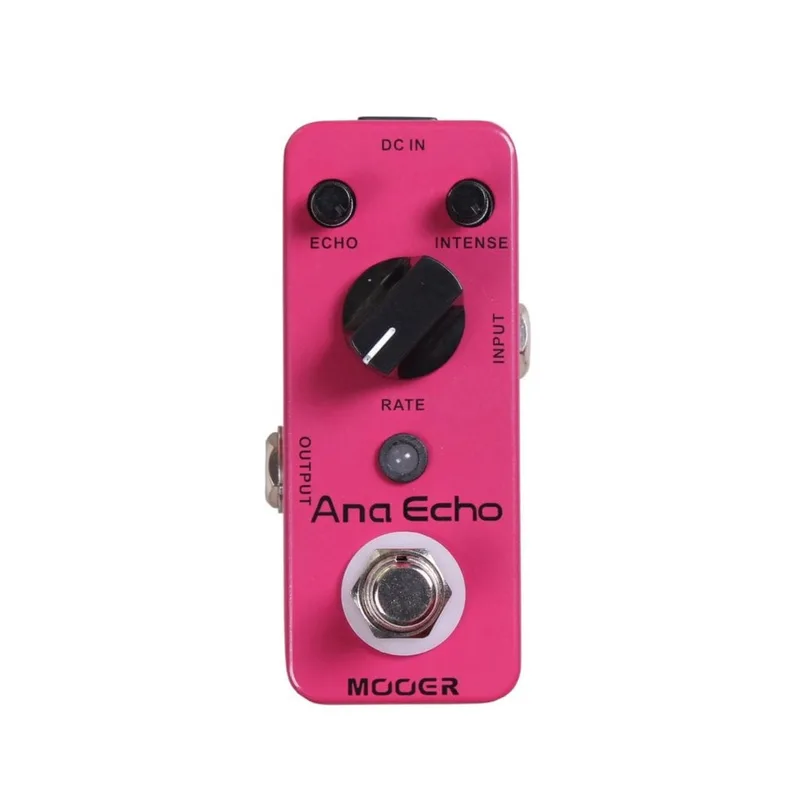
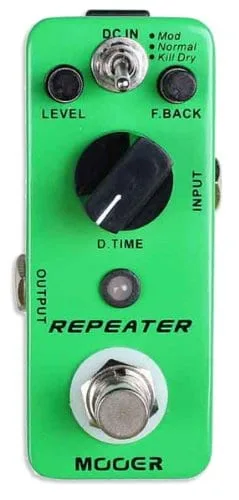
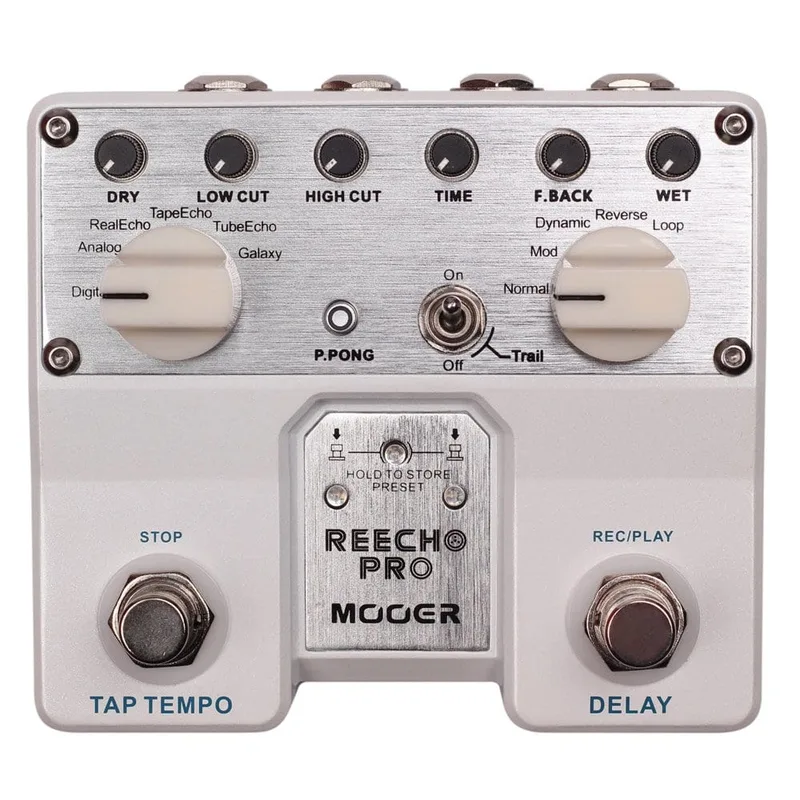
The Echolizer's character comes from its approach to the repeats. Delicious Audio describes it as "a digital delay made to sound like an analog delay"3, which places it alongside Mooer's other analog-flavored echo pedals like the Ana Echo and Reecho in the company's range, rather than its cleaner or more feature-packed digital delays such as the Repeater.
MusicRadar's reviewer called it "a workmanlike delay"2, a fair summary of what the pedal is aiming at: a straightforward, compact echo rather than a do-everything delay workstation.
Power and connections
The Echolizer runs on a 9V DC AC adapter with a center minus (center negative) plug, drawing 40 mA1. There is no battery option in the maker's specifications, so it needs a power supply or a pedalboard power distribution system. The 40 mA draw is modest, so it shares comfortably with other compact pedals on a typical isolated supply.
Connection is minimal: one 1/4" monaural input jack with 1M Ohms impedance and one 1/4" monaural output jack with 470 Ohms impedance1. It is a mono pedal, with no stereo outs, no effects loop and no expression control.
The Echolizer is true bypass1, so when switched off it does not buffer your signal. On a long pedalboard with many true bypass pedals, some players add a buffer to keep the high end from dulling.
Videos
Premier Guitar
MOOER Audio
Prymaxe
Questions
Is the Mooer Echolizer analog or digital?
It is a digital pedal. Mooer describes it as a digital recreation of a classic analog stompbox delay, built to produce a warm delay with repeats that degrade like an analog echo rather than the cleaner repeats of a straight digital delay.
What is the maximum delay time on the Mooer Echolizer?
The Delay Time control ranges from 25ms to 600ms, according to Mooer's product specifications. That is enough for slapback echo and medium repeats, though not for the long ambient delays of larger delay pedals.
Is the Mooer Echolizer true bypass?
Yes. Mooer lists true bypass among the pedal's specifications, so when it is switched off the signal passes through without buffering.
Can the Mooer Echolizer run on a battery?
No. Mooer's stated power requirement is a 9V DC AC adapter with a center minus plug, drawing 40 mA. There is no battery option in the maker's specifications.
What power supply does the Mooer Echolizer need?
It needs a 9V DC center negative (center minus) adapter, with a current draw of 40 mA. This is the standard supply used by most compact effects pedals, so a typical pedalboard power supply will run it.
Sources (3)
- Echolizer_MOOER Audio, MOOER Audio
- Mooer Echolizer review, MusicRadar, 2013-02-04
- Guitar Pedal Reviews: Mooer Micro Pedals Vol. 1, Delicious Audio, 2013-04-15