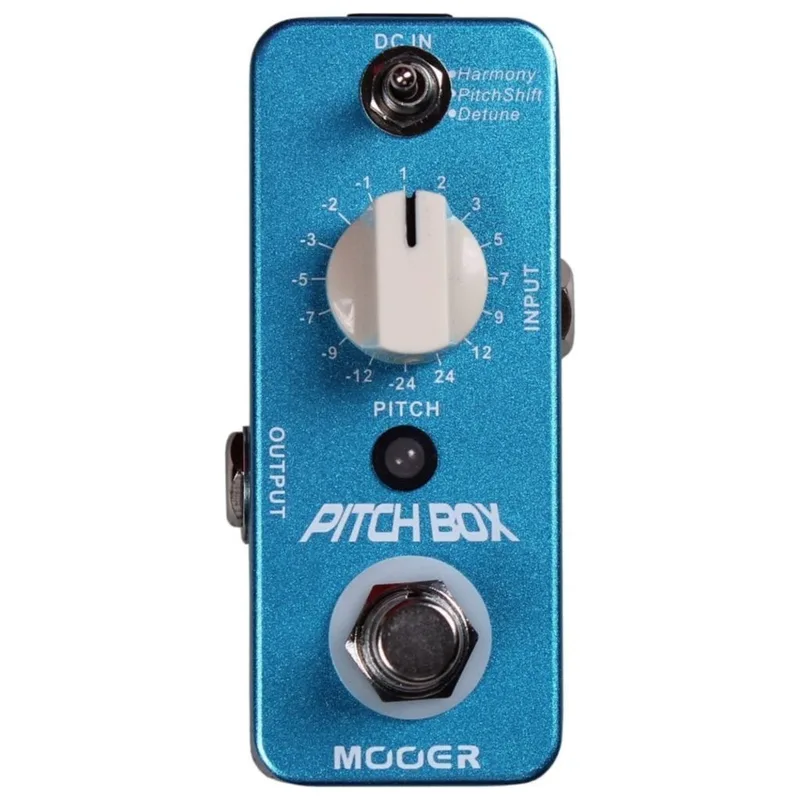


The Mooer Pitch Box is a compact pitch pedal from Chinese pedal manufacturer Mooer Audio, one of the company's range of tiny, affordable stompers1. It packs three pitch-based effects into a mini enclosure: a harmoniser, a pitch shifter and a detune effect, selected with a single three-way toggle1. The rotary control then selects the interval of the pitch shift, taking you all the way up, or down, two octaves1.
It is a simple pedal to operate: pick a mode, pick an interval, and play. Mooer positions it as an entry point into pitch shifting for players who want the effect without the cost or footprint of a full-size unit1.
The three modes and how they sound
Mooer describes each mode on its product page, and the differences between them matter for how you would use the pedal2.
| Mode | What Mooer says it does |
|---|---|
| Harmony | Shifts the pitch and mixes it back with the original signal to create a rich harmonic voice2 |
| Pitch Shift | Outputs a precise polyphonic pitch shifting voice2 |
| Detune | Slightly shifts the pitch and mixes it back with the original signal to create a chorus-like effect, with what Mooer calls a lot of nice spacy feeling2 |
The three-way toggle at the top of the pedal selects one of the three modes: harmoniser, pitch shifter or detune1. The rotary control then selects the interval of the pitch shift, up or down two octaves1. In Pitch Shift mode the pedal is polyphonic, meaning it tracks chords rather than only single notes2.
The Detune mode is the closest thing here to a chorus pedal: a slight pitch shift layered against your dry signal gives a similar thickening effect without being a dedicated chorus circuit2.
Controls
The control set is minimal, which is part of the pedal's appeal for small boards1.
- Three-way toggle: selects Harmony, Pitch Shift or Detune mode21
- Rotary control: selects the interval of the pitch shift, up or down two octaves1
That is the whole interface. There is no key selection, no preset storage and no expression input, which is where the pedal's low price shows1.
Power and connections
The Pitch Box runs on a 9V DC adapter only, with a center minus plug, and draws 128 mA2. There is no battery option2. At 128 mA it draws more current than many analog mini pedals, so it is worth checking that your power supply can feed it before sharing one supply across a board.
The pedal is mono: one 1/4" monaural input at 470k Ohms impedance and one 1/4" monaural output at 100 Ohms2. It uses true bypass, so the signal passes unprocessed when the pedal is off2. The full metal shell measures 93.5mm deep by 42mm wide by 52mm high and weighs 170g2, small enough to sit in a gap on almost any pedalboard.
Where it came from
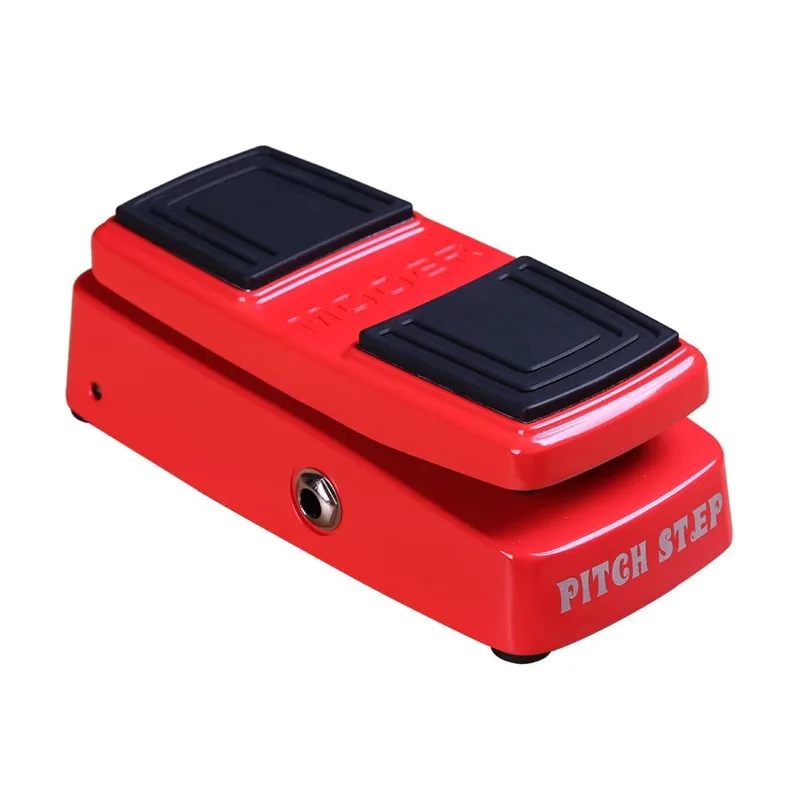
The Pitch Box appeared as part of Mooer's original line of micro effect pedals. Guitar Interactive Magazine listed it among the first Mooer micro pedals announced for distribution in June 2012, described as a harmony/pitch shift pedal4. MusicRadar later noted that Mooer's range of tiny, affordable stompers had become available to buy in UK shops1. Mooer has since expanded its pitch-shifting line with pedals like the Pitch Step, a treadle-based polyphonic pitch-shifter.
What reviewers said
MusicRadar reviewed the Pitch Box and found it copes well for its price when it comes to tracking and audio artifacts1. The harmoniser mode drew a qualified compliment:
"The harmoniser, meanwhile, is accurate and responsive, but doesn't allow you to select a specific key for the harmony."
That limitation is the main practical catch in Harmony mode: the pedal shifts by a fixed interval rather than following a musical key, so the harmony note stays a set distance from whatever you play rather than landing on a scale tone automatically1.
On latency, MusicRadar reported:
"In pitch shift mode, there's a delay between your playing and the processed-sounding result, but you get used to it."
Guitar World, reviewing the DigiTech Drop, compared the two directly and found the Pitch Box "does suffer from more audible latency than the Drop"5. For players who need tight, immediate pitch drops, that difference matters; for detune and ambient harmony parts it is less of an issue.
MusicRadar's overall verdict was positive on value, listing the price, the Detune and Harmony modes and the pedal's looks as plus points1:
"Serious pitch-shifters will want to invest in something more sophisticated, but if you're on a budget, you don't have much to lose."
Gearnews included the Pitch Box in its 2026 round-up of pitch-shifter pedals, noting its pitch range of ±2 octaves and a list price of $65.003.
How it compares with other Mooer pitch pedals
The Pitch Box is the simplest and cheapest entry in Mooer's pitch-shifting range. Where it sits against its stablemates1:
| Pedal | What it offers beyond the Pitch Box |
|---|---|
| Pitch Step | Treadle-based operation with pressure sensor activation, polyphonic pitch shift and harmoniser functions |
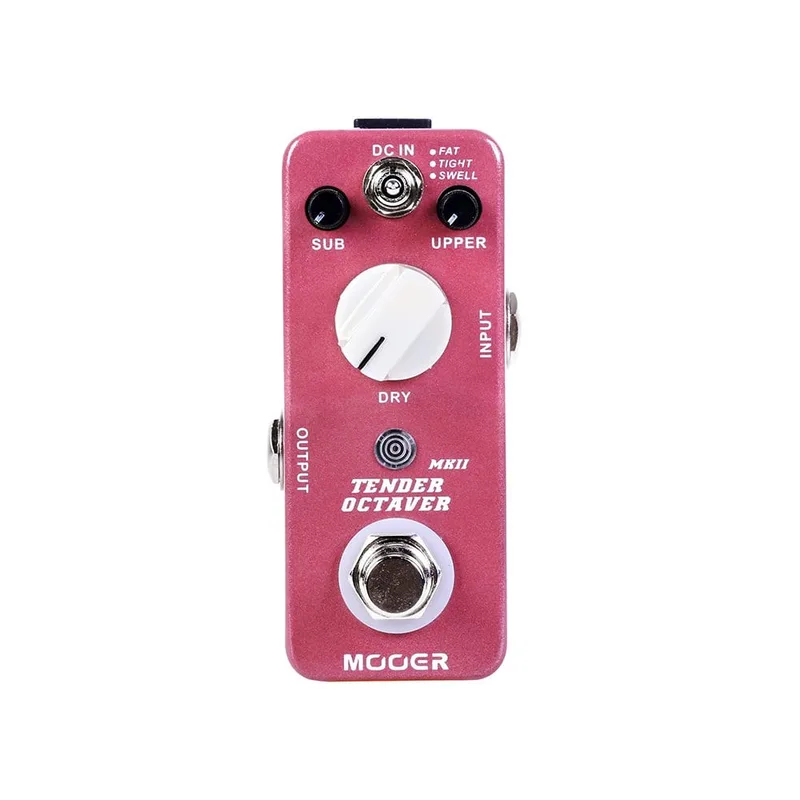
| Tender Octaver MKII | Three octave algorithms and analog dry-through |
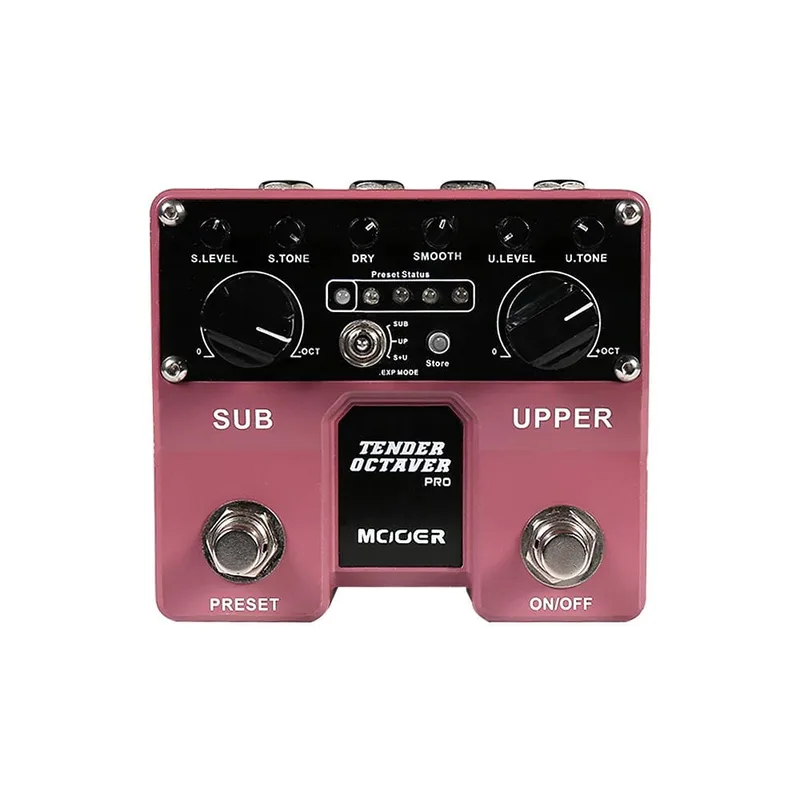
| Tender Octaver Pro | A larger-format octave pedal released alongside three other Mooer pedals in April 2017 |
The Pitch Box trades features for size and price: no presets, no key-aware harmony and no stereo output, but a 42mm-wide enclosure and a $65.00 list price23. Players who need key-aware harmonies or lower latency are the ones MusicRadar pointed toward more sophisticated units1.
Videos
Gearfacts
Want 2 Check
Want 2 Check
Questions
Does the Mooer Pitch Box take a battery?
No. The Pitch Box is powered by a 9V DC adapter only, with a center minus plug, and Mooer lists no battery option. Its current draw is 128 mA, which is high for a mini pedal, so it needs a proper 9V supply rather than a shared daisy chain.
Is the Mooer Pitch Box true bypass?
Yes. Mooer lists true bypass for the Pitch Box, so when the pedal is switched off the signal passes through without processing. It has a single 1/4 inch monaural input and output, so it is a mono pedal.
Can you set a key for the harmony on the Mooer Pitch Box?
No. MusicRadar's review found the harmoniser mode accurate and responsive, but it does not allow you to select a specific key for the harmony. The harmony interval is set with the rotary control instead, so the shifted note follows your chosen interval rather than a musical key.
Does the Mooer Pitch Box have latency?
Yes, some. MusicRadar noted a delay between playing and the processed result in Pitch Shift mode, though the reviewer said you get used to it. Guitar World also found it suffers from more audible latency than the DigiTech Drop.
Is the Mooer Pitch Box polyphonic?
Yes, in Pitch Shift mode. Mooer describes that mode as outputting a precise polyphonic pitch shifting voice, so it can track chords, not just single notes. The pitch range is plus or minus two octaves with 16 optional parameters.
Sources (5)
- Mooer Pitch Box review, MusicRadar, 2012-12-25
- Pitch Box_MOOER Audio, MOOER Audio
- The 5 Best Pitch Shifter Pedals for Wild Sounds and Perfect Tracking, gearnews.com, 2026-03-16
- Osiamo Introduces Mooer Micro Effect Pedals, Guitar Interactive Magazine, 2012-06-13
- DigiTech Drop Limited Black Edition review, Guitar World, 2026-03-31