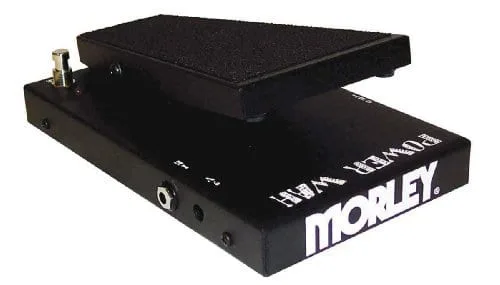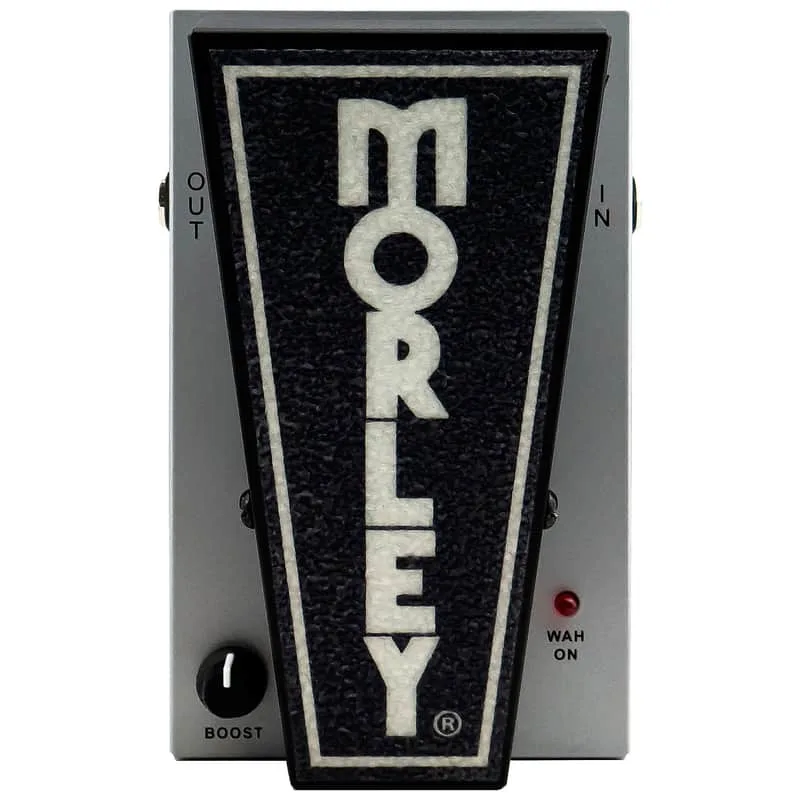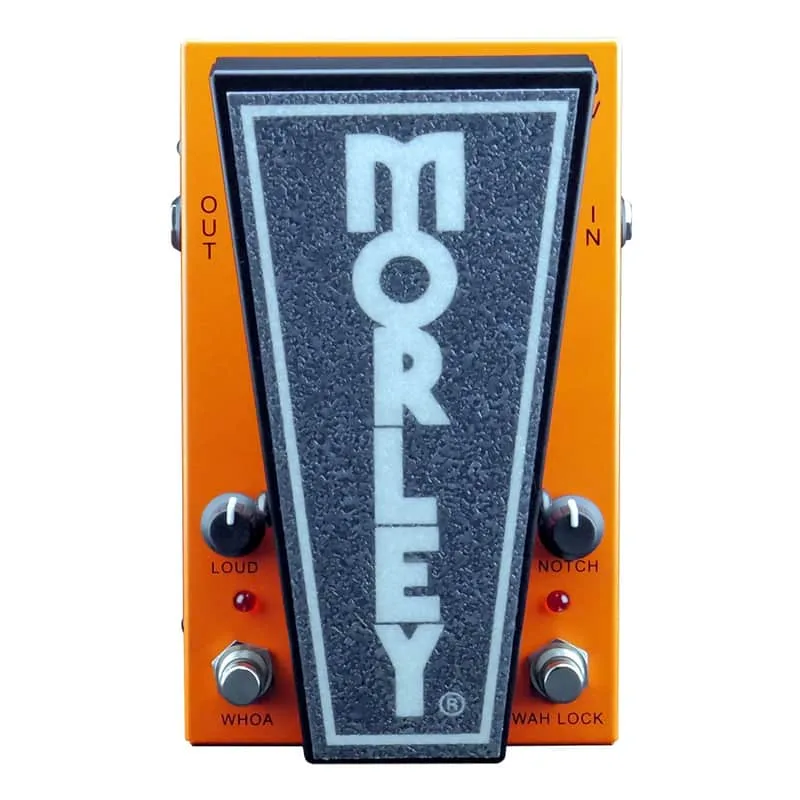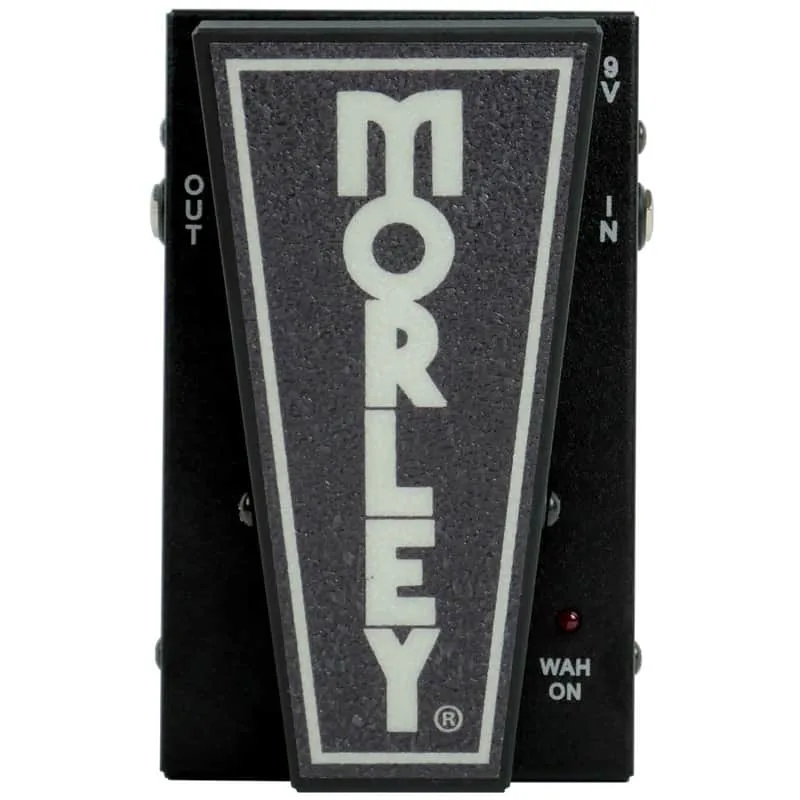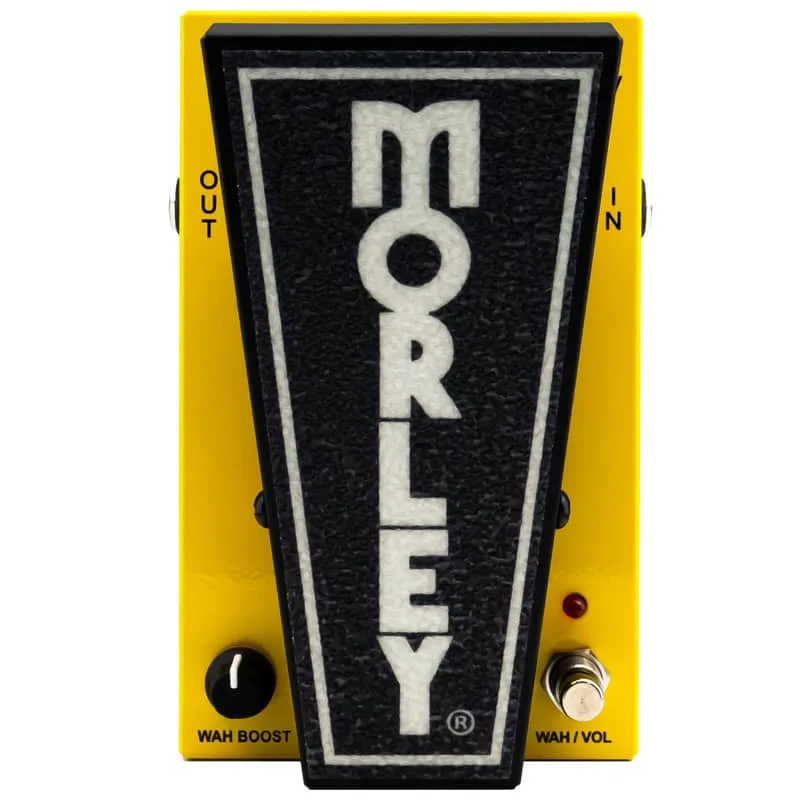


The Morley 20/20 Power Wah is a wah pedal from Morley: a switchable, optical wah with a wide sweep and what the maker calls a vintage tone, plus a built-in 20 dB clean boost1. It is a pedalboard-friendly remake of a circuit with real history. As Morley tells it, the Power Wah was introduced in the 1970s as one of the great Morley classics, and the 20/20 version carries it on in a standard pedalboard-friendly size1.
Unlike several pedals in the 20/20 line, the Power Wah is switchable rather than switchless: you turn the wah on and off with a side switch, the same side switch activation Morley used on its classic pedals2. Inside is the same approach Morley uses across the line, an optical circuit that reads the treadle position with light rather than a mechanical potentiometer, so there is no pot to wear out.
What it does to your sound
Morley describes the 20/20 Power Wah as a wah with a wide sweep and vintage tone, and the Power Wah line as traditional wah tone14. In Sweetwater's demo video of the pedal, the presenter characterized the wah as a little harsher than some other wah pedals, which suits players who want the effect to cut through rather than sit politely behind the band2.
The built-in boost is the other half of the pedal. The Boost knob allows up to 20 dB of clean boost in wah mode1, which you can use to push a solo forward or level out in the mix. Sweetwater's demo put it simply:
"with the boost feature that gives you up to 20 DB"
The controls
The 20/20 Power Wah keeps its control set minimal, in keeping with the original.
| Control | What it does |
|---|---|
| Treadle | Sets the wah position across the sweep |
| Side switch | Turns the wah on and off, as on Morley's classic pedals2 |
| Boost knob | Up to 20 dB of clean boost in wah mode1 |
Silent switching is part of the design. Morley says the pedal uses silent switching to prevent pops and noise1, and the Sweetwater demo adds that silent switching ensures zero pops reach your amp2.
The buffer, and why it is not true bypass
The 20/20 Power Wah is not a true bypass pedal. Morley fits it with a 20/20 Buffer circuit that the maker says prevents signal loss and maintains tone1. In the Sweetwater demo, Morley's representative noted that all 20/20 wah pedals come with a buffer2, so this is a line-wide feature rather than something unique to the Power Wah.
For a player, the practical difference is this: a buffered pedal always has a small active circuit in the signal path, even when the effect is off, which keeps your tone from dulling across long cable runs and crowded boards. Players who want the guitar completely disconnected when the pedal is off will want to know this before choosing it.
Power and connections
The pedal runs on one 9-volt battery, or on the optional Morley 9V adapter. Morley says it is compatible with most 9V adapters1, so a typical pedalboard power supply will run it. Gearnews' coverage of the 20/20 line at launch likewise reported that the pedals are powered by a 9V battery or external DC power supply5.
The 20/20 Power Wah takes a battery, unlike many compact wahs that dropped the battery compartment to save space. If you run it on a daisy chain, Morley only promises compatibility with "most" 9V adapters, not all of them1.
Where it came from
The Power Wah dates back to the 1970s, when Morley introduced it as one of its classics1. The 20/20 version arrived in 2019 as part of a wider refresh of Morley's wah line. Morley's press release for the launch described the Power Wah as carrying a 20 dB wah boost control, with a street price of $1393. Guitar World's launch coverage listed the same figures, the Power Wah at $139 and the Power Wah Volume at $159, each packing a 20 dB wah boost4. Premier Guitar's news story on the updated line noted the Power Wah's traditional wah tone and its Midnight Pearl Blue paint job6.
The 20/20 name refers to the size. These are smaller, board-friendly versions of Morley's full-size classics, built in the USA27 in a cold-rolled steel housing1.
The 20/20 family and its versions
The Power Wah is one pedal in a larger 20/20 range. Here is how the siblings compare.
| Pedal | What it is | How it differs from the Power Wah |
|---|---|---|
| 20/20 Power Wah | Switchable optical wah with 20 dB clean boost1 | The subject of this page |
| 20/20 Power Wah Volume | Same wah plus a smooth audio volume taper8 | Adds volume pedal function |
| 20/20 Lead Wah | Switchless optical wah for high gain, wider sweep, low-end boost, internal Wah Level trimpot910 | Switchless, voiced for high gain, no boost knob |
| 20/20 Wah Boost | Switchless optical wah with 20 dB boost11 | Switchless; boost and wah activate together in one step12 |
| 20/20 Bad Horsie | Switchless optical wah, same tone and features as the previous Bad Horsie3 | Switchless, based on the Bad Horsie circuit |
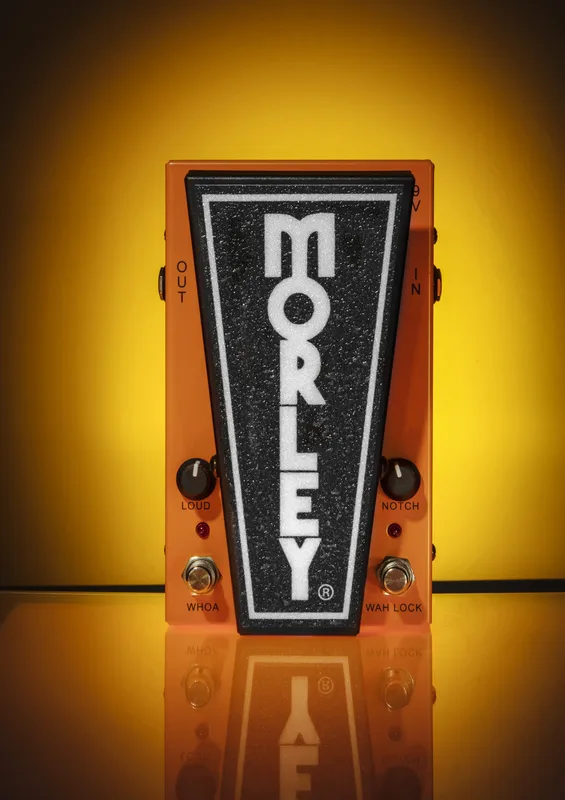
| 20/20 Wah Lock | Switchless wah with three modes: Wah, WHOA and Wah Lock, plus a Notch knob13 | Switchless, with a lockable fixed filter |
| 20/20 Power Fuzz Wah | Fuzz circuit before the wah circuit, Level and Intensity controls, Vintage/Modern fuzz switch1415 | Adds fuzz instead of a clean boost |
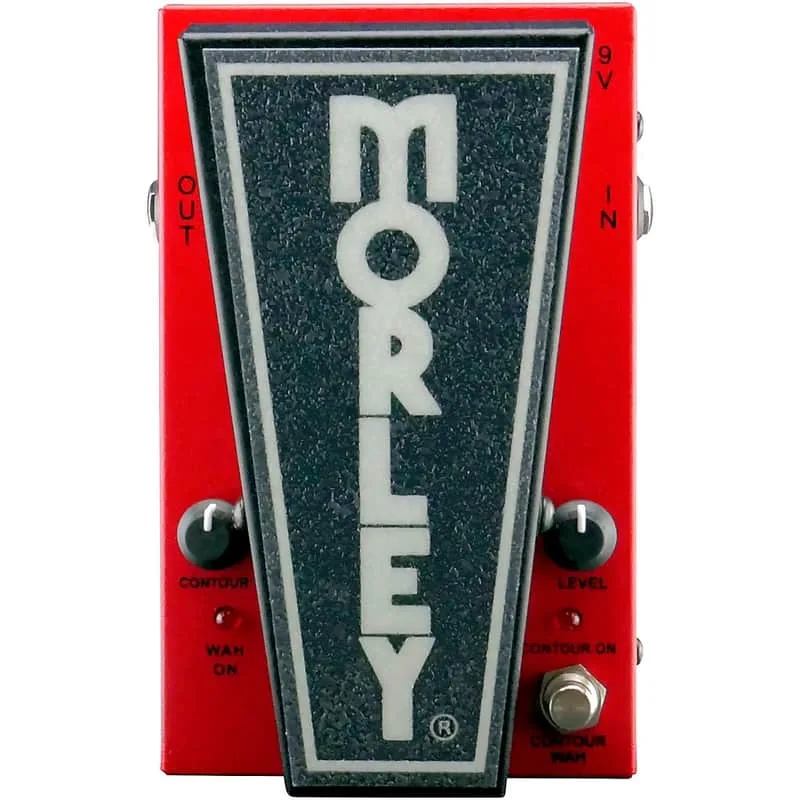
| 20/20 Classic Switchless Wah | Switchless classic wah, $13916 | Switchless, no boost |
| 20/20 Distortion Wah | Wah with distortion | Discontinued and no longer available17 |
A few of these are worth a closer look from a Power Wah buyer's point of view.
The Power Wah Volume is the closest sibling: the same Power Wah circuit with its vintage tone, wide sweep and 20 dB clean boost, plus a smooth audio volume taper8. Delicious Audio described it as the classic Morley Power Wah with a smooth audio volume function, at a $139 street price18. In a Morley-hosted review, Cesar Huesca said he had used the previous classic-size version for the past decade and was excited to have the newer, smaller version19.
The Wah Boost covers similar ground to the Power Wah but in switchless form. Premier Guitar's review described it as re-imagining the Power Wah Boost as a more compact pedal, with switchless operation that makes activating the boost and wah together an easier one-step process12. It listed the street price at $15912.
The Power Fuzz Wah is the big tonal departure. Where the Power Wah adds clean volume, the Power Fuzz Wah puts a fuzz circuit before the wah circuit, just like the original14. In Sweetwater's demo, the fuzz comes with Level and Intensity controls, a Vintage/Modern switch (Vintage recreating the old-school cut-speaker sound of the original, Modern giving more presence and mid-range), a Wah Level control on the left side, and a switch on the right side to engage the fuzz20.
What reviewers said
Published coverage of the 20/20 line at launch was broadly positive about the concept. MusicRadar described the three US-made wah pedals unveiled at the launch as a trio from the new 20/20 lineup7. Guitar World's later coverage of the expanded line, which added the Wah Lock, Wah Boost and Lead Wah, called them four tricked-out wah pedals21.
Sweetwater's demo videos remain the most detailed published walkthroughs of the Power Wah's sound and operation, covering the side switch activation, the boost, the buffer and the silent switching2.
Videos
Sweetwater
Morley
Sean Pierce Johnson
Questions
Does the Morley 20/20 Power Wah take a battery?
Yes. Morley powers it with one 9-volt battery, or you can use the optional Morley 9V adapter instead. The maker says it is compatible with most 9V adapters, so a standard pedalboard power supply will run it.
Is the Morley 20/20 Power Wah true bypass?
No. The 20/20 Power Wah is not described as true bypass. It uses a 20/20 Buffer circuit that Morley says prevents signal loss and maintains tone, along with silent switching designed to keep pops and noise from reaching your amp.
How much clean boost does the 20/20 Power Wah have?
The Boost knob allows up to 20 dB of clean boost in wah mode, according to Morley. A Sweetwater demo of the pedal puts it the same way: the boost feature gives you up to 20 dB.
What does the buffer in the Morley 20/20 do?
Morley fits every 20/20 wah pedal with a 20/20 Buffer circuit that the maker says prevents signal loss and maintains tone. In practice it keeps your guitar signal strong through long cable runs and the rest of your pedalboard.
Where is the Morley 20/20 Power Wah made?
It is made in the USA. A Sweetwater demo video of the 20/20 line says the pedals are made right in the USA, and MusicRadar's coverage of the launch likewise describes the 20/20 wahs as US-made.
What is the difference between the 20/20 Power Wah and the Power Fuzz Wah?
The Power Wah is a wah with a clean boost of up to 20 dB. The Power Fuzz Wah is a dual pedal: a fuzz circuit feeding a wah circuit, with Level and Intensity controls for the fuzz, a Vintage/Modern fuzz switch, and a Wah Level control. One adds volume, the other adds fuzz.
Sources (21)
- 20/20 Power Wah, Morley
- Morley 20/20 Power Wah Pedal Demo, Sweetwater, 2019-11-07
- 20/20 Pedals Press Release, Morley, 2019-08
- Morley showcases its 20/20 vision with 3 new wah pedals, Guitar World, 2019-08-19
- Morley 20/20 Wah Range: Classic pedals get a pedalboard-friendly update, gearnews.com, 2019-08-21
- Morley Introduces the Updated 20/20 Pedal Line, Premier Guitar, 2019-08-21
- Morley unveils a trio of wahs from their new 20/20 lineup, MusicRadar, 2019-08-20
- 20/20 Power Wah Volume, Morley
- 20/20 Lead Wah, Morley
- Next 20/20 Pedals Press Release, Morley, 2019-11
- 20/20 Wah Boost, Morley
- Boost Your Filter Sweeps with a Compact Wah Pedal, Premier Guitar, 2020-04-16
- 20/20 Wah Lock, Morley
- 20/20 Power Fuzz Wah, Morley
- Morley 20/20 Power Wah/Volume Pedal Demo, Sweetwater (YouTube), 2019-11-07
- 20/20 Classic Switchless Wah, Morley
- 20/20 Distortion Wah, Morley
- Morley 20/20 Power Wah/Volume (with Boost), Delicious Audio, 2021-01-18
- Cesar Huesca Reviews the 20/20 Power Wah Volume, Morley, 2024-05-29
- Morley 20/20 Power Fuzz Wah Pedal Demo, Sweetwater, 2019-11-22
- Morley extends its 20/20 vision with 4 tricked-out wah pedals, Guitar World, 2019-11-19