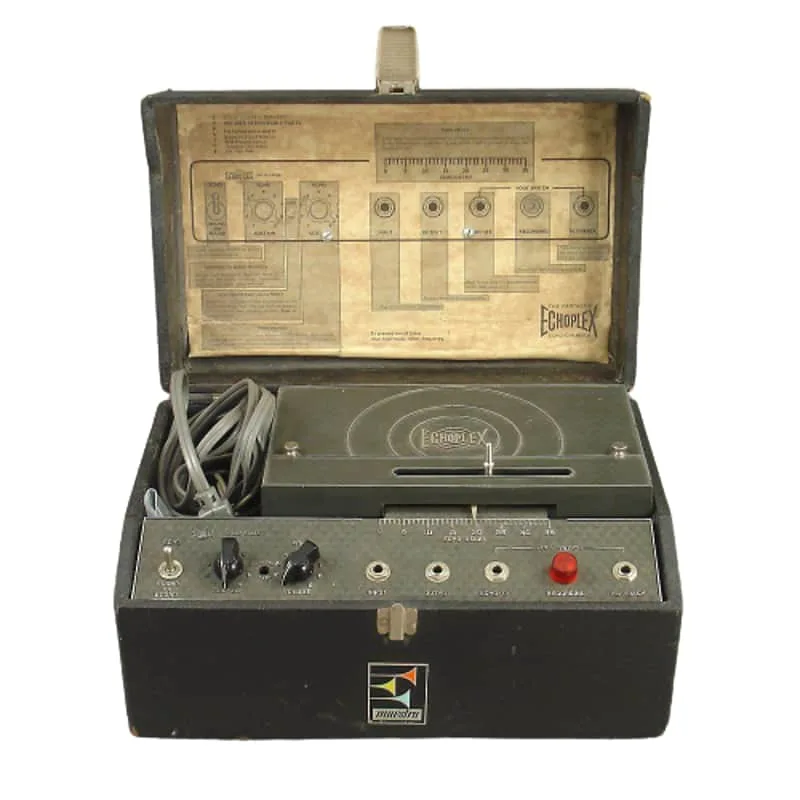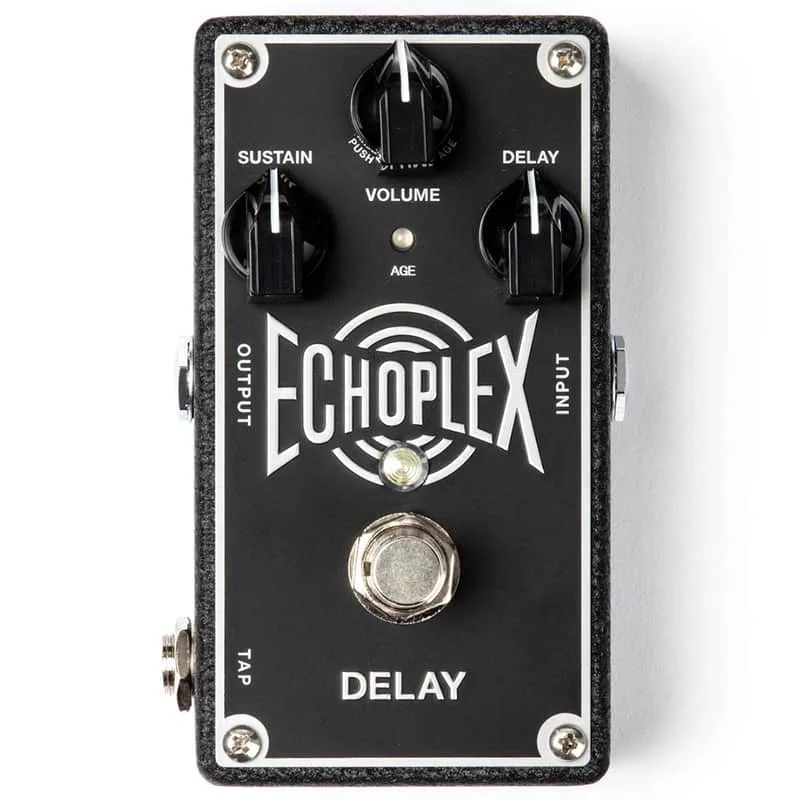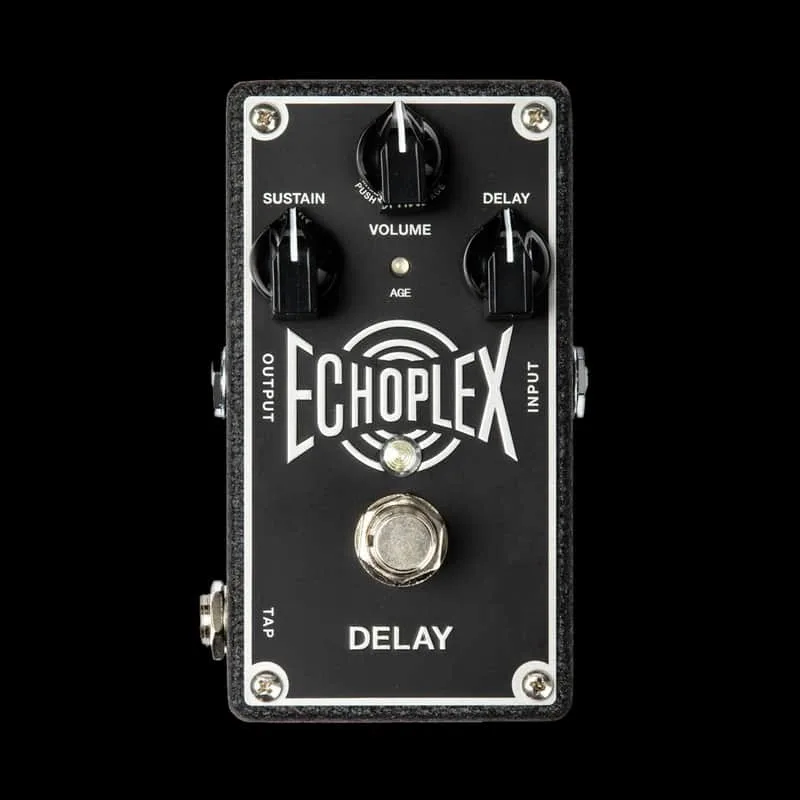


The MXR EP103 Echoplex Delay is a compact digital delay pedal from MXR that recreates the sound of the Maestro Echoplex EP-3, the tape echo machine from the 1970s whose preamp added color and bite to the signal passing through it123. Dunlop's manual describes it as delivering "Vintage Echoplex EP-3 tape echo warmth and modulation"1, and Premier Guitar called it "the first compact digital stompbox to wear the Echoplex name"2.
Where the original EP-3 was a tape machine with a single head and a slider for setting delay times, the EP103 puts the same echo effects and controls into a small pedal format4. It carries a street price of $199 as listed by Premier Guitar in 20212.
Analog or digital?
The EP103 is a digital pedal. Stompbox Book's history of the Echoplex notes that Dunlop's EP103 Echoplex Delay Pedal "is also a digital one"6. Guitar World's tape echo buying guide lists its type as "Analog/Digital"7, which reflects a hybrid arrangement: Pedal of the Day reports that "The EP103 features an all-analog, hi-fi dry signal path, for a crystal clear signal when the pedal is bypassed"5. So the repeats are digital while your dry signal stays analog end to end. The manual also lists audiophile quality audio paths and a 96 kHz sampling rate among its specifications1.
The controls
The EP103 keeps the EP-3's control set: three knobs and a footswitch.
| Control | What it does |
|---|---|
| DELAY | Sets delay time, 65 to 750 ms1 |
| VOLUME | Sets output level; push and hold for about 2 seconds to enter and adjust Age mode45 |
| SUSTAIN | Sets the number of repeats5 |
The Sustain control also approximates the odd taper of the EP-3's own sustain control, with self-oscillation available at maximum settings, as Premier Guitar's reviewer noted2.
Age mode
The Volume knob doubles as a push-button that activates Age mode, which introduces tape-warble-simulating modulation and a filtering effect that approximates tape degradation2. Guitar World describes what it does in use:
"I did compare it to my own early-'70s Maestro EP-3, and I was very impressed with how close the MXR came to nailing the"42
Premier Guitar's reviewer found that activating Age mode "darkens the repeats, adds cool coloration, and at times even seems to lend randomness" to the modulation2. Delicious Audio's delay roundup puts it more bluntly: "The tiny 'Age' control makes the repeats increasingly degraded"8. Once dialed in, the final Age setting can be locked in and accessed again by pressing the Volume control4.
In standard mode, the modulation sounds good, though the Premier Guitar reviewer noted that single-coil pickups and bright amps can highlight a faint regularity in the modulations2.
Wet mode
The manual also describes a Wet mode, selectable via Startup Mode, that sends only the wet signal to your amplifier1, useful if you want to blend the repeats elsewhere in your chain.
Delay time and tap tempo
The Delay knob covers 65 to 750 ms1. For longer delays and for syncing repeats to a tempo, the pedal includes a Tap jack for the optional MXR M199 Tap Tempo switch4. With that switch connected, the maximum delay time extends to about four seconds25. Guitar World's tape echo guide highlights the practical benefit: "you also have the option of tap tempo, allowing you to sync up your delay perfectly without any fuss"7.
On the original EP-3, players set delay times with a slider, and in Sweetwater's demo video Don Carr compares the experience directly: "it's like using the delay time slider on the old ep3"9.
How it compares to the original EP-3
The EP103 offers the same echo effects and controls as the original EP-3 Echoplex tape echo unit, in a compact pedal format4. Reviewers have compared the two directly. Premier Guitar's reviewer set it against an early-'70s Maestro EP-3 and "was very impressed with how close the MXR came to nailing the Maestro's complex overall sound picture," while noting that "the dynamic range is narrower than on my EP-3, but it adds impressive tone variations"2.
Guitar World's reviewer was equally direct about how it stacks up against other recreations:
"Most digital emulations of this effect sound comparatively flat, but the EP103 absolutely nails the EP-3's unique character"4
Premier Guitar summed up the pedal as "an excellent delay and an authentic homage to the Maestro Echoplex EP-3 and it's many quirks"2.
Sounds and pairing
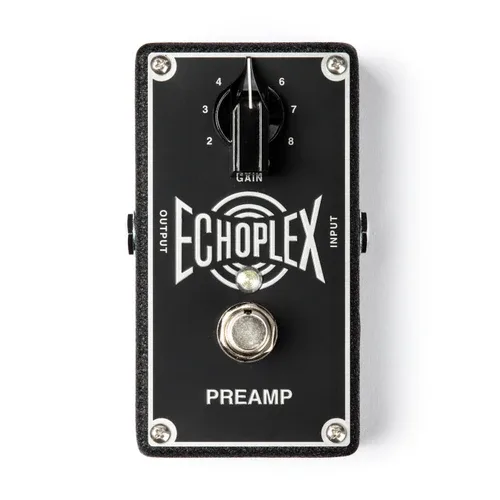
Pedal of the Day describes the range of tones available: "If you want dark, brooding repeats, but also the option to have bright, clear delay tones, and a mix of everything in between," the pedal covers that ground5. The same review suggests it pairs well with the Dunlop EP101 Echoplex Preamp, which reproduces the preamp side of the original machine5.
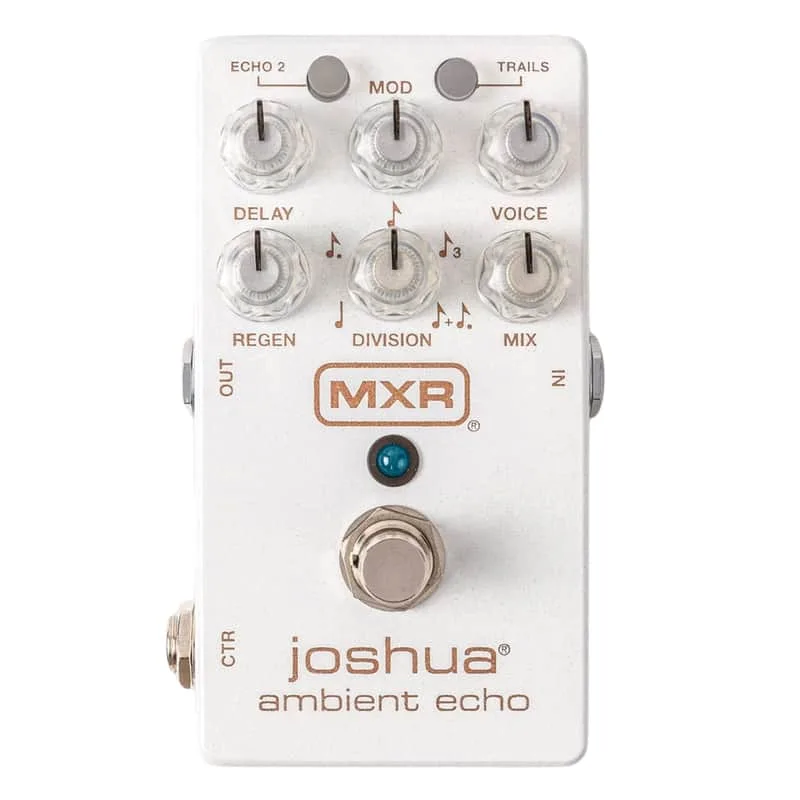
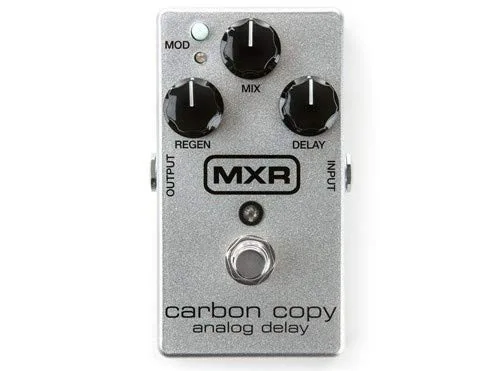
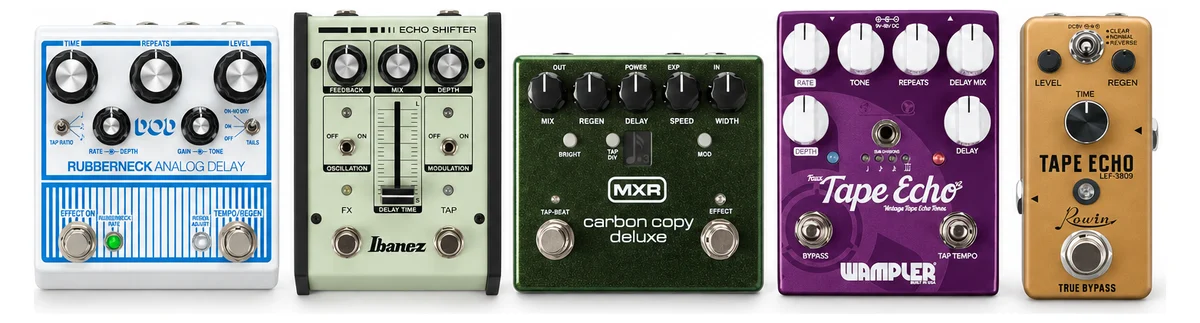
Players looking for a fully analog alternative in the MXR line can compare the EP103 against the MXR Carbon Copy family of analog delays, or the stereo MXR Joshua Ambient Echo for rack-style ambient tones.
Videos
ProGuitarShopDemos
Premier Guitar
Sweetwater
Questions
Is the MXR EP103 Echoplex Delay analog or digital?
It is a digital delay. The repeats are digital, but the dry signal path is all analog, so your unprocessed signal stays clean when the pedal is bypassed. Guitar World's buying guide lists its type as Analog/Digital, reflecting that hybrid arrangement.
How long is the delay time on the EP103?
The Delay knob provides 65 to 750 ms of delay time, according to the Dunlop manual. With the optional MXR M199 Tap Tempo switch connected to the Tap jack, the maximum delay time extends to around four seconds.
What does age mode do on the EP103?
Age mode simulates the sonic qualities of an aging original EP-3. It darkens the repeats, adds coloration, and increases wow and flutter modulation that replicates the sound of worn-out tape. You set it by holding the Volume knob down for about two seconds, and the setting can be locked in and recalled by pressing the Volume control.
Can the EP103 reach a four-second delay?
Yes, but not with the Delay knob alone. The knob tops out at 750 ms. Connecting the optional MXR M199 Tap Tempo switch to the Tap jack extends the maximum delay time to about four seconds.
How is the EP103 different from the original Echoplex EP-3?
The EP103 is a compact digital pedal that offers the same echo effects and controls as the original EP-3 tape echo unit. Premier Guitar's reviewer found its dynamic range narrower than a real EP-3 but was very impressed with how close it came to the Maestro's overall sound, and noted the sustain control approximates the odd taper of the EP-3's sustain control.
Sources (9)
- EP103.pdf, Dunlop Manufacturing, Inc., 2019
- MXR EP103 Echoplex Delay Review, Premier Guitar, 2017-01-16
- Axion JFET Preamp / Echoplex EP-3 Preamp, Aion FX, 2025-03-28
- Review: Dunlop EP103 Echoplex Delay Pedal, Guitar World, 2016-09-07
- Dunlop Electronics EP103 Echoplex® Delay, Pedal of the Day, 2018-01-19
- Echoplex, Stompbox Book (stompboxbook.com), 2019-03-03
- Best tape echo pedals: Nail the warm sound of tape delay, Guitar World, 2023-02-07
- The 3 Best Delay Pedals Per Type, In 2023, Delicious Audio (delicious-audio.com), 2023-08-25
- Catalinbread Belle Epoch Deluxe Tape Echo Demo, Sweetwater, 2021-10-31