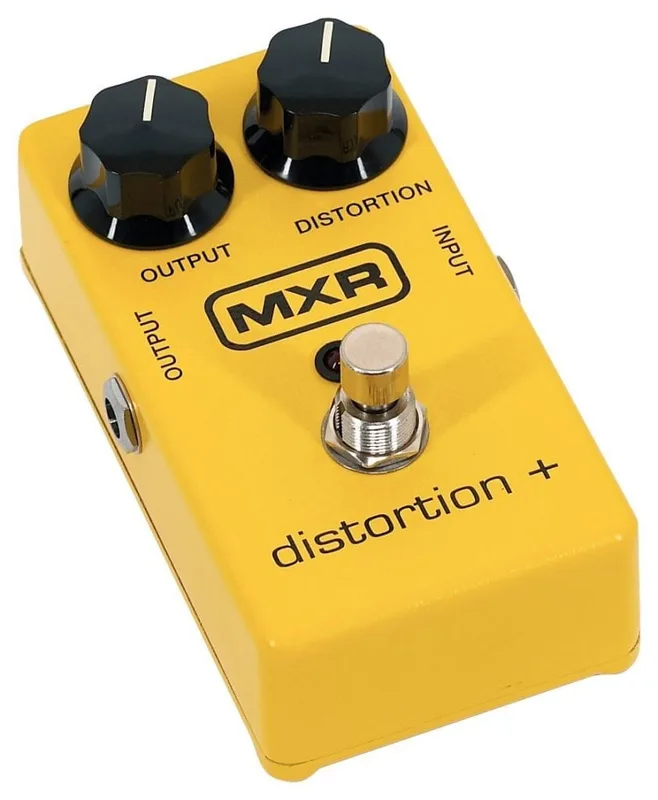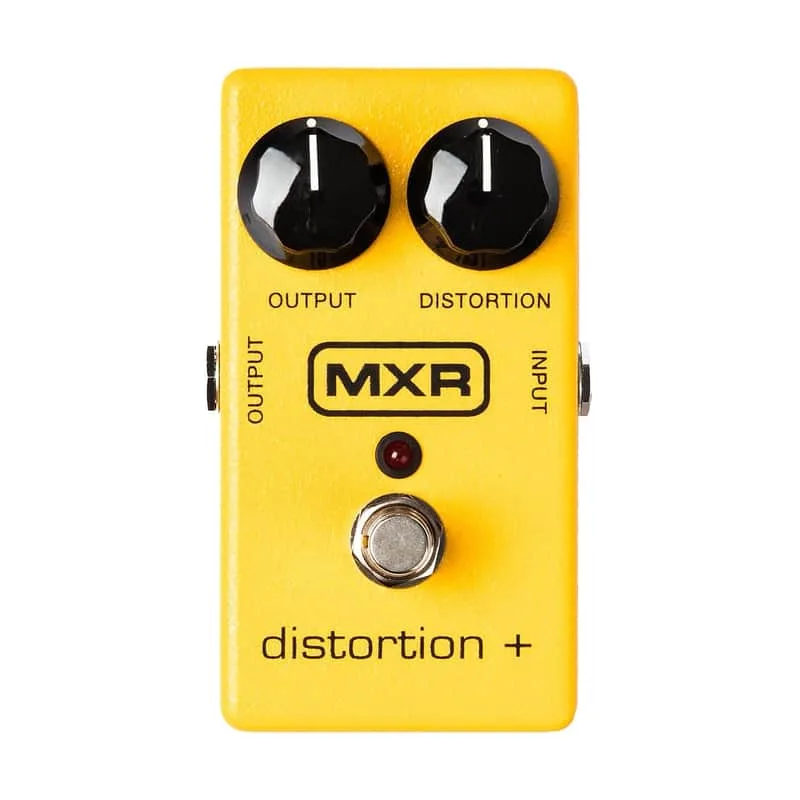


The MXR M104 Distortion+ is a distortion pedal made by Dunlop Manufacturing, Inc. It is one of the simplest distortion pedals going: two knobs, a footswitch and a red LED, built around what Dunlop describes as "organic, germanium-powered clipping." The maker characterizes the sound as "overdrive with just the right flavor of non-brittle signal breakup." Tone Island's Adam Connell notes it was launched in the 70s and, in his words, "dominated the pedal market ever since."1
Controls
The Distortion+ has just two controls, which is most of what you need to know about playing it21:
| Control | What it does |
|---|---|
| OUTPUT | Controls the overall volume of the effect1 |
| DISTORTION | Controls the amount of distortion1 |
The footswitch toggles the effect on and into bypass, and a red LED indicates when it is on.1
Sound and gain range
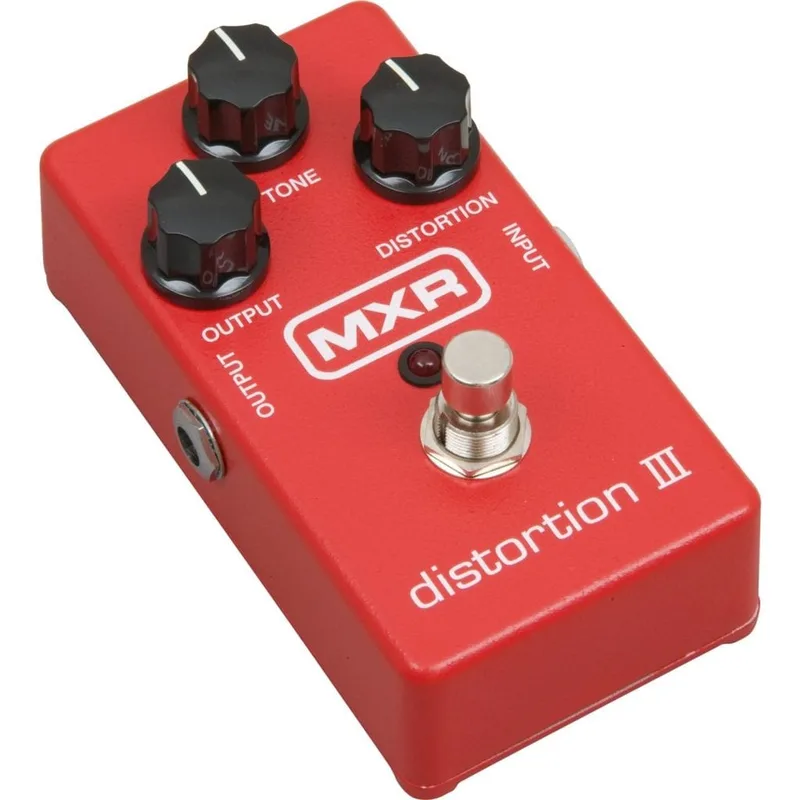
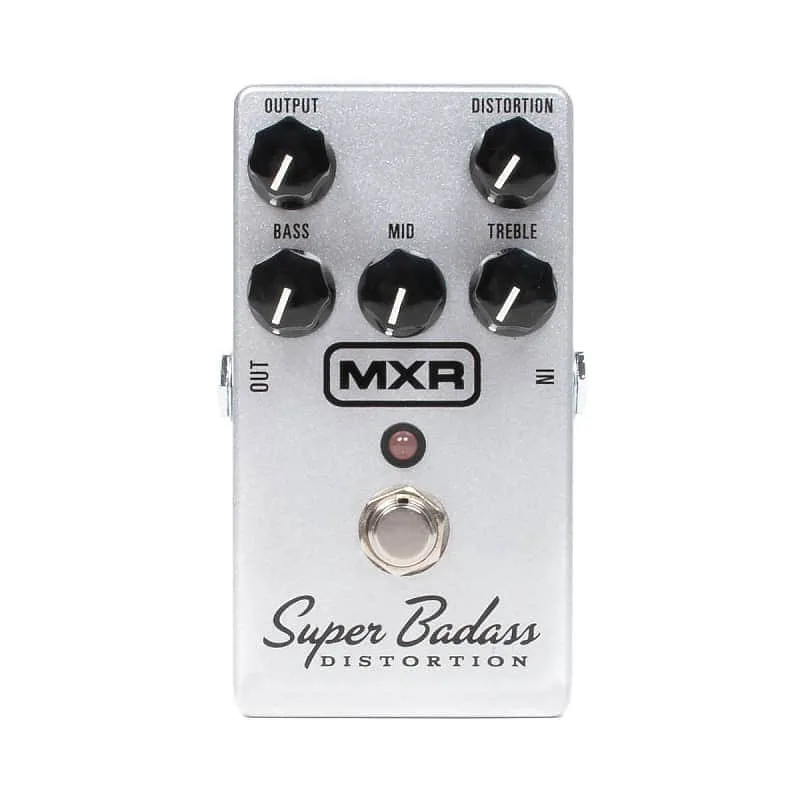
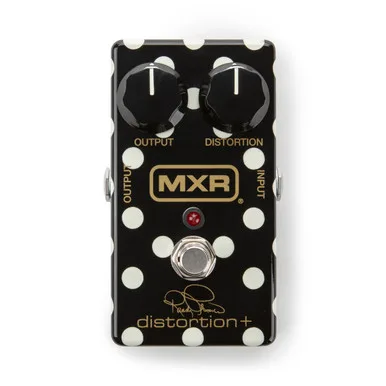
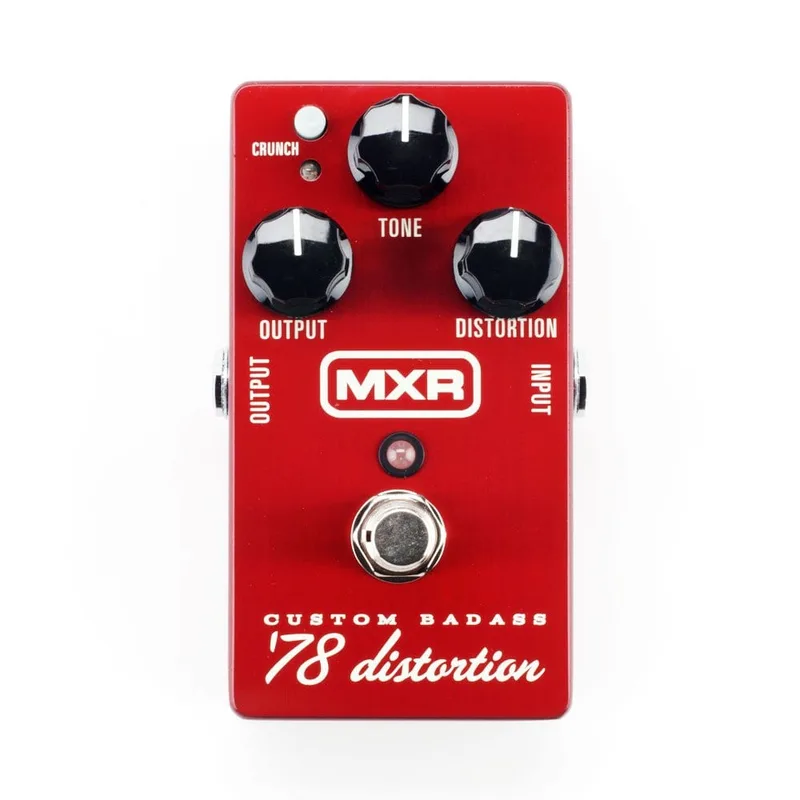
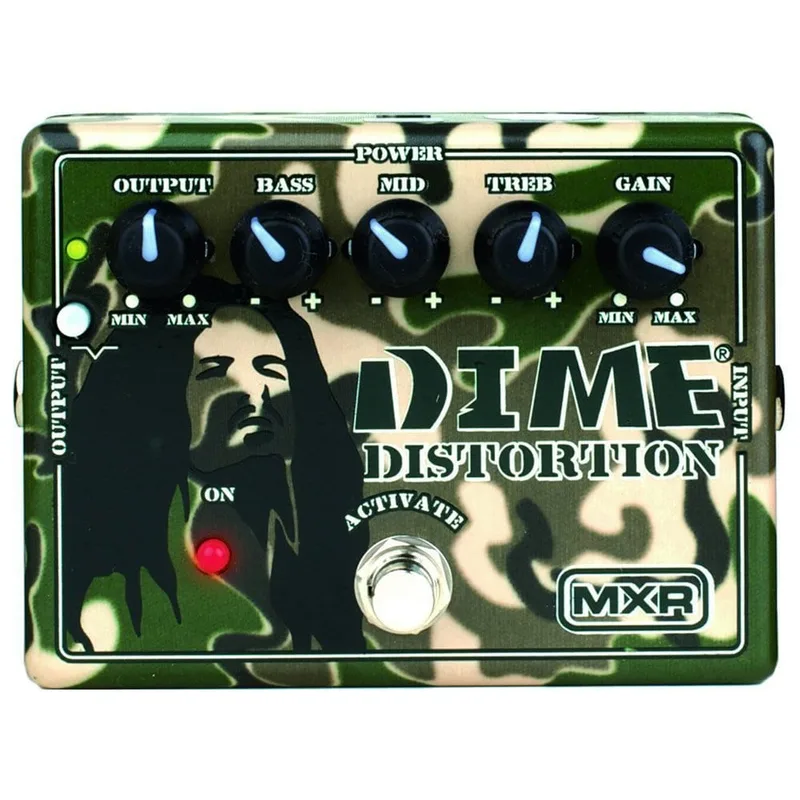
The pedal's distortion gain runs from 10 dB to 45 dB at 1 kHz, so it covers a wide sweep from light breakup to a lot of gain with one knob. Dunlop's own description leans toward the overdrive end of that range, calling it overdrive with a non-brittle flavor of signal breakup.1 If you want more controls than two knobs, MXR's own line runs from the MXR Distortion III to the MXR M75 Super Badass Distortion, and the Randy Rhoads signature models such as the MXR Randy Rhoads Distortion+ build on the Distortion+ name. For the wider field, see Distortion Pedals.
Power and connections
The Distortion+ runs on 9 volts DC and draws 2.5 mA, one of the lightest loads you will put on a power supply. It also takes one 9-volt battery, installed by removing the bottom plate.1
The pedal uses hardwire bypass rather than buffered or true bypass switching, per Dunlop's manual.1
Hooking it up is the standard two-cable arrangement: run a cable from your guitar to the pedal's INPUT jack, and another cable from the OUTPUT jack to your amplifier.1
Specifications
All figures below are from Dunlop's manual for the M104.1
| Specification | Value |
|---|---|
| Nominal input level | -22 dBV |
| Input impedance | 1 MΩ |
| Output impedance | 25 kΩ (output control at mid position) |
| Maximum output level | -14 dBV |
| Noise floor | -74 dBV, A-weighted, all controls at maximum clockwise position |
| Distortion gain | 10 dB to 45 dB, 1 kHz |
| Power supply | 9 volts DC |
| Current draw | 2.5 mA |
| Battery | one 9-volt battery |
| Bypass | hardwire |
The 1 MΩ input impedance means the pedal puts very little load on your guitar's pickups, and the 2.5 mA current draw means it will run happily on a battery for a long time or on any single output of a pedalboard supply1.
Videos
ProGuitarShopDemos
Pat Posse
jimdunlopusa
Questions
Does the MXR Distortion+ run on a battery?
Yes. According to Dunlop's manual, the MXR Distortion+ is powered by one 9-volt battery, and you remove the bottom plate to install it. It also runs on a 9 volts DC power supply, and its current draw is very low at 2.5 mA, so a battery lasts a long time and the pedal is easy on any standard supply.
How much current does the Distortion+ draw?
Dunlop's manual lists the current draw at 2.5 mA at 9 volts DC. That is low enough that the pedal can run on a battery and sits comfortably within the budget of almost any pedalboard power supply output.
What does the Output knob do on the Distortion+?
The OUTPUT knob controls the overall volume of the effect, so you set how loud the pedal sits relative to your clean signal. The DISTORTION knob next to it controls the amount of distortion. Those two knobs are the pedal's only controls.
How much gain does the MXR Distortion+ have?
The manual specifies a distortion gain of 10 dB to 45 dB at 1 kHz. That range runs from a mild boost into breakup territory up to a large amount of gain, which is why the pedal works for everything from light overdrive to fuller distortion.
What is the input impedance of the MXR Distortion+?
Dunlop's manual lists the input impedance at 1 megohm, which is high enough that the pedal presents little load to your guitar's pickups. The output impedance is 25 kΩ with the output control at its mid position.
Sources (2)
- M104.pdf, Dunlop Manufacturing, Inc., 2019
- 13 Best Distortion Pedals For 2026 (Top Picks), Tone Island (toneisland.com), 2026