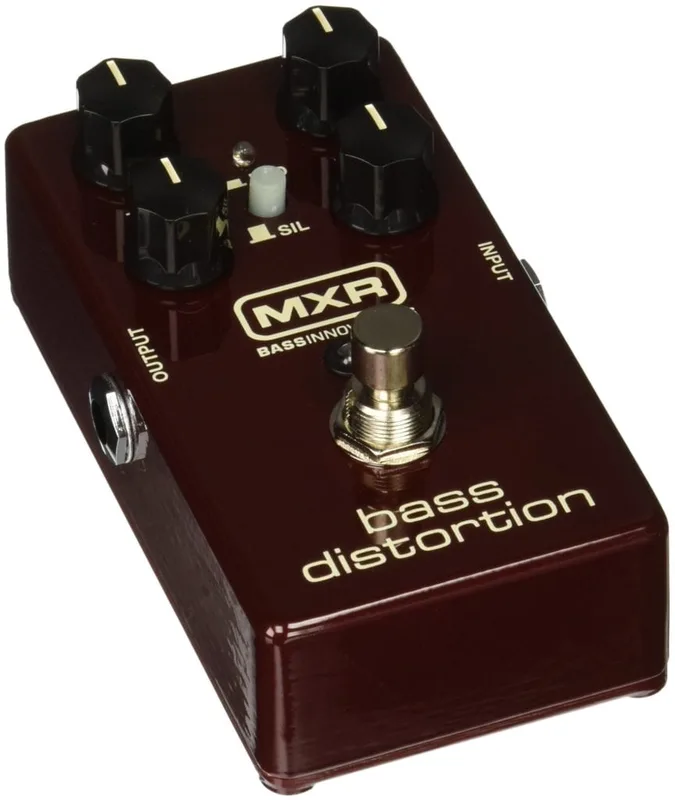


The MXR M85 Bass Distortion is a distortion pedal built for bass, released in 2015 as a collaboration between MXR and Ryan Ratajski, founder of Fuzzrocious Pedals12. MXR describes it as taking "a famously nasty sounding distortion circuit" and re-tooling it for the modern working bass player, dishing out "big gnarly tones with all the low end your bottom-dwelling heart desires"1. Its defining feature for players is a clean/dirty blend: separate Dry and Wet level controls put the mix of clean and distorted signal right at your feet1.
MXR lists the M85 as a "LEGACY PRODUCT / NO LONGER IN PRODUCTION"1. Dunlop still sells electronic replacement parts for the pedal, but only with qualified technicians in mind: if you do not have experience installing electronic parts, the company asks that your repair be performed by a qualified technician3.
The controls
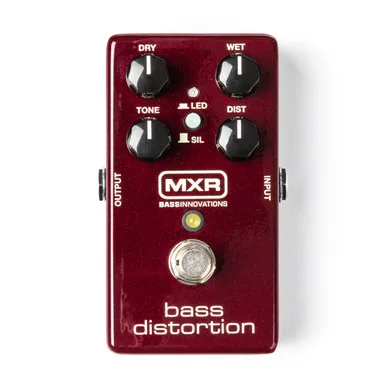
The M85 keeps its face simple: four knobs and one button4.
| Control | What it does |
|---|---|
| Dry | Sets the level of the clean signal in the mix1 |
| Wet | Sets the level of the dirty signal in the mix2 |
| Tone | A simple high cut filter for dialing back the top end; affects only the distortion signal1 |
| Distortion | Sets the distortion signal's intensity1 |
| Distortion button | Two-mode switch selecting between SIL and LED clipping14 |
The SIL and LED settings are the pedal's two voices. The default SIL setting uses silicon clipping diodes, which MXR describes as "an aggressive, biting sound and a bit of compression," while the LED setting uses LED diodes for "a more wide open sound and a nice gain bump"1. Because the Tone control only touches the distortion signal, your clean Dry signal passes through untouched, which is how the pedal keeps low end under the dirt1.
Where it came from
The M85 arrived in 2015. On the JHS Pedals YouTube channel, Josh Scott described it as "Another 2015 collaboration is this. This is the M85 base distortion with Fuzerocious"5, referring to the work with Ratajski's Fuzzrocious Pedals. MXR's own page says the company worked "closely with indie pedal phenom, bass dirt guru, and Fuzzrocious Pedals founder Ryan Ratajski" on the pedal1. A JHS Pedals blog post adds the Dunlop side of the project: "This project was initiated and managed internally by Scott Shiraki, and engineered by Sam McRae"6.
What reviewers said
In Guitar World's 2022 buying guide to distortion pedals for bass, the M85 came away with a positive verdict: "Easy to use and plenty versatile, definitely one of the best distortion pedals for bass out there"4.
A demo of the pedal from the JHS Pedals channel covers its background as a 2015 MXR and Fuzzrocious collaboration and walks through the pedal itself5.
Power and connections
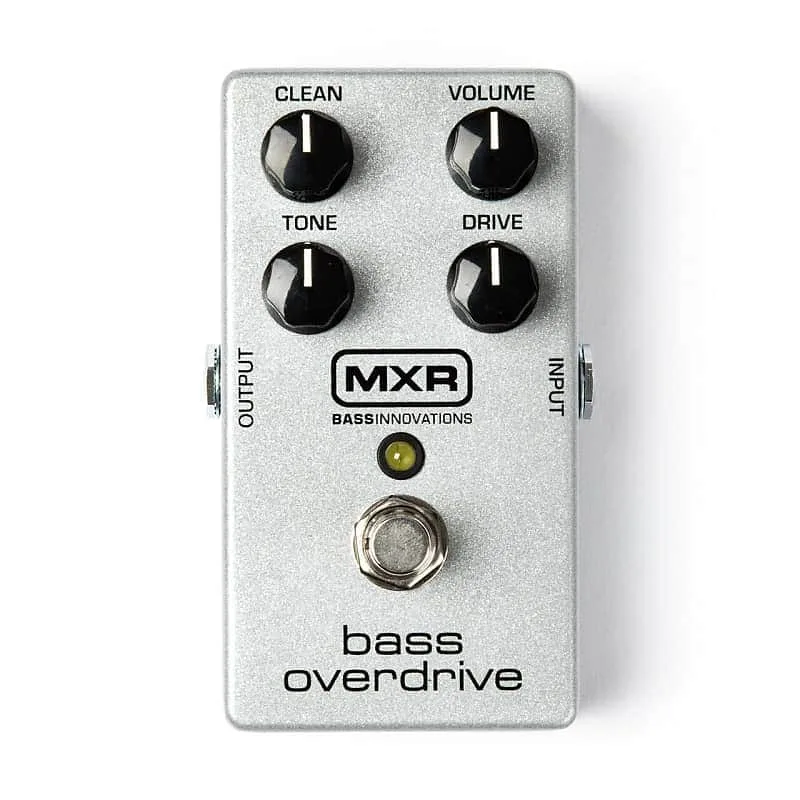
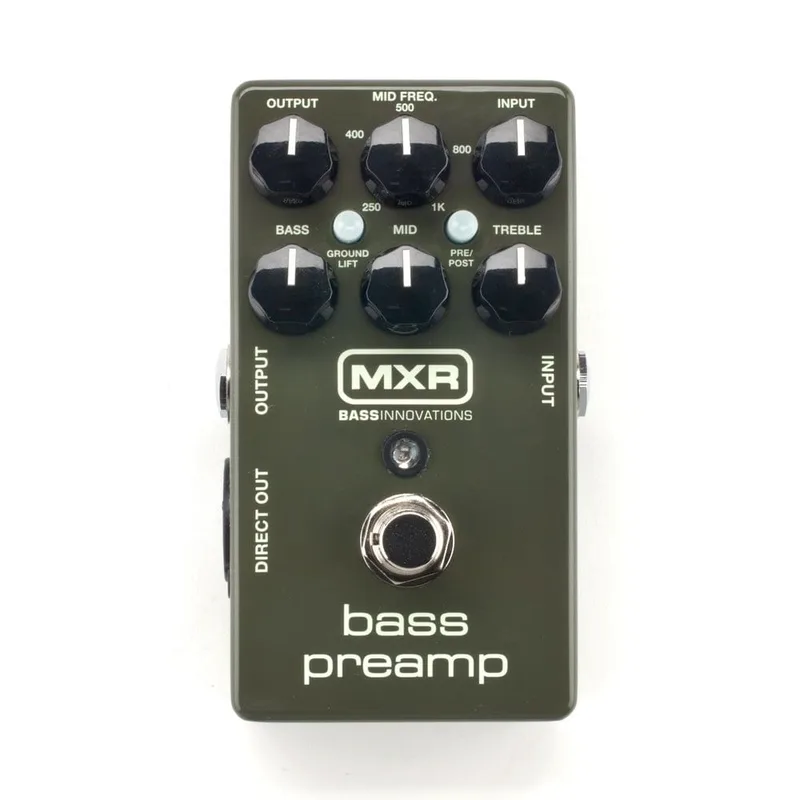
The M85 runs on 9 volts at 11mA, per Guitar World's specification listing4. MXR says it can be powered by a 9-volt battery, a Dunlop ECB003 9-volt adapter, or the DC Brick, Iso-Brick and Mini Iso-Brick power supplies, none of which are included with the pedal1. It sits in MXR's bass line alongside pedals like the MXR M89 Bass Overdrive and the MXR Bass Preamp, and among distortion pedals it is one of the company's bass-specific dirt options1.
Videos
ProGuitarShopDemos
Sweetwater
Zachary Rizer
Questions
Is the MXR M85 Bass Distortion still made?
No. MXR lists the M85 Bass Distortion as a legacy product that is no longer in production. Dunlop still offers electronic replacement parts for the pedal through its parts page, but those are sold with qualified technicians in mind, so a player without electronics experience is advised to have any repair carried out by a qualified technician.
What is the difference between the SIL and LED settings?
The two-position Distortion button selects between two clipping flavors. The default SIL setting uses silicon clipping diodes, which MXR describes as an aggressive, biting sound with a bit of compression. The LED setting uses LED diodes instead, which MXR describes as a more wide open sound with a nice gain bump.
Does the MXR M85 keep the low end clean?
It can. The pedal has separate Dry and Wet level controls, putting the clean/dirty mix right at the player's feet. The Dry control sets the level of your clean bass signal and the Wet control sets the level of the distorted signal, so you can blend as much untouched low end into the dirt as you want.
Can the M85 run on a 9-volt battery?
Yes. MXR says the pedal can be powered by a 9-volt battery, a Dunlop ECB003 9-volt adapter, or the DC Brick, Iso-Brick and Mini Iso-Brick power supplies, which are not included. Guitar World lists the power requirement as 9v at 11mA.
Who designed the MXR M85?
MXR worked closely with Ryan Ratajski, founder of Fuzzrocious Pedals, whom the company calls an indie pedal phenom and bass dirt guru. According to a JHS Pedals blog post, the project was initiated and managed internally by Scott Shiraki and engineered by Sam McRae.
Sources (6)
- MXR® BASS DISTORTION, Dunlop (jimdunlop.com)
- MXR M85 Bass Distortion Now Available, Guitar Interactive Magazine, 2015-05-19
- MXR® BASS DISTORTION, Jim Dunlop (jimdunlop.com)
- Best distortion pedals for bass: thicken up your low end, Guitar World, 2022-08-17
- How The MXR Duke Of Tone and Timmy Pedals Are A Big Deal For Boutique Pedals, JHS Pedals (YouTube channel), 2022-09-19
- ARE MASS PRODUCED PEDALS GOOD?, JHS Pedals