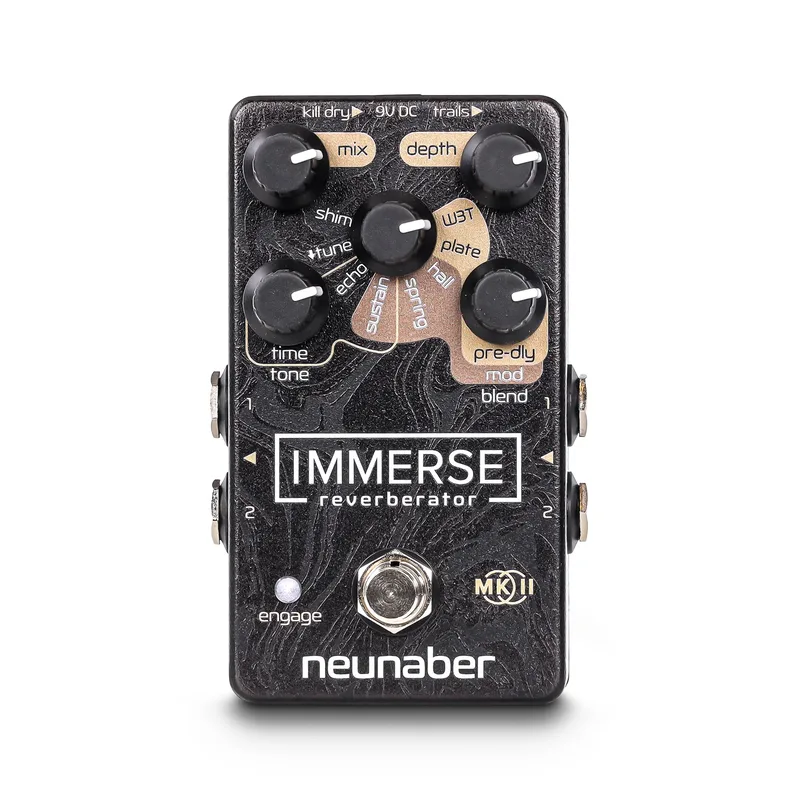


The Neunaber Immerse Reverberator is a digital, algorithm-based stereo reverb pedal from Neunaber Technology, a company that designed and manufactured its products in Orange, California1. It packs several of Neunaber's reverb algorithms into one compact pedal, selectable from a knob rather than menus, and runs true stereo in and out. The original launched in 2016 at a $225 suggested retail price2, and the Mk II followed in 2018 with redesigned circuitry, upgraded algorithms and a $249 price234.
The idea behind the pedal is simple: one box that covers the reverb sounds most players reach for, without deep editing. As the maker's product page puts it, "Eight studio reverbs. One pedal. No manual required."5
What it does
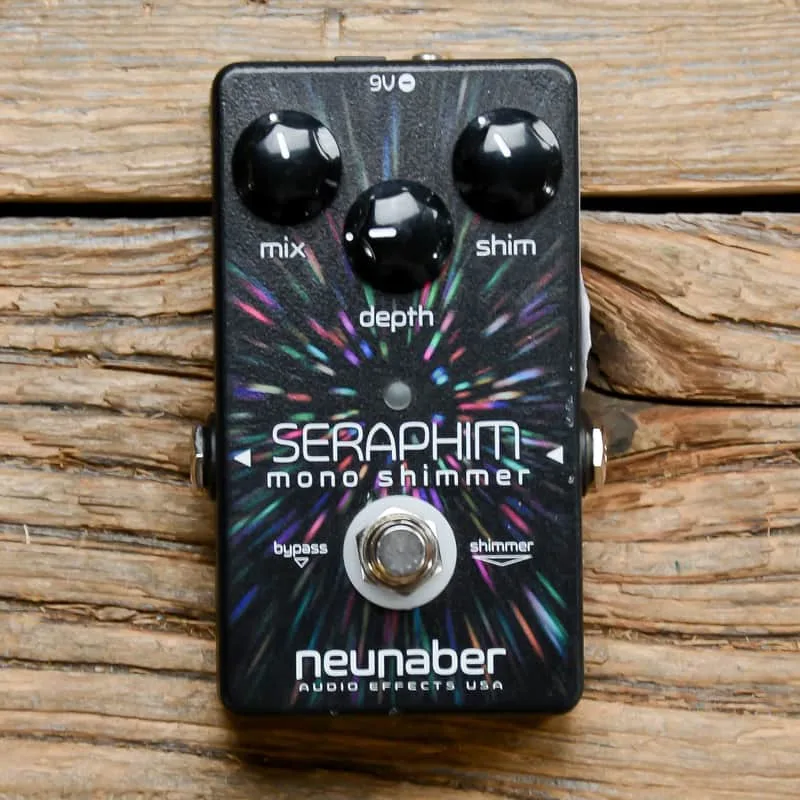
The Immerse is a multi-algorithm reverb. The original offers eight modes: WET, HALL, PLATE, SPRING, SHIMMER A, SHIMMER B, +ECHO and +DETUNE1. WET is an updated version of Neunaber's renowned algorithm, with shorter pre-delay, higher initial density and more balanced imaging1. The two Shimmer effects are both based on the company's Seraphim Shimmer pedal2.
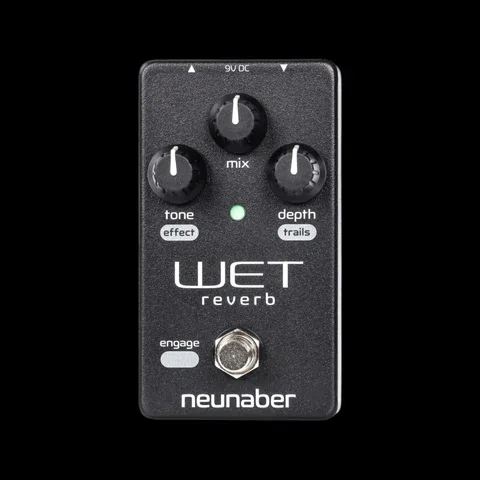
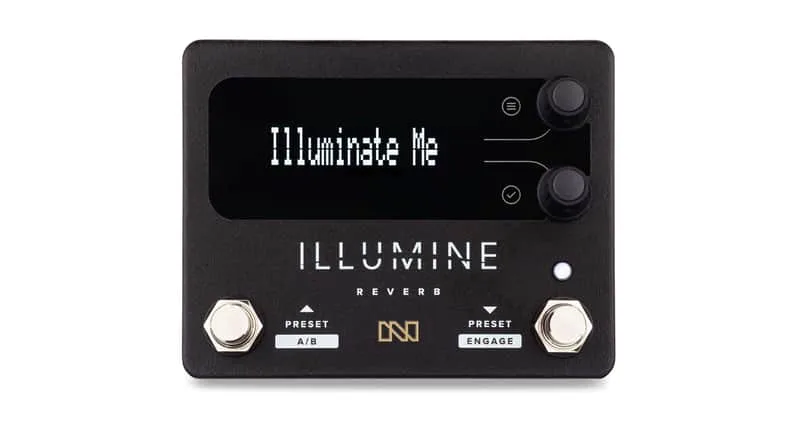
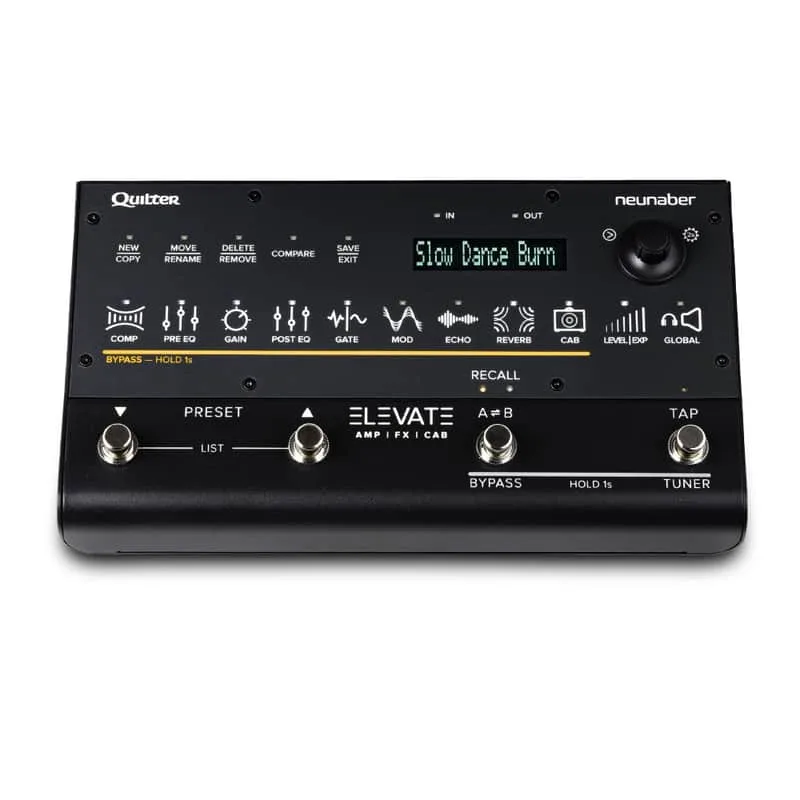
The Mk II carries the concept forward with W3T (Wet v3), Hall, Plate, Spring, Sustain, Echo, Detune and Shimmer65. W3T is the flagship: version 3 of the WET algorithm, which the manual describes as smoother decay and more three-dimensional sounding, enhancing what you play without covering it, with pre-delay up to an additional 200 ms6. The W3T algorithm is the same engineering behind the Wet Reverb and the Illumine, and it also powers the reverb block inside the Quilter Elevate amp5.
A few modes go beyond plain reverb:
- Sustain is built on the W3T reverb and can be configured as a sustain effect or virtually infinite reverb. The hold phase recycles what you play in an infinite loop, then decays during release; Time sets hold time, Depth sets release, and Mod sets modulation depth6.
- Echo adds echo and reverb together. Time adjusts echo time from 50 to 700 ms, Depth controls reverb decay and echo repeats, and Blend sets the mix between reverb and echo6.
- Detune pitch-transposes the signal slightly downward and adds that detune to a detuned reverb for a thick, chorus-like effect6.
- Plate aims for the bright, diffused sound of a physical plate reverb, with pre-delay up to an additional 200 ms6.
- Spring reproduces the distinctive "twerp" of a physical spring reverb; the Mod knob increases modulation rate for a classic vibrato-spring sound6.
The controls
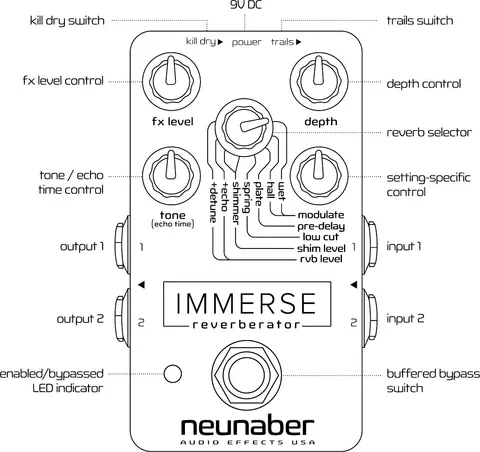
Both versions keep the control set simple. The Mk II manual describes five knobs plus a footswitch and two small switches910, and Delicious Audio lists the same five controls for the original: Effect Select, Effect Level, Reverb Depth, Tone (or Echo Time), and an Effect Adjust whose function depends on the chosen effect10.
| Control | What it does |
|---|---|
| Effect Select (center knob) | Chooses the reverb mode611 |
| Mix knob (Mk II) | Blends dry signal to effect, from 100% dry to 100% effect6 |
| Depth | Sets reverb depth (decay time); with Echo it also sets the number of repeats6 |
| Tone | Adjusts the high frequency content11 |
| Effect Adjust | Mode-dependent control (Mod, Time, Blend)610 |
| Footswitch | Engages the effect; LED lights when active16 |
| Trails switch | Lets the effect naturally trail after the pedal is bypassed; normal bypassing gives lower noise while bypassed6 |
| Kill Dry switch (Mk II) | Removes the dry signal even when bypassed; enable for parallel effect loops, disable for serial loops6 |
The big functional change on the Mk II is the Mix knob: mix is adjustable from 100% dry to 100% wet, and all modes can now go fully wet67. On the original, the Effect Level knob served the equivalent role.
Stereo, power and connections
Both pedals have two 1/4" (6.35 mm) inputs and two 1/4" outputs, and using both outputs creates a stereo signal from a mono input1. On the original, Input 1 is mono only, Input 2 accepts a stereo TRS input only, Output 1 is summed mono only, and Output 2 supplies a stereo TRS output only1. The Mk II manual cautions that Inputs 1 and 2 should not be used with two discrete signals, such as two different instruments6. The outputs are buffered and capable of driving long cables16.
There is no battery option, and the power adapter is not included. The pedal needs a standard 9 to 12 V DC center-negative supply with a 5.5 mm OD x 2.1 mm ID plug, rated 70 mA or more for the original and 80 mA or more for the Mk II16. Bypassing the effect does not lower power consumption, because it does not turn off power to the pedal1.
The original's dry-path measurements from the manual give a sense of how clean the buffer is: frequency response 20 Hz to 20 kHz at +0.1 dB / -0.5 dB, total harmonic distortion under 0.003% typical, signal-to-noise ratio 112 dB mono and 110 dB stereo (A-weighted), input impedance 1 MΩ (mono) and 2 MΩ (stereo), output impedance 500 Ω (mono) and 1 kΩ (stereo), and 0 dB gain between enabled and bypassed at mix 01.
The original and the Mk II
The original Immerse Reverberator was announced at NAMM in January 2016, available March 1 with pre-orders from February 1, at a $225 SRP2. Delicious Audio's write-up called it a pedal that "takes the most luscious of effects (the reverb) into new territories of sonic splendor"10. A UK price of £219 was listed in a 2017 Guitar.com review12.
The original Immerse Reverberator carried an SRP of $225 and became available March 1, with pre-ordering beginning February 12. The Mk II keeps the same footprint, 2.9" W by 4.6" L by 2.0" H / 73 mm W by 117 mm L by 51 mm H12, but its power requirement rises from 70 mA or more to 80 mA or more at 9 to 12 V DC, center-negative16, and its weight goes from 8.5 oz / 240 g to 8.84 oz / 251 g16. Both pedals share a Trails switch that lets reverb tails taper even after the effect has been disengaged116, and the Mk II adds a Kill Dry switch that removes the dry signal even when bypassed, for use in parallel effect loops116.
What reviewers said
Guitar World's 2019 review of the Mk II found that "the Immerse Reverberator MKII sounds extremely expressive and musical," noting that the Plate, Hall and Spring reverbs each have the distinct character that defines those effects, that the modulation of Hall, Spring and Sustain is seductively rich, and that Detune generates the lushest chorused reverb effect the reviewer had heard, with crystalline clarity overall4. The review framed it as "true pro-quality reverb effects in an affordable pedal format" with true stereo operation in addition to mono, at a $249 street price4.
Of the original, Brandon Stoner wrote for Delicious Audio: "For the player looking for a reverb that can do what you'd expect and more, this pedal is worth a solid look."11
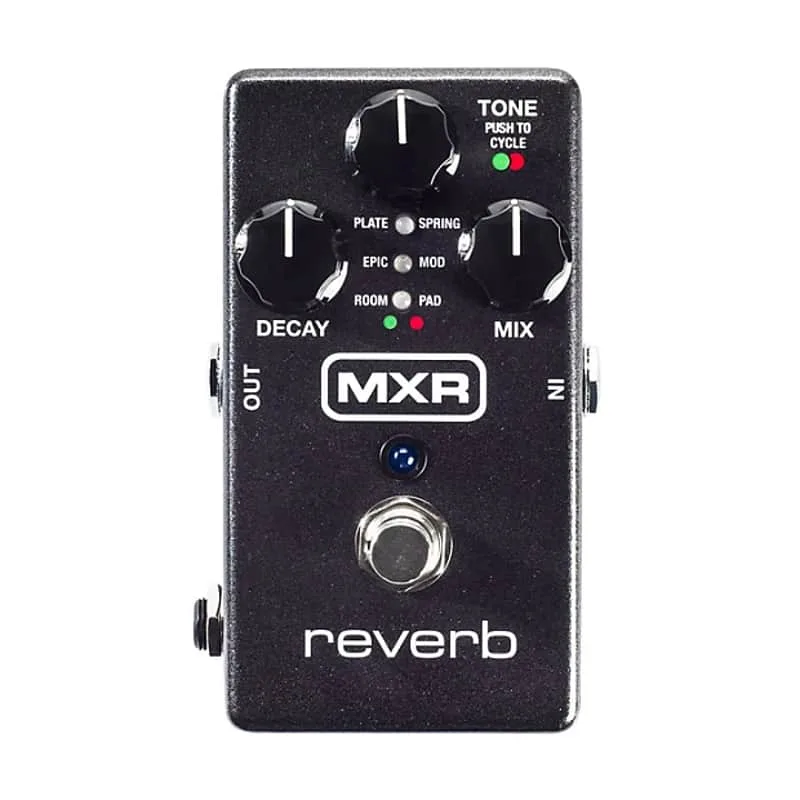
That Pedal Show compared the Immerse Reverberator head to head against the MXR M300 Reverb in an AB comparison demo13.
Videos
Pete Thorn
Pete Thorn
Neunaber Audio
Questions
Does the Immerse Reverberator have trails?
Yes. Both versions have a Trails switch that lets the reverb naturally decay after you bypass the pedal. The Mk II manual notes that normal bypassing, with trails off, results in lower noise while the pedal is bypassed, so players who want the quietest bypass can leave trails off and cut the tail instead.
Is the Neunaber Immerse true bypass?
The original Immerse Reverberator is not true bypass. It uses a high-quality buffered bypass, so the signal is always buffered whether the effect is on or bypassed, and the manual states the gain is 0 dB between enabled and bypassed at mix 0. The Mk II product page lists bypass as selectable True or Buffered.
Does the Immerse MkII work with an expression pedal or MIDI?
No. The original Immerse has no USB port, does not work with Neunaber's ExP Controller, has no expression inputs, and lacks the programmable second-switch functions of the Stereo Pedals line. The Mk II keeps the same five-knob, two-switch format, so players who need expression or MIDI control would look to other Neunaber pedals such as the Illumine.
What is the difference between Immerse MkI and MkII?
The Mk II has completely redesigned circuitry and upgraded algorithms. It adds a Mix knob that sweeps from 100% dry to 100% wet in every mode, a new Sustain effect, and a revised W3T version of the Wet algorithm. The original offered eight modes too, including WET, Hall, Plate, Spring, two Shimmers, +Echo and +Detune, but could not go fully wet in all modes.
Sources (13)
- Immerse User Guide (Original), Quilter Labs / Neunaber Technology LLC, 2016
- NAMM 2016: Neunaber's Immerse pedal promises 'stellar' stereo reverbs, MusicRadar, 2016-01-20
- Immerse Reverberator Mk II, Quilter Labs
- Review: Neunaber Immerse Reverberator MKII, Guitar World, 2019-02-14
- Immerse Reverberator Mk II, Quilter Labs (neunaber.net)
- Immerse Reverberator MkII User Guide, Quilter Labs, 2018
- Neunaber crams eight “magical stereo reverbs” into Immerse Reverberator Mk II, MusicRadar, 2018-10-08
- Neunaber Audio announces the Immerse Reverberator MKII, Guitar.com, 2018-10-09
- The Best Ambient-Shoegaze Reverb Pedals In 2024, Delicious Audio, 2024-11-15
- Neunaber, Delicious Audio, 2017-10-19
- Neunaber IMMERSE Reverberator, Delicious Audio, 2016-01-29
- Gear Of The Year 2017: Best Effects Pedal, Guitar.com, 2017-12-19
- TPS AB Comparisons, That Pedal Show, 2016-12-20