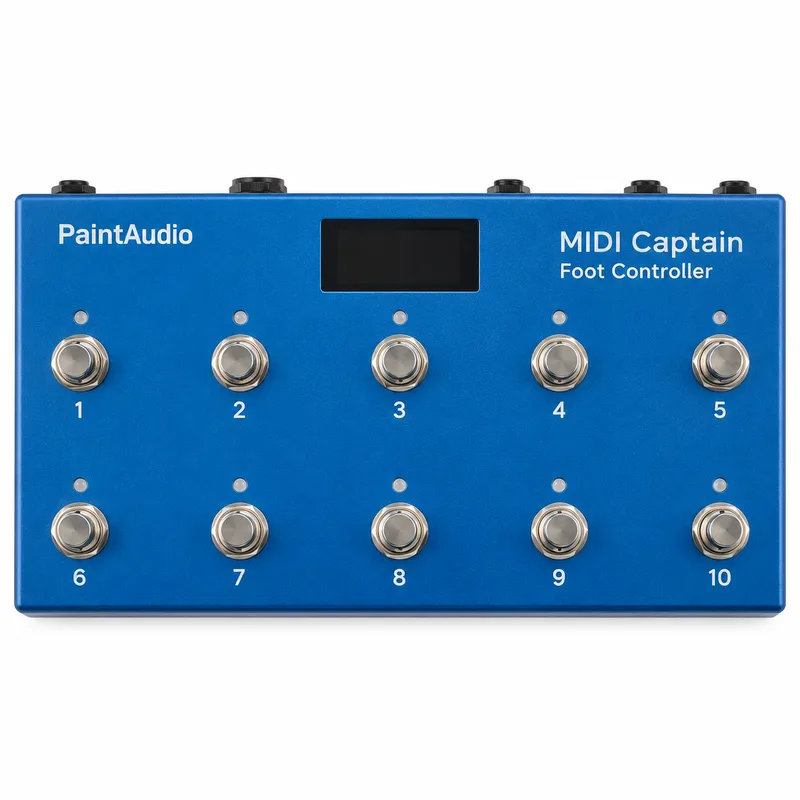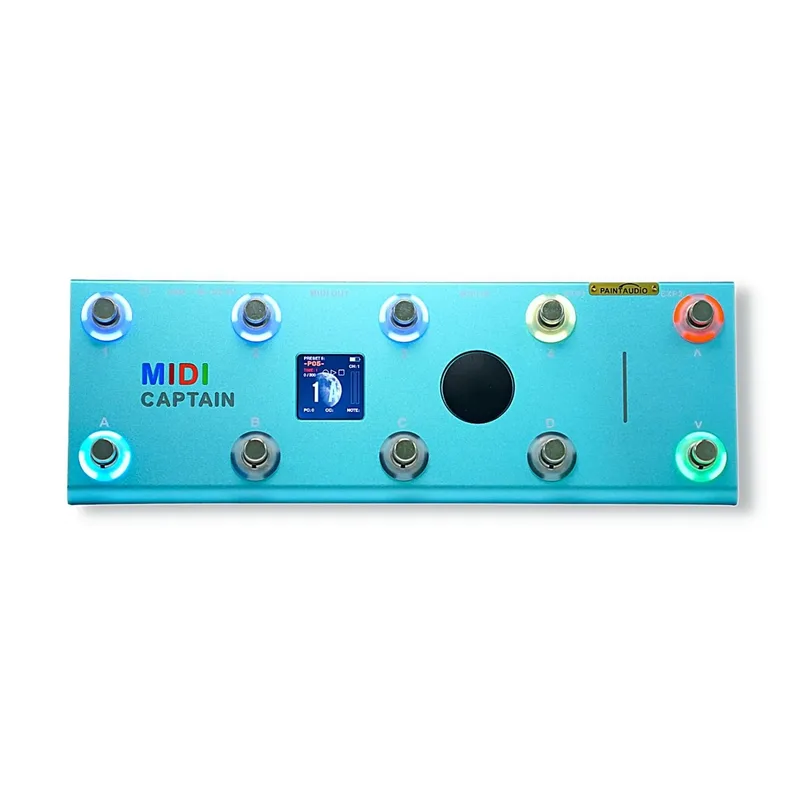


The PaintAudio MIDI Captain STD is a MIDI foot controller with ten fully programmable foot-switches1. It sits in the middle of a controller line that PaintAudio positions as more than a switch box: RockBoard's PedalPedia describes the MIDI Captain as "not just a MIDI controller, but a comprehensive musical performance assistant"2. In practice, that means a board you program once so each switch fires the commands your rig needs, whether that is changing a preset on a modeler, turning an effect on and off, or triggering a sample in software.
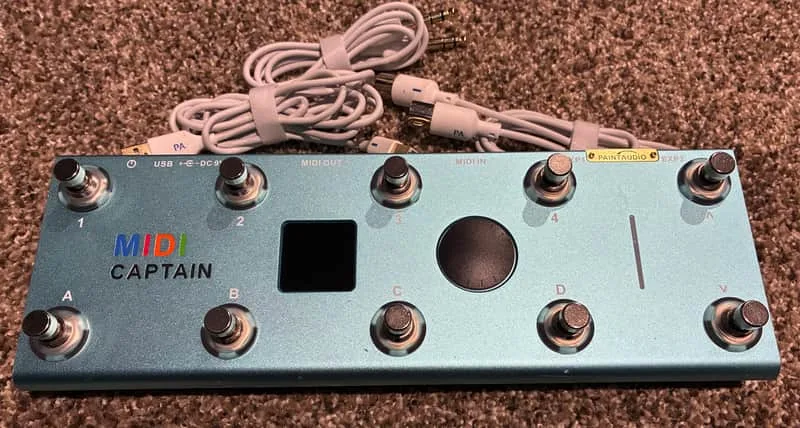
The STD is the black version of the ten-switch MIDI Captain. Its defining trait is what it leaves out: the built-in wireless MIDI module that the blue and gold Pro versions carry1.
Programming: PC, CC and Note commands
Each of the ten switches can be programmed to send a mixture of MIDI Program Change (PC), Control Change (CC), and MIDI Note commands1. For a player, that covers the three things most rigs listen for: PC messages call up presets, CC messages turn individual effects on and off or set parameter values, and Note messages trigger sounds in samplers and software.
A single press can carry more than one command. Across the MIDI Captain line, the switches are described as capable of sending single or multiple MIDI commands each time they are pressed, and the controllers can mix multiple MIDI channels and different types of MIDI commands, including PC, CC and Note, in one action52. That matters on a real pedalboard: one switch can change your amp preset on MIDI channel 1 while switching a delay on and off on channel 3.
Switch functions are configured by connecting the controller to a computer over USB4. PaintAudio publishes an English manual for the MIDI Captain line covering the command setup2.
The Time Engine
The STD includes a "Time Engine" function meant to record and automate key-actions, so you can set up complex switch sequences ahead of time1. Rather than tapping a run of switches in rhythm during a song, you record the sequence once and the controller replays it. It is the feature that pushes the MIDI Captain beyond preset switching toward scripted performance moves.
Power and MIDI connections
The STD has multiple power input options: 9 V, USB, or battery1. The 9 V option means it runs from a standard pedalboard power supply, and the battery option frees it from the board entirely. Other controllers in the line can be powered via a USB cable or a standard pedal power adapter4.
For connections, the STD offers wired MIDI out or standard USB1. The USB-MIDI functionality across the MIDI Captain line is aimed at controlling DAW software, synthesizers, and effects software on a computer6, so the same box can drive a hardware modeler at a gig and a plugin setup at home.
The STD has no built-in wireless module and cannot be paired with the MIDI Mate for wireless control4. If wireless MIDI matters to you, the blue and gold Pro versions are the ones that carry it.
STD compared with the wireless versions
PaintAudio sells the MIDI Captain family in three finishes, and the maker is explicit about how they differ. The blue and gold versions only differ in color and are considered the Pro versions, although the maker notes they carry no specific markings. The black STD version has a spray-coated surface, lacks the built-in wireless module, cannot pair with the MIDI Mate, and is slightly cheaper3. Otherwise, the maker states, they are the same in all other aspects4.
The Pro versions can also add an optional wireless MIDI Mate for fully wireless operation3, which the STD cannot use.
| Version | Finish | Wireless module | Price |
|---|---|---|---|
| Blue (Pro) | Blue | Built in3 | Higher3 |
| Gold (Pro) | Gold | Built in3 | Higher3 |
| STD | Black, spray-coated3 | None3 | Slightly cheaper3 |
The wider MIDI Captain line
The ten-switch STD is the largest controller in the range. The smaller units share the same command engine in different sizes1:
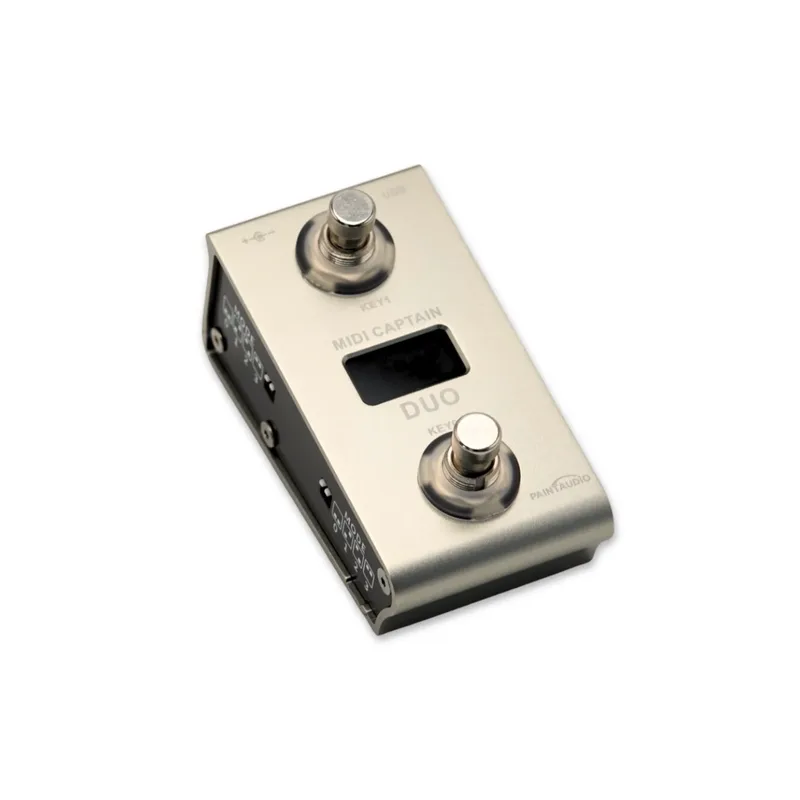
- MIDI Captain DUO: two programmable switches4
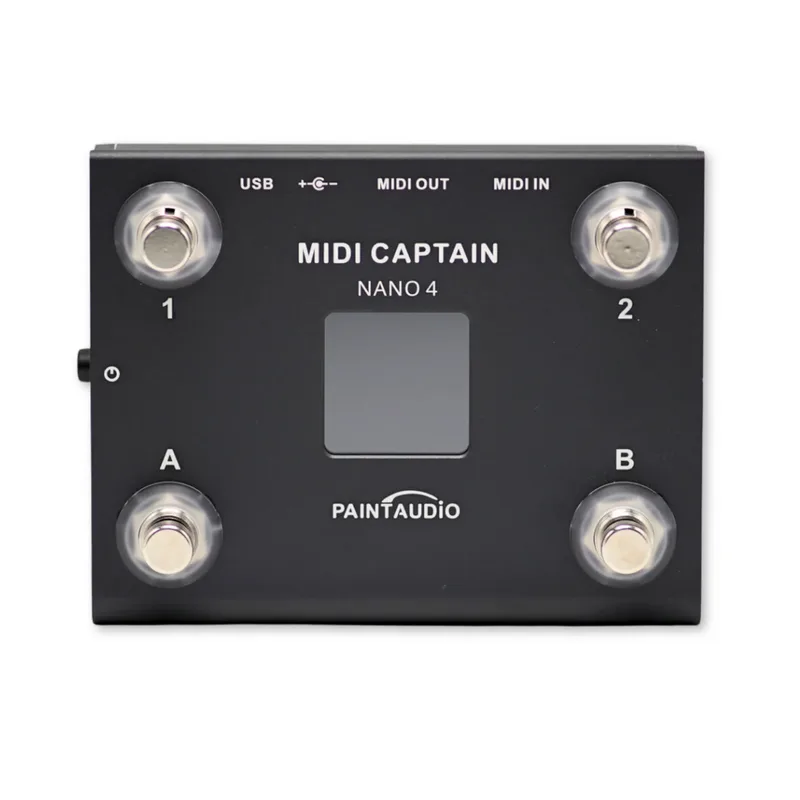
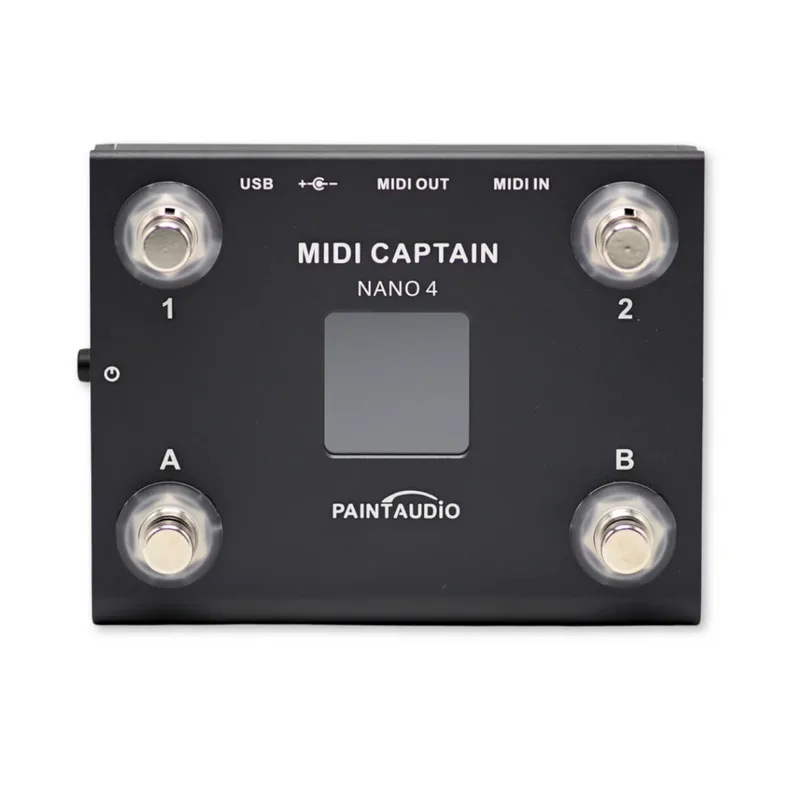
- MIDI Captain NANO 4: four programmable switches6
- MIDI Captain MINI 6: six programmable switches7
- MIDI Captain Foot Controller (BLUE): the Pro ten-switch version with the wireless module3
All of them feature a sturdy metal body and foot switch design for durability4, and all support the same PC, CC and Note command set425. The choice between them comes down to how many switches you need and whether you want the wireless module.
Videos
Andrew Reviews Everything
Andrew Siemon
Andrew Reviews Everything
Questions
What does STD mean on the MIDI Captain?
STD marks the black standard version of the MIDI Captain. Compared with the blue and gold Pro versions, the only functional difference is that it has no built-in wireless module and cannot be paired with the MIDI Mate for wireless control. It also has a spray-coated surface and is slightly cheaper.
Does the MIDI Captain STD have wireless MIDI?
No. The STD version does not have a built-in wireless module and cannot be paired with the MIDI Mate for wireless control. The blue and gold Pro versions include the wireless module, and the Pro versions can also use an optional wireless MIDI Mate for fully wireless operation.
How can the MIDI Captain STD be powered?
The STD version has multiple power input options: 9 V, USB, or battery. Other controllers in the MIDI Captain line can be powered via a USB cable or a standard pedal power adapter, so the STD fits a normal pedalboard power supply as well as a USB connection.
What is the Time Engine on the MIDI Captain?
The Time Engine is a function meant to record and automate key-actions, so you can set up complex switch sequences ahead of time. Instead of tapping several switches in order during a song, you program the sequence once and let the controller play it back.
Can the MIDI Captain STD send MIDI over USB?
Yes. The STD version can use standard USB as a MIDI output alongside wired MIDI out. The MIDI Captain line generally carries USB-MIDI functionality for controlling DAW software, synthesizers and effects software on a computer.
How many footswitches does the MIDI Captain STD have?
Ten. The STD version offers ten fully programmable foot-switches, each capable of sending single or multiple MIDI commands when pressed. Smaller models in the line have fewer: the DUO has two, the NANO 4 has four and the MINI 6 has six.
Sources (7)
- MIDI Captain STD by PaintAudio, RockBoard PedalPedia, 2026
- Midi Captian by PaintAudio, RockBoard PedalPedia, 2026
- PaintAudio MIDI Captain Foot Controller (BLUE), PaintAudio
- MIDI Captain DUO Controller with HID Multi-state Cycling, PaintAudio
- PaintAudio EXP-AB Face Expression Pedal, PaintAudio
- MIDI Captain NANO 4 Controller with HID Multi-state Cycling, PaintAudio
- MIDI Captain MINI 6 Controller with HID Multi-state Cycling, PaintAudio