

The Red Noise Pedals Stone Blender is a multi-mode fuzz pedal built around the circuit of the 1990's Sola Sound Tone Bender. Where most fuzz pedals give you one fixed clipping voice, the Stone Blender puts four of them on a rotary switch, so one box covers a range of fuzz flavors from a purry, overdrive-like sound to a full, sizzling classic Tone Bender bark12.
The pedal is the work of Ariel Scherbacovsky of Red Noise Pedals, and every unit is 100% hand made and hand wired in Atlanta, Georgia, individually numbered, tested and hand painted12. The Germanium edition runs on three NOS Matsushita 2SD352 germanium transistors, which Guitar Pedal X's reviewer found "create the most wonderfully textured output"3.
A Tone Bender lineage, built in Atlanta
The Stone Blender's circuit traces back to the Tone Bender, the fuzz family introduced to the musical instrument market by Sola Sound in 1965. Macari's Musical Instruments in London produced numerous variations starting in the mid-1960s, and the MK3 Tone Bender was later supplied as a pedal to various manufacturers including Park, Rotosound and Vox45. The MK3 was itself a three-transistor design, which is the shape the Stone Blender follows with its three 2SD352s.
Red Noise's builder is direct about the borrowing: "We based the circuit on the 1990's Sola Sound Tone Bender"1. Pedal of the Day's review puts it the same way, noting that "the entire circuit of the Stone Blender is based on the 1990's Sola Sound Tone Bender"2. So this is not a vague "Tone Bender-style" fuzz; it is a rebuild of a specific late-era Sola Sound circuit, with the clipping stage made switchable.
Where other Tone Bender tributes keep one voice, the Stone Blender's reason for being is the choice of four. Delicious Audio notes that "multi-mode fuzz pedals are somewhat rare," and that the pedal does its switching through an unassuming four-setting Diode rotary switch1.
The four fuzz modes
The heart of the pedal is its 4-way rotary switch, which selects between four clipping diode configurations12. Each mode has its own distinct sound and dynamic response, shaped by the Tone, Fuzz, Vol and De-Clip (Mid) controls2.
| Mode | Clipping | What reviewers found |
|---|---|---|
| Fuzz #1 (Green) | 1N60 germanium diodes3 | A purry, overdrive-like fuzz with volume boost and added crunch1 |
| Fuzz #2 (Red) | 1N4148 silicon diodes1 | The classic Tone Bender fuzz, sizzling up top while punching you in the gut1 |
| Fuzz #3 | Yellow LED1 | A third clipping flavor on the rotary switch1 |
| Fuzz #4 | Blue LED1 | A fourth clipping flavor on the rotary switch1 |
The Green mode is the softest of the four. Delicious Audio describes it as a "purry overdrive-like fuzz, offering volume boost and added crunch," a sound players leaning toward overdrive textures can dial in without losing the fuzz character1. The Red mode, with its 1N4148 silicon diodes, is the one the maker points to as the classic: "Sizzling up top while punching you in the gut, this is the 1990's Sola Sound Tone Bender"1. The two LED modes round out the switch with harder clipping voices1.
Controls and build
The control set is small and conventional for a fuzz, with one unusual addition:
- Fuzz: Controls the amount of signal going into the fuzz circuit. Counterclockwise for less fuzz, clockwise for more1.
- Tone: Shapes the sound dynamically2.
- Vol: Sets the output level2.
- De-Clip (Mid): A mid control that lets you back off the clipping character, unique to this design among Tone Bender derivatives2.
The Germanium edition's three Matsushita 2SD352 transistors are the engine: Guitar Pedal X's Stefan Karlsson writes that "3 of those Transistors are put to incredibly good use in the Germanium Stone Blender, and they create the most wonderfully textured output"3.
Every Stone Blender is hand made, hand wired, individually numbered, tested and hand painted in Atlanta, Georgia by Ariel Scherbacovsky, and each pedal is individually tested before shipping12. As a hand-built pedal from a single builder, availability is tied to Scherbacovsky's bench rather than a factory production line.
What reviewers said
Pedal of the Day reviewed the Stone Blender in 2019 and came away impressed with its range, calling it "a fuzz full of tones, differing sounds and unique features" and concluding: "No shortage of fuzz, power or volume here, folks, this thing is a beast, and he means business"2.
"The Stone Blender from Red Noise Pedals is an interesting and exciting Fuzz Engine, not just a pedal."
Guitar Pedal X's 2022 look at the Germanium 2SD352 edition focused on the transistors and the multi-clipping concept, crediting "Ariel Scherbacovsky's Red Noise Pedals" with delivering an "Exceptional Germanium 2SD352 Edition Multi-Clipping Stone Blender"3.
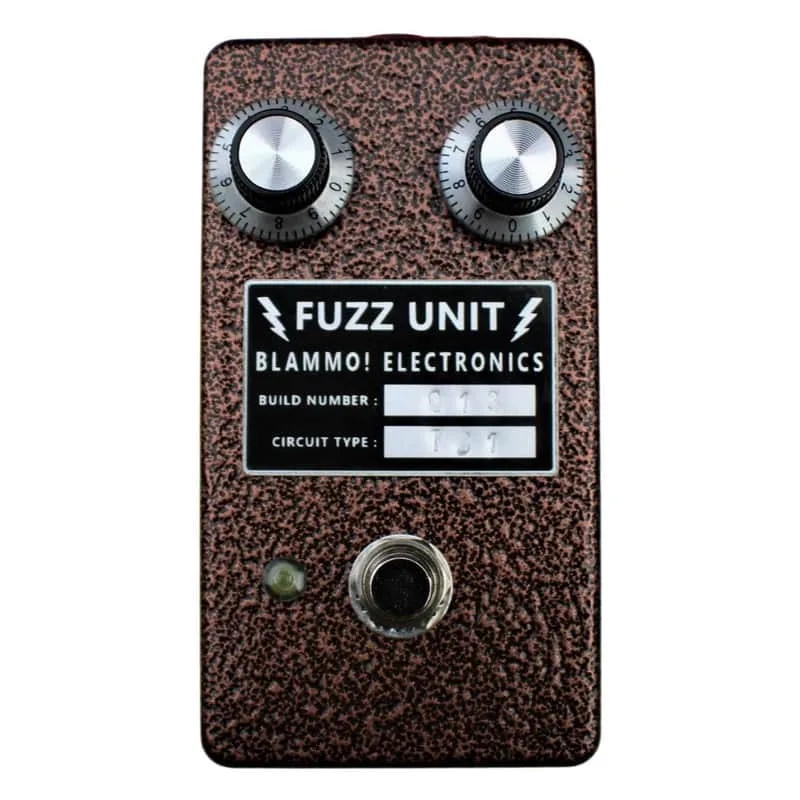
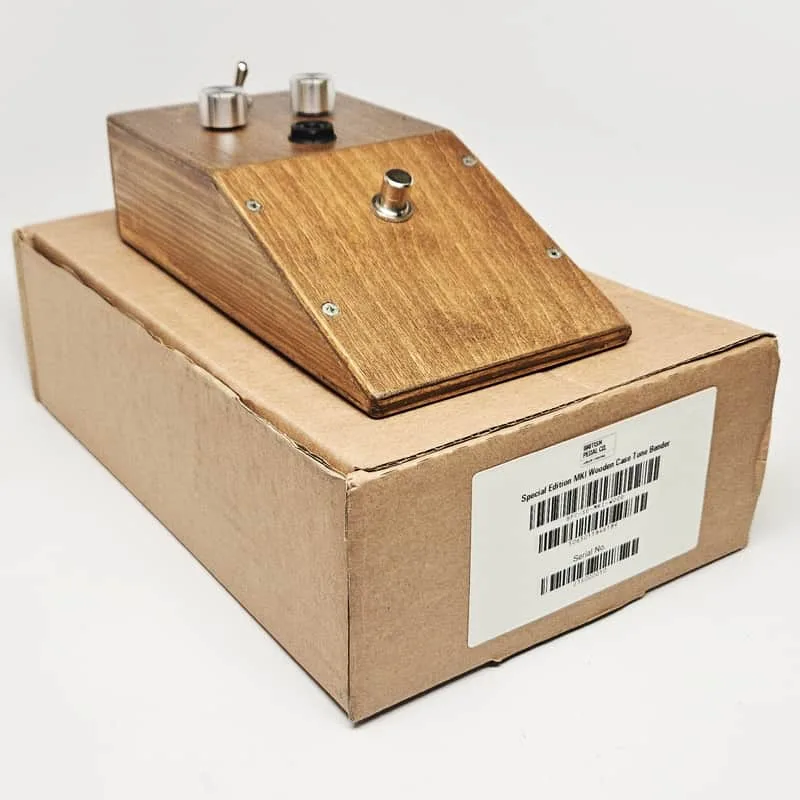
For players comparing Tone Bender-family options, the Stone Blender sits apart from point-to-point MKI reproductions like the BLAMMO! P2P Tone Bender MKi and the British Pedal Company Special Edition Master Built MKI Tone Bender: those pedals recreate one vintage circuit faithfully, while the Stone Blender takes a single circuit, the 1990's Sola Sound Tone Bender, and makes its clipping voice switchable across four settings12.
Videos
Red Noise Pedals
Red Noise Pedals
Red Noise Pedals
Questions
What circuit is the Red Noise Stone Blender based on?
The entire circuit of the Stone Blender is based on the 1990's Sola Sound Tone Bender, the London-made fuzz that Red Noise's builder describes as the starting point for the pedal. The original Tone Bender was introduced to the musical instrument market by Sola Sound in 1965, and Macari's Musical Instruments in London produced numerous variations starting in the mid-1960s.
How many fuzz modes does the Stone Blender have?
The Stone Blender has four unique fuzz settings, selectable via a 4-way rotary switch. Each mode uses a different clipping diode: 1N60 germanium (Green), 1N4148 silicon (Red), a Yellow LED, and a Blue LED. Reviewers found each setting has its own distinct sound, shaped further by the Tone, Fuzz, Vol and De-Clip (Mid) controls.
Who designed the Red Noise Stone Blender?
The Stone Blender was designed by Ariel Scherbacovsky, who builds every pedal himself. Each unit is 100% hand made and hand wired in Atlanta, Georgia, individually numbered, tested and hand painted by Scherbacovsky.
Is the Stone Blender a germanium fuzz?
Yes. The Germanium Stone Blender edition is built around three NOS Matsushita 2SD352 germanium transistors, and its Green clipping mode uses 1N60 germanium diodes. The other three clipping modes use silicon diodes and LEDs, so the pedal covers both germanium and silicon clipping flavors.
Where is the Red Noise Stone Blender made?
Every Stone Blender is made in Atlanta, Georgia. Each pedal is hand made, hand wired, individually numbered, tested and hand painted there by Ariel Scherbacovsky, and each one is individually tested before it leaves the bench.
Sources (5)
- Red Noise Germanium Stone Blender, Delicious Audio, 2021-03-26
- Red Noise Pedals Stone Blender Fuzz Engine, Pedal of the Day (pedal-of-the-day.com), 2019-11-26
- Guitar Pedal X, Guitar Pedal X, 2022-03-30
- BOSS TB-2W Tone Bender, Delicious Audio, 2024-10-03
- Tone Bender History, British Pedal Company