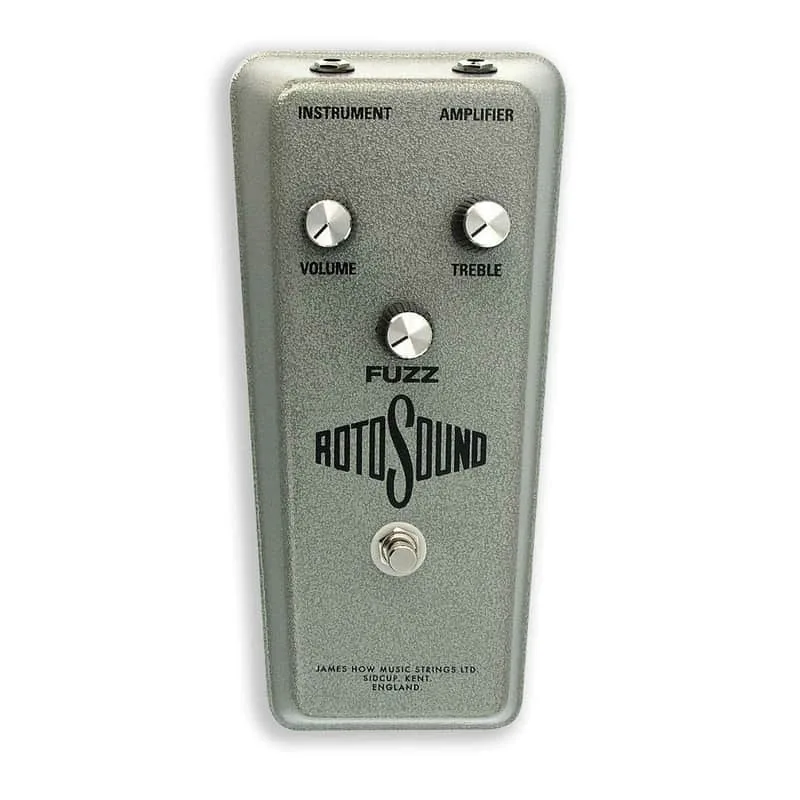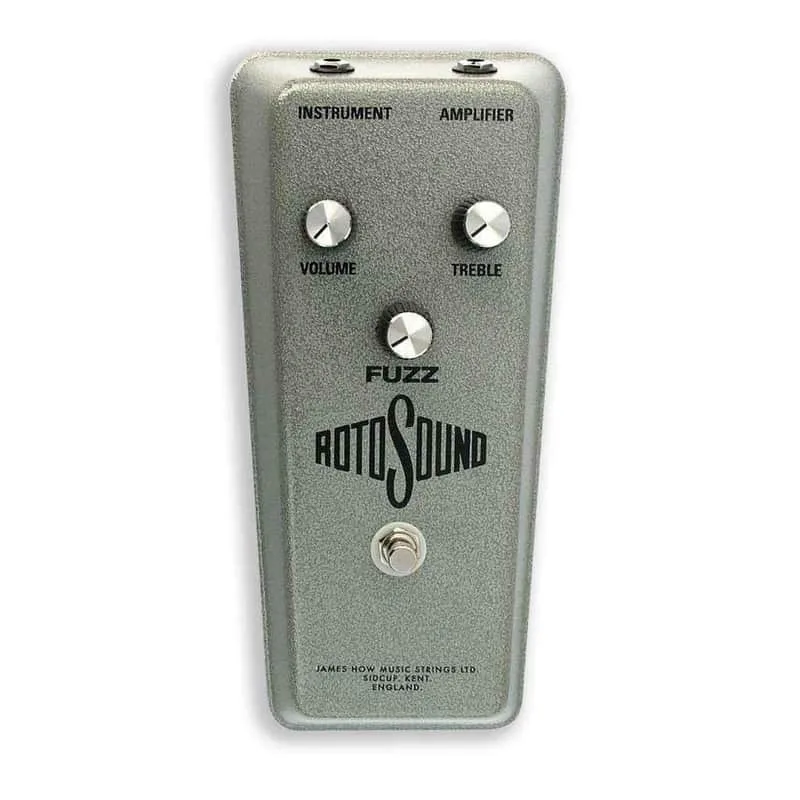


The Rotosound Germanium Fuzz is a reissue of a 1960s germanium fuzz pedal that Rotosound originally sold in 1967. The original was OEM'd by Sola Sound, the London firm behind the Tone Bender fuzzes, and the reissue is based on the same circuit as the original design, hand-wired with carefully selected components including vintage N.O.S. germanium transistors1.
Rotosound brought the pedal back as part of a series of seven vintage effects reissued in March 2025, available to authorised dealers worldwide. Guitar Pedal X's Stefan Karlsson expects the Germanium Fuzz to be the most sought-after of the bunch:
"I expect the Germanium Fuzz to be particularly popular - so that will probably go first!"1
A 1960s germanium fuzz, reissued
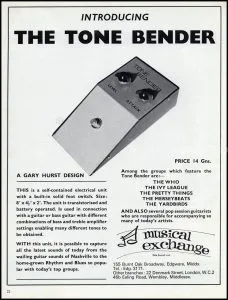
The story of this pedal is tangled up with Sola Sound and the Tone Bender. The original Rotosound Fuzz was supposedly a MKIII prototype that emerged the year before the official Tone Bender MKIII release1. Fuzzboxes.org's history of the Rotosound Fuzz Box confirms the connection: the MKIII Rotosound Fuzz Boxes were built with the same electronic circuits that Sola Sound was also supplying to Vox and Park concurrently, a circuit that ultimately replaced the MKII in Sola Sound's own line2.
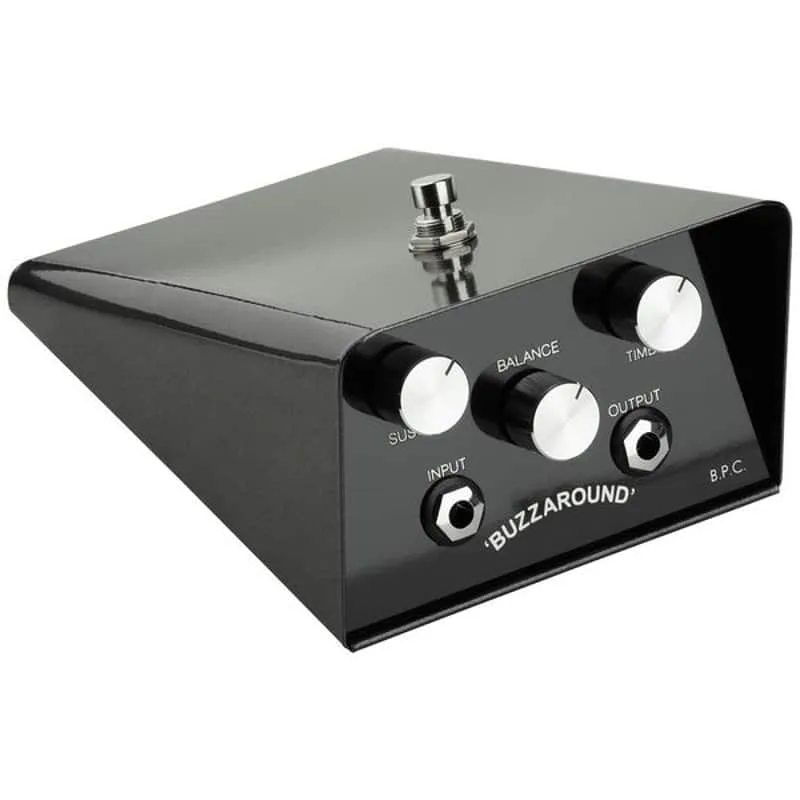
The germanium version of the Vox Tone Bender MKIII used a germanium transistor circuit loosely based on the earlier Baldwin-Burns Buzzaround, and that same circuit was supplied to companies like Rotosound and Park for their own versions of the Tone Bender MKIII3. Sola Sound built these three-knob germanium Tone Benders between the late 1960s and approximately the mid-1970s3.
The original Rotosound pedals were never widely distributed. They were only ever available in limited numbers at Rotosound's showroom in London's Denmark Street1, which is why original examples are hard to find today.
Jimmy Page and the Rotosound fuzz
The pedal's best-known user is Jimmy Page. British Pedal Company's Tone Bender history records that Page can be seen in 1969 using the Rotosound version of the three-knob Tone Bender4. Guitar Pedal X notes that the reissue's attention to detail helps it deliver the same chewy fuzz tones that made the original popular with legends like Led Zeppelin's Jimmy Page1.
The controls: Volume, Treble, Fuzz
The layout is the classic three-knob arrangement of the Tone Bender MKIII family. Fuzzboxes.org describes the germanium MKIII as coming with adjustable controls for the volume, amount of fuzz, and tone of the effect3, and the Rotosound reissue follows suit1.
| Control | What it does |
|---|---|
| Volume | Sets the output level of the effect1 |
| Treble | Shapes the tone of the effect1 |
| Fuzz | Sets the amount of fuzz1 |
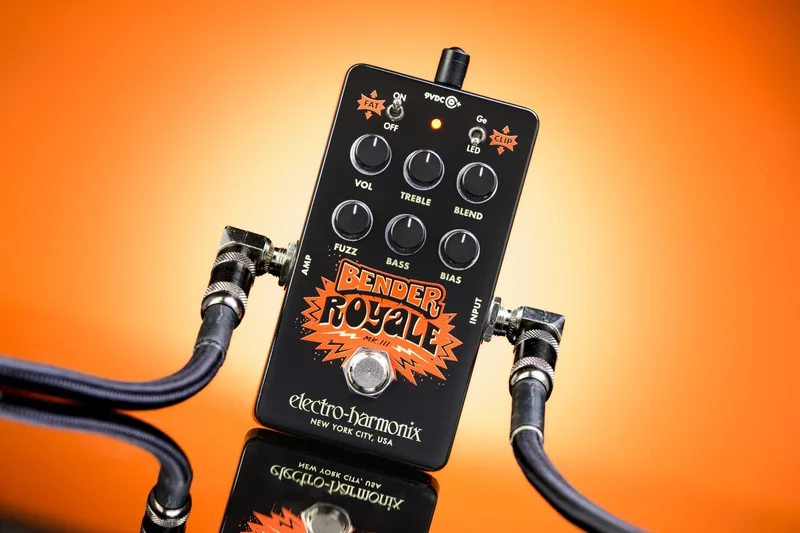
That is the whole control surface. There is no bias knob, no internal trimmer mentioned in the coverage, and no separate boost or blend control of the kind found on some modern germanium fuzzes. Players who want more sound-shaping on a similar circuit could look at pedals like the Electro-Harmonix Bender Royale MKIII Germanium Fuzz, a take on the MkIII version of the vintage germanium-based three-transistor fuzz circuit that opens up a wider range of fuzz tones5.
How it compares with other germanium fuzzes
The Rotosound sits in a crowded field of Tone Bender MKIII-derived pedals. What distinguishes it is lineage: it is a reissue of an actual 1960s Rotosound-branded version of the circuit rather than a modern clone, hand-wired with vintage N.O.S. germanium transistors1.
Other germanium fuzzes on the market take different approaches to the same 1960s territory:
- The Electro-Harmonix Bender Royale MKIII Germanium Fuzz takes the MkIII version of the vintage germanium-based circuit and expands its tonal range5.
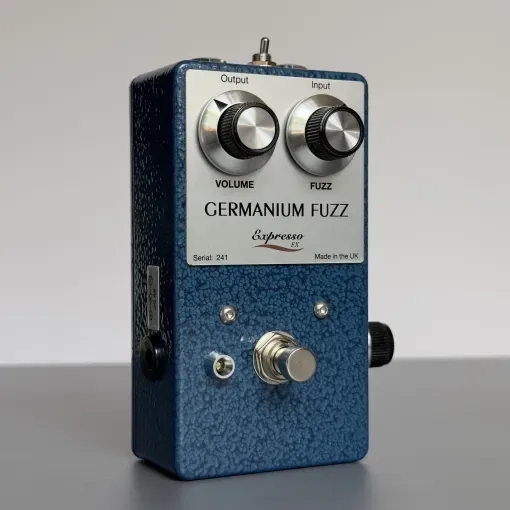
- The Expresso FX Germanium Fuzz is a classic fuzz pedal reminiscent of those made in the 1960s, built with hand-selected NOS germanium transistors.
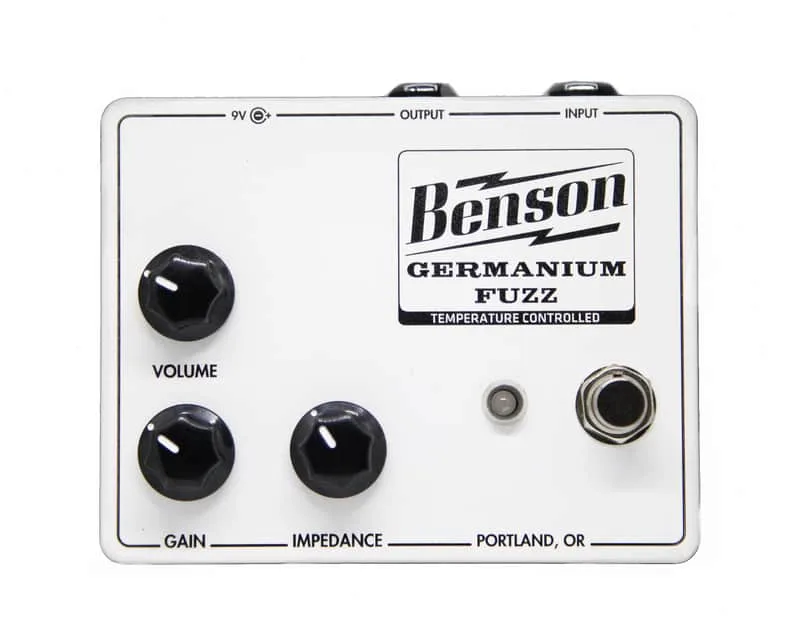
- The Benson Amps Germanium Fuzz uses a pair of 2N527 or 2N404 germanium transistors with thermal biasing for consistent 60s fuzz tones.
For a wider view of the category, see the fuzz pedals page.
Price and availability
The £349 price is a UK recommended retail price as reported in March 2025.
Videos
David Curtis
GrandZeppelinBand
Questions
What is the Rotosound Germanium Fuzz?
A reissue of the germanium fuzz pedal Rotosound originally sold in 1967. The original was OEM'd by Sola Sound, the London firm behind the Tone Bender fuzzes, and the reissue is based on the same circuit, hand-wired with vintage N.O.S. germanium transistors. It was reissued in March 2025 as part of a seven-pedal vintage series.
Did Jimmy Page use a Rotosound fuzz?
Yes. British Pedal Company's Tone Bender history records that Jimmy Page can be seen in 1969 using the Rotosound version of the three-knob Tone Bender. Guitar Pedal X notes the reissue aims to deliver the same chewy fuzz tones that made the original popular with players like Page.
What controls does the Rotosound Germanium Fuzz have?
Three knobs: Volume sets the output level, Treble shapes the tone, and Fuzz sets the amount of fuzz. That is the classic three-knob arrangement of the Tone Bender MKIII family, with no bias knob or extra sound-shaping controls.
Sources (5)
- Guitar Pedal X, Guitar Pedal X, 2025-02-21
- Rotosound Fuzz Box • Fuzzboxes, Fuzzboxes.org, 2021-05-19
- Vox Tone Bender MKIII • Fuzzboxes, Fuzzboxes.org, 2021-05-30
- Tone Bender History, British Pedal Company, 1969
- Electro-Harmonix Bender Royale MKIII Germanium Fuzz, Pedal of the Day, 2026-03-27
 Jimmy Page