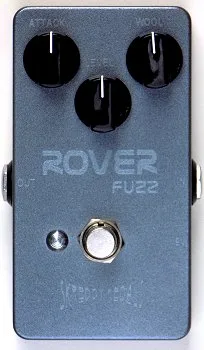


The Skreddy ROVER Fuzz is a high gain Tone Bender MkII fuzz made by Skreddy Pedals, designed by Marc "Skreddy" Ahlfs. Where the original MkII circuits used germanium transistors, the ROVER is a silicon build that Skreddy describes as a "Germanium-like silicon fuzz with a Tone Bender* heart"1. The point, as the maker frames it, is old school fuzz character without the practical drawbacks of germanium: it is stable across temperature ranges, so an outdoor gig does not change how it behaves1.
The pedal carries three controls, Fuzz, Volume and Wool, runs on a standard 9V negative ground supply, and lists at $205, discounted to $184.50 at the maker's site, where it was listed as a preorder12.
A high-gain Tone Bender MkII in silicon
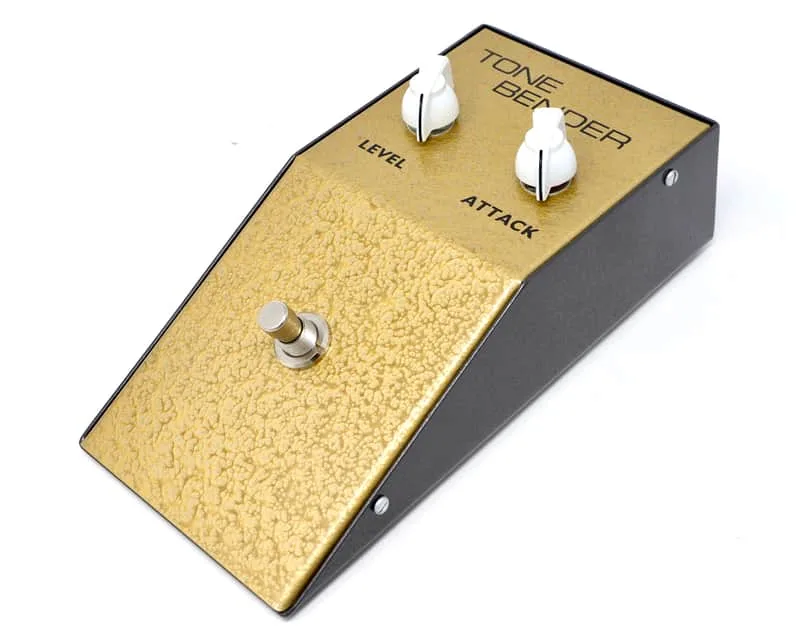
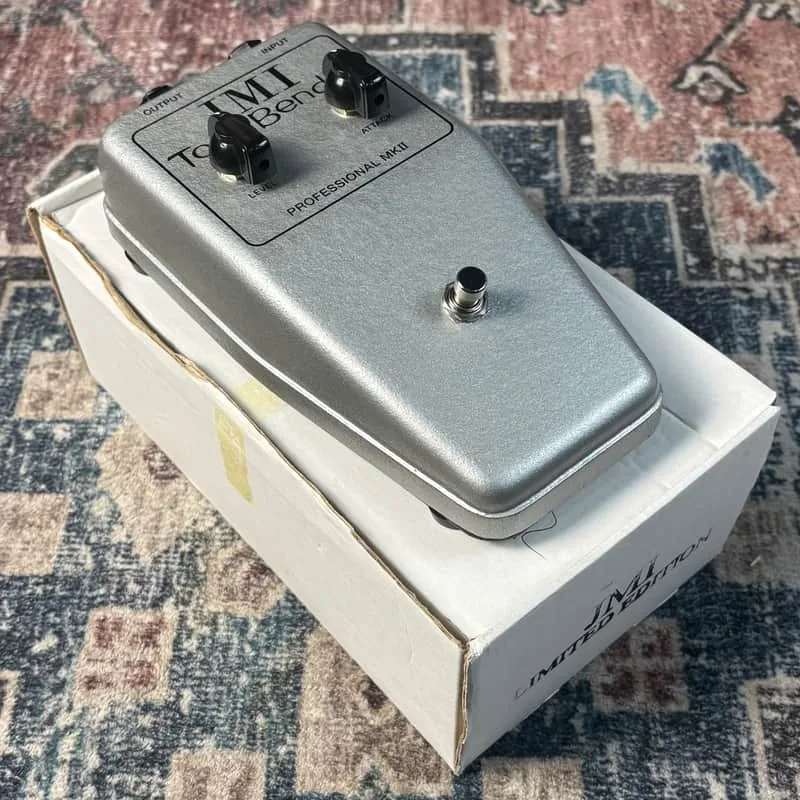
The circuit the ROVER draws on goes back to the mid-1960s. The Sola Sound Tone Bender MKI was a three-transistor fuzz circuit based on Gibson's 1962 Maestro Fuzz-Tone4. The Tone Bender MKII that followed was also a three-transistor fuzz circuit5, and Sola Sound produced this circuit for other brands including VOX, Marshall (as the Supa Fuzz) and Rotosound (as the Fuzz Box)6. The JMI Tone Bender Professional Mk II is one of the better known versions of the design.
The ROVER is Skreddy's take on that MkII circuit with silicon transistors in place of germanium. For a player, the practical difference is stability: germanium fuzzes can drift with temperature, and Skreddy pitches the ROVER as a fuzz "you won't have to worry about when you play an outdoor gig" because it stays stable throughout any survivable temperature range1. The maker also positions it as a high gain version of the MkII sound2.
The controls: Fuzz, Volume and Wool
The ROVER keeps the control set simple, with three knobs1:
| Control | What it does |
|---|---|
| Fuzz | Sets the fuzz amount1 |
| Volume | Sets the output level1 |
| Wool | Dials in anything from tight, hot, articulate distortion to saggy, brick-wall-compressed fuzz1 |
The Wool control is the one that sets the ROVER apart from a straight two-knob MkII clone. Skreddy describes it as the control that shapes the fuzz's density, moving between a tight, articulate distortion feel at one end and a saggy, heavily compressed fuzz at the other1.
"The Wool control knob really shines as far as parameters go here, with an extended range of sonic options to explore and enjoy"
Pedal of the Day's review of the Animals Pedal version found that Wool adjusts the sound density and thickness while keeping the original tone intact, adding what the reviewer called "a bit of pizazz, sparkle and brick wall compression"7.
Power and battery
The ROVER runs on a regular 9V negative ground supply with no special power requirements, so it works with the standard pedalboard supplies most players already own1. The jack is the industry-standard 9V DC plug, a 5.5mm barrel by 2.1mm center coax with negative tip1.
A 9V battery is supported but not included, and the battery disconnects automatically when a power supply is plugged in1.
Because the battery disconnects when a DC plug is inserted, you can leave a battery installed as a backup without it draining while the pedal runs on a power supply1.
Origin and the Animals Pedal version
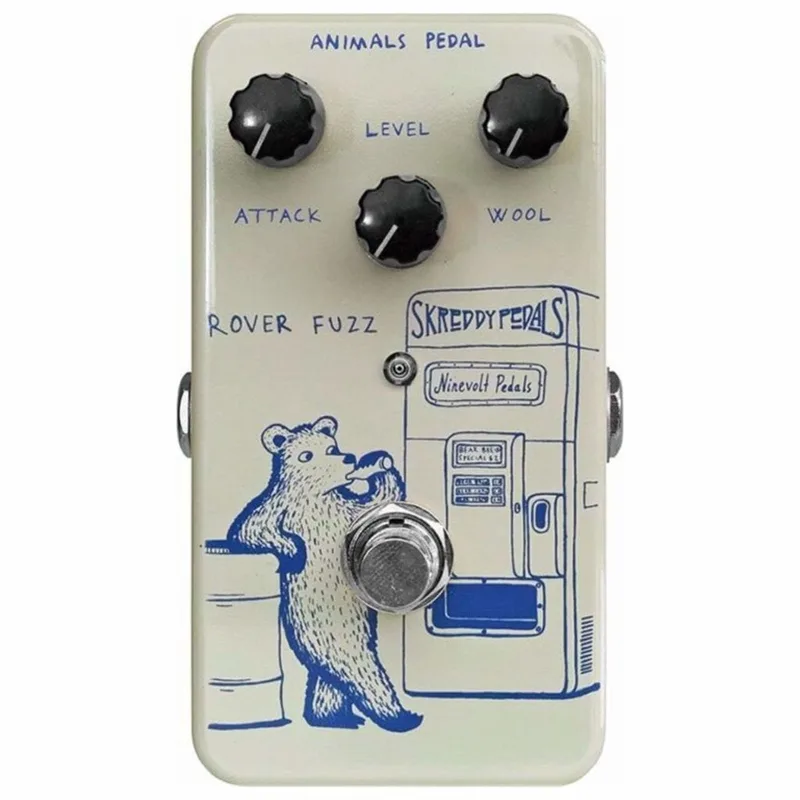
The ROVER also exists as the Animals Pedal Rover Fuzz, a version built by Animals Pedal and designed by Marc Ahlfs of Skreddy Pedals8. Pedal of the Day reviewed that version in March 2018, noting that "The Rover Fuzz comes to us from Animals Pedal"7.
Animals Pedal later issued a revised version of its Rover Fuzz with easier battery replacement, a footswitch moved closer to the front edge for better playability, and a wider tonal range9. The Animals Pedal version uses a true bypass footswitch and runs on a 9V battery or a standard center-negative 9V DC adapter9. Its control set differs slightly from the Skreddy original, with an ATTACK knob that adjusts the fuzz's distortion and sharpness9.
Who plays it
The maker's page for the ROVER includes jam clips from Ilya Lipkin, playing a Gibson SG into a clean Orange amp and also into a Fryette Aether amp1.
Videos
Premier Guitar
Skreddy Pedals
Mike Hermans
Questions
Does the Skreddy Rover Fuzz take a battery?
Yes. It accepts a 9V battery, though one is not included with the pedal. The battery disconnects automatically when a power supply is plugged into the DC jack, so you can leave a battery installed as a backup without it draining while you run the pedal on a adapter.
Is the Skreddy Rover Fuzz silicon or germanium?
It is a silicon fuzz. Skreddy describes it as a silicon take on the classic germanium Tone Bender MkII, built to give a germanium-like fuzz character while staying stable across temperature ranges, so it does not shift behavior on hot outdoor stages the way germanium transistors can.
What does the Wool knob do?
Wool sets the density and thickness of the fuzz. Skreddy says it dials in anything from tight, hot, articulate distortion to saggy, brick-wall-compressed fuzz. Pedal of the Day found it kept the original tone intact while adding sparkle and brick wall compression, calling it the control that really shines.
How much does the Skreddy Rover Fuzz cost?
Skreddy Pedals lists the ROVER Fuzz at $205, discounted to $184.50 at the time of writing. The pedal was listed as a preorder at its maker's site, so availability and pricing may change once stock ships.
What power supply does the Rover Fuzz need?
It uses a regular 9V negative ground supply with no special power requirements, so it works with standard pedalboard power. The jack is the industry-standard 9V DC plug, a 5.5mm barrel by 2.1mm center coax with negative tip, the same connector most pedal power supplies use.
Sources (9)
- Fuzz | ROVER Fuzz | Skreddy Pedals, Skreddy Pedals
- ToneBender variants, Skreddy Pedals
- Fuzz | Klipper | Skreddy Pedals, Skreddy Pedals
- Gary Hurst Tone Bender 'MKI' • Fuzzboxes, fuzzboxes.org, 2021-05-20
- Sola Sound Tone Bender Professional MKII • Fuzzboxes, Fuzzboxes.org, 2021-05-18
- TONEHOME, TONEHOME - the World of Vintage Guitar Effects Pedals
- Animals Pedal Rover Fuzz Effects Pedal, Pedal of the Day, 2018-03-23
- Custom Illustrated RF coalowl うるせー! reprint edition, Animals Pedal (animalspedal.jp)
- 【10/26(月)16:00まで10%OFF】Animals Pedal Rover Fuzz, Animals Pedal (animalspedal.jp)